
“Ever since the ‘Timaeus’ it has been repeatedly stated that the soul is a sphere. As the anima mundi, the soul revolves with the world wheel, whose hub is the Pole. … The anima mundi is really the motor of the heavens.”
Collected Works of C.G. Jung, Volume 9 (Part 2): Aion: Researches into the Phenomenology of the Self, par. 212
She has been called “a murky goddess on the fringes of Greek religion” (1) whose origins predate Ancient Greece and lead to the Karian people in Asia Minor (modern Turkey). There she had a sanctuary in Lagina as the great goddess, who brought prosperity to the people and in their name maintained close relations with “the Karian equivalent of Zeus.” (2) Similarly, her worship in Ancient Greece also put great emphasis on her special relationship with the ruler of Mount Olympus. Hesiod in Theogony portrayed her as an all-powerful goddess. She was a Titaness, not an Olympian, and yet, although Zeus had overthrown her race, he chose to grant her a special position; all that while simultaneously reducing the power of all the other goddesses. Zeus gave Hekate a share of earth, sea and heaven, and made her “kourothropos (nursemaid) to all living creatures. (3) If she is correctly invoked, says Hesiod, she will bring success to all kinds of people, notably herdsmen, fishermen, kings, politicians, and so forth. To attain these objectives, she must collaborate with fellow deities and serve as a mediator between the divine realm and humanity. The invocations of Hekate provide a glimpse into her eventual pivotal role in the realm of magic, which would later become a prominent facet of her character. Her indispensable function as an intermediary stands at the core of her archetypal significance. Already at the dawn of her worship, as the goddess ruling over all the worldly spheres, she was crucially seen as the deity who “can initiate change throughout the entire world.” (4)
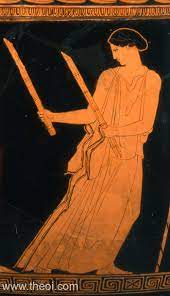
Hekate played a crucial role in the myth of the abduction of Persephone. In the Homeric Hymn to Demeter, “Hekate of the glossy veil heard from her cave” how Persephone was abducted by Hades. Helios, the Sun god, witnessed the event, while Hekate, in contrast, only heard it. This forges a connection between her and the realm of the unconscious, symbolizing her affinity with the Moon—the celestial counterpart to the Sun, both serving as witnesses to the world’s occurrences.(5) Later Hekate escorted Persephone in her annual journey to the Underworld, where Persephone would reaffirm her marital bond with Hades. The portrayal of Hekate residing within a cave already signified her divine presence that bridged the realms of the earth and the underworld. The Homeric Hymn to Demeter vividly illustrates Hecate’s distinctive attribute as she emerged in the dead of night, bearing two flickering torches to console the distraught Demeter.
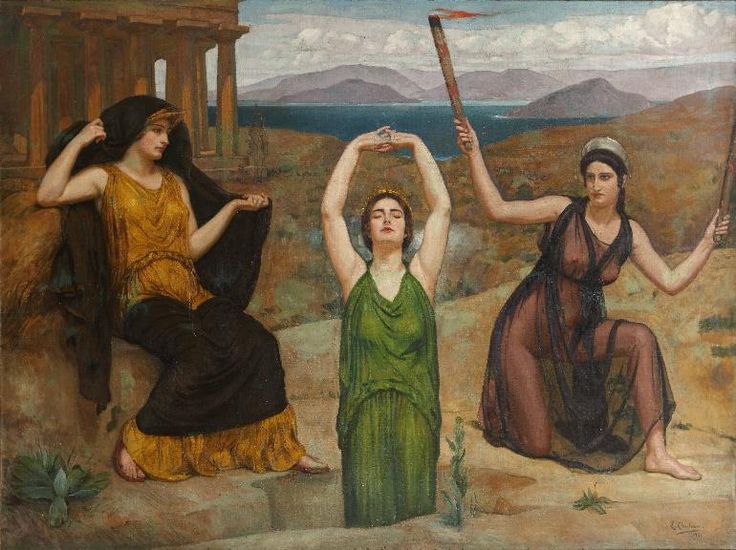
Hekate was considered apotropaic, meaning she had the power to ward off or avert evil and negative forces. This association was due to her role as a protective goddess, especially at liminal places and times, such as crossroads, doorways, and the dark of the moon. She was worshiped as the goddess of birth and death, which defined the most significant and perilous transitions of all. But her shrines (hekateia) also symbolically protected the mundane thresholds of numerous Athenian households. At the entrance to Acropolis stood a tripleformed Hekate sculpted by Alkamenes. She was believed to guard crossroads, which were considered vulnerable points where malevolent spirits could lurk. Hekate’s companions were “restless souls denied entrance to Hades.” (6) At the time of the new moon Hekate’s “suppers” were offered at the crossroads to appease the spirits and ensure a harmonious transition across this temporal boundary. Hekate protected from the dissolution, which is symbolically associated with all kinds of liminal realms:
“Every limen–the threshold, the crossroads, the gate, the frontier–is by definition detached from its surroundings. … the boundary itself must be regarded as a sort of permanent, chaotic Limbo; associated with neither of the two extremes it divided …” (7)
“It was in the interstices between safely defined territories (home, sanctuary, city) and times (new and old month) that dangerous spirits were emboldened to attack the unwary.” (8)
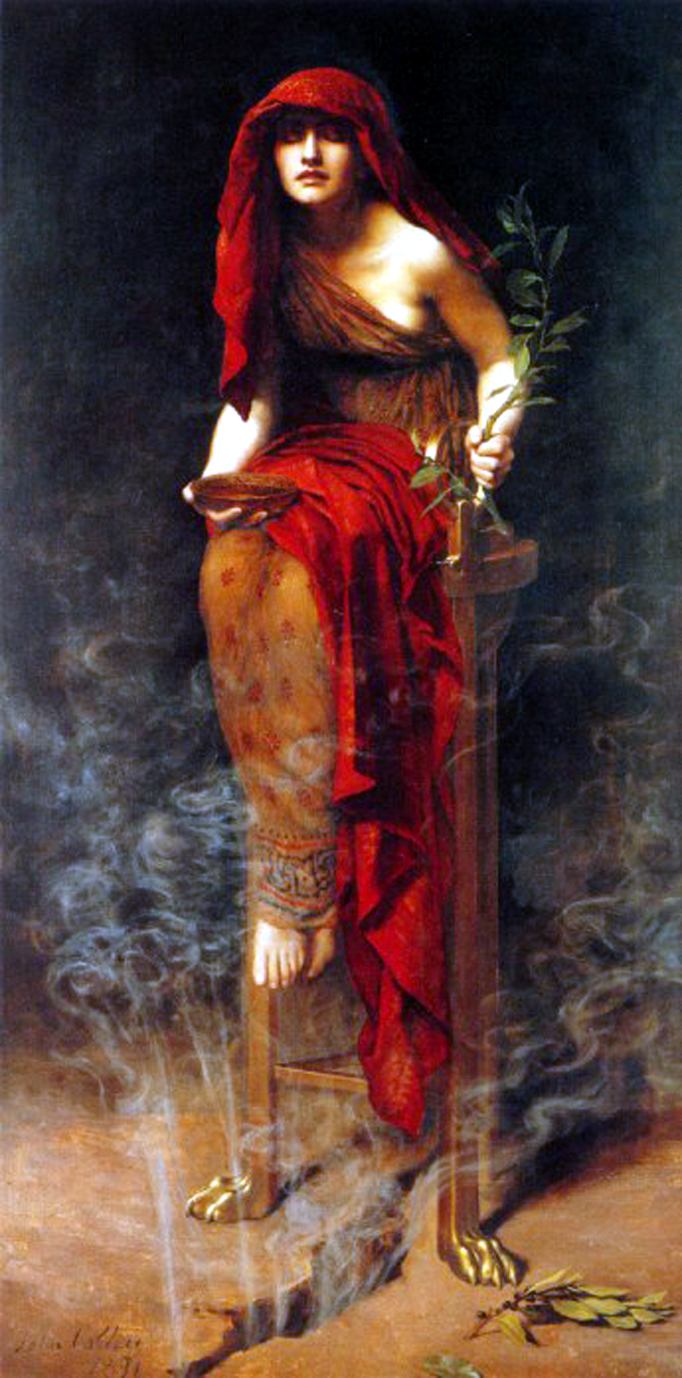
As a holder of the keys – another of her significant attributes – Hekate ensured that the boundaries within the fabric of the Cosmos were closed. In other words, she controlled Chaos by establishing clear limits. She was the one who had to be approached to open the gates to the Underworld. In this role she became associated with witchcraft and magic; she was especially worshiped by the Thessalian witches. When Aeneas, the legendary hero and central character in Virgil’s epic poem The Aeneid, embarked on his journey to the Underworld, he asked a Sybil for help. Vergil’s Sybil, seeking access to Hades, called on and sacrificed to Hekate – “mighty in Heaven and Hell.” It is Hekate who opened the passageway, “as the earth splits open, dogs bark, and the goddess is felt to be near.” (9)

Ever a mediator poised between different spheres and worlds, in Hellenistic times Hekate became associated more closely with the Moon, especially in the Middle Platonic doctrine represented by Plutarch and Apuleius. They believed the Moon to be “a liminal point and a transmissive or mediating entity between the Sensible and Intelligible Worlds.” (10) By way of explaining, the intelligible world, in Neoplatonism, represents a non-physical realm of unchanging and timeless universal truths or forms that underlie and give rise to the sensory and material world. The Moon was imagined to be the sphere of the daimons and Hekate was both their mistress, and the Mistress of the Moon. According to Porphyry, daimons held various functions, including maintaining cosmic order, ensuring the harmony of the cosmos, and transmitting divine influences to the material world. They played a role in linking the celestial spheres to the earthly realm. Hesiod described daimons as “the immortal yet not divine spirits of the golden race that watched over men.” (11) In order for a magician to obtain a daimon’s help, Hekate had to be called upon for divine assistance.
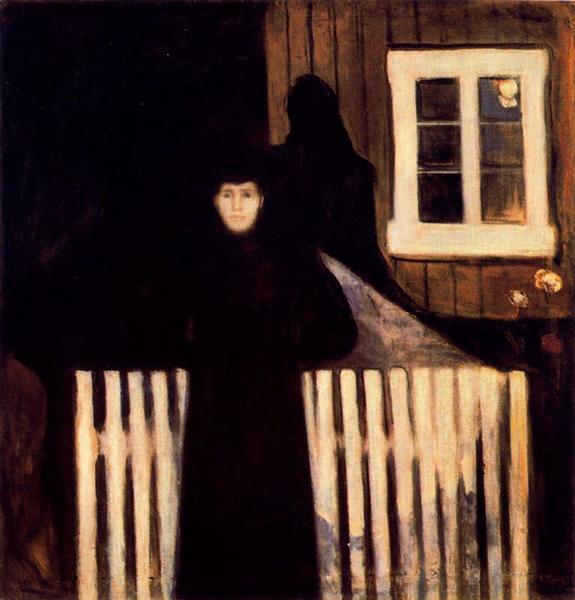
Porphyry’s writings and teachings show his engagement with and interpretation of the Chaldean Oracles. These were described as “divine revelations in hexameter verses” and “the last important sacred book of antiquity.” (12) Crucially, the Chaldean Oracles equated Hekate with the Platonic Cosmic Soul:
“Standing on the border between the intelligible and the sensible worlds, acting both as a barrier and as a link between them, we find an entity personified as Hecate … She … appears to be the channel through which influences from above are shed upon the physical world. In Fr. 30 [Fragment 30 of the Chaldean Oracles] she is described as ‘fount of founts, a womb containing all things.’” (13)
“She ensouled the cosmos and individuals, formed the connective boundary between the divine and human worlds, facilitated soul releasing communication between man and god.” (14)
According to the Oracles, the Soul becomes impregnated with the eternal divine ideas and projects them onto the material world. Hekate “conveyed Ideas and the animating liquid of the Soul across the cosmic boundary into the sensible world.” (15) The role of Hekate or the Soul is to disperse the divine messages across the visible world. The eternal Ideas are communicated via “symbola” and “sunthemata” which are imagined as divine emblems planted all across the visible universe. These emblems are living proof that there exists cosmic sympathy between the divine and human realms. Symbola could be all kinds of objects – rocks, plants and even sounds or words. In the hands of a theurgist, a spiritual and religious practitioner who aimed to establish a direct connection with the divine and achieve spiritual ascent, symbola served to invoke divine powers. All of this was achieved by Hekate’s grace.
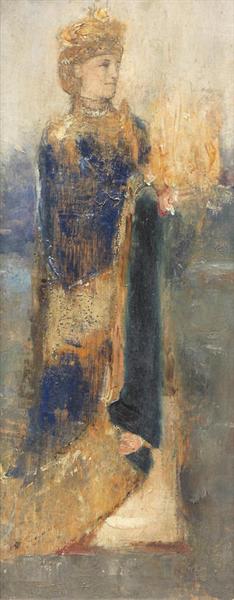
More specifically, a theurgist would spin a magic wheel called an iynx, which was “a golden ball, formed around a sapphire with character engraved on it.” (16) The whirring sound of these iynges was emblematic of the cosmic harmony or music of the spheres, which enveloped the Soul. The theurgist was thus hoping to form a connection between a god or a daimon, to invoke a god’s epiphany or to call a god into a statue or a medium. (17) At the Apollo’s temple in Delphi iynges were visualized as “tongues of the gods.”
The Chaldean Oracles saw Hekate as a truly supreme goddess. Two fragments especially attest to that:
“Fr. 189
And she is visible on all sides and has “faces on all sides” … receiving in her womb the processions from the intelligibles … and she sends forth the channels of corporeal life and contains within herself the center of the procession of all beings.
Fr. 51
Around the hollow of her right flank a great stream of the primordially-generated Soul gushes forth in abundance, totally ensouling light, fire, ether, worlds.” (18)
But the most beautiful summary of her triple supremacy over the divine sphere of eternal ideas, the silvery lunar realm and the earthly world (including the Underworld) was expressed by Porphyry in Philosophy from Oracles:
“I come, a virgin of varied forms, wandering through the heavens, bull-faced, three-headed, ruthless, with golden arrows; chaste Phoebe bringing light to mortals, Eileithyia [goddess of childbirth and labor pains]; bearing the three synthemata of a triple nature. In the aether I appear in fiery forms and in the air I sit in a silver chariot. Earth reins in my black brood of puppies.”
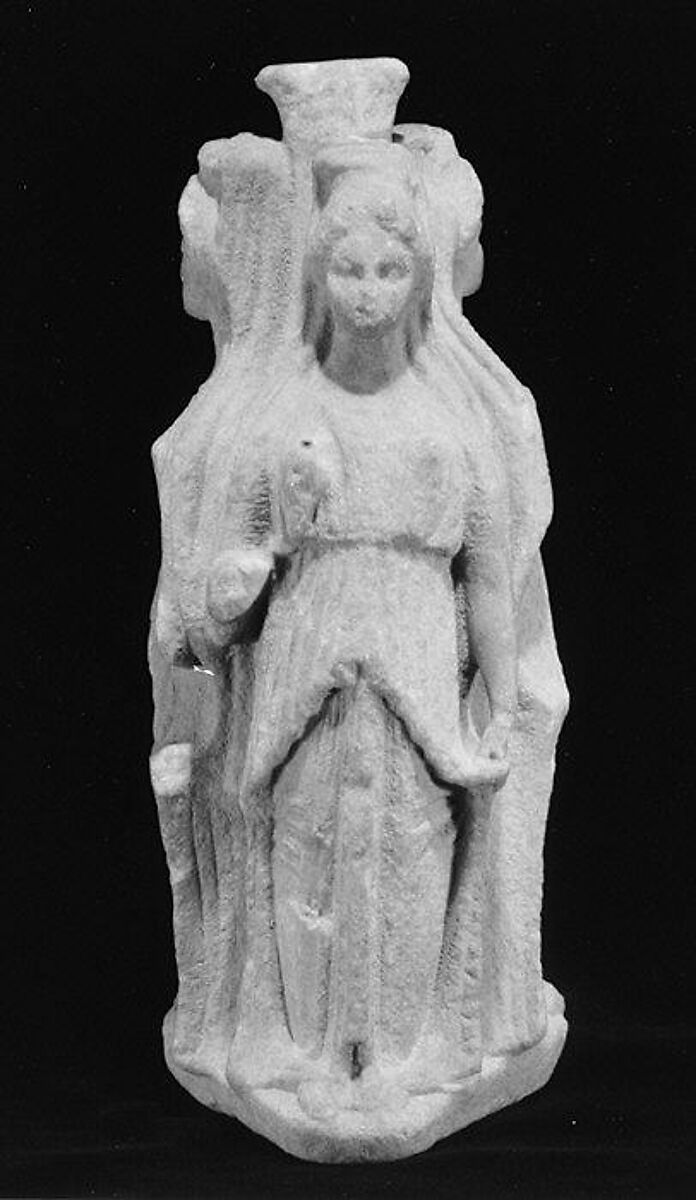
Adaptation of work attributed to Alkamenes, via https://www.metmuseum.org/art/collection/search/255108
Today being the seventh night of Navratri, an annual Hindu festival dedicated to honoring the goddess Durga, which I also humbly observe. I couldn’t help but notice a distinct quality of a goddess we revere on the fourth day. Her name is Ma Kushmanda and she is said to have created the universe with her smile. One of her attributes is a spinning chakra wheel, or the cosmic wheel of time, over which she has control, signifying her role as the creator and sustainer of the universe. I could not help seeing the connection between this attribute and Hekate’s spinning iynx. Like Shakti, also Hekate represents the dynamic, creative, and powerful aspect of the universe.

Notes:
(1) Athanassakis, A. N., & Wolkow, B. M. (2013). The Orphic Hymns. JHU Press.
(2) Larson, J. (2007). Ancient Greek Cults: A Guide. Routledge.
(3) Roberts, E. M. (2020). Underworld Gods in Ancient Greek Religion: Death and Reciprocity. Routledge.
(4) Ibid.
(5) Athanassakis, A. N., & Wolkow, B. M. (2013). The Orphic Hymns. JHU Press.
(6) Johnston, S. I. (1990). Hekate Soteira: A Study of Hekate’s Role in the Chaldean Oracles and Related Literature. Oxford University Press.
(7) Ibid.
(8) Larson, J. (2007). Ancient Greek Cults: A Guide. Routledge.
(9) Johnston, S. I. (1990). Hekate Soteira: A Study of Hekate’s Role in the Chaldean Oracles and Related Literature. Oxford University Press.
(10) Ibid.
(11) Ibid.
(12) Stoneman, R. (2011). The Ancient Oracles: Making the Gods Speak. Yale University Press.
(13) Dillon, J. M. (1996). The Middle Platonists: A Study of Platonism, 80 B.C. to A.D. 220. Duckworth.
(14) Johnston, S. I. (1990). Hekate Soteira: A Study of Hekate’s Role in the Chaldean Oracles and Related Literature. Oxford University Press.
(15) Ibid.
(16) Ibid.
(17) Ibid.
(18) Majercik, R. (1989). The Chaldean Oracles: Text, Translation, and Commentary. E.J. Brill.
Support my blog
If you enjoy my writing, please consider donating to support my work. Thank you very much in advance.
$1.00





 symbolreader
❤️🔥✨THANK 🌷🌻🌹✨🙏🏽💕
Sent from my iPad
<
div dir=”ltr”>
<
blockquote type=”cite”>
LikeLike
Loved it! Thank you! Jai jai Ma!
LikeLiked by 1 person
Thank you, Danah. Adi Shakti
LikeLike