
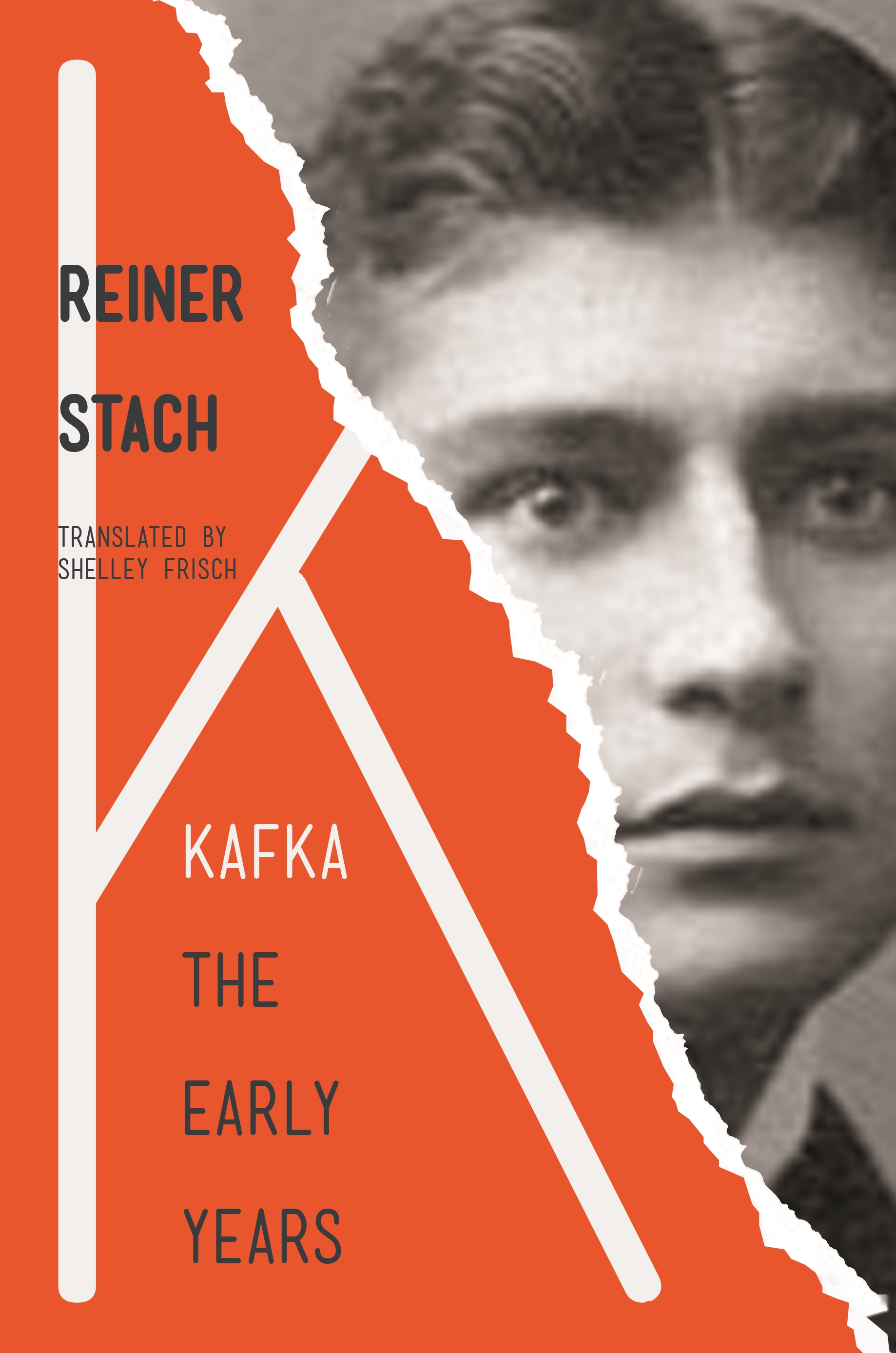
Each volume of Reiner Stach’s Kafka biography is a gem in its own right. The Early Years, which, due to legal issues, was published last in the trilogy, offers a treasure trove of insights into Kafka’s childhood and formative years. This past June, I had the privilege of hearing Stach speak briefly about Kafka at a concert held at the Tonhalle in Zurich. The event featured passages from Kafka’s America, set against a backdrop of Czech classical music, in honor of the 100th anniversary of Kafka’s death.
What left a lasting impression on me during Stach’s speech was his infectious energy, a kind of jovial exuberance that seemed to radiate from him. It was the kind of joy that comes from walking one’s true path in life, from having found a personal guru or guiding spirit. Stach’s enthusiasm for Kafka and his work was palpable and infectious.
One sentence from the first volume of the biography struck me as utterly true and perfectly encapsulating the essence of Kafka’s genius:
“His writing was magical in a sense that was utterly unlike the alleged magic of Prague, because every one of his lines passed through the filter of a daunting, often ice-cold intellectual alertness and an unyielding reflexivity saturated with imagery.”
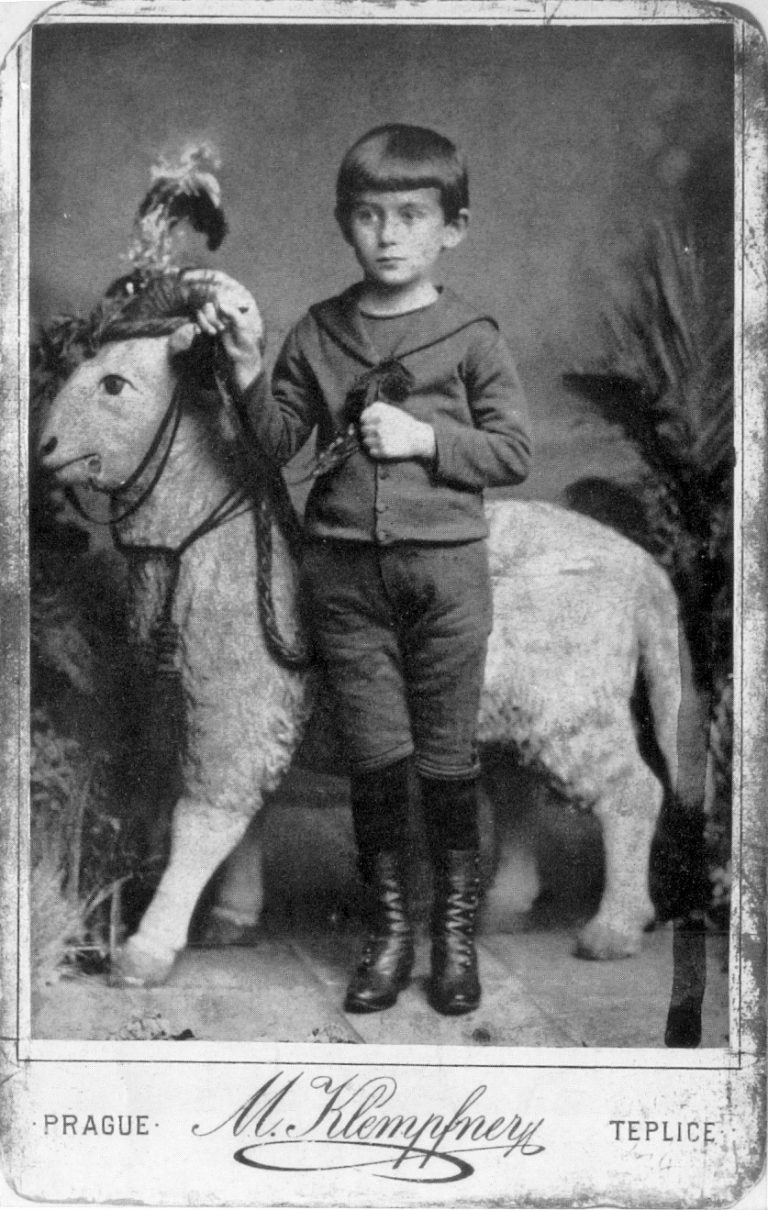
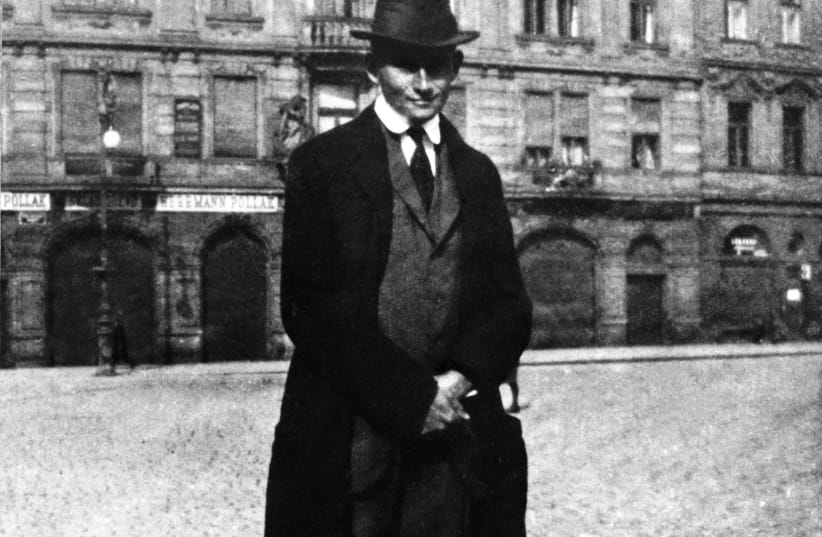
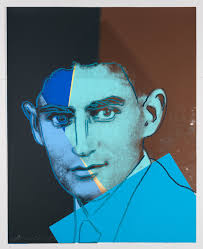
This first post is a brief journey through Kafka’s imaginarium, focusing on his early years and drawing from Stach’s biography. Images, I believe, are central to understanding Kafka’s writing, and his own face has become an iconic image in itself. There’s a hypnotic quality to it – a cross between the human and the non-human, familiar yet strangely alien, much like his work.
I. JACKDAW
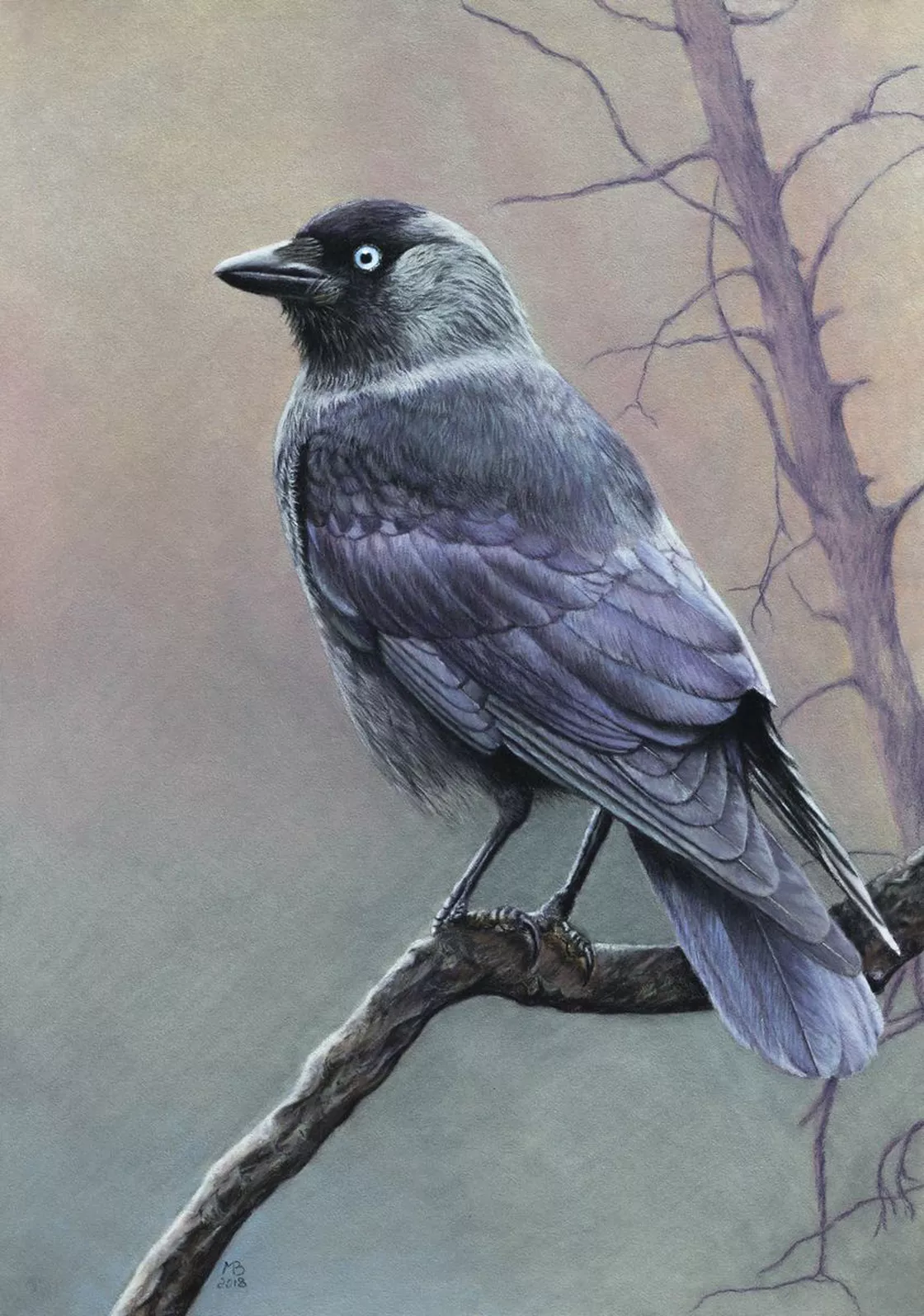
The family name Kafka (kavka) means “a jackdaw” in Czech. Jackdaws are small birds related to crows. They are known to be intelligent, elusive, and somewhat mysterious birds. Similarly, Kafka’s life was marked by a sense of alienation and an inward retreat. Much of his existence was spent in quiet observation, working as a clerk by day, writing in solitude by night. Like a jackdaw, he seemed to hover on the edges of society, never fully integrating, yet watching everything keenly. As Stach puts it:
“The feeling that he was standing outside of life and had to find his way in was one of the fundamental, formative experiences that shaped his identity, a focal point of his self-image.”
II. PRAGUE
When Kafka was nineteen, he conceded in a letter to a friend that “Prague does not let go. … This little mother has claws.” The whole of Kafka’s writing is saturated with the spirit of Prague. Though he rarely named the city directly, the essence of Prague – its labyrinthine streets, Gothic architecture, and its historical tensions – permeates his work. In Kafka’s stories, there is often a fluid, dreamlike quality to space and time, where places shift, change, and become unfamiliar, bringing to mind the experience of navigating the winding, ancient streets of Prague. In essence, Kafka’s writing captures the unique, surreal, and oppressive energy of Prague with its sense of alienation and belonging, Kafka knew so well as a German speaking Jew living in a Czech city.
Throughout his life, Kafka longed for foreign travel, dreaming of distant lands and exotic cultures. Yet, each trip had to be carefully planned and kept brief, always cut short by the obligation to return to his office duties.
III. WRITING
A passage from Kafka’s letter to Oskar Pollak has long been my favourite:
“If the book we’re reading doesn’t wake us up with a blow on the head, why are we reading it? So it makes us happy, as you write? My God, we would also be happy if we had no books, and the kind of books that make us happy are the kind we could write ourselves if need be. What we do need are the books that affect us like a calamity that causes us great pain, like the death of someone we loved more than ourselves, like being banished into forests far from everyone, like a suicide, a book must be the axe for the frozen sea within us.”
These are the reflections of young Kafka: not yet a writer, but already an avid reader. He has not yet accessed his “dark depths grabbing hold of the treasures, and bringing them up to the light while keeping them intact”, says Stach. But these very words spelled his writer’s credo.
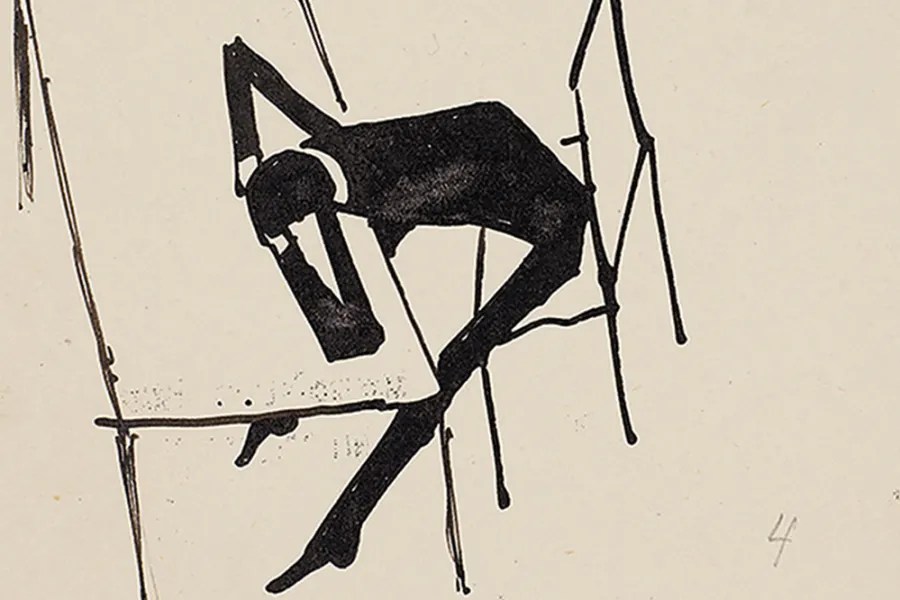
Limited by his family and professional obligations, Kafka struggled to pursue his writing as freely as he desired. He voiced his doubts during a meeting with Rudolf Steiner, from whom he sought advice:
“Apart from my family situation, I could not live by literature, if only, to begin with, because of the slow maturing of my work and its special character; moreover, I am prevented also by my health and my character from devoting myself to what is, in the most favorable case, an uncertain life. This is why I became an official in a social insurance institute. Now these two professions can never get along and allow a common fortune. The smallest good fortune in one becomes a great misfortune in the other. If I’ve written something good one evening, I’m afire the next day in the office and can’t finish anything. This back and forth is getting worse and worse. In the office, I fulfill my duties satisfactorily, at least outwardly, but not my inner duties, and every unfulfilled inner duty becomes a misfortune that never budges.”
Kafka’s dilemma, ultimately, remained unresolved, and his disappointment with Steiner was evident. He never attended another theosophy lecture. His longing for inner depths and its irreconcilability with the external demands of social obligations is something his readers frequently identified with. C. G. Jung’s distinction into the spirit of our time and the spirit of the depths springs to mind.
IV. SUN AND WATER
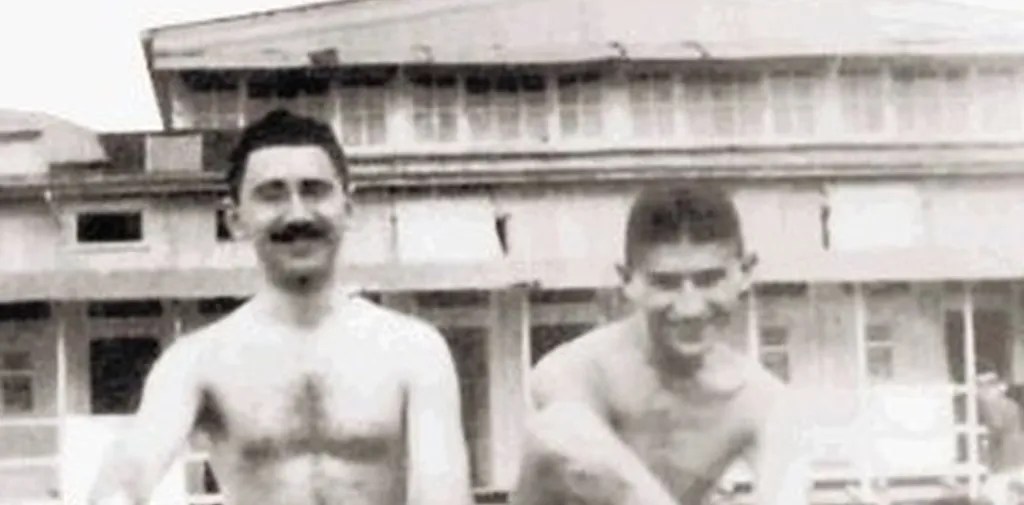
Although on land Kafka was full of fear and “social prickliness,” water was a natural element for him. He spent hours swimming and sunbathing; hence his permanently tanned striking face. Shortly before his death he remembered fondly the Lugano sun and wished he could feel it on his face again. It was a memory of a trip to Switzerland he had taken with his friend, Max Brod.
Just as he moved through water with fluid ease, his imagination flowed freely in his stories, drawing from the vast, mysterious depths of his inner world.
He looks frail in photos, yet he loved the physical activity and the outdoors. He could hike for hours, played tennis, rode a bike and even took horseback lessons.
The longing for freedom without external limitations sees to have haunted him all his life. Here’s a memorable passage from his short story “The Wish to be a Red Indian”:
“If only one were an Indian, ready at once and on the running horse, askew in the air, quivering briefly again and again over the quaking ground, until one let go of the spurs, for there were no spurs, until one threw away the reins, for there were no reins, barely aware of the land ahead as a smoothly mowed turf, the horse’s neck and the horse’s head already gone.”
What is crucial to understand about Kafka is that, while he has often been embraced as a figurehead by frail intellectuals, he was far from a desiccated scholar lost in abstract thought. Kafka had a deep and genuine love for popular culture, engaging with it in ways that showed his vibrant curiosity about life. He may have been selective, even snobbish, when it came to literature, but beyond that, his interests were broad and unpretentious.
There was a childlike quality to Kafka—a purity and openness to experience that was most apparent in moments like when he watched the simple, unpolished performances of Yitzhak Löwy’s Jewish theatre. It was this blend of intellectual depth and an almost innocent fascination with the world around him that made Kafka a figure of complex humanity.
Support my blog
If you enjoy my writing, please consider donating to support my work. Thank you very much in advance.
$1.00






 symbolreader
This is a worthy review of an extraordinary man. His genius mind astonished and captivated everyone around him, including Max Brod, Rudolf Steiner, Reiner Stach, etc. (apart from the women!). Thank you, dear Monika, for this precious post.👍💖
Of course, I don’t want to take up too much of your time; I just wanted to share one of my recent posts about him. During my summer holiday, I had a book with me about his days and night dreams, and I wrote a short article about one of his dreams.😁😅
https://lampmagician.com/2024/08/10/back-again-from-extraneous-with-kafka-and-a-daydream/
LikeLiked by 2 people
Thank you for sharing, Aladin. If I were to interpret that dream, I would say that it beautifully encapsulates his inner tension; his complexes (the Writer and the inner feminine) are not happy with him in the dream. But at the same time, the dream is so beautifully described: it is masterful prose, like almost everything he wrote.
LikeLiked by 1 person
Monika, I think you are interpreting from, as Jung is quoted in the article, from a “’guideline for the direction of therapy’ and ‘a prediction of the outcome’.” On the other hand, perhaps from a “a prospective dimension,” perhaps Kafka is trying to see through the cracks in Resa’s mask (powdered makeup) to see her real unhidden face. Just dream analysis hack thought.
LikeLiked by 2 people
Right! He was able to see through all the masks, definitely.
LikeLiked by 2 people
It’s an excellent interpretation, dear Monika. I also love what he wrote. Thank you. 🙏💖🌹
LikeLiked by 1 person