
SATURN’S SHADOW
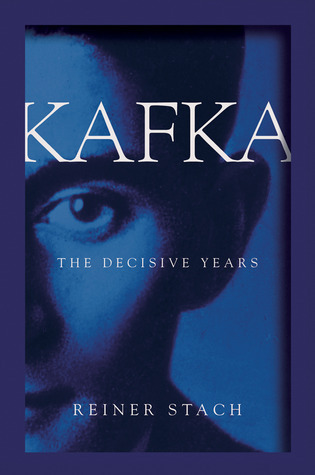
Reiner Stach published the second volume of Kafka’s biography in 2013 under the title Kafka: The Decisive Years. The volume covers the years 1910 (Kafka’s 27th birthday) till 1915. This period, spanning Kafka’s late twenties to early thirties, aligns with what astrologers call the Saturn Return, a time when life’s deeper questions seem to demand answers, often through upheaval and self-reckoning. For Kafka, these were years of intense inner conflict and creative fervour – navigating the suffocating expectations of his family, the severe restrictions of his job at the Workers Accident Insurance Institute, and his own relentless self-doubt. This was also the time when his most iconic works were written – The Judgement, The Trial, The Metamorphosis, and last but not least, the Letter to His Father.
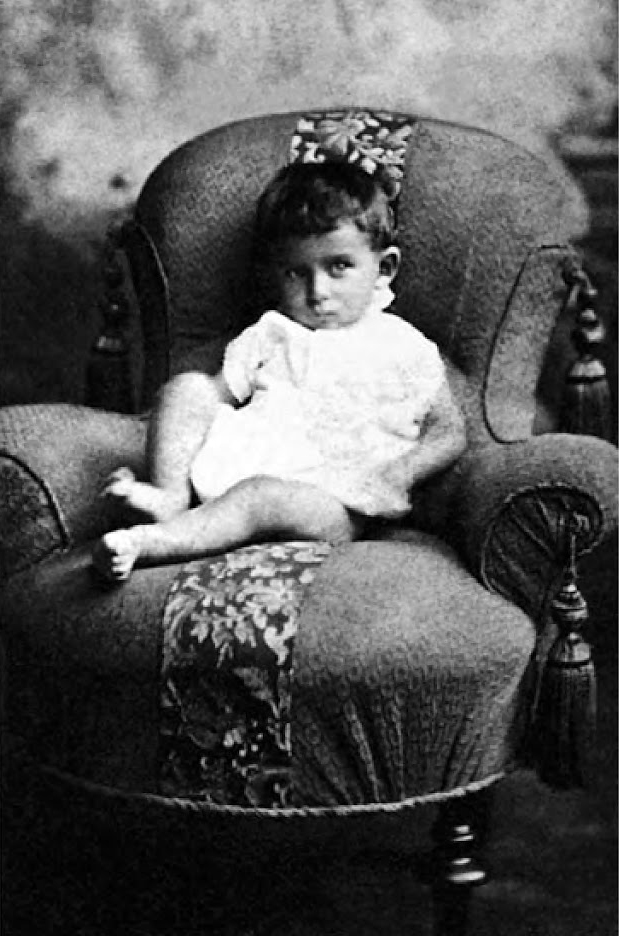
I have recently read a wonderful essay on Kafka by Deborah Eisenberg. (1) She describes the experience of looking at Kafka’s photos as akin to seeing “images of a lone witness about to be engulfed in darkness.” This observation made me reflect on how even baby photos can carry a certain shadow, as though Saturn lays its claim far earlier than the fateful age of thirty. Eisenberg also references Philip Roth’s striking description of Kafka’s face: the “intense, creaturely gaze of startled composure—enormous fears, enormous control.” Without overanalyzing, the gaze of baby Kafka feels haunting, almost like peering into the abyss.
Saturnian themes permeate Kafka’s work, shaping its tone and weight. Notably, Kafka reserved the word “work” exclusively for his writing, relegating his office job to a mere functional label: “the office.” Reiner Stach attempts to pinpoint the essence of the “Kafkaesque” by identifying several key elements: “the father figure who is both overpowering and dirty, the hollow rationality of the narrator, the juridical structures imposed on life, the dream logic of the plot, and last but not least, the flow of the story perpetually at odds with the hopes and expectations of the hero.” These qualities evoke a world where every attempt at meaning or progress is met with insurmountable resistance.
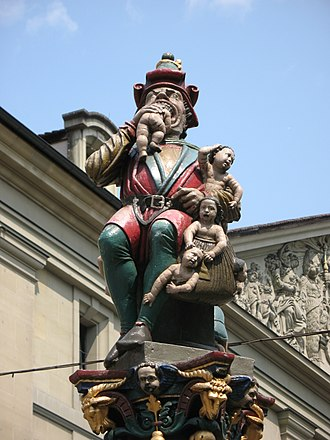
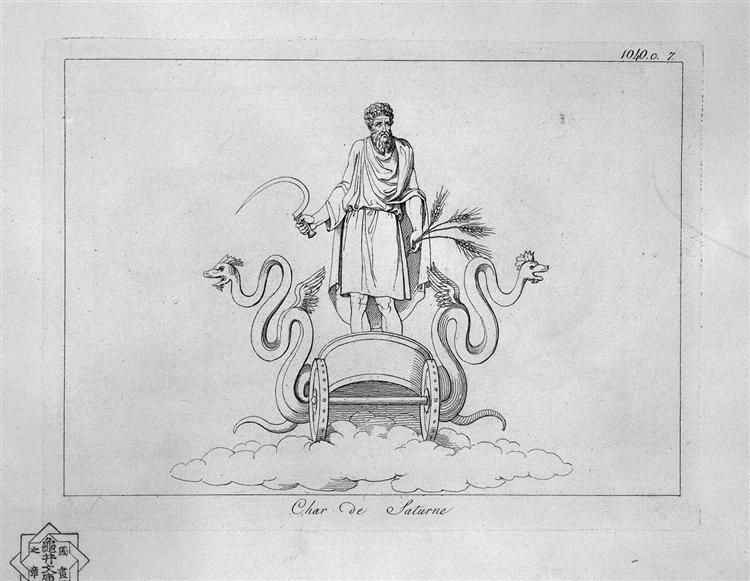
In the Letter to His Father, Kafka wrote, “My writing was all about you; all I did there, after all, was to bemoan what I could not bemoan upon your breast.” This moment of self-reflection reveals how the oppressive presence of his father – whom Kafka continued to live with into his thirties – deeply shaped his life and art. In his webinar Saturn in Myth and Psyche, astrologer Jason Holley discussed Saturnian themes of suppression, comparing the devouring Father/Cronos figure to a force that diminishes or stifles children, viewing them as “less than ideal.”
Although he was well accomplished and respected in his profession, Kafka experienced similar forms of oppression in his work life, feeling trapped by the demands of his office job. Yet, paradoxically, emphasizes Stach, it was this very job that fueled his creativity as a writer. Holley suggests that Saturn’s ultimate gift is the solitude that comes with deep reflection and constant striving – an experience Kafka found both burdensome and creatively essential.
THE COMPLETE OPENING
The suppression of Saturn did not cease for Kafka on the significant night of September 22 to 23, 1912, but it was undeniably a defining moment when his genius briefly soared to the stars, and the darkness receded, if only for a fleeting, radiant moment. This is how he described the night he wrote The Judgment:
“This story, ‘The Judgment,’ I wrote during the night of the 22nd, from 10 P.M. to 6 A.M., in one sitting.
I could hardly pull my legs out from under the desk; they had become stiff from sitting. The frightful exertion and pleasure of experiencing how the story developed right in front of me, as though I were moving forward through a stretch of water. Several times during this night I lugged my own weight on my back. How everything can be hazarded, how for everything, even for the strangest idea, a great fire is ready in which it expires and rises up again. How it turned blue outside the window. A car drove by. Two men walked across the bridge. At 2 A.M. I looked at the clock for the last time. As the maid came through the front room in the morning, I was writing the last sentence. Turning off the lamp, the light of day. The slight pains in my chest. The exhaustion that faded away in the middle of the night. The tremulous entry into my sisters’ room. Reading aloud. Before that, stretching in front of the maid and saying, ‘I have been writing all night.’ The appearance of the undisturbed bed, as though it had just been carried in. My belief confirmed that with my novel I am in the disgraceful lowlands of writing. Only in this way can writing be done, only in a context like this, with a complete opening of body and soul.”
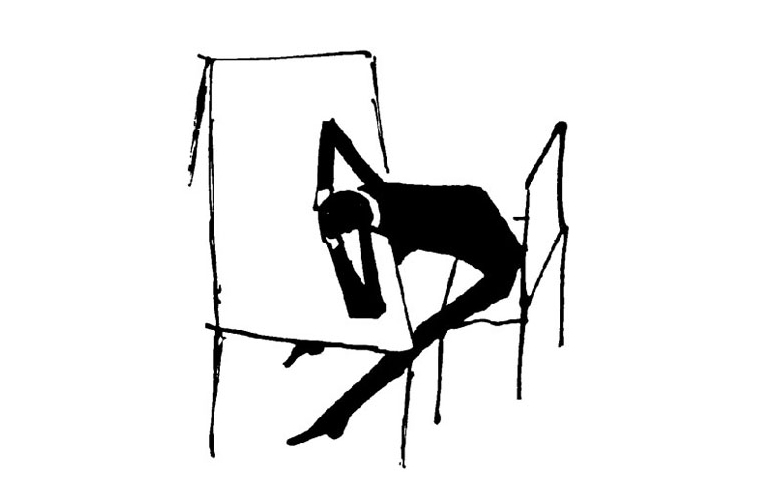
There is not a single, unnecessary sentence in that short story. The language of Kafka may be sparse and controlled but, as Stach beautifully puts it, it is “like a glowing scalpel that cuts through stone.” In symbolism, stone and Saturn share an affinity around the themes of endurance, permanence and unyielding force.
THE ABYSS OF NIGHT AND DREAMING
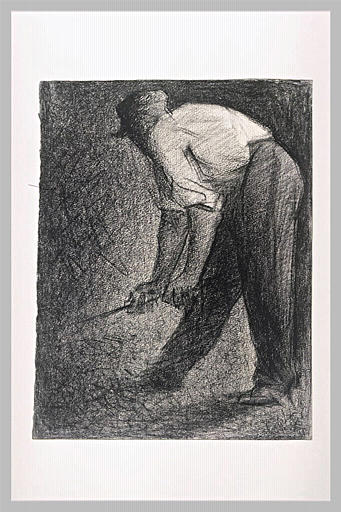
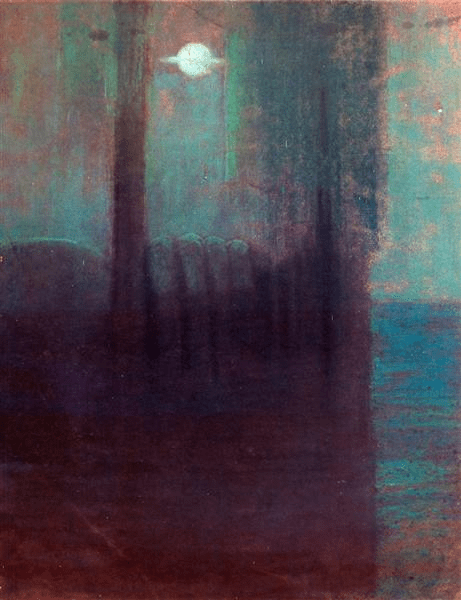
Because of the demands of his daytime job, Kafka was forced to work on his writing during the nights. He also developed a habit of strolling through very dark and empty streets of Prague at night. He was acutely aware of the duality of his existence spanned between the office, which he described as being “on the surface of life,” and his nighttime writing which had “its centre of gravity in depth.”
The night and his “dreamlike inner life” exerted an irresistible pull on Kafka, to the point where his waking life began to “atrophy,” as he himself put it. The monstrous vermin he created in Metamorphosis held a more dreadful reality for him than the figures he encountered in his waking life. From a Jungian perspective, this reflects a transformation of libido – life energy that withdraws from conscious life and is redirected toward the unconscious. Yet, as Jung writes, “flight from life does not exempt us from the law of age and death.” (3) This law, governed by the inexorable force of Saturn, reminds us of life’s inevitable constraints.
Support my blog
If you enjoy my writing, please consider donating to support my work. Thank you very much in advance.
$1.00
Notes:
(1) Eisenberg, Deborah. “Urgent Messages from Eternity: Franz Kafka.” The New York Review of Books, February 13, 2025. Accessed January 25, 2025. (paywall) https://www.nybooks.com/articles/2025/02/13/urgent-messages-from-eternity-franz-kafka/.
(2) https://www.astrologyuniversity.com/shop/search-by-astrologer/jason-holley/saturn-myth-psyche/
(3) Jung, C. G. (1967). Symbols of transformation: An analysis of the prelude to a case of schizophrenia (R. F. C. Hull, Trans., 2nd ed.). Princeton University Press, par. 617





 symbolreader
Every now and then, one of the thoughtful newsletters I subscribe to and regularly read magically reflects and expands upon something I’ve been thinking about. Yours today was one of those.
I’ve been grappling with words-vs-images, and neither is coming clear enough yet to express just what the value of your post today has given me, so please accept my thanks and some money from me via Paypal.
Best regards, Anne Hawley (I think my Paypal shows up under this same email address but who knows)
LikeLiked by 1 person
Thank you very much for such kind words and your generosity.
LikeLike
“From a Jungian perspective, this reflects a transformation of libido – life energy that withdraws from conscious life and is redirected toward the unconscious.”
I always thought creativity and creative inspiration was related to sexual energy. When we become creatively stunted, we become stunted in other ways as well.
This is a fascinating post. Thanks for sharing.
LikeLiked by 1 person
I agree. I think, though, that Jung did not see libido as only sexual, unlike Freud. Thank you for your thoughts.
LikeLike