
Whitefriar Street Church in Dublin does not look grand from the outside. It is easy to walk past without noticing it. Inside, however, it houses a real treasure: a life-size oak figure of the Black Madonna, Our Lady of Dublin. By chance, I entered the church through the back door. It turned out to be lucky, as I would otherwise have missed a quiet little garden with a fountain that leads the visitor inside.
Before the Reformation, the statue belonged to a Cistercian monastery located on the northern bank of the river Liffey. Its fate during the iconoclastic fervour of that period was dramatic. As the Carmelite church’s website recounts, because the statue was hollow at the back, it was used as “a shallow trough for pigs” in a churchyard. (1) The Madonna lay face down in the dirt.
Sometime after the turmoil of the Reformation had passed, the Black Madonna was painted white. Later still, she ended up in a second-hand shop, where she was bought by a Carmelite priest, John Spratt, who was known for his charitable work with the poor.(2) Supposedly, a silver crown she was wearing was lost.
Around 1915, the whitewash was removed, and the figure was given her own shrine within the church.

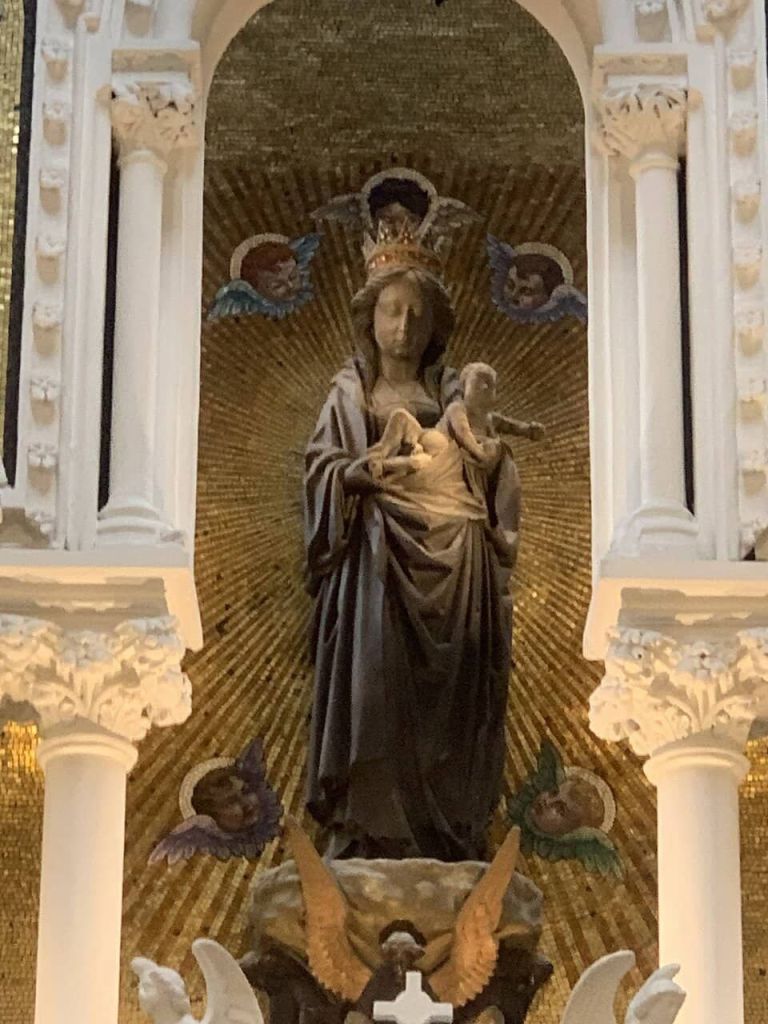
I love this parable of humility – “humus” being the Latin word for earth or ground. I found it especially moving that when I visited the church during Mass, the priest was reading from the Sermon on the Mount (Matthew 5:5):
“Blessed are the poor in spirit, for theirs is the kingdom of heaven.
Blessed are those who mourn, for they shall be comforted.
Blessed are the meek, for they shall inherit the earth.”
In his Book of Hours (Book 1, Poem 4 known as God’s True Cloak) R. M. Rilke wrote:
“We must not portray you in king’s robes,
you drifting mist that brought forth the morning.
Once again from the old paintboxes
we take the same gold for scepter and crown
that has disguised you through the ages.
Piously we produce our images of you
till they stand around you like a thousand walls.
And when our hearts would simply open,
our fervent hands hide you.”
The image of a humble, hidden, dark, and earthy deity, a deity who has lost the crown, is central to the symbolism of the Black Madonna, not only the one in Dublin.
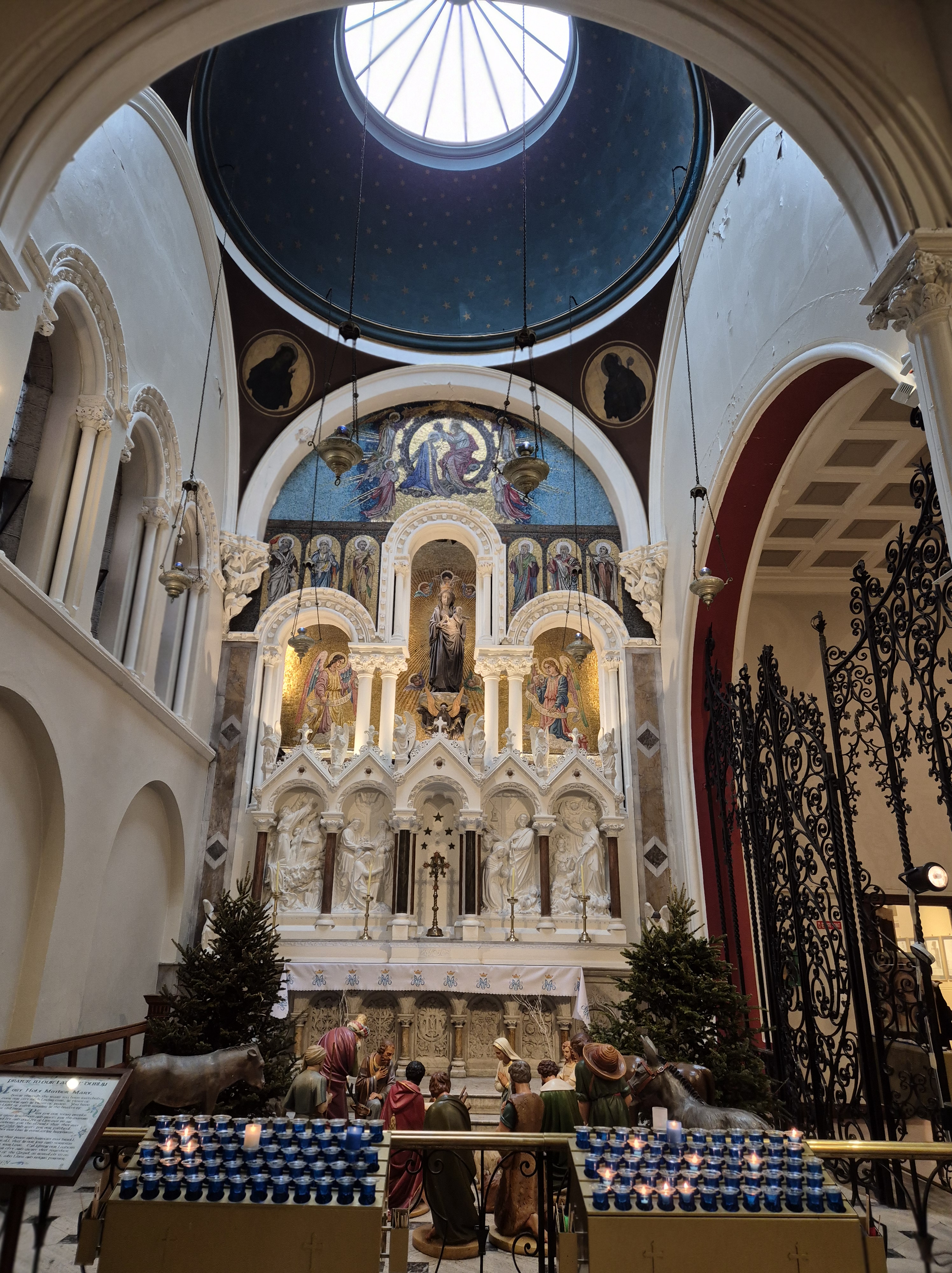
It is significant that further to the north, St Mary’s Pro-Cathedral stands on exactly the same site as the medieval Cistercian cathedral from which the Black Madonna I described here once came. The bronze Celtic Cross of Matt Talbot, donated in 2006 by the Canadian sculptor Timothy Schmalz on the 150th anniversary of Talbot’s birth and baptism, depicts the Black Madonna protecting an alcoholic.
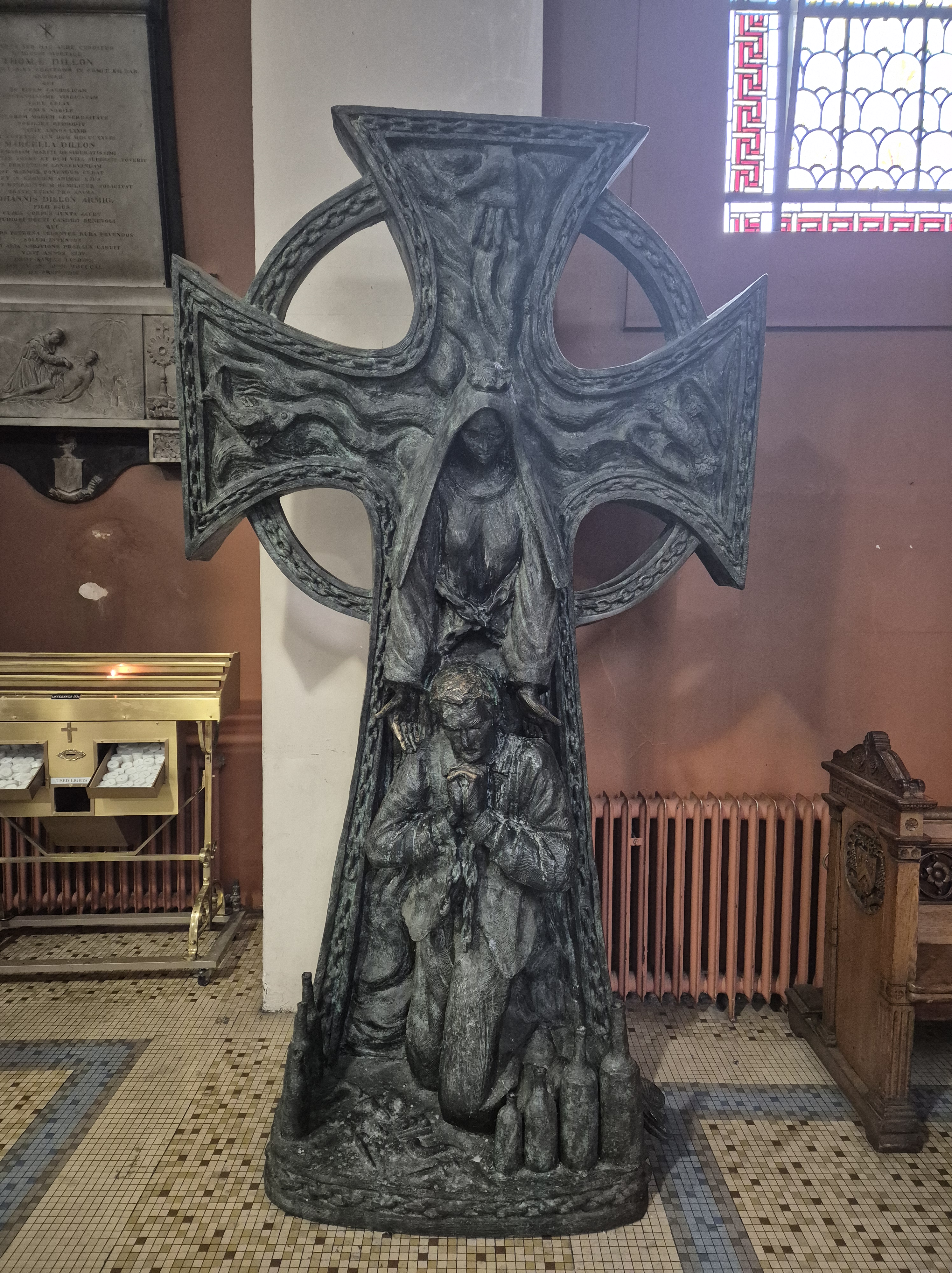
Talbot, born in 1856 in the Five Lamps area of Dublin, struggled with severe alcoholism for sixteen years before undergoing a profound inner change. Through prayer and disciplined spiritual practice, he remained sober for the remaining forty-one years of his life. He became a figure of hope for ordinary people, especially those suffering from addiction. That this image now stands on the very ground of the old cathedral creates a clear continuity: the Black Madonna remains a presence of compassion here, across centuries, for those in need of her love and protection.
Notes:
(1) https://whitefriarstreetchurch.com/our-lady-of-dublin/
(2) Interestingly, Father Spratt was also responsible for bringing the relics of St Valentine to the Whitefriar Church. On 14 February each year, the church is visited by those looking for love.
If you want to support my blog via PayPal, you can do so by scrolling to the bottom of this page and clicking on the PayPal button. You can also find a link here https://symbolreader.net/about/ Thank you very much in advance.





 symbolreader