
The Symbolic Power of Mushrooms
In the collective consciousness since the recent pandemic, two symbols of self-destruction have emerged, both connected to mushrooms. In the HBO series “The Last of Us,” mind-manipulating mushrooms known as ophiocordyceps possess the minds of their human hosts. In the biopic “Oppenheimer,” a mushroom cloud ominously represents humanity’s capacity for self-destruction. These archetypes emerging at this moment in history are not accidental, as C.G. Jung extensively wrote about the parallels between the human psyche and its manifestations in the world.
Jung compared psychology to modern physics by stating that “they both approach the hitherto ‘transcendental’ region of the Invisible and Intangible.” (1) Both encounter the ultimate energies of creation and its shadow – destruction. As he wrote,
“From this it is clear that the psyche not only disturbs the natural order but, if it loses its balance, actually destroys its own creation. Therefore the careful consideration of psychic factors is of importance in restoring not merely the individual’s balance, but society’s as well, otherwise the destructive tendencies easily gain the upper hand. In the same way that the atom-bomb is an unparalleled means of physical mass destruction, so the misguided development of the soul must lead to psychic mass destruction.” (2)
Jung warned against the “godlike” power falling into the human hands. In another letter he wrote,
“Man confuses himself with God, is identical with the demiurge and begins to usurp cosmic powers of destruction, i.e., to arrange a second Deluge.” (3)
The kernel of the Jungian wisdom is that we all partake in the collective psyche’s destructive and creative aspects. “None of us stands outside humanity’s black collective shadow,” said Jung (4) But the human tendency is to drive evil far away from us – like in the Old Testament, in which the scapegoat was carried into the wilderness. Similarly, in “Oppenheimer”, Los Alamos serves as the wilderness, where the “evil” atomic bomb is developed. And like the proverbial scapegoat, Robert Oppenheimer is the one who is made to carry the shadow of the collective psyche.
Jung often referenced a line from the Romantic poet Hölderlin, “Wherein lies the danger, grows also the saving power.” This idea is reflected in the constellating nature of all archetypes, encompassing both light and shadow aspects. Much like mushrooms, archetypes emerge into consciousness unexpectedly, but they are, in reality, manifestations of what already thrives in invisible dimensions(5) This raises the question: how can we interpret the messages conveyed by mushrooms in popular culture?
Like the unconscious psyche, mushrooms are the most mysterious of all species. Merlin Sheldrake has written a fascinating book about them, in which he reveal that these organisms, forming a separate kingdom, stand apart from both animals and plants Over ninety per cent of all fungi remains undocumented. Mushrooms form our “biological dark matter” or “dark life.”(6) Despite their enigmatic nature, mushrooms hold valuable insights into understanding ourselves and our planet. Much like the archetypes of the collective unconscious, mushrooms possess a dual nature, being both nourishing and deadly.
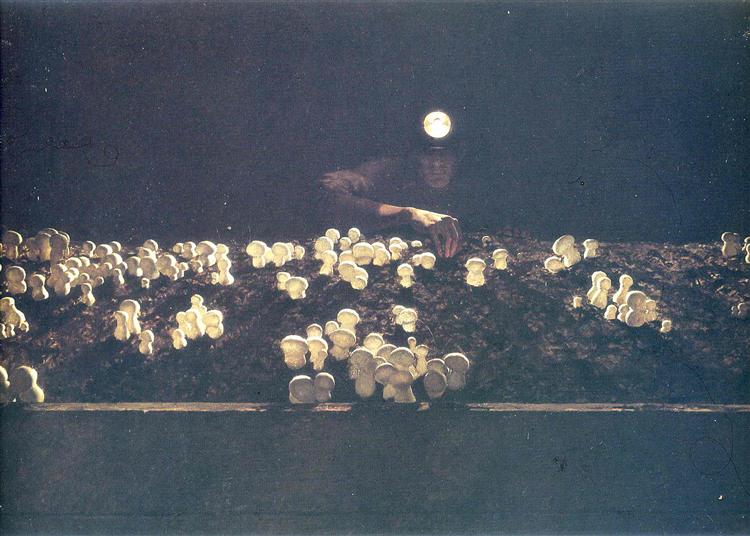
Sheldrake emphasizes that there would be no plant life without fungi. This is because the roots of more than ninety percent of plants are linked with a species of mycorrhizal (mykes – fungus, rhiza – root) fungi. The same fungi ensure communication between plants, the process which has been dubbed the wood wide web. As Sheldrake puts it, “Mycelium is ecological connective tissue, the living seam by which much of the world is stitched into relation.” All that at the invisible, root level. Sadly, modern farming ignores all that swarming, entangled life and chooses to view plants as autonomous individuals. This leads to the destruction of the fungal mycelium in the soil. As Sheldrake puts it, “In viewing soils as more or less lifeless places, agricultural practices have ravaged the underground communities that sustain the life we eat.”
Mushrooms are perfect examples of collective intelligence. One famous example of slime mold intelligence is the “Tokyo railway experiment.” In 2010, scientists at the Future University Hakodate in Japan recreated the map of the Tokyo metropolitan area using oat flakes to represent cities. The slime mold Physarum polycephalum managed to recreate a replica of the Tokyo railway system within a few hours, indicating its capacity for solving complex spatial problems.
From the fungal perspective, “life is an entangled whole.” There is no centre of control; rather the whole control is dispersed and can emerge momentarily and organically, only to dissolve later and appear somewhere else, as needed.
According to Sheldrake, the lesson learned from the entanglement of plants and mushrooms is that “plants that share a network with others grow more quickly and have better survival rates compared to neighboring plants excluded from the common network.” However, that does not exclude competition for resources and destructive tendencies. It is not an Utopian vision of sharing and caring, either. The entanglement involves both light and dark aspects. It is not an accident, says Sheldrake, that biologists started to ponder the phenomenon of symbiosis and coexistence precisely when the world was torn by the Cold War. The issue of co-existence remains unresolved to this day.
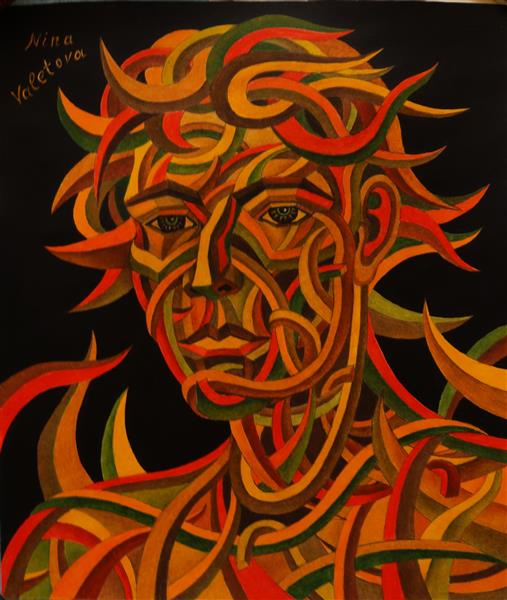
Another important lesson is about us humans. “We” are also ecosystems, who “emerge from a complex tangle of relationships only now becoming known.” Going beyond the ego can be a healing process, which has been reported in a growing number of studies related to the use of psilocybin mushrooms and LSD, also derived from a fungus. The psychedelic healing effect comes from the mushroom’s ability to induce “feelings of merging with something greater, and a reimagined sense of one’s relationship to the world.”
Ancient cultures of Mesoamerica were aware of the power of psychedelic mushrooms. The Aztecs referred to them as “teonanácatl,” which translates to “flesh of the gods.” They believed that by consuming them they communicated with the divine by entering an altered state of consciousness. Also in Ancient Egypt mushrooms were treated as food of immortality gifted by the god Osiris.
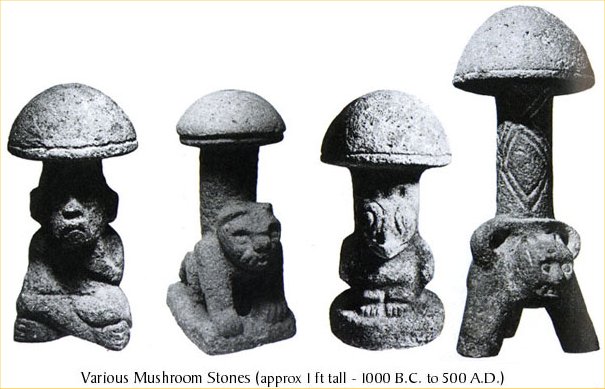
I see mushrooms as symbolic expressions of the workings of the unconscious psyche. Jung extensively wrote about the divinity of the psyche, emphasizing its light and shadow aspects. While watching the movie “Oppenheimer,” a small historical fact caught my attention. During the scientists’ work on a weapon of mass destruction, an unusually high number of children were born in that isolated facility. The quote “I am become Death, the destroyer of worlds” originated from Oppenheimer’s recollection of the first successful test of the atomic bomb at the Trinity site. This quote from the Bhagavad Gita, uttered by Krishna, reveals the god in his terrifying and destructive aspect.
However, the most horrible destruction is usually followed by a period of regeneration , rebirth and renewed activity. Thus, the benevolent face of god may emerge, offering hope and the potential for transformation amidst the destructive forces in the world and its breeding ground – the psyche.

Notes:
(1) Letters of C.G. Jung, Volume II: 1951-1961. Letter to Benjamin Nelson, 17 June 1956. Published by Routledge.
(2) Jung, C.G. The Collected Works of C.G. Jung, Volume 8: The Structure and Dynamics of the Psyche. Bollingen Series XX. Princeton University Press, 1960. par. 428
3) Letters of C.G. Jung, Volume II: 1951-1961. Letter to Jakob Amtstutz, 28 March 1953. Published by Routledge.
(4) Jung, C.G. The Undiscovered Self: With Symbols and the Interpretation of Dreams (Jung Extracts Book 31). Princeton University Press; Revised edition (January 12, 2012). p. 53
(5) The Book of Symbols: Reflections on Archetypal Images, edited by Ami Ronnberg. ARAS (Archive for Research in Archetypal Symbolism), New York, 2010.
(6) Sheldrake, Merlin. Entangled Life: How Fungi Make Our Worlds, Change Our Minds & Shape Our Futures. Random House, 2020. All subsequent facts and quotes about mushrooms come from this book.

Support my blog
If you enjoy my writing, please consider donating to support my work. Thank you very much in advance.
$1.00





 symbolreader
Mushrooms as the shadow of the animal kingdom…..wonderful piece
LikeLiked by 1 person
Thank you!
LikeLiked by 1 person
A very interesting exploration on the scientific and mystical nature of fungi.
LikeLiked by 1 person
Thank you very much, Alethea.
LikeLike
In my brief training in shamanism, I communicated with a mushroom but I could not integrate the message that I heard since I was not spiritually ready to hear the message. This has enlightened me to the message I needed to hear. Thank you for the message. 🙏
LikeLiked by 1 person
This is wonderful to hear. Thank you so much for sharing.
LikeLike