
Rose,
the unfading rose beyond my verse—
rose that’s full and fragrant,
rose of the black garden in the deep of night,
rose of any garden and any night,
rose that’s born again by the art of alchemy
out of tenuous ash,
rose of the Persians and Ariosto,
rose that’s always by itself,
rose that’s always the rose of roses,
the young Platonic flower,
the blind and burning rose beyond my verse,
unattainable rose.“Rose” by J. L. Borges, transl. by Norman Thomas di Giovanni
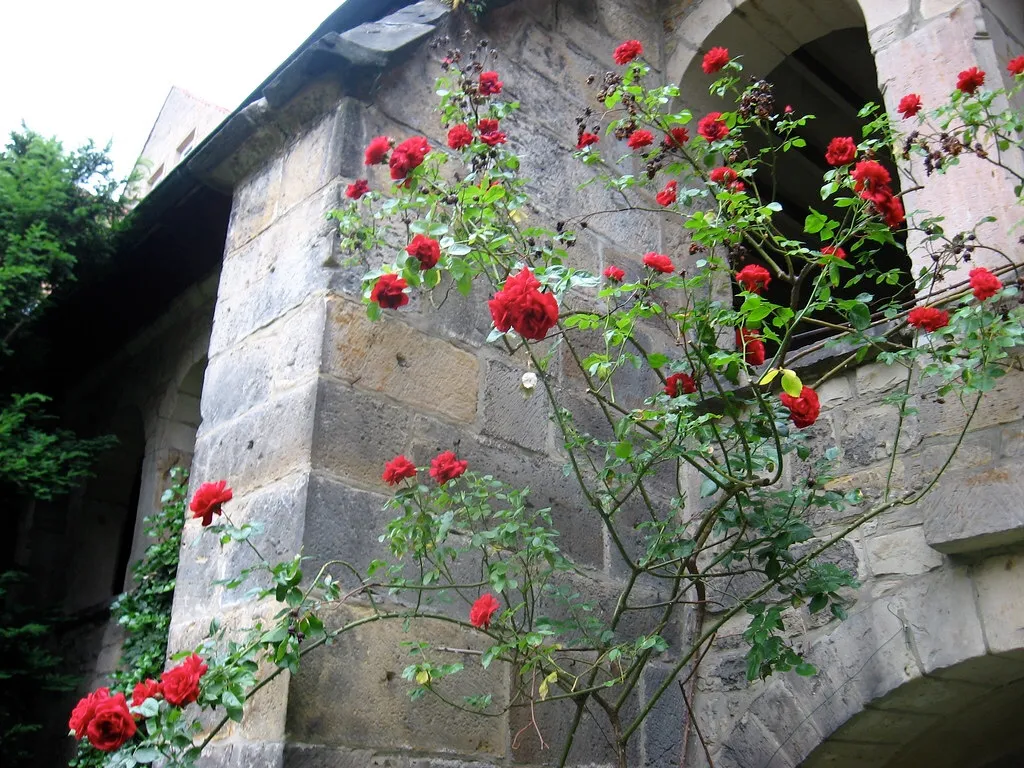
Symbols convey both the language of the divine and the language of nature, bridging the realms of body and spirit. A rose, when observed, is simultaneously sensual and transcendent, both tangible and elusive. For Rilke, the rose embodied “a pure contradiction” – the exact phrase he chose for his epitaph.
The key that most often unlocks the door of symbolism for me is tracing of words back to their earliest meanings:
“The Greek word rhódon is connected phonetically with rheein, meaning ‘to flow’, linking the rose’s life cycle and scent to endless effluvious life, and thereby making it closely associated with the metamorphosis that is characteristic of humanity’s relationship to nature. In Latin, rosa sounds like ros – ‘dew’ – which is an especially ethereal natural phenomenon also closely associated with the realm of the gods. The words rhódon and rosa refer to the colour of light itself, and so the plant was deemed to originate in the world of the gods. In relation to sexual love, the word rosa sounds very close to the Greek Eros, the name of Aphrodite’s son, … These interconnections, reinforced by a purely visceral delight in the visual and olfactory beauty of the rose, meant it was understood to be both an earthly creation and a material sign of the world of the immortals.” (1)
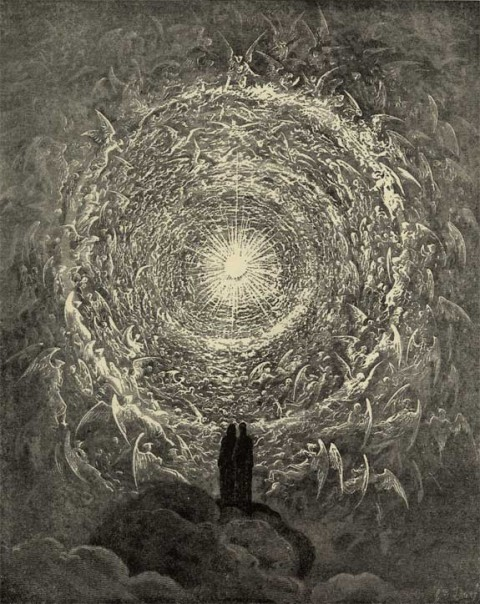
In Dante’s Paradiso, the City of the Blessed Souls takes the form of a white rose. Like the rose windows of Gothic cathedrals, this celestial rose is a mandala that draws the soul inward in contemplation of divinity. The rose in Dante’s Divine Comedy is connected to number eight, as are many rose windows in Gothic cathedrals. (2) In many cases, the imagery and symbolism surrounding the rose window reflect Mary’s role as the “Mystical Rose” in medieval Christianity. Mary was an intercessor between the human and the divine realm, as the rose is “the portal through which the divine love enters the human world.” (3) Her prayer beads are called the rosary.
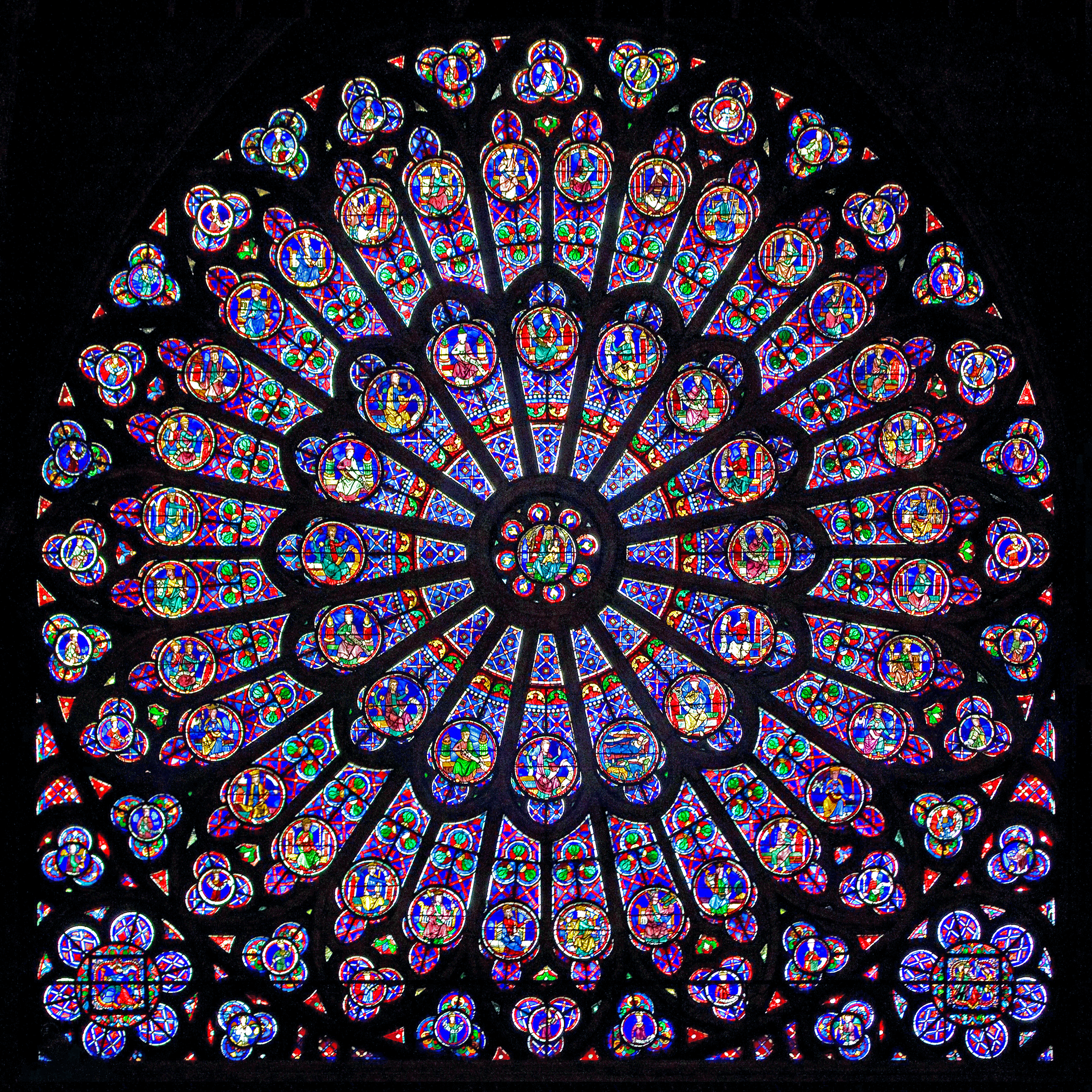
Furthermore, the number eight is connected to the Venus cycle because of the way the planet Venus moves in relation to Earth. Every eight years, Venus returns to almost the exact same position in the sky, forming a regular and beautiful pattern. This perfect symmetry characteristic of the Venus cycle brings to mind Yeats’s poem “The Secret Rose” in which the “inviolate” rose stands for unattainable, secret beauty. The Persian word for the rose is gole, which is related to the word cosmos. In Persian Sufism, the rose is sometimes used as a metaphor for the soul’s journey toward enlightenment. The “gole” represents the heart that opens in spiritual awakening, much like the petals of a rose unfolding. The connection to the cosmos can be seen in the idea that the beauty of the rose mirrors the divine harmony and order of the universe. The rose, in this context, is not just a symbol of earthly beauty but also a reflection of the divine creation, echoing the larger cosmic order. Additionally, in Persian poetry, especially in the works of poets like Hafiz and Rumi, the rose is often depicted as a symbol of the eternal, transcendent beauty of the universe, conveying a spiritual connection to the infinite cosmos. The rose’s scent is likened to the divine fragrance that permeates the universe, offering a reminder of the divine presence in all things. (4)
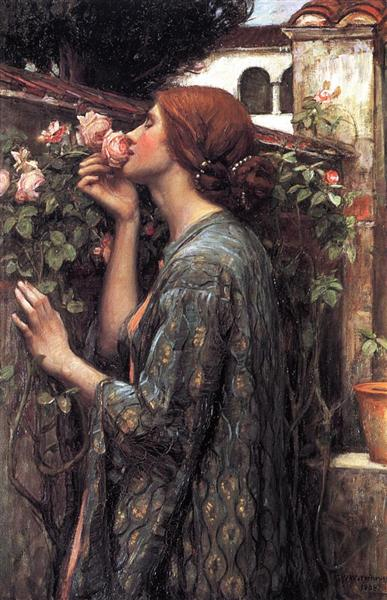
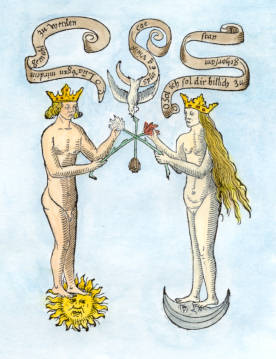
Alchemists frequently employed the rose in their symbolic repertoire. In The Rosary of the Philosophers, for example, the white rose symbolised albedo, while the red one stood for rubedo, i.e. the final stage of the opus:
“In the language of the alchemists, matter suffers until the nigredo disappears, when the ‘dawn’ {aurora) will be announced by the ‘peacock’s tail’ {cauda pavonis) and a new day will break, the leukosis or albedo. But in this state of ‘whiteness’ one does not live in the true sense of the word, it is a sort of abstract, ideal state. In order to make it come alive it must have ‘blood,’ it must have what the alchemists call the rubedo, the ‘redness’ of life. Only the total experience of being can transform this ideal state of the albedo into a fully human mode of existence. Blood alone can reanimate a glorious state of consciousness in which the last trace of blackness is dissolved, in which the devil no longer has an autonomous existence but rejoins the profound unity of the psyche. Then the opus magnum is finished: the human soul is completely integrated.” (5)
Eos, the goddess of dawn, was described as “rosy-fingered” by Homer. However, it was Aphrodite who was most consistently associated with the rose. In Botticelli’s famous The Birth of Venus, she is showered with white gallica roses, which, according to myth, were created from the sea foam that fell onto dry land. According to another myth, roses became red when Aphrodite pricked herself on a rose bush while rushing to her lover, Adonis. In yet another story, Eros, Aphrodite’s son, offers a rose to the god of silence, Harpocrates, so that his mother’s love affairs remain secret. This gave rise to the phrase sub rosa, meaning “under the rose” – in secret and in silence. (6) The Greeks also spoke of the rose’s cooling effect, saying it “cools the head not to blurt out secrets” while drinking. (7)
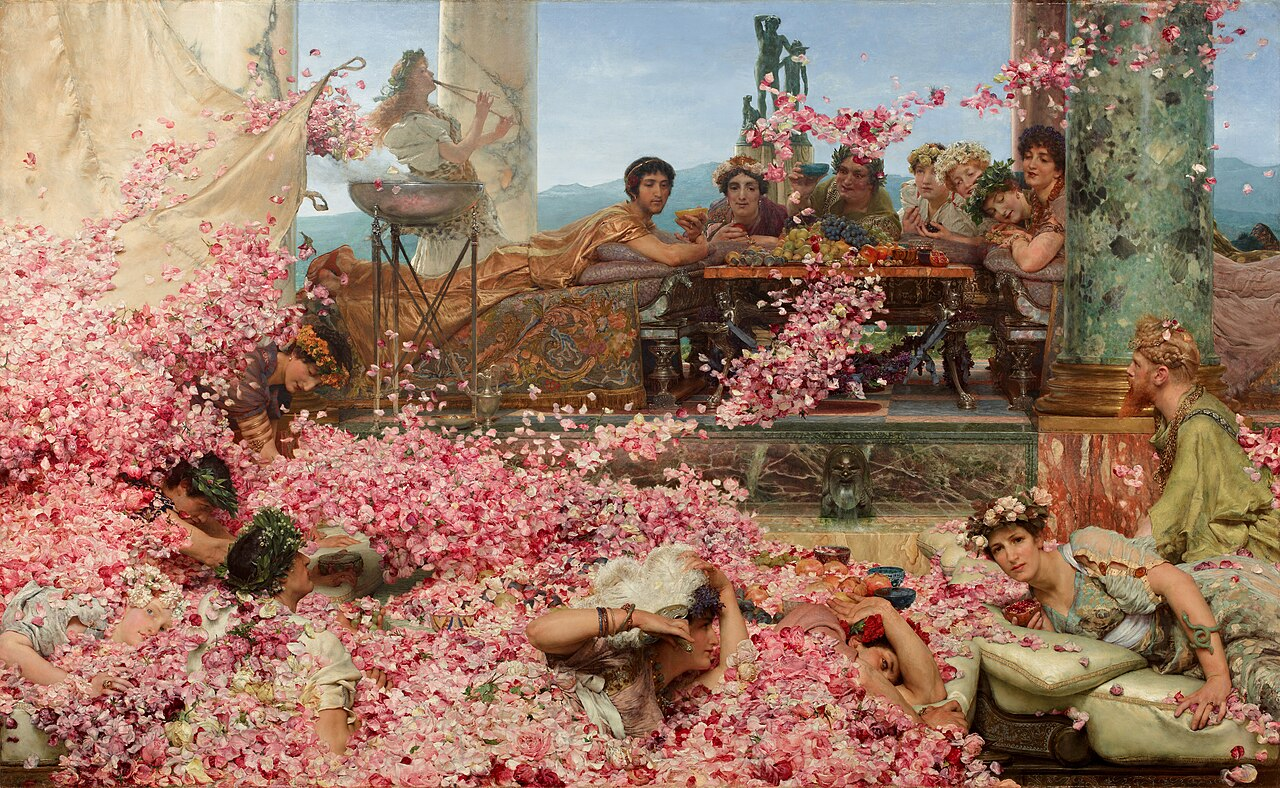
Another god associated with the rose was Dionysos, who discovered the first vine right next to a rose bush. In Greece, rose petals were often dropped into wine, enhancing the symbolism of the rose with themes of passion, intoxication, and losing oneself in the throes of desire.
In summary, for the ancients,
“The rose was closely equated with femininity, vivacity, fecundity, love, beauty, pleasure, desire, the delicious pain of passion, and also the waning of these things … with death.” (8)
Thus, the symbolic rose encompassed the entirety of the universe: the underworld, the human realm, and the divine world, all interconnected in a single, indivisible process. Roses marked significant life transitions and moments, “defining the borders of life’s stations.” (9) Moreover, the Roman holiday of Rosalia celebrated “the transformation of the dead into a rose.” (10)
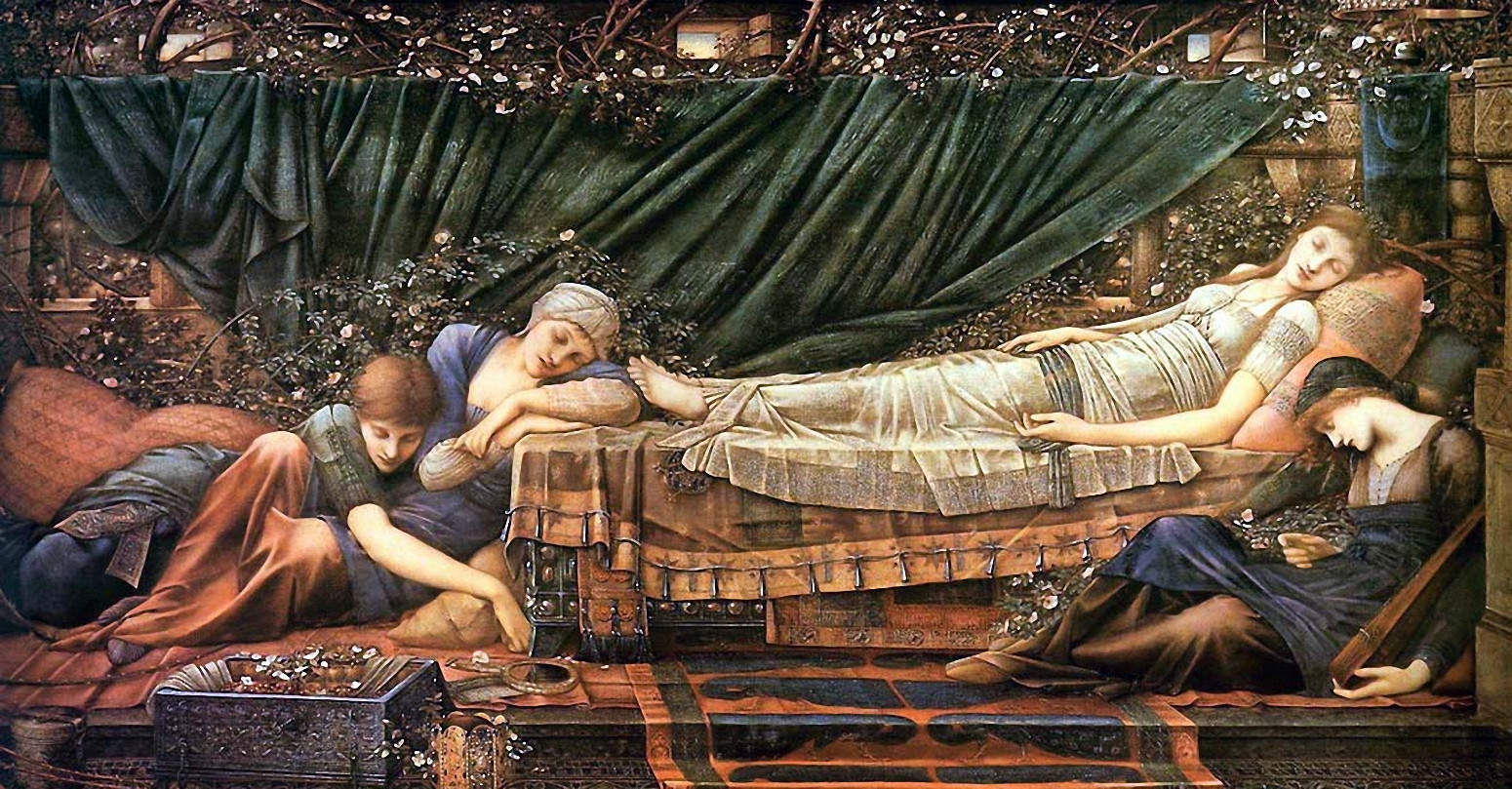
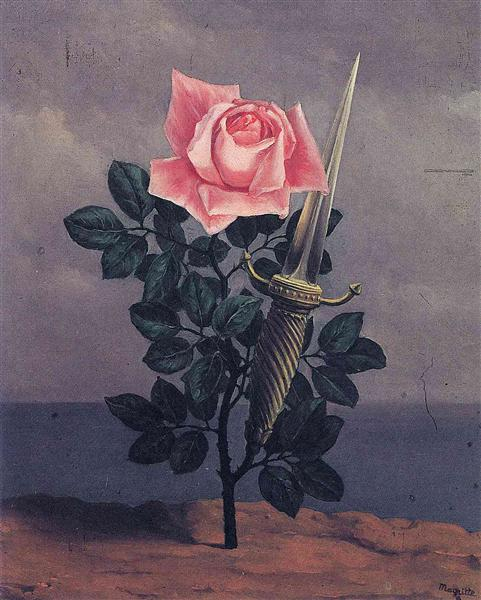
The symbolism of the rose encompasses the full range of human experience, including not only sweetness and passion but also pain and suffering. In Little Briar Rose (Sleeping Beauty), the female protagonist cannot escape life’s hardships. She pricks her finger on a spindle, and as a result, the entire kingdom is engulfed by a thick, enchanted briar rose hedge, isolating it from the outside world. Within this protective barrier, she remains suspended in limbo, avoiding both reality and pain. The rose’s symbolism also holds cruelty and bitterness, as Rilke wrote, “the roses’ red may grow fiery and menacing.” (11)
Support my blog
If you enjoy my writing, please consider supporting my work. Thank you very much in advance.
$1.00
Notes:
(1) Morley, Simon. By Any Other Name: A Cultural History of the Rose. London: Oneworld Publications, 2021.
(2) Di Scipio, Giuseppe C. The Symbolic Rose in Dante’s Paradiso. Ravenna: Longo Editore, 1984.
(3) Ibid.
(4) Morley, Simon. By Any Other Name: A Cultural History of the Rose. London: Oneworld Publications, 2021.
(5) Jung, C. G. C.G. Jung Speaking: Interviews and Encounters. Edited by R. F. C. Hull. Princeton University Press, 1998.
(6) Morley, Simon. By Any Other Name: A Cultural History of the Rose. London: Oneworld Publications, 2021.
(7) Géczi, János. The Rose and Its Symbols in Mediterranean Antiquity. Tübingen: Narr Verlag, 2011.
(8) Morley, Simon. By Any Other Name: A Cultural History of the Rose. London: Oneworld Publications, 2021.
(9) Géczi, János. The Rose and Its Symbols in Mediterranean Antiquity. Tübingen: Narr Verlag, 2011.
(10) Ibid.
(11) Rilke, Rainer Maria. “The Lunatics in the Garden” in: New Poems: A Revised Bilingual Edition. Translated by Edward Snow, North Point Press, 2001.





 symbolreader
lovely, thank you! Especially the etymology – that often reveals so much for me too.
have you read le roman de la Rose? Highly recommended
LikeLiked by 1 person
Thank you. That etymology quote comes from a truly wonderful book, which I’d highly recommend to anyone who loves roses.
LikeLike
Beautiful reminders. Thank you.
I hope you don’t mind if I add a guided imagery into the rose experience.
https://courseofmirrors.com/2012/12/15/the-rose-trick/
LikeLiked by 1 person
Beautiful. Thank you very much.
LikeLiked by 1 person
Thank you. I really enjoy your posts! Susan
LikeLiked by 1 person
Thank you, Susan.
LikeLike
This is a lovely post, I wish I had an encyclopedia of symbols explored like this, through the history of literature.
I’d like to contribute this quote from Blinding, by the Romanian author Mircea Cărtărescu, who combines the mind, the body, and death into one rose, as he describes dreaming himself into the heart of an infinite flame:
In the spooling sheets of ash, in the carbonic rose, what of you remains after you meet the living you, what can have a revelation, what can follow the melting? It is the center of the rose of our death, because there in the center of our carbonized body, among the petals of char that were our liver and brain and lungs, held together, like an abominable blossom, there among the scrubbed granules of our molars, between the matchsticks of our bones burnt white, there is still something, and that something is everything. When the tunnel turns straight and the flames from the oven’s mouth lick it, melting the glassy walls, when you speed fantastically fast directly toward the blindness beyond blindness, toward the deafness that makes deafness seem like the wailing of a slaughterhouse, when the protuberances of fire that burn fire like kindling lap against the black rose, its petals (kidneys and vertebrae, theorems and desires, theories and gods) lift off and ignite again, tumbling back down, and in the middle of the middle of the middle of the cup of the rose, an indestructible quartz sphere appears, that can penetrate the architecture of the tongues of flame, in the hierarchies of wasteland. In the center of the cistern of fire, reflecting the fire, it becomes itself the generator of living power, and so it was at the beginning, since you can never experience an enigma if you weren’t the one who made it.
LikeLiked by 1 person
Thank you very much for this rich, alchemical quote.
LikeLike
My late mother would likely be pleased to read this, as she loved roses; she transformed our small garden in Tehran back then into a beautiful rose garden. Thank you, dear Monika. Frohe Ostern! 🤗🙏💖🐰
LikeLiked by 1 person
That’s a beautiful memory of your mother. My mother grows 🌹🌹🌹 in Poland. Happy Easter to you, too!
LikeLike