
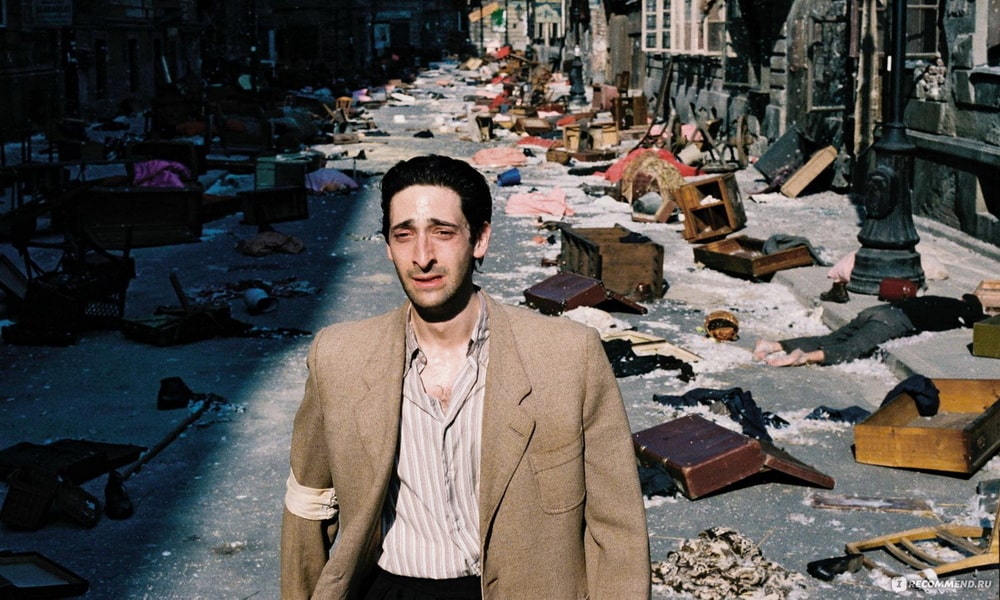
You might recall that in the film The Pianist, Władysław Szpilman is depicted hiding in the ruins of apartments, witnessing both the Ghetto Uprising in 1943 and the Warsaw Uprising in 1944. Today marks the 80th anniversary of the latter. The Polish resistance Home Army aimed to liberate Warsaw from the German occupation before the Soviet Army arrived. The uprising was brutally crushed by the Germans after 63 days, resulting in the death of around 200,000 civilians and widespread destruction of the city. In his memoirs, on which the movie is based, Szpilman describes what the city looked like after the disaster:
“I was alone: alone not just in a single building or even a single part of a city, but alone in a whole city that only two months ago had had a population of a million and a half and was one of the richer cities of Europe. It now consisted of the chimneys of burnt-out buildings pointing to the sky, and whatever walls the bombing had spared: a city of rubble and ashes under which the centuries-old culture of my people and the bodies of hundreds of thousands of murdered victims lay buried, rotting in the warmth of these late autumn days and filling the air with a dreadful stench.”(1)
Below is a short video explaining what happened in a city that survived its own death.
Every year Warsaw commemorates the beginning of the uprising on 1 August at 5 p.m. This is the so called “W” hour during which all people stop whatever they are doing, while traffic comes to a standstill. This is accompanied by the sound of the sirens.
Being of Polish origin, I cannot remain untouched by this day. I often think of the the sewer canals, which the insurgents used to move between parts of the city and to escape the bombardments. The dark cramped canals became scenes of horror and desperation, with many losing their lives in the harrowing underground passages.
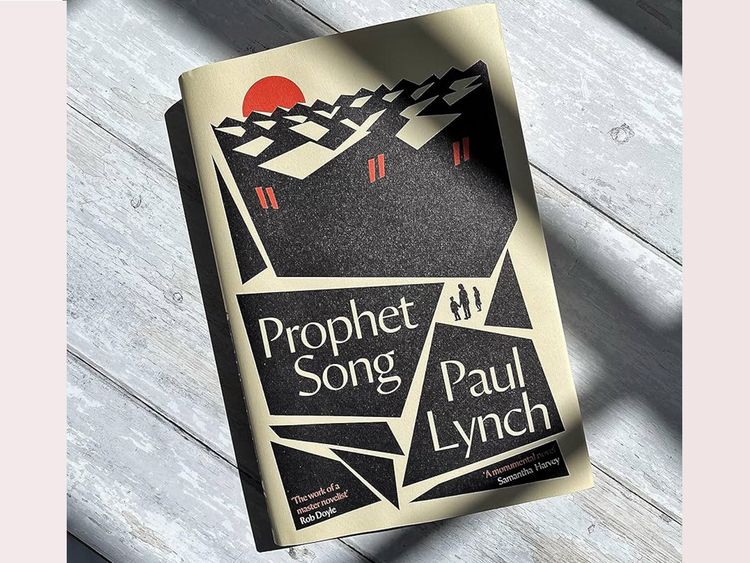
I remembered all that vividly while reading a mesmerizing novel by Paul Lynch called Prophet Song. The dystopian novel is set in a near-future Ireland, which is taken over by a repressive totalitarian regime. It is written from a point of view of a mother of four, whose husband gets arrested and the son goes missing, having allegedly joined a resistance movement. It is one of those books of which Kafka said that they are “the axe for the frozen sea within us.” The story unfolds with a hypnotic rhythm, making the deeply brutal realities of civil war very affecting. The absence of paragraph breaks and the integration of dialogue within the text create a seamless, organic flow that feels intensely real and immersive. Although there are chapter breaks, which offer brief respites akin to emerging from an ocean onto a small island to catch one’s breath, the narrative itself remains a relentless, unyielding current that propels the reader forward.
Towards the end comes a passage (a single sentence!) that explains the meaning of the title of the book:
“She looks to the sky watching the rain as it falls through space and there is nothing to see in the ruined yard but the world insisting on itself, the cement’s sedate crumbling giving way to the rising sap beneath, and when the yard is past there will remain the world’s insistence, the world insisting it is not a dream and yet to the looker there is no escaping the dream and the price of life that is suffering, and she sees her children delivered into a world of devotion and love and sees them damned to a world of terror, wishing for such a world to end, wishing for the world its destruction, and she looks at her infant son, this child who remains an innocent and she sees how she has fallen afoul of herself and grows aghast, seeing that out of terror comes pity and out of pity comes love and out of love the world can be redeemed again, and she can see that the world does not end, that it is vanity to think the world will end during your lifetime in some sudden event, that what ends is your life and only your life, that what is sung by the prophets is but the same song sung across time, the coming of the sword, the world devoured by fire, the sun gone down into the earth at noon and the world cast in darkness, the fury of some god incarnate in the mouth of the prophet raging at the wickedness that will be cast out of sight, and the prophet sings not of the end of the world but of what has been done and what will be done and what is being done to some but not others, that the world is always ending over and over again in one place but not another and that the end of the world is always a local event, it comes to your country and visits your town and knocks on the door of your house and becomes to others but some distant warning, a brief report on the news, an echo of events that has passed into folklore, Ben’s laughter behind her and she turns and sees Molly tickling him on her lap and she watches her son and sees in his eyes a radiant intensity that speaks of the world before the fall, and she is on her knees crying, taking hold of Molly’s hand.”
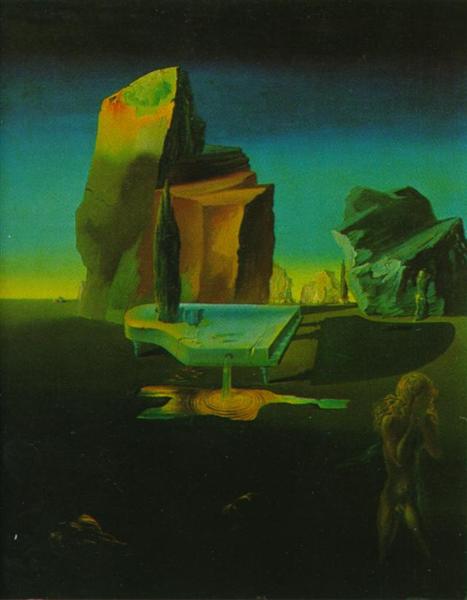
The root of the word “war” is Germanic and means “discord” and “confusion.” (2) In Mysterium Coniunctionis, Jung spoke of the war reflecting the clashing forces of the psyche:
“Just as the decay of the conscious dominant is followed by an irruption of chaos in the individual, so also in the case of the masses (Peasant Wars, Anabaptists, French Revolution, etc.), and the furious conflict of elements in the individual psyche is reflected in the unleashing of primeval blood-thirstiness and lust for murder on a collective scale. … Once the symptoms are really outside in some form of sociopolitical insanity, it is impossible to convince anybody that the conflict is in the psyche of every
individual, since he is now quite sure where his enemy is. …Only the living presence of the eternal images can lend the human psyche a dignity which makes it morally possible for a man to stand by his own soul, and be convinced that it is worth his while to persevere with it. Only then will he realize that the conflict is in him, that the discord and tribulation are his riches, which should not be squandered by attacking others …” (3)
This is why the Warsaw “W” hour moment of silence is so crucial: a moment of reflection and an insight into the clashing opposites within the human soul. As Jung concludes, “If the ego does not interfere with its irritating rationality, the opposites, just because they are in conflict, will gradually draw together, and what looked like death and destruction will settle down into a latent state of concord.” (4) This profound idea mirrors a sublime moment in The Pianist, when the helpful German officer Wilm Hosenfeld, amidst the ruins, asks Szpilman to play the piano. Szpilman plays Chopin’s Nocturne in C-sharp minor, and this moment encapsulates the fragile beauty of reconciliation.
Support my blog
If you enjoy my writing, please consider supporting my work.
$1.00
Notes:
(1) Władysław Szpilman (1999). The Pianist: The Extraordinary Story of One Man’s Survival in Warsaw, 1939–45, trans. Anthea Bell. London: Victor Gollancz Ltd.
(2) Ronnberg, Ami, ed. (2010). The Book of Symbols: Reflections on Archetypal Images. New York: Archive for Research in Archetypal Symbolism (ARAS).
(3) CW 14: par. 510-511.
(4) Ibid: par. 507 (also quoted by Ronnberg in The Book of Symbols, entry: war/warrior)





 symbolreader
Sehr ergreifend, Danke!🙏💖💕💖🙏
LikeLiked by 1 person
Danke, Aladin!
LikeLiked by 1 person