
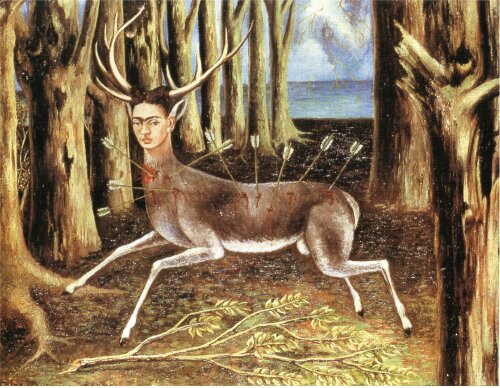
Frida Kahlo, “The Wounded Deer”
“I bear the wounds of all the battles I avoided.” Fernando Pessoa
Frida Kahlo, “The Wounded Deer”
“I bear the wounds of all the battles I avoided.” Fernando Pessoa

Johfra Bosschart, Capricorn
A mountain goat is a very special creature to me and therefore I adore this image of Johfra, showcasing the goat in all its glory. Once I spotted a herd of them high in the mountains, once I saw them in a nature park and once in a children’s zoo, where I could observe how little goats are born climbers: they can stand immediately after being born and are able to climb very shortly after. Their instinct is to always move upwards. Symbolism is never arbitrary, but always has its roots in nature. The qualities of the animal resonate with the maturity and ambition associated with the sign Capricorn. Further, mountain goats have very flexible skeletons and their elemental quality is “surefootedness,” says Ted Andrews, who associates this particular animal totem with the need to apply flexibility while rethinking the basic structure of our lives. Inflexibility and rigidity, preserving the structure at all costs, are the more inharmonious expressions of the sign. The magnificent goat in Johfra’s painting seems to be petrified in time, like a statue: on the one hand, because it has accomplished perfection understood as perfect form, on the other hand, however, this showcases the rigidity of the sign and its leaden, heavy quality. The animal also has a thick coat, which makes it possible for the goat to survive the harshest weather conditions. The quality of endurance and, as Liz Greene puts it, “the theme of the waste land and the long wait for the redeemer in depression despair and deadness” are associated with this sign. But, like Sisyphus patiently pushing the rock upwards, the goat will not stop climbing.
Rocks are the material that makes its home. In Greek myth, rocks were the source of human life. After the deluge sent upon the earth by the angry Zeus, Deucalion – the only survivor together with his wife repopulated earth by walking and throwing stones behind themselves. Out of those stones people were formed. In Johfra’s image the little children seem to have sprung from the rock. Their spines (ruled by Capricorn) will gradually become stronger and they will be able to stand assuredly on their own two feet soon.
Also the foundation of Christian church was built on the rock, as St Peter’s name is derived from the word “petra” which means “rock.” In Matthew’s gospel, Jesus speaks to Peter: “On this rock I will build my church, and the gates of Hell will not prevail against it.” The symbolism of rock and stone is very rich and we are also reminded of the philosopher’s stone sought by alchemists as the ultimate goal of their opus:
1.“The stone symbolized something permanent that can never be lost or dissolved, something eternal that some have compared to the mystical experience of God within one’s own soul…. It symbolizes what is perhaps the simplest and deepest experience, the experience of something eternal that man can have in those moments when he feels immortal and unalterable .”
Carl Gustav Jung
2. “In volcanic eruptions, air turned to fire, fire became ‘water’ and ‘water’ changed to stone; hence stone constitutes the first solid form of the creative rhythm —the sculpture of essential movement, and the petrified music of creation.”
Juan Eduardo Cirlot
Capricorn is an earth sign and the earth of Capricorn is stone (rock), while the earth of Taurus was soil, and the earth of Virgo was sand. Out of stones solid structures are built – our cities and our civilization. However, it is also interesting to see how the symbolic roots of the sign Capricorn are submerged in water. The sign itself, which Johfra chose not to show us, has always been represented as the sea-goat: a goat with the tail of the fish. Capricorn is the sign of the leader. Its tail submerged in water indicates that all power comes from the archetypal, watery dimension. A true leader has mastered the alchemical principle which said “solve et coagula” (dissolve and coagulate). Every rigid structure, every rule that has outlived its usefulness, needs to be dissolved before new order can be established (coagulated, i.e. solidified).
“…our modern Capricorn type shows the characteristic features of the sign mostly in their negative aspect. This is because humankind has not yet evolved to the point where a soundly organized society of free and creative individuals has become entirely feasible. .. To date we only know the shadowy and mostly dark aspect of the Capricorn realm – therefore we speak of the State as a coercive and inherently oppressive entity.”
Dane Rudhyar, “Zodiac as the Universal Matrix”
Our contemporary leaders have lost the connection with the watery source. Patriarchy has neglected the feminine, i.e. the sign Cancer, which is in opposition to Capricorn. They rigidly cling to power and they would have much to learn from history. Around winter solstice, ancient Romans celebrated the festival of Saturnalia (Saturn is the ruler of Capricorn). At that time social roles were reversed and slaves became masters. Such temporary anarchy prevented despotism and hardening into too rigid social structure, says Hillman. For a moment the world was allowed to step outside of time, and time is the domain of Saturn’s order.
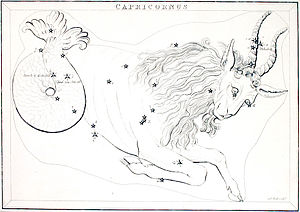
The Sea-Goat
The Babylonian deity associated with Capricorn was Ea (Enki in Sumerian mythology), depicted as the sea-goat, who was a wise and benevolent leader. He lived in the primordial fresh water ocean that surrounded the earth. That the water was fresh rather than salty shows the nurturing and civilizing quality of that god. He was a wise protector of humankind, god of magic and the one who protected humans from monsters, and who brought law and order upon the earth. A good leader needs to protect his people from the forces of chaos. That is probably why Johfra chose to depict the boy Hercules victorious over the crocodile on the left and the Apollo victorious over Python on the right. Ea was also the one who warned the wise man Utnapishtim of the deluge of the world planned by the enraged god Enlil. Utnapishtim had enough time to build a boat and survive the cataclysm. The boat carried by the ocean can be compared to the ego: a structure that we build within the vast ocean of the Jungian Self. Saturn, who is responsible for creating order, structures, and boundaries, is the ego builder. A rigid ego means death because it does not allow the waters of life to flow freely.
Let us contemplate other Capricornian paradoxes shown by Johfra in the painting. The old man (Latin senex) featured centrally is the Greek god Kronos (Roman Saturn). His sickle has dual meaning: it is an instrument of death and castration (Kronos castrated his father Uranos – the sky god) but also a harvesting tool. In myth Kronos swallowed his children which was like “the swallowing of youth by age, joy by depression, freedom by form, imagination by intellect, innocence by experience,” as Hillman puts it. To proceed, I must return to Hillman’s dichotomy of senex (old man) and puer (youth) because it matches Johfra’s vision perfectly. They personify “the poles of tradition, stasis, structure, and authority on one side, and immediacy, wandering, invention and idealism on the other. The senex consolidates, grounds and disciplines; the puer flashes with insight and thrives on fantasy and creativity.” The senex is associated with time, work, order, limits, learning, history, continuity, survival and endurance; all that is old, ordered and established. A senex quality was required to give “realization through time and dense corporality.” One always brings to mind the other and their duality is at the heart of father/son relationship and conflict. When an idea appears like a divine spark puer is there, but its maturation, perfection and harvesting is presided over by the senex. After Rhea fooled Kronos and gave him a stone to swallow instead of a baby (the stone here is symbolic of his hardened stance and heartless tyranny) she hid Zeus in the mountains where a benevolent goat Amalthea nursed and nurtured him. Her horn was later made into the Cornucopia (the horn of plenty) by Zeus. Thus, paradoxically, Capricorn is the sign of both lack and abundance. Amassing wealth can, however, lead to greed and tyranny and the cycle of established order/revolution must start anew:
“But the harvest is a hoard; the ripened end-product and in-gathering again can be dual. Under the aegis of Saturn it can show qualities of greed and tyranny, where in-gathering means holding and the pursue of miserliness, making things last through all time.”
James Hillman
It seems that the puer and senex cannot survive without each other. The puer breathes new life into the rigidity of the senex, nourishing him with new and fresh ideas; the senex establishes the necessary boundaries and brings ideas to fruition thanks to hard work and endurance. Says Hillman:
“As principle of coagulation and of geometrical order, it dries and orders, builds cities and mints money, makes solid and square and profitable, overcoming the dissolving wetness of soulful emotionality. The worship of flow, however, means also to be continually flowed through, provisional, suggestible, receptive to sinking into any surrounding. Now we meet another danger to puer consciousness: dissolution into water, oblivion.”
In the image puer and senex do not seem to be in conflict. The figure of the puer on the right (Johfra says he painted Apollo here) shows the wise senex reverence and even seems to worship him. Hillman reminds us that Apollo was actually a patron of youngsters entering into manhood. In a ritual of initiation young Greek boys offered their long hair to Apollo as a sign of their transition into adulthood.
The background of Johfra’s painting forms a skull (bones are ruled by Saturn in astrology) through which the Sun rises. That part of his vision is quite awe-inspiring. I would like to finish today with a beautiful passage from The Pulse of Life by Dane Rudhyar:
“In Capricorn, the Christos-seed is almost entirely unnoticeable, so completely overwhelmed is the renascent Day-force by the vast structure built by the Night-force. It is to be seen only in the heart of the Capricornian Yogi or Seer; the recluse Hermit; the lonely Wanderer on the heights of snow-covered peaks; the solitary Individual, who, after having assimilated within the strong structure of his selfhood the total contents of the Collective Unconscious has become a “womb of human totality.” In that “womb” which represents the fulfillment of an entire cycle of human expansion, he who has become a seed-man receives in utter consecration the New Life that comes from on high.
…
In due time the New Life always wins. The new type of human being pierces through the crust of the decaying matter of what was once the powerful State erected by Caesar, as spring impels seeds to germinate after the Piscean deluge of equinoctial storms. The Christos always wins against Caesar. The Federation of Man must win over the imperial machines erected by power-groups using Sagittarius energies — machines and propaganda, tanks and fanaticism — to crystallize their ambition. The cycle of life does not allow static fulfillment. Everything turns into its opposite. The wheel moves on everlastingly and the Day-force interplays with the Night-force in an ever-renewed drama which is life itself.”

Support my blog
If you appreciate my writing, consider donating and make my day. Thank you in advance.
$1.00
Sources:
Ted Andrews, Animal Speak
Johfra Bosschart, Astrology
Juan Eduardo Cirlot, The Dictionary of Symbols
Liz Greene, The Astrology of Fate
James Hillman, Puer and Senex, Collected Writing volume 3
Carl Gustav Jung, Man and His Symbols
Dane Rudhyar, The Pulse of Life
Dane Rudhyar, Zodiac as the Universal Matrix
Rachel Storm, The Encyclopedia of Eastern Mythology
Related posts:
Related posts:

Kashmir valley, image credit
“Call the world if you please ‘the vale of soul-making.’ Then you will find out the use of the world.”
John Keats, in a letter
Mountain valleys can be breathtakingly beautiful. Lusciously green, nested between high mountains, with streams, rivulets and wisps of clouds, they are a picture of safe haven, an all-embracing fertile womb.
“Its characteristic fertility stands in contrast to the nature of the desert (symbolically a place of purification), of the ocean (which represents the Origin of life but which, in relation to man’s existence, is sterile), and of the mountain (the region characterized by snows and the ascetic, contemplative life, or by intellectual illumination). In short, the valley is symbolic of life itself and is the mystic abode of shepherd and priest.”
Juan Eduardo Cirlot, Dictionary of Symbols (entry: valley)
James Hillman distinguishes between soul and spirit using the image of a valley and a mountain respectively. He calls valleys “the places of nymphs,” since one of the etymological roots of the word “valley” equals nymphs with “wisps and clouds of mist clinging to valleys, mountainsides, and water sources.” But valleys are not only lush and green places of enchantment. We all know the biblical valley of the shadow of death; some of us have heard the expression “the vale of tears” used to describe the world. If a valley can be looked upon as an image of the soul, sadness seems to be inevitably attached to it. There is no soul-making without tears. The soul needs moisture to thrive.

Kashmir valley, image credit
Mountains, on the other hand, have been traditionally associated with “loftiness of spirit” in symbolism. On the peak of the mountain heaven touches earth. The feeling we get standing on the top of the mountain is different to the one we experience while being gently embraced by the valley below. Perhaps this is what Maslow meant by “peak experience”: heart racing in euphoria, the feeling of awe and inspiration, dizziness and clarity felt at the same time, the feeling of being placed outside of time and space.
James Hillman quotes the fourteenth Dalai Lama of Tibet, who wrote in a letter to Peter Goullart:
“The relation of height to spirituality is not merely metaphorical. It is physical reality. The most spiritual people on this planet live in the highest places. So do the most spiritual flowers…. I call the high and light aspects of my being spirit and the dark and heavy aspect soul.
Soul is at home in the deep, shaded valleys. Heavy torpid flowers saturated with black grow there. The rivers flow like warm syrup. They empty into huge oceans of soul.
Spirit is a land of high, white peaks and glittering jewel-like lakes and flowers. Life is sparse and sounds travel great distances.
There is soul music, soul food, soul dancing, and soul love….
When the soul triumphed, the herdsmen came to the lamaseries, for soul is communal and loves humming in unison. But the creative soul craves spirit. Out of the jungles of the lamasery, the most beautiful monks one day bid farewell to their comrades and go to make their solitary journey toward the peaks, there to mate with the cosmos….
No spirit broods over lofty desolation; for desolation is of the depths, as is brooding. At these heights, spirit leaves soul far behind…
People need to climb the mountain not simply because it is there but because the soulful divinity needs to be mated with the spirit…”(the edited quote comes from Hillman but I strongly encourage you to look at Stephen’s comment below in the comment section to see the original letter)
I am really discovering Hillman’s writing these days, allowing myself to be embraced by its soulfulness. At first I had the same feelings regarding the Dalai Lama quote as Hillman: I am not too fond of it, at least not entirely. Heavy torpid flowers in a valley? I do not think the nymphs would agree. However, after I read Stephen’s comment below (please take a look at it) my criticism relented completely. Still,drawing a very sharp distinction between spirit and soul does not appeal to me. Says Hillman:
„To give definitions of spirit and soul – the one abstract, unified, concentrated; the other concrete, multiple, immanent – puts the distinction and the problem into the language of spirit. We would already have left the valley. We would be making differences like a surveyor, laying out what belongs to whom according to logic and law rather than according to imagination.”
The spirit is outside space and time, the soul is historical and bound by time and matter. But the soul abhors such definitions and clear-cut divisions. The soul embraces everything, including spirit.

Kashmir valley, image credit
Source of quotations:
James Hillman, Senex and Puer, Uniform Edition volume 3

Jan Brueghel and Peter Paul Rubens, “Smell”
“A sigh isn’t just a sigh. We inhale the world and breathe out meaning. While we can. While we can.”
Salman Rushdie, “The Moor’s Last Sigh”
Helen Keller compared the sense of smell to a “potent wizard that transports you across thousands of miles and all the years you have lived.” Perhaps smell has a subtle sort of power that consciously we are inclined to underestimate. Consequently, we would much more readily sympathize with a person who has lost any other senses than the sense of smell.
It is a scientifically established fact that the sense of smell is the most primal sense and the first one to develop. We acquire it while still in the mother’s womb. It seems to be crucial for our survival and as such it is related to the base chakra. Furthermore, the smell receptors are to be found at the base of the brain. All olfactory experiences pass through the limbic system, which is the unconscious, emotional area of the brain, responsible for the formation of memories. Marcel Proust knew that smell could be the royal road to the unconscious memories etched in the dark recesses of our minds:
“…when nothing subsists of an old past, after the death of people, after the destruction of things, alone, frailer but more enduring, more immaterial, more persistent, more faithful, smell and taste still remain for a long time, like souls, remembering, waiting, hoping, on the ruin of all the rest, bearing without giving way, on their almost impalpable droplet, the immense edifice of memory.”
There is something primal and animalistic about the sense of smell, something moist, dark and unconscious. To this day it remains the most elusive of the senses, the hardest to be completely scrutinized by science. In the animal kingdom, the record for the most potent sense of smell belongs to the bear. Symbolically, this is very interesting, as bears are primal and, perhaps, the least ‘civilized’ of all creatures. To me, they are synonymous with the power of the wildest heart of nature. Their periodic hibernation may be compared to the need of the human soul to periodically be reclusive and to go deep within oneself to find insight.

Ted Andrews says that the keynote for the symbolic meaning of the bear is “awakening the power of the unconscious.” Snakes are also said to possess a potent sense of smell. They do not have noses, but a smelling organ inside their mouths. When the snake is flickering its tongue it is actually collecting data (scent particles) for this organ.
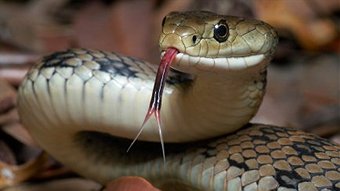
When the unconscious awakens, when the coiled snake at the base of the spine starts to rise, its movement resembles the rise of incense smoke towards the higher realms of the spirit.
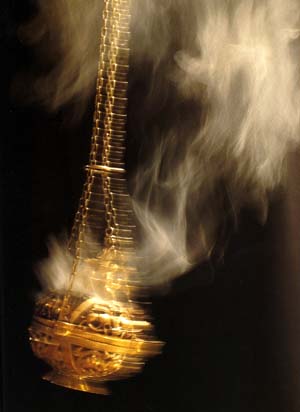
The power of incense is rooted in the earth but it climbs to heaven, putting those present at the ritual in a state of mystical participation and carrying their prayers across to the spiritual realm. Incense can transcend the worlds and travel to the great beyond. Incense is not unlike the ancient ambrosia, the food of the gods, which was said to exude a divine fragrance and was brought to Olympus by doves. It was thought of by the Greeks as a divine exhalation of the Earth. Titius Lucretius Carus, a Roman poet and philosopher wrote that the soul is part of the body just as scent is part of frankincense. Indeed, smell does seem to have a direct connection to the soul. In Hebrew, the words “smell” and “spirit” are directly related as cognates, while smell is considered the most spiritual of the senses in the Kaballah.
The ancients realized the power of smell. Their gods were described as fragrant, especially Aphrodite, whose “ambrosial locks” were “fragrant with heavenly odour,” as poet Virgil put it. Gods brought inspiration with their divine scent (in spirare – breathe, inhale). Europa was seduced by Zeus (disguised as a white bull) chiefly because of his sweet smell that overpowered the fragrance of the whole meadow. Smell and seduction have always gone hand in hand. According to science, smell is the number one factor for women influencing their choice of a partner. The seductive power of smell is the theme of the most famous and sensually delightful novel about scents: The Perfume by Patrick Süskind.

The protagonist creates a scent that will give him tremendous power over all human kind:
“He had used only a drop of his perfume for his performance in Grasse. There was enough left to enslave the whole world. If he wanted, he could be feted in Paris, not by tens of thousands, but by hundreds of thousands of people; or could walk out to Versailles and have the King kiss his feet; write the Pope a perfumed letter and reveal himself as the new Messiah; be anointed in Notre-Dame as Supreme Emperor before kings, or even as God come to earth.”
Further on he says something very significant:
“For people could close their eyes to greatness, to horrors, to beauty, and their ears to melodies or deceiving words. But they couldn’t escape scent. For scent was a brother of breath. Together with breath it entered human beings, who couldn’t defend themselves against it, not if they wanted to live. And scent entered into their very core, went directly to their hearts, and decided for good and all between affection and contempt, disgust and lust, love and hate. He who ruled scent ruled the hearts of men.”
Symbolically, the smell in the novel can be likened to Tolkien’s ring of power: both are associated with potency and black magic used for evil purposes.
For this and other reasons, in antiquity, scent was a valuable commodity. Frankincense was one of the three precious gifts brought by the Magi for baby Jesus. The tree that is harvested for frankincense is called Boswellia Sacra.

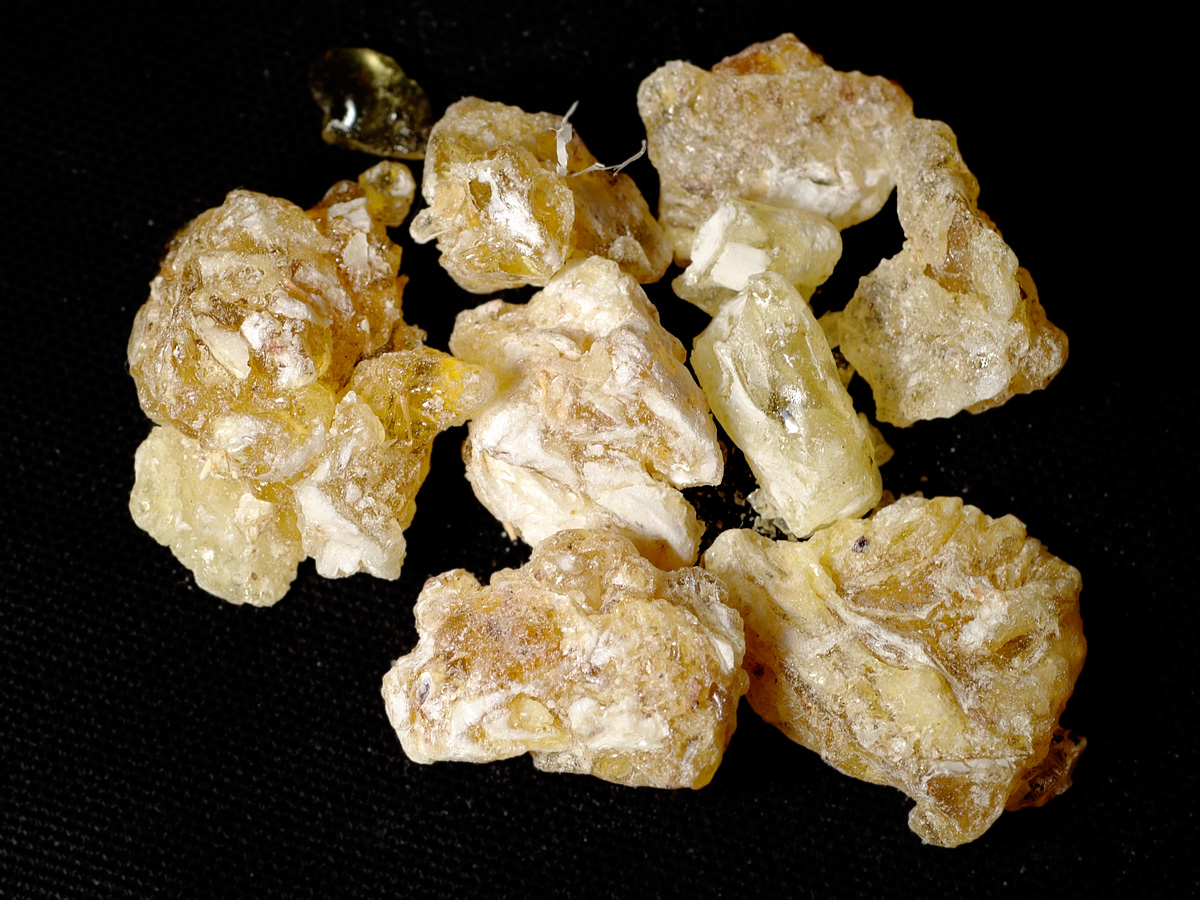
As we can read in Wikipedia, these trees “are considered unusual for their ability to grow in environments so unforgiving that they sometimes grow out of solid rock.” The sweet aroma of frankincense is a product of harsh and unforgiving conditions.
Cities, like people, have their own unique smells, which is exuded by their spirit. I have argued with some of my friends about the smell of Venice, which I found immensely pleasing, while some of them could not stand it.
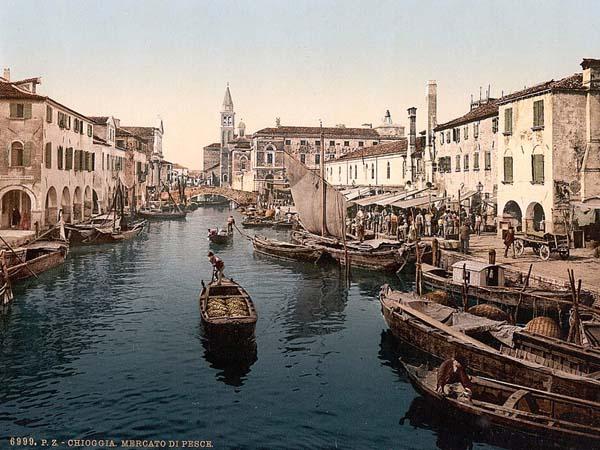
Venice, fish market, image credit: http://www.old-picture.com/europe/Chioggia-market-Venice-Italy-001.htm
In a TV series “Game of Thrones,” Shea, a female character says she gets aroused by the odour of the city, which smells of “dead bodies and shit; of cum and garlic and rum.”

The cities in the Middle Ages were not particularly fragrant, as described in a book Aroma: The Cultural History of Smell. Gone were the aromatic days of ancient Romans, daily anointed with excessive amounts of perfume by slaves in public baths:
“European cities were often filthy places in earlier times. Streets served as conduits for refuse of all sorts – food remains, human and animal waste, blood and entrails of slaughtered animals, and dead cats and dogs to name some. … Most streets were made of dirt, which would mingle with waste products to produce a sticky and malodorous muck.”
I am under the impression that most Western cities are slowly losing their souls, which is getting replaced with synthetic, commercialized fragrances. I feel that in order not to lose our attachment to Life we need to actively pursue natural smells. After all, according to “The Book of Symbols,” “the nose is like a forgotten portal to the archaeology of the psyche.” Which means that not only does it bring us closer to our bodies, it also helps us retrieve our souls.
Sources:
Ted Andrews, Animal Speak
Titius Lucretius Carus, Of the Nature of Things
Constance Classen, David Howes, Anthony Synnott, Aroma: The Cultural History of Smell
Scott Cunningham, The Complete Book of Incense, Oils and Brews
Marcel Proust, The Swann’s Way
“The Book of Symbols,” ed. by Ami Ronnberg, ARAS

The turn of the year is ruled by the senex/puer archetypal polarity. In the most popular allegorical depictions, the old man gives way to a young boy. This happens when the Sun is in Capricorn: the sign of the senex (father time, the reality principle), whose shadow, that which makes him complete, is puer. In a book Senex and Puer: James Hillman Uniform Edition vol. 3, we read: “As the senex is perfected through time, the puer is primordially perfect.” At this time we take stock of our individual story. Have we fulfilled the promise of the primordially perfect puer that we met at the beginning of the previous year? What substance did senex give to the dreams and visions of the puer in the last year?
“…the puer eternus figure is the vision of our own first nature, our primordial golden shadow, …, our angelic essence as messenger of the divine… From the puer we are given our sense of destiny and mission, of having a message and being meant as eternal cup-bearer to the divine, that our sap and overflow, our enthusiastic wetness of soul, is in service to the Gods, bringing eternal refreshment to the archetypal background of the universe…. A beginning is always meaningful and filled with the excitement of eros.”
James Hillman
May the puer call us to be true to ourselves this coming year. May the senex ripen and materialize our inner vision.

BALANCE
By Adam Zagajewski, translated from the Polish by Clare CavanaghI watched the arctic landscape from above
and thought of nothing, lovely nothing.
I observed white canopies of clouds, vast
expanses where no wolf tracks could be found.I thought about you and about the emptiness
that can promise one thing only: plenitude—
and that a certain sort of snowy wasteland
bursts from a surfeit of happiness.As we drew closer to our landing,
the vulnerable earth emerged among the clouds,
comic gardens forgotten by their owners,
pale grass plagued by winter and the wind.I put my book down and for an instant felt
a perfect balance between waking and dreams.
But when the plane touched concrete, then
assiduously circled the airport’s labyrinth,I once again knew nothing. The darkness
of daily wanderings resumed, the day’s sweet darkness,
the darkness of the voice that counts and measures,
remembers and forgets.
I love looking at clouds from the plane: I find it quite mesmerizing. I also love to promote Polish poetry on my blog and Adam Zagajewski is an eminent poet in my home country. I hope you can see why.

Sandro Boticelli, Mystic Nativity
This beautiful painting has been one of my favourites for many years. I was always touched by the beautiful twelve angels dancing in a circle at the top, the three angels gracing the roof and the three angels at the bottom raising the weak and battered human figures off the ground. The apocalyptic motives of death and rebirth of the soul are quite apparent, if you look carefully. The top figures dancing in ecstasy are so different from the troubled human figures and the banished demons at the bottom.
If you wish to find out more about the historical background of the painting, you can read an excellent article “Botticelli and the dark psychology of the mystic nativity.”
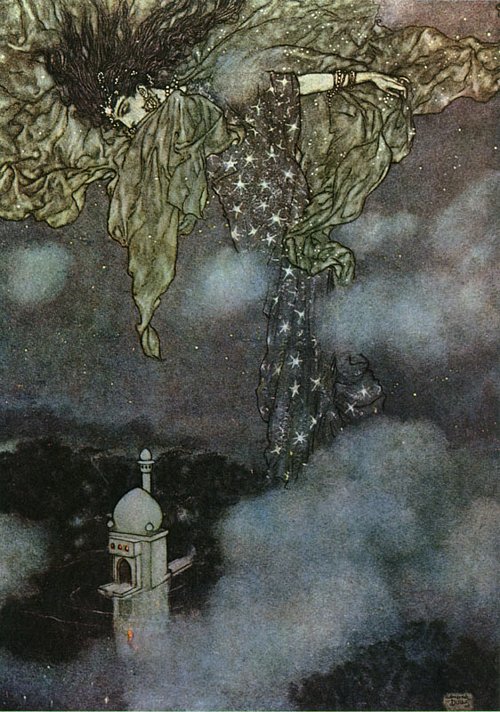
Edmund Dulac, “Night, The Rubaiyat of Omar Khayyam”
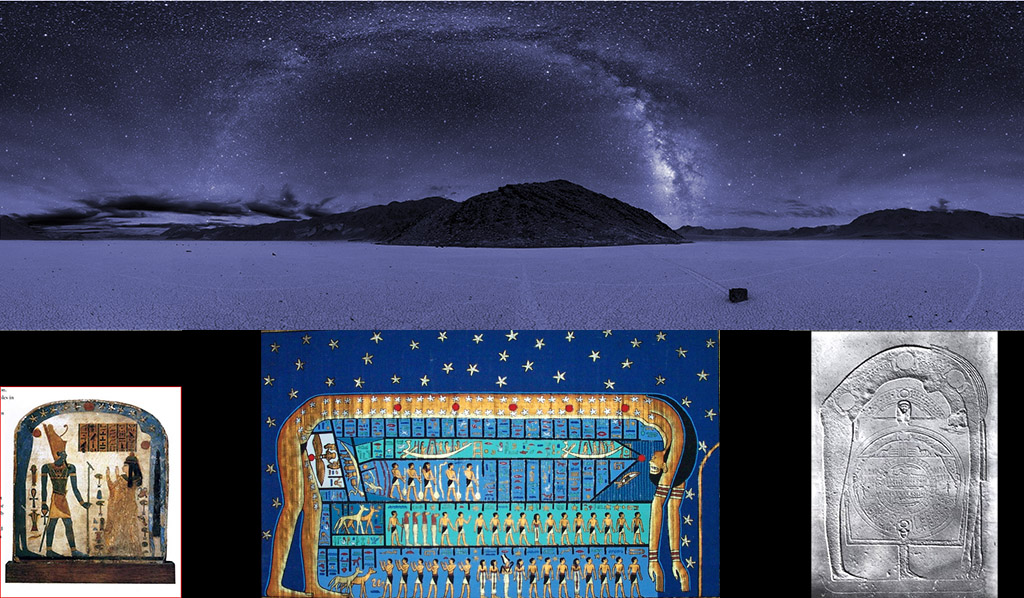
Act III, scene II of Shakespeare’s Romeo and Juliet begins with a breathtaking monologue of Juliet in which she beckons the night to come faster so that she can start her “amorous rites” with Romeo. There are quotes from literature that haunt us and I particularly like this monologue and the line that I made into the title of this post. Romeo and Juliet is an alchemical play that contains a rich interplay of pairs of opposites, the central being the pair of lovers themselves. Juliet meets Romeo (his name means “pilgrim”) at the age of 14, he sees her at night. She is the Moon, the feminine principle, and the Moon at the fourteenth day of her cycle is full, while he is the pilgrim, i.e. the Sun that wanders across the sky, the masculine principle. In the longest night of the year we all await the rebirth of the Sun and Light. But we can also choose to celebrate and rejoice with the Queen of the Night, the Greek goddess Nyx, by turning inwards and reflecting, dreaming and resting. The Norsemen used to call the Winter solstice night “Modranect,” which meant the Night of the Mother. On that night she gave birth to the solar Frey, one of the most crucial gods in their mythology. In ancient Egypt, Nut was the night goddess famously depicted as a woman arched over the earth. This depiction actually may have its roots in winter solstice, as a scholar Ronald Wells speculated:
“… in the predawn sky at winter solstice in predynastic Egypt the Milky Way would have looked remarkably like a stretched out figure with arms and legs touching the horizons in exactly the manner in which the goddess was often later depicted. Furthermore, at the time of the winter solstice the sun would have risen in the area of the goddess’s figure – her pudendum – from which it would be imagined to be born, just as nine months earlier, at the spring equinox, the sun would have set in the position of the goddess’s head – suggesting it was being swallowed.”
Richard H. Wilkinson, The Complete Gods and Goddesses of Ancient Egypt
I hope you enjoy my collection of quotes meant as a tribute to Night.
I.
“You, darkness, of whom I am born —
I love you more than the flame
that limits the world
to the circle it illumines
and excludes all the rest.
But the darkness embraces everything:
shapes and shadows, creatures and me,
people, nations — just as they are.
It lets me imagine
a great presence stirring beside me.
I believe in the night.”
Reiner Maria Rilke, from “Book of Hours,” translated by Anita Barrows and Joanna Macy

Gustave Moreau, The Fiancée of the Night
II.
“I turn away from the light to the holy, inexpressible, mysterious night. Far away lies the world sunk into a deep vault, its place waste and lonely. Across my heart strings a low melancholy plays. I will fall in drops of dew and merge with the ashes. Distant memories, the wishes of youth, the dreams of childhood, the brief joys and vain hopes of a long life – all arise dressed in grey, like evening mist after sunset. In other lands light has pitched its merry tents.
Are you pleased with us, dark night? What is it you conceal under your mantle, that grabs invisibly and powerfully at my soul? You raise up the heavy wings of the soul – darkly and inexpressibly we are moved.”
Novalis, “Hymns to the Night,” translated by Simon Elmer

Gustave Moreau, “Night”
III. “Nyx, the forgotten primordial Greek goddess of night, is calling for resurrection. And there are unexpected gifts to be found in the darkness she brings, if we choose to be more nightminded. Night has been celebrated and sanctified with rich social and sacred rituals across cultures and time. Whether it is the initial transition through the dusk, the experience of sleeping and dreaming, or the coming of dawn and awakening, each phase of night offers sacred and healing possibilities.
…
We suffer today from serious complications of psychospiritual night blindedness – a far-reaching failure to understand the significance of night in our lives, health, and spirituality. Over the past century, “civilized” nights have grown significantly shorter. A culture of zealous industrialization has polluted the night environment with excessive and pernicious artificial illumination. Blinded by this light, we have lost our regard for the natural milieu of dusk, dawn, and the intervening darkness of night.”
Rubin R. Nayman, Healing Night: The Science and Spirit of Sleeping, Dreaming and Awakening

From Mozart’s “The Magic Flute,” The Arrival of the Queen of the Night, stage set by Karl Friedrich Schinkel

Johfra Bosschart, Sagittarius
1.“The right art,” cried the Master, “is purposeless, aimless! The more obstinately you try to learn how to shoot the arrow for the sake of hitting the goal, the less you will succeed in the one and the further the other will recede. What stands in your way is that you have a much too willful will. You think that what you do not do yourself does not happen.”
Eugen Herrigel, “Zen in the Art of Archery”
2. “You are an explorer, and you represent our species, and the greatest good you can do is to bring back a new idea, because our world is endangered by the absence of good ideas. Our world is in crisis because of the absence of consciousness.”
Terence McKenna
3. “One idea lights a thousand candles.”
Ralph Waldo Emerson
While I was looking at this image it occurred to me that Johfra’s Sagitarius is an image of the Sacred Masculine in its triple aspect, analogous to the triple goddess. Zeus, the heavenly Father, lights the arrow of the centaur, half-Man, half-Beast, who had reached the stage of initiation as a result of mastering his body and spirit by following instructions of his Master, the Hermit.
The very centre of the image is the horse’s belly, the third chakra ruled by the planet Jupiter, which in turn rules Sagittarius. This is where initiation starts. Alchemy, as Hillman points out, uses the horse’s belly as an image of inner heat, which is appropriate, as Sagittarius is the last of the fire signs.
“Alchemy employs metaphors of fire for the intense concentration needed for soul-making. The heat of the horse’s belly referred to the digestion of events, brooding and incubating, instead of flaming up with martial temper. It is an inward heat, a contained fire.”
James Hillman
Using the language of alchemy, we can say that the centaur is “enveloped and cooked” by the heat of the animal drive within him. The skin of the Ram (Aries being the first fire sign) hangs on his arm, which might suggest that he has mastered his ego drives.
The wise centaur Chiron was the creature that recognized the wisdom and sacredness of Mother Earth – the sacred matter. The mount Pelion, where he resided in a cave, abounded in healing herbs and lush greenery. Johfra once again showed his amazing symbolic talent here. He did not know that the esoteric ruler of Sagittarius is the Earth, but the painting he created shows that deep down he sensed it. If you look carefully at the image, you will notice a number of nymphs near the water and on the grass. The ancients believed the world was populated by graceful Nymphs (nubile women), who lived in the sea, the mountains, caves, trees, streams, rivers, glens and groves. Zeus, the ruler of Sagittarius, was particularly fond of them, to his wife Hera’s chagrin. Eurynome, an Oceanid, bore him the three Charites (Graces), who embodied the spirit of charity and joy (the Greek hairein meant “to rejoice,” as Liz Greene points out). With the Titan Themis he had the Horai: Eunomia (lawful order), Dike (just retribution) and Eirene (peace). Thus the sign Sagittarius is connected with the realm of justice as an alternative to revenge. The name Zeus or djeus meant “the light of heaven,” which links the sign with organized religion and the eternal spirit:
“When he emerges as the victorious king of the gods, overthrowing the rule of the earthy Titans and establishing his own heavenly domain, he reflects the emergence into collective consciousness of a spiritual principle which is greater than Moira. It is therefore appropriate that Sagittarius should follow Scorpio, for Zeus embodies that which belongs to the eternal spirit rather than the mortal flesh. “
Liz Greene
The essence of Sagittarius is transcendence of the world of form, but in pursuit of this goal Sagittarians often find themselves trapped by the flesh. As a god, Zeus did not have to suffer “the slings and arrows of outrageous fortune,” unlike the centaur Chiron of the constellation of Sagittarius, who was not an Olympian but a son of the earth. Lower centaurs, less evolved than Chiron, spent their lives just drinking and satisfying their carnal desires. Chiron, however, was a wise healer, scholar and prophet. He was a tutor to Greek heroes, who tragically suffered an accidental mortal wound by Heracles’ arrow dipped in Hydra’s poison. The arrow symbolism is central to the sign of Sagittarius (“sagitta” means “an arrow” in Latin). In Chiron’s myth, the arrow is an instrument of fate and bounds the hero to the suffering endemic to flesh and blood.
“The wound lies in the animal aspect of the Centaur, and is in the leg – that which we must stand on, or take our stand, in the material world. … it is the suffering of the animal in man, which cannot fly so high, which is mute, and which is bound to the laws of nature…. The wound points upward to Zeus and the eternal life of the spirit; and it also points down to the equally divine life of the body which must bear such a fiery soul and suffers accordingly.”
Liz Greene
But the arrow also comprises a lofty, spiritual symbolic meaning. Direction, force, movement and power all partake in its rich symbolism. The arrow pierces a distant, unseen target symbolizing “a single-pointed wisdom of penetrating awareness,” as Coomaraswamy puts it. It is important to remember, as the same author points out, that “the reed of which the arrow is made is produced by the earth fertilized by the rains from above.” In the evolved Sagittarius the above meets the below. The archer’s concentration starts from the belly, and the correct, properly balanced posture means everything. “If all the preparations have been made correctly, the arrow, like a homing bird, will find its own goal,” says Coomaraswamy. Herrigel expresses a very similar thought of a Zen master:
“You can learn from an ordinary bamboo leaf what ought to happen. It bends lower and lower under the weight of snow. Suddenly the snow slips to the ground without the leaf having stirred. Stay like that at the point of highest tension until the shot falls from you. So, indeed, it is: when the tension is fulfilled, the shot must fall, it must fall from the archer like snow from a bamboo leaf, before he even thinks it. “
Sagittarians are always in pursuit of truth, but that pursuit is inevitably linked with illusion and distortion, the inalienable shadow side of truth. Not every master out there is like Chiron or a true Zen master, who encourages the apprentice to live the truth, experience the truth, and not only believe it. The bow, when it is drawn properly, encloses the All, the totality, what Rudhyar called the “organic synthesis.” The sign Sagittarius is connected with culture and civilization, propagated by the process of symbolization. Rudhyar summarizes it beautifully:
“Sagittarius, being a Fire sign, is a transforming energy. Being also a mutable sign…, it is energy moving in a spiraling rhythm. Indeed, Civilization develops as a spiral, through the activities of individuals whose creative destiny repeats itself according to a definite spirallic process of constant refocalization.”
The focus of the archer keeps changing with the times and according to the dominant archetypal mode of his or her culture. Sagittarius deals in ideas, which are “abstractions and generalizations of experiences.” The domain of Sagittarius are all-encompassing, universal laws; the danger for the sign is losing contact with the concrete reality of facts, which are represented by the sign opposite to it – Gemini. Another danger is becoming a slave to a guru ideology, which is not rooted in direct experience. Ideas can be more deadly weapons than arrows; and when an idea falls on a fertile ground, paradigms shift. “No army can withstand the strength of an idea whose time has come,” as Victor Hugo wrote.
Support my blog
If you appreciate my writing, consider donating and make my day. Thank you in advance.
$1.00
Sources:
Johfra Bosschart, Astrology
Ananda C. Coomaraswamy, ”The Symbolism of Archery” http://www.studiesincomparativereligion.com/public/articles/The_Symbolism_of_Archery-by_Ananda_Coomaraswamy.aspx
Liz Greene, The Astrology of Fate
Eugen Herrigel, Zen in the Art of Archery
Dane Rudhyar, The Zodiac as Universal Matrix
Related posts:

In this time of the year many of us run after the perfect gifts for our loved ones. A gift I chose for myself this week was a small silver box with an engraved stag. I saw it at a Christmas open-air market and just had to have it. The reason is obvious enough for Greek myth lovers: the lunar (silver) goddess Artemis, who had deer as her emblem. As a child, Artemis was asked by her father Zeus what she really desired:
“The infant Artemis sat on Zeus’s lap. She knew what she wanted for the future and told her father all her wishes one by one: to remain forever a virgin, to have many names, to rival her brother, to possess a bow and arrow,…, to hunt wild beasts, to have sixty Oceanides as an escort, … to hold sway over all mountains; she could get by without the cities.”
Roberto Calasso
Her wish was granted. Artemis is this part of the psyche which is primal, wild and unbound; it is the wild hunter in us, not the domesticated farmer. She is alien to settling down, for her thrill is the endless chase. The emotion I associate with this goddess is a feeling of joy and total liberation. She brings the joy of liberation and expresses it through her delightful singing and dancing, as we read in the hymn by Homer:
“…when she is satisfied and has cheered her heart, this huntress who delights in arrows slackens her supple bow and goes to the great house of her dear brother Phoebus Apollo, to the rich land of Delphi, there to order the lovely dance of the Muses and Graces. There she hangs up her curved bow and her arrows, and heads and leads the dances, gracefully arrayed, while all they utter their heavenly voice…”
Her first instinct is to defend. Her fighting skills also resemble those of a dancer; she never attacks head-on, hacking and stabbing, but rather accomplishes a victory gracefully, as was the case in the myth of the Aloadai Giants, who in their youthful foolishness decided to raid the Olympus. The first goddesses they encountered were Hera and Artemis:
“The first twin, Ephialtes, tried to force his unwanted attentions on Hera, and the second Otos did likewise to Artemis. Artemis escaped from Otos by shape-shifting into a deer, distracting the young giants. Ephialtes and Otos decided they wanted to kill the divine deer. Artemis cunningly ran between them, and as they tried to spear her she moved too swiftly for the cumbersome giants to hit her. As a result they missed and killed each other instead, just as Artemis had planned.”
Sorita D’Este

Michiel Van der Sommen, Artemis, via http://www.mvandersommen.com/artemis%20page.html
I have been thinking a lot about Artemis recently while researching the symbolism of the arrow and archery for my monthly installment of the Images of the Zodiac. No other weapon is so graceful, so striking as the bow, and Artemis is a master archer. Furthermore, I saw two young graceful stags crossing my path in the woods quite recently, which filled me with enormous joy. Another interesting omen was a piece of information I found out just a few days ago: apparently, the name Berne, the capital of my adopted country, Switzerland, means “she-bear” and a black bear is also the emblem of the city. I turns out that ancient Helvetian tribes used to worship Artemis as She-Bear in this area.
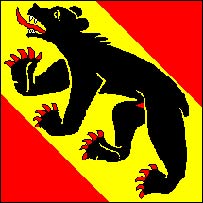
That connects Artemis to the constellation Ursa Major, which in esoteric thought is believed to rule the stars and protect the World Axis (axis mundi). The axis mundi resembles an arrow, so it is fitting that Artemis should guard it. Also, the world axis, where the four compass directions meet, is equaled with the world tree, and Artemis’s home was the woods.
“The months and seasons are determined by the revolution of Ursa Major. The tail of the constellation pointing to the east at nightfall announces the arrival of spring, pointing to the south the arrival of summer, pointing to the west the arrival of autumn, and pointing to the north the arrival of winter. … “
Barbara G. Walker

The bear, according to Ted Andrews, is “the true last symbol of the primal, natural world.” It is naturally associated with trees, thanks to its climbing skills and also because of its love of honey. The sweetness of life can only be tasted by returning to primal nature.
As was the case with many other goddesses, also the genealogy of Artemis proves to be very ancient. Robert Graves returns to the Akan (African) roots of her myth. It is not unexpected that she is a descendant of a very ancient Moon goddess:
“In the most primitive, the Moon is worshipped as the supreme Triple-goddess Ngame, … . Ngame is said to have brought forth the heavenly bodies by her own efforts, and then to have vitalized men and animals by shooting magical arrows from her new-moon bow into their inert bodies. She also, it is said, takes life in her killer aspect; as did her counterpart, the Moon-goddess Artemis.”
Walt Disney, Fantasia
Her arrows are in equal measure life-giving and life-taking. She hunts wild beasts but also protects them, and can be thus regarded as a regulatory force in nature. She remains unmarried and childless but protects women in childbirth and helped deliver her own brother, Apollo. She is pure, primal and fierce. She also protects the essential, godlike feminine aspect against being raped and contaminated. In the most famous myth, Actaeon sees her naked while she is bathing in a pond, and pays with his life, for she transforms him into a stag and he is ravished by his own hunting gods. This ritual was very common in many cultures, as Graves asserts:
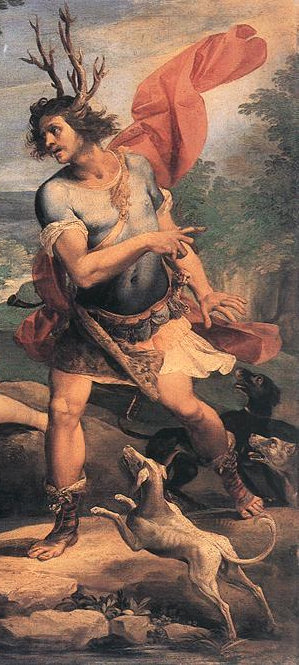
Giuseppe Cesari, Actaeon and Diana (detail)
“…the ritual bath in which Actaeon surprised her, like the horned hinds of her chariot and the quails of Ortygia, seems more appropriate to the Nymph than the Maiden. Actaeon was, it seems, a sacred king of the pre-Hellenic stag cult, torn to pieces at the end of his reign of fifty months, namely half a Great Year; his co-king, or tanist, reigning for the remainder.”
To me, she is the untamed, uncivilized part of every woman and man; the part immersed in nature, living and breathing in concert with its universal rhythm. Her chariot was pulled by deer and she was called the Lady of the Beasts. Ted Andrews points out that the Anglo-Saxon word “deer” was first used as a general word denoting all animals and wild beasts. He traces it back to the Sanskrit “mrga,” meaning “wild animal.” He sees the symbolism of the deer as the lure of adventure and the call of the wild:
“The hunt of the deer is what transfers our civilization to the wilderness. There are many stories and myths of deer luring hunters or even kings deep into the wood until they are lost and begin to encounter new adventures.”
The antlers may stand for the attunement to our intuition and to acute perception in general. The senses of the deer are incredibly acute, as Andrews points out: “especially effective at detecting contrasts and edges in dim light.”
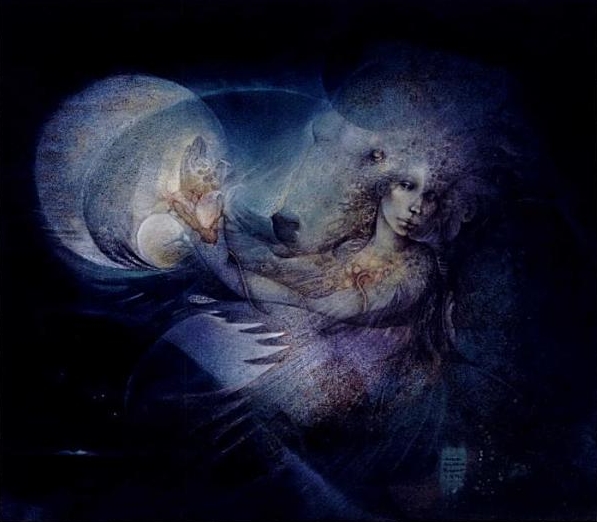
Susan Seddon Boulet, Artemis Callisto (Mother Bear)
Gentle as a deer and ferocious as a bear, Artemis protects all that grows and develops, especially children, young animals and mothers. She is powerful but not invincible – Hera particularly hates her because she is the fruit of Zeus’s tryst with Leto. Hera’s mythical supremacy over Artemis may just be the patriarchal finger wagging at the wild and independent feminine power. But no one can destroy Artemis, much as Hera would like to get rid of yet another proof of her husband’s infidelity. As opposed to Hera, Artemis cherishes her aloneness and privacy. Aphrodite or Eros had no supremacy over her: she loved her solitude. She embodies that aspect of a woman that is non-relational and not looking for a partner or a mate. She is completely self-sufficient. When Artemis decides to spend time with a man she chooses her equals: hunters, like Orion, or other children of wild nature and ecstasy, such as Dionysus, who she fought side to side with against Hera in the Indian wars, or Pan, who presented her with a pack of wild dogs for hunting.
At Ephesus, where her famous temple and a place of cult were located, she was worshipped as a luscious fertility goddess with multiple breasts symbolizing endless nourishment. The temple of Ephesian Artemis in Ephesus was one the seven wonders of the world; it was surrounded by two streams. The temple was burnt to the ground by Herostratus, who thus wanted to immortalize his name. The burning of the temple coincided with the birth of Alexander the Great, the conqueror of Asia.
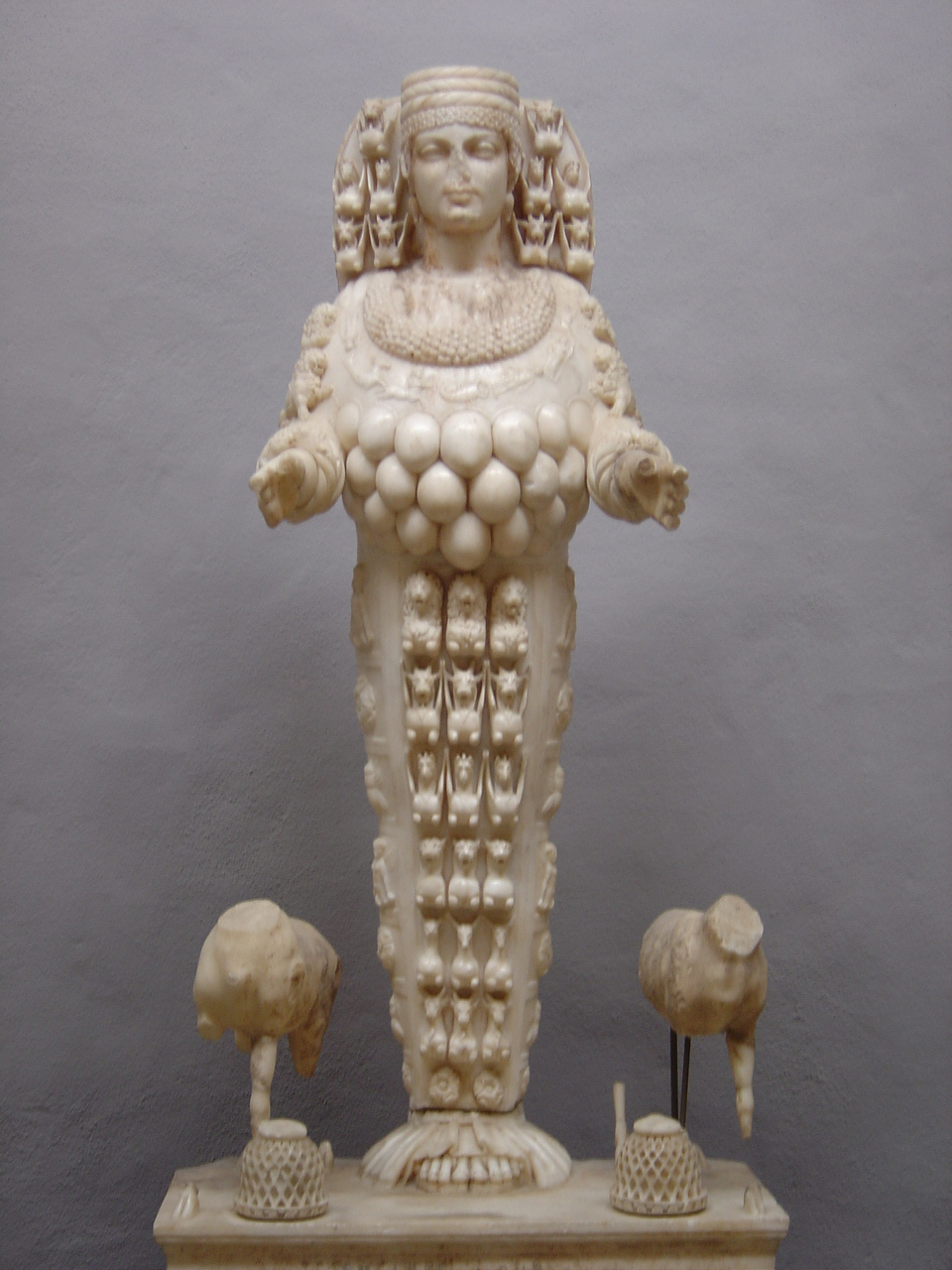
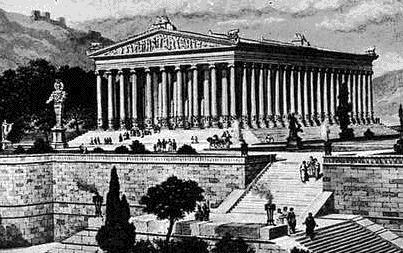
What her temple possibly looked like
“Eastern soothsayers who visited the ruins of the temple prophesied that the day that the temple burned down was an omen predicting that a great force which would destroy Asia came into the world.”
Robert Graves
In this season of darkness, let lunar Artemis guide us with her torch to the fertile, hidden recesses of our wild hearts.
Sources:
Ted Andrews, Animal Speak
Roberto Calasso, The Marriage of Cadmus and Harmony
Sorita D’Este, Artemis: Virgin Goddess of the Sun, Moon and Hunt
Robert Graves, The Greek Myths
Barbara G. Walker, The Woman’s Encyclopedia of Myths and Secrets
"The deepest core of life is poetry and symbol." - Dane Rudhyar





Support my blog
If you appreciate my writing, consider donating and make my day. Thank you in advance.
$1.00

 symbolreader