Images of the Zodiac: Contemplating Aquarius

Image

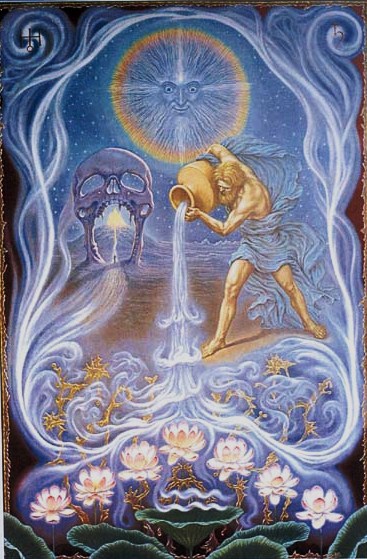
Johfra Bosschart, Aquarius

1.“And the pool was filled with water out of sunlight,

And the lotus rose, quietly, quietly,

The surface glittered out of heart of light.”

T.S.Eliot, “Burnt Norton”

2.“Praise to the jewel in the lotus.” (Om mani padme hum)

3. And God said, Let there be a firmament in the midst of the waters, and let it divide the waters from the waters. And God made the firmament, and divided the waters which [were] under the firmament from the waters which [were] above the firmament: and it was so. (Genesis 1: 6-7)

Looking at the image, these words come to me: pure, luminescent, incandescent, pristine, enlightening. Johfra surpassed himself by managing to portray the mystery of transcendence. We are beyond the bounds of time and space here, contemplating the heart of cosmic consciousness, the primordial fabric of the universe. While looking at the image each of us will be undoubtedly captured by a different part of it. For some reason, over and over again I found myself looking fixedly at the seven luminescent lotuses at the bottom. Before writing about Aquarius I felt there was a pressing need for me to get closer to understanding the mystery of the sacred lotus (Nelumbo nucifera). I took a long time studying its mystery, helped by a wonderful book by Mark Griffiths, a renowned British botanist, who became nothing short of obsessed with lotus after receiving three-thousand year old seeds of this precious flower. His method of investigation was very appealing to me because he did not limit himself to science but also explored extensively the mythology of the lotus in various parts of the world. In Hinduism, the goddess Lakshmi together with the god Vishnu are crucial in Vedic creation myth, as Griffiths summarizes:

“They float in the void upon an immense multi-headed serpent whose concave body resembles the wall of a uterus and whose thousands mouths hold the planets. From Vishnu’s navel issues a single flower of Nelumbo which opens to produce Brahma, the god who will set about the work of creation itself. … the lotus, the primal generative organ, is Lakshmi’s and hers alone. She is the female principle and principal, the essential earth in which Vishnu is rooted. Her catalytic energy is known as Shakti, a Sanskrit word for power. A similar symbiosis exists between other lotus goddesses and their male leads – between Isis and Osiris, between Inanna, Ishtar and their various spouses…”

The lotus signifies Vishnu’s authority and purity, and also “his capacity for infinite rebirth and his dominion over Dharma, the rules of conduct that lead to spiritual awakening.” If we were to analyze the above fragment astrologically, we would notice a merger of a few Zodiac signs and if we were trying to extricate the symbolism of Aquarius we would have to stop at the lotus-born Brahma, who produced all the material elements of the universe through his meditation. He also gave humans concept and ideas to understand the material reality.

The lotus is an absolutely outstanding flower. Its diamond-hard seeds can survive thousands of years and still germinate and produce beautiful flowers. Once the seed encounters appropriate conditions, sunlight being a crucial one, but also wet and muddy soil, it is ready to bloom almost immediately, as Griffiths describes:

“The lotus embryo is less like a fledgling nymph and more like Athena, capable of bursting forth from the acorn, its Jupiter’s nut, fully armed for the trials of life. Although encased within the utter darkness of soil and seed shell, it remains full of chlorophyll, ready to seize the day in the midst of perpetual night. The moment light touches it, the lotus plumule is at work, photosynthesizing, fully functioning and fast-moving. Within days of its emergence, this germ of brilliant green will have produced its first rhizome, roots and leaves.”

That passage reminded me of Krishnamurti’s claims that true enlightenment cannot be achieved through time, because it is already there, outside of time, and is achieved immediately: “That ultimate thing, which is truth, is not to be achieved through time. It can never be achieved; it is there; or it is not there.” (via http://www.esotericonline.net/forum/topics/jiddu-krishnamurti-talk-on-enlightenment?xg_source=activity). Aquarius is a fixed sign and in its most evolved expression it signifies the constancy and permanence of the divine logos, which was at the beginning of all creation.  What Iamblichus wrote in Egyptian Mysteries resonates with the symbolism of lotus and Aquarius very deeply:

“God’s being shown seated on a lotus signifies a superiority which rises above and excludes all contact with the mud of the world. It also points to the reign of the intellect in the heavens. For every feature of the lotus is circular, from the outline of its leaves to the shape of its fruit, and circularity alone is akin to the activity of the intellect as it invariably manifests itself in identity, ruled by one order and one reason. God himself is established in himself as being above power and activity of this kind, august and holy in his transcendent simplicity, abiding within himself – this is what his being seated on the lotus signifies.”

What I also learned from the book on the sacred flower was that lotus leaves have astonishing self-cleaning properties. Deborah Houlding, an excellent writer and astrologer, reminds us that for the Romans, February, the month of the water bearer, was traditionally the month destined for purification. Also the mantra om mani padme hum is recited to achieve purity of body, soul and mind. Now we are getting closer to answer the mysterious question why the air sign Aquarius is symbolized by a water bearer. To delve deeper into this mystery, we must look at other creation myths. In the Greek creation myth:

“Earth brought forth Ouranos, the Sky, to be her cover and protector and a place for the blessed gods. He was filled with stars.” (Richard P. Martin)

The planet Uranus is a modern ruler of Aquarius. Johfra chose to depict the god Ouranos as a mandala: the Sun surrounded by a circular rainbow. The rainbow has long been a symbol of human, earthy connection with the great beyond, the realm of the gods and goddesses, the logos. In our times it has also evolved into a symbol of embracing diversity and universal tolerance, also in keeping with the meaning of the sign Aquarius. There is an ongoing debate in astrological circles about traditional and modern planetary rulers. Johfra, who had an uncanny symbolic ear, does not take sides but typically for a non-rigid and open creative artist he honours both traditional, i.e. Saturn and the modern, i.e. Uranus, rulers of Aquarius. I have recently become convinced that both deserve merit. Keiron le Grice writes:

“The encompassing background to the unfolding human drama, the sky has ever been a symbol of the transcendent spiritual power that lies above and beyond the personal sphere of human existence.”

Uranus is a transpersonal planet, while Saturn is the last planet which can be visible with the naked eye. Symbolically, that would mean that Uranus is a force inaccessible by the conscious mind, ego obliterating and transcending the limitations of time and space. Uranus has no choice but act in the world through Saturn, the principle of material realization. In myth, the god Kronos (Roman Saturn) castrated his father Ouranos. When the divine Uranian logos seeks to be embodied in the realm of gross matter, these pristine, beautiful ideas will inevitably get crippled and will always be short of perfection. In his article “Does Uranus rule astrology?”, Dane Rudhyar says that in the name “Uranus” the world “Ur” is hidden, which means “primordial space-substance” or “the original cycle of being.” He says: “Ouranos was, at least in the oldest times, the vast primordial deity that was the ruler or soul of the whole Universe before its various realms or levels of manifestation became differentiated.” If we analyze the symbolism of Saturn more closely, we will discover that there is something very significant that he shares with Uranus, which makes their claims to ruling Aquarius conjointly valid. In his “Meditations on Saturn,” Rudhyar reminds us that in myth the god Saturn was the ruler of the Golden Age (Satya Yuga in Sanskrit). “Satya” and “Saturn” are related, according to Rudhyar:

“The word Sat in Sanskrit signifies ‘essential being.’ It is the pure, spiritual foundation of existence. It is, thus, the seed state before germination – i.e., before the purity of essential being is affected by the results of complex and often adulterating relationships with the world. ‘Satya’ is the powerful assertion (Ya) of essential being. In the now quite fashionable language of Zen Buddhism, the word refers to a man’s ‘fundamental nature’ — or, it is said, to ‘the face one had before one was born.’ This fundamental nature — this pre-existing form of selfhood (i.e., “face”) — which becomes clouded over by a constantly increasing agglomeration of non-essential characteristics and superfluous social acquisitions, this is the seed-being deep in every human personality. To live “spiritually” is to live in terms of, and with reference to, this seed-being instead of according to the dictates or ever-changing moods (perhaps vagaries, even perversions) of our surface being. It is, therefore, to live in terms of what the planet Saturn essentially represents — that is, in terms of the “purity” of our true self. In Sanskrit, the word Satya has also the meaning of truth — but truth not as an intellectual fact — i.e., a statement is true or untrue — but instead as a reference to the essential being of every living entity, especially of every human person.”

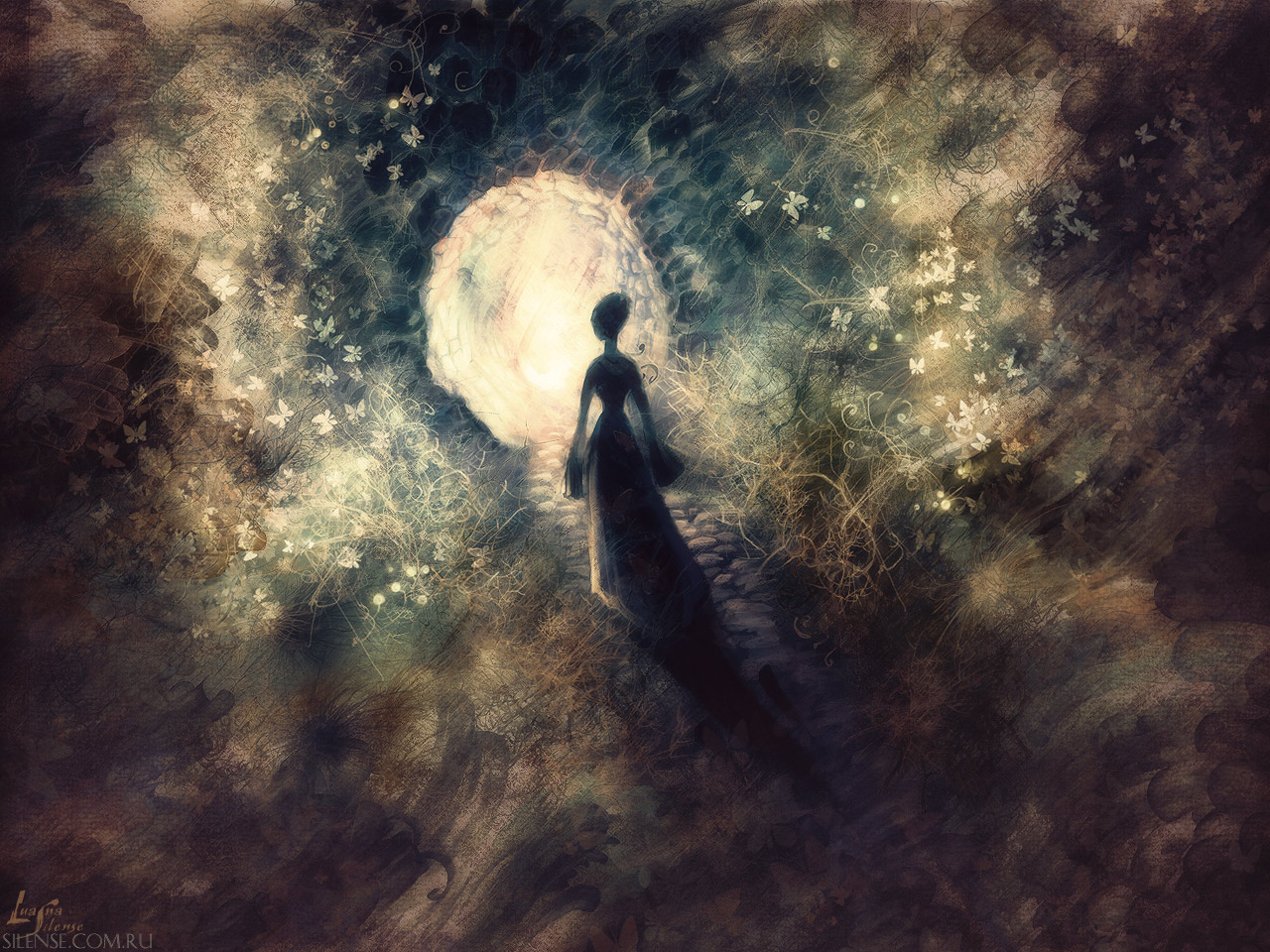
On a personal note, while writing this post I was constantly thinking about a dream I had many years ago that I have always regarded as the greatest dream of my life. In this dream, I was looking at the Sun during a solar eclipse. Suddenly, I saw that the Sun had turned into the planet Saturn, which was entirely made of gold. There was a circular rainbow around Saturn. The whole image was moving, Saturn was spinning and sparkling, and so were its golden rings. I knew when I woke up that I had just been initiated into a very deep truth. Now when I am looking at Johfra’s image of Aquarius, which I did not know at the time when I had the dream, I feel I am getting closer to understanding the essence of that dream. I think it was an alchemical dream, no doubt, but also the golden Saturn was “the pre-existing form of selfhood” that Rudhyar spoke about. In the painting, a pilgrim walks through the gate of the skull towards a supernatural light in the distance. That is the light I saw in my dream, while the skull is a classic symbol of Saturn. It is as hard as rock (the philosopher’s stone), the indestructible core of our spiritual being.

In the painting by Johfra, our lotus seed nature is generated and purified by divine waters poured over it from above. In his Pulse of Life, Rudhyar calls the Uranian urn “the mystic seed-bag”:

 “It is also a symbol of the storm-cloud, laden with bountiful rain which will water the expectant crop, and release the lightning. … The lightning is not only a destructive force. It is the means for the precipitation out of the air of precious nitrogen necessary to living processes.”

The water carried by the water bearer is a pure and sparkling water of the spirit; we might suggest it is not really water but rather prana, life force that permeates the universe and flows through our seven chakras, symbolized by the seven lotuses depicted in the painting. It is important to differentiate between waters of the sign Aquarius and the primordial ocean associated with the sign Pisces, about which I am going to write next month. As Deborah Houlding writes, the glyph of Aquarius Image derives from the Egyptian hieroglyphic Mu, meaning water. When the Moon was full in Aquarius the river Nile flooded and fertilized the land. David Coleman has even more fascinating observations regarding the area of the sky called Celestial Sea, which includes, among other elements, the signs of Pisces and Aquarius:

 “Legends tell us this vast region of the sky is the Source of Life. In the early Bronze Age around 3,000 to 2,000 BCE the winter solstice of the northern hemisphere took place in these stars, a traditionally wet time, and it was known in the northern hemisphere as the Southern Gate of the Sun for the Sun had reached its most southerly point in the skies (the Tropic of Capricorn) and thus began to return light to the world from thereafter leading up to the following solstice.

Note that here I use the term primordial waters, indicating something quite different to the oceans or even the Water Element itself – specifically I am referring to the primordial waters of life that are the astral plane, and astrologically to the influence of the stars that make up the Celestial Sea. In modern terms we might think of this as the medium by which nature causes forms to emerge from the complex interactions of individual organisms as demonstrated by fractals and Chaos Theory. There is a form of natural order that emerges (on Earth) primarily in synchrony with the influence of Jupiter and Saturn on the broader scale and the Sun and Moon on the more concrete scale, but it is the stars of the Celestial Sea which magically ‘pour’ this substance over the Earth, they are celestial influences which act as ‘taps’ that pour the astral waters of life upon our awareness.”

We can say that the modern ruler of Aquarius, i.e Uranus, rules the invisible patterns, which self-organize into a system manifesting physically as the world of form, ruled by Saturn. Reality is a “dynamic patterned energy process,” as Le Grice puts it, and as Johfra so wonderfully shows in his depiction of Aquarius. According to Cartesian dualism mind and body existed independently, but we no longer believe that mind is an incorporeal substance. Says Le Grice:

  “…mind and matter, it appears, are mutually dependent: mind depends on material structure, yet this structure is itself the physical expression of mind. Mind, in this sense, brings forth the structure of the world. The entire universe – every aspect of the material world – arises from the embodiment of mind in structure. …

The cosmos, we might say, is the materiality of the cosmic mind, and the cosmic mind is the interior dimension of the cosmos.”

I am reminded of C.G. Jung’s concept of unus mundus: a common transcendent background for both mind and matter, the matrix of life, the spring of being. David Bohm spoke of the same thing when he wrote about “the implicate order.” As Le Grice summarizes it: “The material world of space and time emerges out of the ‘cosmic ocean’ of energy, Bohm suggests, as an ‘excitation pattern’, like a ripple on a vast sea’.”  Mind and matter are two faces of one unitary reality.

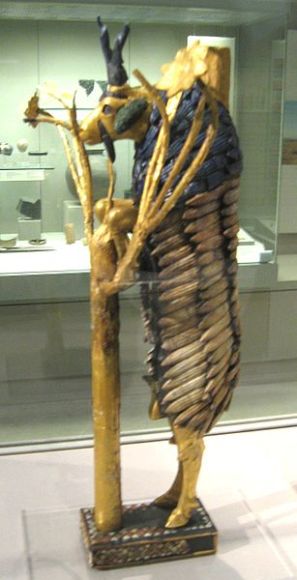
What will the approaching Age of Aquarius bring? I would say we my see “the union of Ibex and Lotus.” I am referring here to an archaeological discovery made at Ur (ancient Mesopotamia): a figure of a mountain goat feasting on lotus. When it was originally discovered it was mistakenly referred to as “Ram in a Thicket.” The goat, connected with the sign Capricorn, in Johfra’s painting symbolized by the skull (see my post on Capricorn for more details), intimately connects with its sacred seed, its divine lotus nature. The light shining beyond the skull in the distance is the Holy Grail, the truth of enlightenment, which connects us with our inner divine spark and shows our connection to the whole universe.

Finally, I see it as extraordinary synchronicity that I should have come across this poem by Boris Pasternak today on Nigel Borrington’s blog. I think it describes the essence of Aquarius:

After the storms , Poem By : Boris Pasternak
Image

(image from Wikipedia)

Support my blog

If you appreciate my writing, consider donating and make my day. Thank you in advance.

$1.00

Sources:

David Coleman, “The Guardian of the Collective”, http://astralvisions.wordpress.com/2013/10/17/the-guardian-of-the-collective/

Keiron Le Grice, The Archetypal Cosmos: Rediscovering the Gods in Myth, Science and Astrology

Mark Griffiths, The Lotus Quest: Travels in Search of the Sacred Flower

Deborah Houlding, “Star Lore of the Constellations: Aquarius the Waterbearer”,

http://www.skyscript.co.uk/aqua_myth.html

Richard P. Martin, Myths of the Ancient Greeks

Dane Rudhyar, “Does Uranus Rule Astrology?” http://www.khaldea.com/rudhyar/astroarticles/doesuranusruleastrology.php

Dane Rudhyar, “Meditations on Saturn”, http://www.khaldea.com/rudhyar/astroarticles/meditationsonsaturn.php

Dane Rudhyar, The Pulse of Life

Rachel Storm, The Encyclopedia of Eastern Mythology

Related posts:

Images of the Zodiac: Contemplating Aries

Images of the Zodiac: Contemplating Taurus

Images of the Zodiac: Contemplating Gemini

Images of the Zodiac: Contemplating Cancer

Images of the Zodiac: Contemplating Leo

Images of the Zodiac: Contemplating Virgo

Images of the Zodiac: Contemplating Libra

Images of the Zodiac: Contemplating Scorpio

Images of the Zodiac: Contemplating Sagittarius

Images of the Zodiac: Contemplating Capricorn

Images of the Zodiac: Contemplating Pisces

Posted in Johfra Bosschart | Tagged , , , , , , , , , , , , , , , , , , , , | 33 Comments

The Secrets of the Odyssey (1)

Image

Timanthes, “The Sacrifice of Iphigenia” (detail: Odysseus)

Homer’s Odyssey has always held an extreme fascination with me. All the characters and what happens to them have been coming back to me recently, perhaps in connection with Mercury retrograde with Neptune. The non-linear journey full of fantastical encounters seems to correlate well with these archetypes. There is such richness of themes in The Odyssey and so many layers; I am starting this series with little hope I will actually be able to exhaust this vast subject. But sing, o Muse, as Homer would put it. I will not be retelling the story in as much detail as I did in the series on Eros and Psyche, but I will be referring extensively to a book by Florence and Kenneth Wood Homer’s Secret Odyssey.

Image

The blurb of the book says:

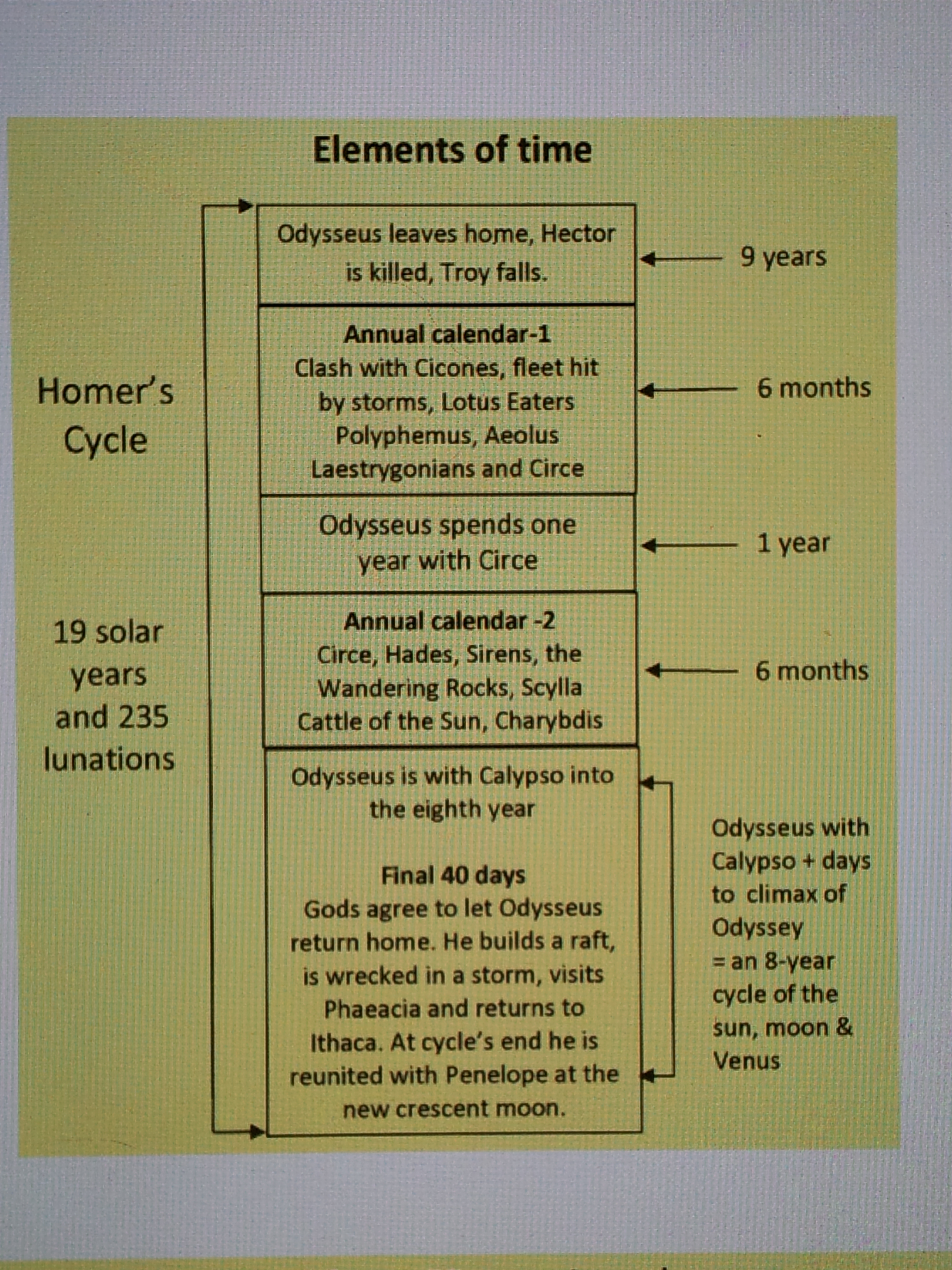
“Research now reveals that at a time when the Greeks did not have a written script, Homer concealed an astonishing range of learning about calendar making and cycles of the sun, moon and planet Venus in the Odyssey, his epic of the Fall of Troy and the adventures of the warrior-king Odysseus. With original research and content, this book is written to appeal to both popular and scholastic audiences, rolling back the history of Greek astronomy by three centuries.”

There is “a wealth of secret learning encrypted” in Homer’s epic, the authors claim:

“… the danger-filled adventures are played out not only on earth but also in parallel scenarios that conjure beautiful metaphorical images of stars, constellations and the Milky Way, set against the background of the wine-dark seas of the night skies.”

Image

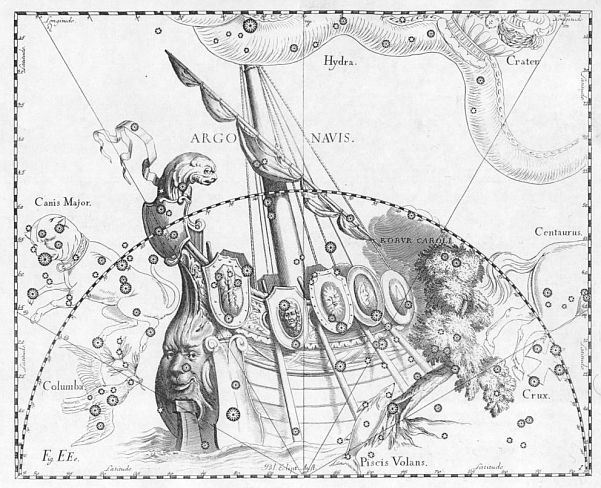
about the image: “Canopus is the second brightest star in the sky (only Sirius is of greater magnitude) and the second most important navigational star (after Polaris, the “north star”). Canopus was also the name of a town in the Nile delta in ancient Egypt and said to be the name of Odysseus’ (Ulysses) navigator (‘kybernos’ in Greek, the word from which ‘cybernetics’ and many other modern words related to information technology are derived) on the Argo.” (via: http://canopusresearch.com/about-canopus-research/)

Apart from its extraordinary literary value, the story of Odysseus was conceived to preserve the important ancient knowledge of the society that was pre-literate. Scholars believe that it was originally composed in oral tradition and written down much, much later. The truth is that it does sound beautiful when read aloud. Odysseus was renowned for his brilliant intelligence and cunning nature. Homer called him “ingenious” right in the first line of The Odyssey. The Trojan Horse ploy was after all his idea. Choosing a man with a brilliant mind as a hero is ideal for the task of preserving the wealth of ancient knowledge:

“To achieve his aims Homer created for Odysseus an alter ego as a personification of the moon. So closely is Odysseus’ iconic role linked to the calendar that the tempo of his adventures is governed by the rhythm of the monthly lunar cycle, from one new crescent moon to the next. … A range of literary devices are employed to conceal knowledge: Odysseus’ adventures contain the main body of learning but prominent characters, such as his wife Penelope, son Telemachus, the beautiful Helen of Troy, the pig-keeper Eumaeus and even his faithful hound Argus, are linked to the calculation of time.”

Image

Odyssey (Bibliotheque Nationale de France)

Do you see the emerging pattern? Odysseus, the master of trickery and disguise, is himself used to smuggle in important knowledge. How ingenious on the part of Homer:

“Homer records such precise information about the lunar year, the solar year, luni-solar cycles and other calendrical matters that the astronomers of the eighth century BC have to be acknowledged as being far more advanced than has previously been recognized.”

I am reminded of Thoth, the ancient Egyptian god of the Moon presiding over knowledge and wisdom, who was also “scribe, doctor, scientist, magician, mathematician, astronomer, archivist, maker of calendars, inventor of wind and stringed musical instruments, patron of literature, grand vizier of Osiris,” as Raven Kaldera wittily puts it in his book Myth Astrology.

Image

Thoth

The Odyssey with its protagonist is linked to Thoth in the sense that it combines the symbolism of the Moon and Mercury in order to impart knowledge and wisdom through metaphor, poetry, myth and stories. This has always been the most effective way of learning for me.

Image

image credit

Related posts:

The Secrets of the Odyssey (2): Elements of Time (the Muse and the Moon)

The Secrets of the Odyssey (3): Calypso and Phaecians

The Secrets of the Odyssey (4): A Tribute to Penelope

The Secrets of the Odyssey (5): Lotus-Eaters, Auriga and Polyphemus

The Secrets of the Odyssey (6): the God of Winds

The Secrets of the Odyssey (7): Circe and the Underworld

The Secrets of the Odyssey (8): the Sirens, Scylla & Charybdis, and Thrinacia

The Secrets of the Odyssey (9): Leucothea in the Sea of Space and Time

https://symbolreader.wordpress.com/2014/07/14/the-secrets-of-the-odyssey-10-return-to-ithaca-through-the-cave-of-the-nymphs/?preview=true

The Secrets of the Odyssey (11): Death of Odysseus, Master of Land Ways and Sea Ways

Posted in The Odyssey | Tagged , , , , , , , , , , , , , , | 26 Comments

Will We Be Saved Each One Alone?

Image

Mara, Lord of Death and Desire holding a Wheel of Reincarnation

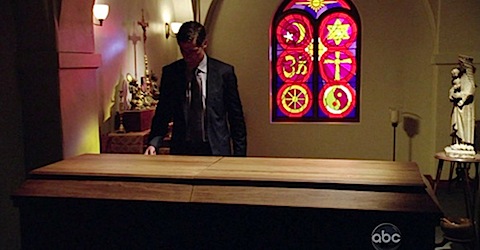
I have written before how much I love the TV show “Lost.” I have just finished watching it all over again and I must say the final episode of the last season was again incredibly moving to me. While I was watching it yesterday I could not help thinking it was mysteriously in sync with the current planetary line-up of Jupiter in Cancer opposing Pluto in Capricorn. In case you do not know the show, in the last episode, which is very esoteric and mysterious, the main characters meet in a church, which is not a regular church but more like a temple with symbols from various religions and mystical traditions. It seems that all the characters are dead at this point and they are there to “leave” and “move on.” Alternatively, the scene could be interpreted as the transition of just one character, Jack Shephard, who had died and was to make a transition to afterlife surrounded by friends and family. All the characters, or just Jack, were there to bid farewell to their mortal existence and transit through a doorway into the afterlife. I thought of Cancer and Capricorn at this point because the mystery of life, death and rebirth is deeply connected with the Cancer-Capricorn polarity, as Cancer marks the highest ascent of the Sun in the northern hemisphere, while Capricorn marks its lowest ascent.  As Master DK taught, Cancer is the “gate in” while Capricorn the “gate out;” we incarnate into human form in Cancer while Capricorn is the sign of the return to the spirit.

I felt that the Cancer-Capricorn polarity was beautifully shown in this episode. The main character’s death was shown as a sublime experience, full of peace, wisdom, love and acceptance.

Image

Image

I found a relevant and quite striking quote in a classic book by Roger J. Woolger entitled “Healing Your Past Lives,” which I can thoroughly recommend:

“Budhists and Hindus alike believe that the last thought at the moment of death determines the character of the next incarnation. … The Tibetan tradition counsels us that the finest way to die is to leave the transient way consciously and peacefully if we can, taking no thoughts, no body pains of any kind with us; it teaches us that only when we become completely empty can we know the pure radiance of our limitless minds.”

What I loved about the moment of death and transition shown on “Lost” was that it was both in keeping with the Buddhist instruction on “perfect death” (which takes care of the Capricorn Spirit polarity) but it also incorporated the polar opposite of Cancer and invoked the feeling of warmth felt when surrounded by your loved ones. Capricorn without Cancer can be quite cold and unforgiving. I was reminded of a very powerful poem by Zbigniew Herbert, a Polish poet that I often quote on my blog. The poem is called “At the Gate of the Valley”:

“After the rain of stars
on the meadow of ashes
they all have gathered under the guard of angels

from a hill that survived
the eye embraces
the whole lowing two-legged herd

in truth they are not many
counting even those who will come
from chronicles fables and the lives of the saints

but enough of these remarks
let us lift our eyes
to the throat of the valley
from which comes a shout

after a loud whisper of explosion
after a loud whisper of silence
this voice resounds like a spring of living water

it is we are told
a cry of mothers from whom children are taken
since as it turns out
we shall be saved each one alone

the guardian angels are unmoved
and let us grant they have a hard job

she begs
– hide me in your eye
in the palm of your hand in your arms
we have always been together
you can’t abandon me
now when I am dead and need tenderness

a higher ranking angel
with a smile explains the misunderstanding

an old woman carries
the corpse of a canary
(all the animals died a little earlier)
he was so nice – she says weeping –
he understood everything
and when I said to him
her voice is lost in the general noise

even a lumberjack
whom one would never suspect of such things
an old bowed fellow
catches to his breast an axe
– all my life she was mine
she will be mine here too
she nourished me there
she will nourish me here
nobody has the right
– he says –
I won’t give her up

those who as it seems
have obeyed the orders without pain
go lowering their heads as a sign of consent
but in their clenched fists they hide
fragments of letters ribbons clippings of hair
and photographs
which they naively think
won’t be taken from them

so they appear
a moment before
the final division
of those gnashing their teeth
from those singing psalms.”

(Translated by Czeslaw Milosz and Peter Dale Scott)

Image

George Innes, “The Valley of the Shadow of Death”

Image

“Rebirth of a Black Moth”

Posted in Lost | Tagged , , , , , , , , , , , | 31 Comments

Uncovering Inner Knowledge

1.“Knowing demands the organ fitted to the object.”

Plotinus, The Fifth Ennead; Fifth Tractate: Section 12

http://www.sacred-texts.com/cla/plotenn/enn464.htm

2. “There is a sacred science, and for thousands of years inquisitive people have sought in vain to penetrate its secrets. It is as if they attempted to dig a hole in the sea with an ax. The tool must be of the same nature as the objective to be worked upon. Spirit is found only with spirit, and esoterism is the spiritual aspect of the world, inaccessible to cerebral intelligence.”

R.A. Schwaller de Lubicz, Esoterism and Symbol

Image

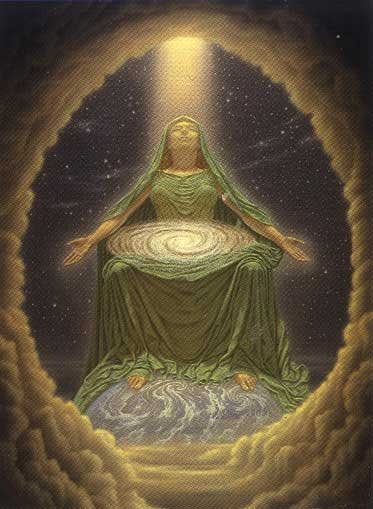
Johfra Bosschart, “Primordial Mother”

Posted in Quotations | Tagged , , , , , , | 20 Comments

Iris: the Goddess of the Rainbow as the Harbinger of a New Era

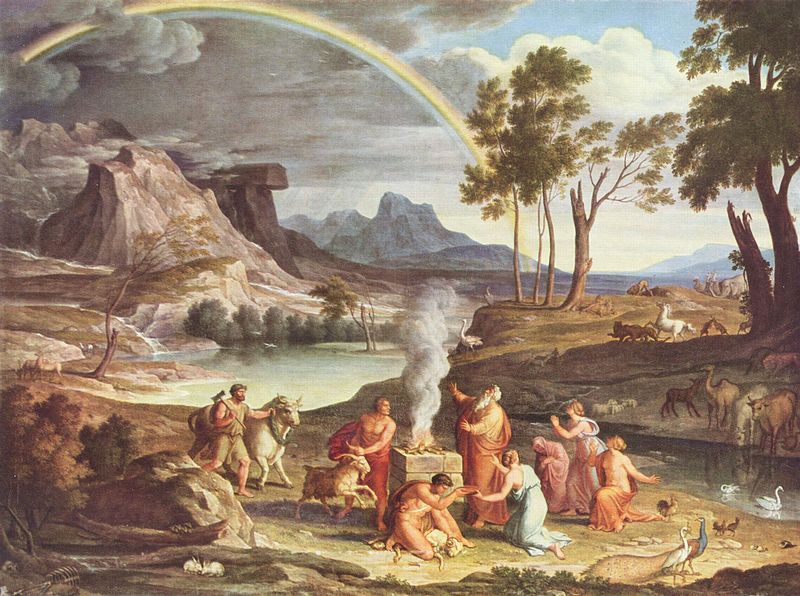
There is a well-known saying that the rainbow comes only after the storm. In the Bible, after the Deluge, God places a rainbow in the sky and pledges solemnly not to send another flood upon the earth: “I have set my rainbow in the clouds, and it will be the sign of the covenant between me and the earth,” as we read in the Book of Genesis. Symbolically, deluge denotes spiritual cleansing and redemption, which ushers in a new era. Probably everyone reading this would agree that the Earth is in deep need of renewal at this point in time. With the Sun currently in Aquarius, my thoughts have been centering on a need for cleansing and renewal; a new suit of ideas that would wake, transform our collective attitudes and fertilize our sterile collective mind. More and more individuals seem to be waiting for an outer manifestation of all the stirrings and movements that have been occurring in the collective psyche. For a reason I cannot explain, because my mind often functions in very whimsical ways, I have been thinking of the symbolism of the rainbow recently.

Image

Joseph Anton Koch, “Landscape with Noah”

The Greek goddess personifying the rainbow is one of the most fascinating deities to me. Her name was Iris and she was a swift-footed, golden-winged messenger to the gods, bringing important news and disappearing as miraculously and quickly as she has appeared; not unlike the rainbow itself. There is also an asteroid Iris (number 7, which is fitting if you think of the colours of the rainbow), which has just crossed the cardinal axis and entered the sign Aries. The emergence from the unconscious waters of Pisces into Aries, the first sign of the Zodiac, is associated with manifestation. Hopefully, the transiting Iris will be a harbinger of change and renewal for all of us. Let’s hope that what has been stirring inside will be brought outside now. The goddess Iris, as a rainbow bridge, linked the sea and the sky, and she was also allowed to enter the underworld and dive in the depths of the sea. The Greeks imagined that she was the goddess who supplied the clouds with the water that she obtained from the seas by means of a golden pitcher, and thus stimulated the rains that brought growth and fertility onto the earth. This must have been born from observing actual rainbows, whose one end as hiding deep beyond the horizon, often in the sea or a body of water and whose other end seemed to reach the heavens.

Image

Image

Guy Head, “Iris Carrying the Water of the River Styx to Olympus for the Gods to Swear by”

Image

John Atkinson Grimshaw, “Iris”

I find it quite fascinating that Iris’s mother was Electra, a cloud nymph and one of the seven Pleiades. The Pleiades themselves were associated with water in all forms, such as rain, frost, ice snow, lakes, rivers, oceans, etc.

“In Greek and Aboriginal mythology the Pleiades are often referred to as ocean or sea nymphs or as water girls and ice maidens. Their relationship with water is multi-layered and multi-faceted and we see numerous connections of the Pleiades with the weather, agriculture, navigation and sailing.”

Munya Andrews

Image

Returning to Iris, but still staying with the symbolism of number seven and the rainbow, for Cirlot, the rainbow is a kind of an elusive bridge which links that which can be perceived with what is beyond perception. The seven colours of the rainbow also refer to the marriage of heaven and earth, because symbolically three is a number connected with heaven and god/goddess while four is associated with the earth and matter. In a classic text by Wynn Westcott (see Sources below), we read:

“The Heptad, say the followers of Pythagoras, was so called from the Greek verb ‘sebo,’ to venerate (and from the Hebrew ShBO, seven, or satisfied, abundance), being Septos, ‘Holy,’ ‘divine’…”

Elaborating on the meaning of number seven and trying to find its synthesis, Cirlot writes:

“It corresponds to the seven Directions of Space (that is, the six existential dimensions plus the centre), to the seven-pointed star, to the reconciliation of the square with the triangle by superimposing the latter upon the former (as the sky over the earth) or by inscribing it within. It is the number forming the basic series of musical notes, of colours and of the planetary spheres as well as of the gods corresponding to them; and also of the capital sins and their opposing virtues. …the six directions of space symbolize—or are equivalent to—the simultaneous and eternal presence of the six days of the Creation, and that the seventh day (of rest) signifies the return to the centre and the beginning. It was indeed the awareness of the seven Directions of Space (that is, two for each of the three dimensions plus the centre) that gave rise to the projection of the septenary order into time. Sunday—the Day of Rest—corresponds to the centre and, since all centres are linked with the ‘Centre’ or the Divine Source, it is therefore sacred in character. The idea of rest is expressive of the notion of the immobility of the ‘Centre’, whereas the other six Directions are dynamic in character.”

To summarize and synthesize, number seven seems to be a perfect and complete number encompassing both the spiritual and the temporal spheres. Madame Blavatsky says that seven is a parthenogenic number “neither born of a mother or a father but that it proceeded ‘from the Monad directly’ and was therefore considered ‘to be a religious and perfect number.’ ” (here quoted after Munya Andrews, author of a splendid book on the mythology of the Pleiades, please refer to the Sources below). The harmony of the spheres is said to rest on the seven tones of creation. In her book on Pleiades, Andrews frequently cites scientific findings and offers her own symbolic interpretations of them, which I find quite illuminating:

 “Ancient beliefs in the creative powers of number seven have been recently affirmed by science. In ‘Just Six Numbers: The Deep Forces that Shape the Universe,’ astronomer Martin Rees has identified one number as the source of our creation, and that is 0.007. What is so remarkable about this number, says Rees, ‘is that no carbon-based biosphere could exist if this number had been 0.006 or 0.008 rather than 0.007.’ ”

And even more amazingly, more so when we think of the Hindu mythology, which refers to the Pleiades as the Seven Mothers of the World:

 “What is enormously interesting about our widespread preoccupation with the number seven in many creation stories is the revelation that genetic analysis of people of European descent traces DNA (deoxyribonucleic acid) carried only in female mitochondrial genes (mtDNA) to seven primordial ‘clan mothers.’ These are The Seven Daughters of Eve who feature in Bryan Sykes’ book, which overturned previously held archaeological and anthropological conjecture about early hominids and spontaneous agricultural development.”

Our Great Mother seems to have been seven in number. In fact, both Madame Blavatsky and Barbara Hand Clow, author of The Pleiadian Agenda, have associated the stars of the Pleiades with the Harmony of the Spheres and the creation of the universe by means of sound and vibration. According to Madame Blavatsky, quoted here after Munya Andrews, “it is the stars of Ursa Major acting in concert with the Pleiades that govern the various cycles of time, including the cyclical destruction and reconstruction of the cosmos.”

What kind of divine message is the goddess Iris bringing to humanity? I feel that she comes down from the heavens to share with us some sacred mysteries that have remained hidden up to now. The word revelation is actually connected etymologically with the act of tearing away a veil. Porphyry, a Neoplatonic philosopher and disciple of Plotinus, wrote that the ancients called heavens “a veil,” which was hiding the true and profound mysteries of creation. Just looking at the Pleiades or at a rainbow, provokes a sense of mystery and awe. The Pleiades seem to be wrapped in blue veils, a rainbow is never crystal clear but always misty and elusive. Barbara G. Walker likens the goddess Iris to the Hindu Maia, who personified “the many-colored veils of the world’s appearances behind which the spirit of the Goddess worked unseen.” She adds:

 “Like the part of the eye named after her, she was the Kore, Virgin, or Female Soul, a form of the Great Shakti who was both the organ of sight and the visible world that it saw. Her spectrum spanned all possible colors.”

Image

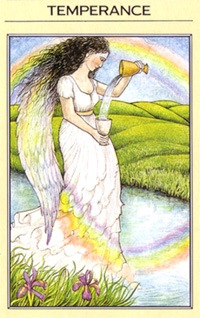
Mythic Tarot, Temperance

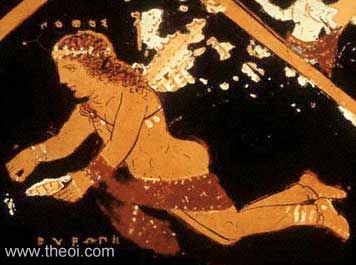
To me, both Iris and the Pleiades and their myth seem to hold the keys to the quality of the approaching New Era. It is worth pointing out that rainbows seem to be bows and arches but are in fact always full circles. We only ever see the upper half of the arc. The Great Round, Full Circle of wisdom is always hidden behind the veil. According to myth, Iris had one son with Zephyrus, god of the West Wind. His name was Pothos. James Hillman was fascinated by that mythical figure and had a lot of amazing things to say about him. For the Greeks, pothos meant “erotic feeling of nostalgic desire,” “a yearning desire for a distant object.” Somewhere over the rainbow, beyond the horizon, is what we desire. We long for “the unattainable, the ungraspable, the incomprehensible.” The eros and the spirit are forever intertwined. Winning an object of our longing will inevitably bring a feeling of pothos because a desire for love can never be fully satisfied. Says Hillman:  “Pothos, as the wider factor in eros, drives the sailor-wanderer to quest for what cannot be fulfilled and what must be impossible.”

Image

Pothos

We can attain what we long for ultimately only through imagination. Nothing wakes pothos so acutely as a sighting of a rainbow.

Sources:

Munya Andrews, The Seven Sisters of the Pleiades – Stories from around the World

Juan Eduardo Cirlot, Dictionary of Symbols

James Hillman, Senex and Puer (Uniform Edition of the Writings of James Hillman 3)

Barbara G. Walker, The Women’s Encyclopedia of Myths and Secrets

Wynn Westcott, Numbers, Their Occult Powers and Mystic Virtues, http://sacred-texts.com/eso/nop/nop14.htm

Posted in Iris | Tagged , , , , , , , , , , , , , , , , , , , , | 42 Comments

Energy and Action in the Year of the Horse

I found this post quite uplifting. I really hope this will be the year of decisive action and progress.

mommymystic's avatarMommy Mystic

“When I bestride him, I soar, I am a hawk: he trots the air; the earth sings when he touches it; the basest horn of his hoof is more musical than the pipe of Hermes.”

–       Shakespeare, Henry V

January 31st is Chinese New Year, ushering in the Year of the Horse, and it is followed one month later by Losar, the Tibetan New Year. As I’ve done the last few years, over at BellaOnline I’ve offered an overview of some of the traditional interpretations of the Year of the Horse, drawn from Chinese astrology. Here at Mommy Mystic I’m doing my own take, based on the symbolism of the horse in various cultures and time periods. This is part intuitive read, and part symbolic play.

I hope you enjoy it and feel inspired by the energies available this year, because if there is one prominent theme in…

View original post 1,471 more words

Posted in Uncategorized | Tagged | 6 Comments

Poetic Genesis

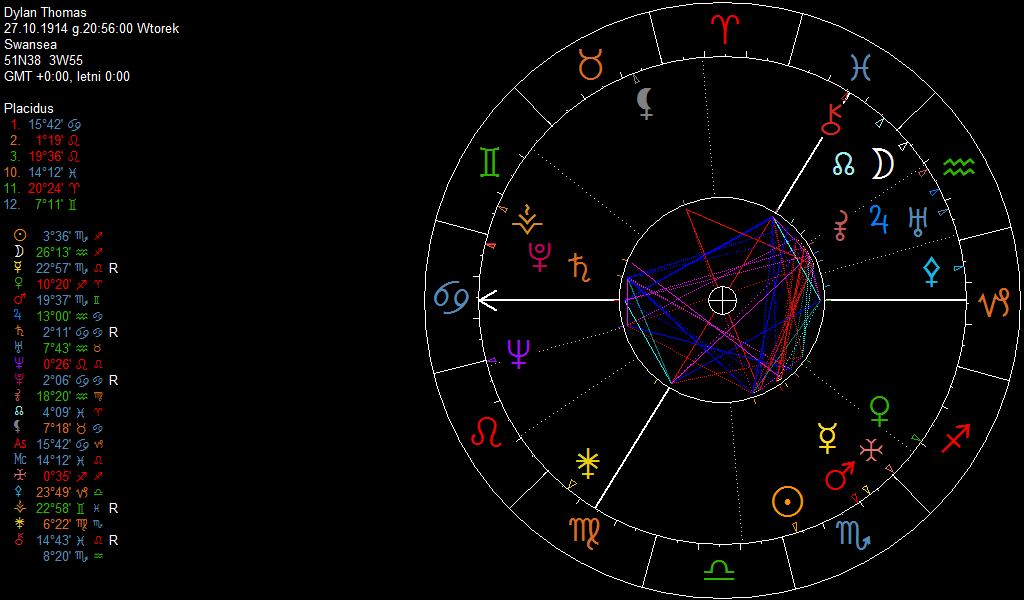
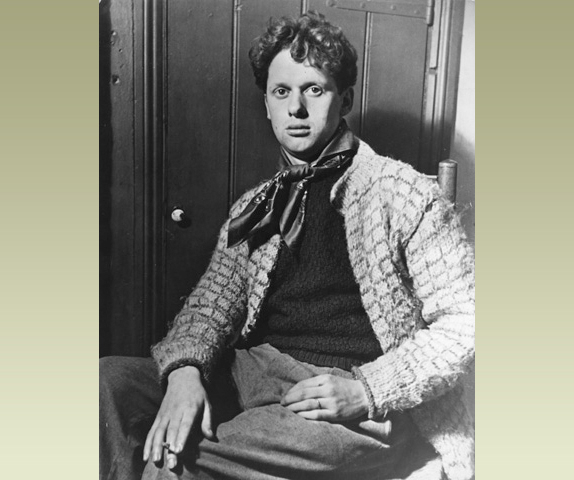
The poetry of Dylan Thomas is deep, passionate, sensual, musical, forceful and simply magical to me. I remember I was awe-struck when I first read “The Force That Through the Green Fuse” at an English literature class. This year we will hear a lot about this poet, as it will be the 10th anniversary of his birth in October. He was yet another genius, whose art was complete and brilliant, but whose life was in complete disarray. Although he was admired by his contemporaries both at home and abroad (he had wildly successful poetry readings in the USA), he died in debt and most probably as a result of heavy drinking. He was only thirty-nine. Here is a clip of him reading his probably most famous poem “Do Not Go Gentle into That Good Night,” which he wrote while his father was on his deathbed. I hope you appreciate his Welsh accent and quite unique melodious reciting.

I tried to locate this magnetic force and consummate talent that he possessed in his natal chart. I am reproducing it here for those of you fascinated by astrology. I think the chart clearly shows the enormous depths his psyche was capable of plunging into.

Image

The poem I wanted to share today is very special to me because it shows his unique myth making talents. It is his own myth of genesis – creation of the world – retold as if he had been there when the elements and matter were violently spun together and formed into matter from blood, breath, fire and love. The collection of images is quite astounding and what I have always found very appealing in his poetry is how body (substance), mind and soul/spirit rely on each other and how inseparable they are. Three is a very important number in the poem invoking both God and Goddess as the number of divine fullness.

“In the Beginning”

In the beginning was the three-pointed star,
One smile of light across the empty face,
One bough of bone across the rooting air,
The substance forked that marrowed the first sun,
And, burning ciphers on the round of space,
Heaven and hell mixed as they spun.

In the beginning was the pale signature,
Three-syllabled and starry as the smile,
And after came the imprints on the water,
Stamp of the minted face upon the moon;
The blood that touched the crosstree and the grail
Touched the first cloud and left a sign.

In the beginning was the mounting fire
That set alight the weathers from a spark,
A three-eyed, red-eyed spark, blunt as a flower,
Life rose and spouted from the rolling seas,
Burst in the roots, pumped from the earth and rock
The secret oils that drive the grass.

In the beginning was the word, the word
That from the solid bases of the light
Abstracted all the letters of the void;
And from the cloudy bases of the breath
The word flowed up, translating to the heart
First characters of birth and death.

In the beginning was the secret brain.
The brain was celled and soldered in the thought
Before the pitch was forking to a sun;
Before the veins were shaking in their sieve,
Blood shot and scattered to the winds of light
The ribbed original of love.

Image

Posted in Poetry | Tagged , , , , , | 12 Comments

Symbolism of the Island

1.“Theseus is cruel because he leaves Ariadne on the island of Naxos. … Just a beach lashed by thundering waves, an abstract place where only the seaweed moves. It is the island where no one lives, the place where obsession turns round and round on itself, with no way out. A constant flaunting of death. This is the place of the soul.”

Roberto Calasso, “The Marriage of Cadmus and Harmony”

2.“Be not afeard. The isle is full of noises,
Sounds and sweet airs that give delight and hurt not.”

William Shakespeare, “The Tempest”

3.“O place of many a mystic sacrament!

Archaic Aphrodite’s splendid shade

Lingers above your waters like a scent

Infusing spirits with an amorous mood.

Worshipped from of old by every nation,

Myrtle-green isle, where each new bud discloses

Sighs of souls in loving adoration

Breathing like incense from a bank of roses”

Charles Baudelaire, “The Voyage to Cythera”

4.”I’ve looked into the eye of this island, and what I saw was beautiful.”

John Locke, a character in “Lost”

Image

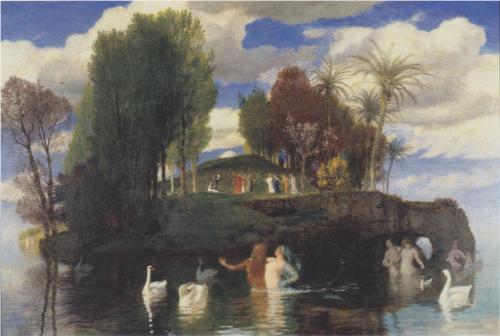
Arnold Böcklin, The Island of Life

In Psychology and Alchemy, Carl Gustav Jung wrote that “only in the region of danger (watery abyss, cavern, forest, island, castle, etc.) can one find ‘the treasure hard to attain’ (jewel, virgin, life potion, victory over death).” Islands are one of the most treasured motifs both in myth and literature. Jung’s quote shows his amazing intuitive grasp of island’s significance: it is both beautiful and dangerous. Islands can be incredibly scenic but their detachment from the mainland may create a feeling of entrapment. Island inhabitants define their identity chiefly as Islanders: they have their own unique cosmos there and any newcomers are perceived as intruders. Because they are away from the land of law and regulations, morality may break loose on them and people can get tested, as you may remember from the famous novel “Lord of the Flies.” As final resting places, most notable example being the island of Avalon, islands have a funerary, eschatological quality about them. Where there is death, there must be transformation. Whoever comes to an isolated island, does not leave it as the same person: islands are both safe havens and dangerous areas of upheaval; safe wombs and insular alchemical vessels of transformation. Time flows differently on islands, because they are places torn out of the conventional time space continuum. Odysseus found that out when he spent seven long years trapped on Ogygia by the nymph Calypso. Ogygia was a primordial island, which attracted visitors like an insect eating plant only to trap and devour them:

“No one was ever lonelier than Calypso. … Divine hostess, time denied her any guests. … Calypso’s distance from the world wasn’t only to be measured across the huge expanse of the waters but first and foremost across time. … Calypso lived at a point of cosmic intersection: Ogygia was a primordial island…

Image

Arnold Böcklin, “Odysseus and Calypso”

Image

Jan Brueghel the Elder, “Odysseus and Calypso” (a completely different vision than that of Böcklin)

Calypso means “She Who Conceals Things.” Concealment was her passion, cloaking something in a veil, like the veils she sometimes wore around her head. … Toward Calypso, Odysseus felt the same attraction Gilgamesh had felt for the barmaid Siduri, for the woman who pours drinks behind a counter and talks, listens. What did the attraction conceal? Odysseus knew what would later be forgotten: it concealed the woman who welcomes us at the entrance to the kingdom of the dead. …  The conversation with the woman who pours the drinks goes on and on through an endless night, unthreatened by any dawn on the window-panes. …

Odysseus spent seven years with Calypso… They were years when time sucked him backward into a fabulous prison that was also a floating sepulcher.”

Roberto Calasso, “The Marriage of Cadmus and Harmony”

Calypso, the sad and lonely nymph, seems to be at one with the island she inhabits. The symbolism of islands definitely has an intimate connection with the feminine. Islands are like precious jewels scattered on ocean waves, like treasure chests waiting for brave heroes to explore them. They provoke longing and wishful craving.

Islands continue to inspire writers, TV producers and movie makers. The show that caught my attention in the last years was “Lost,” which I am the staunchest fan of. In “Lost” the island is an entity, a protagonist in its (her?) own right. At one point the island falls off the temporal axis and a group of characters start travelling in time. The series itself is wonderfully inventive and plays on numerous cultural tropes, myths and archetypes. It seems to be a place where accelerated character growth takes place, where characters get in touch with their spiritual centre, and where they can redeem their past and carve out a new identity for themselves. While Robinson Crusoe did everything to recreate a full civilization on the island where he was shipwrecked (he was obsessed with keeping track of the time passed, for example), the characters in “Lost” get in touch with the wildness of nature that resides within themselves. Like the game of backgammon, featured in the first episode, the microcosm of the Island is s stage where dark and light forces interplay, intermingle, oppose and attract each other.

Image

John Locke, a character in “Lost”

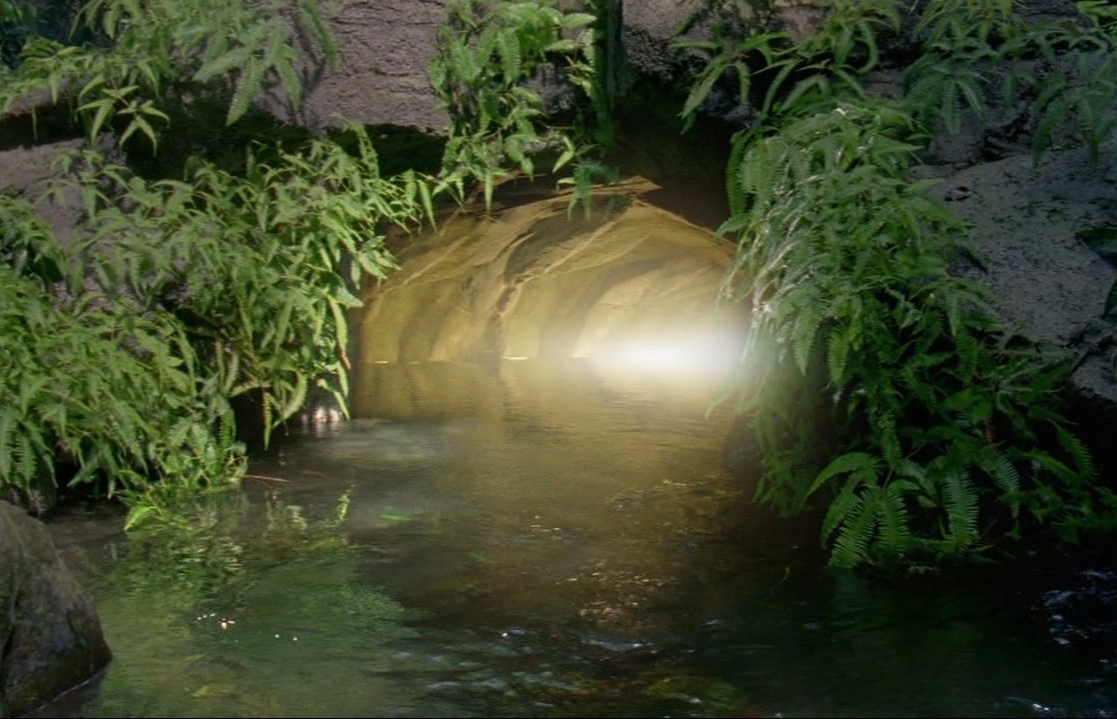
The island in “Lost” has healing powers which emanate from the Heart of the Island (a source of water bathed in brilliant white light).

Image

The Heart of the Island

This source of life, death and rebirth needs to be protected. The Island also functions as a sort of a “cork” that contains darkness and evil and prevents it from spreading. It is extremely ancient and was populated by Egyptians and Sumerians in the distant past. It periodically changes its location, which again points to her archetypal character as a place outside of space and time. As such it is similar to Atlantis, which also existed beyond the frontiers of known space and time. If it really existed, then the cradle of our civilization and the seed of our inner wisdom originated on a mythical island.

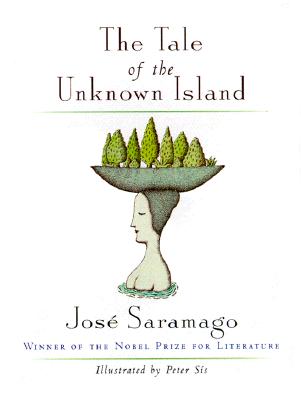
Northrop Frye, a literary critic, referred to islands as “points of epiphany.” On an island, away from their everyday circumstances, mythical and literary characters can become free of themselves in order to find themselves. I have recently read a short story by one of my favourite authors: it was “The Tale of the Unknown Island” by Jose Saramago. It is an enchanting fairy tale in which the main character wants to discover an unknown island but has no boat and petitions the king of his country to give him one. In a famous poem the poet John Donne says that no man is an island, but from Saramago’s tale we can surmise that every person is like an unknown island both to themselves and others. As the cover of the book suggests, the mystery of the island cannot be solved without a woman.

Image

Support my blog

If you appreciate my writing, consider donating and make my day. Thank you in advance.

$1.00

Posted in Islands | Tagged , , , , , , , , , , , , , , , | 37 Comments

Wounded

Frida Kahlo, “The Wounded Deer”

“I bear the wounds of all the battles I avoided.” Fernando Pessoa

Posted in Quotations | Tagged , , , , | 24 Comments

Images of the Zodiac: Contemplating Capricorn

Image

Johfra Bosschart, Capricorn

A mountain goat is a very special creature to me and therefore I adore this image of Johfra, showcasing the goat in all its glory. Once I spotted a herd of them high in the mountains, once I saw them in a nature park and once in a children’s zoo, where I could observe how little goats are born climbers: they can stand immediately after being born and are able to climb very shortly after. Their instinct is to always move upwards. Symbolism is never arbitrary, but always has its roots in nature. The qualities of the animal resonate with the maturity and ambition associated with the sign Capricorn. Further, mountain goats have very flexible skeletons and their elemental quality is “surefootedness,” says Ted Andrews, who associates this particular animal totem with the need to apply flexibility while rethinking the basic structure of our lives. Inflexibility and rigidity, preserving the structure at all costs, are the more inharmonious expressions of the sign. The magnificent goat in Johfra’s painting seems to be petrified in time, like a statue: on the one hand, because it has accomplished perfection understood as perfect form, on the other hand, however, this showcases the rigidity of the sign and its leaden, heavy quality. The animal also has a thick coat, which makes it possible for the goat to survive the harshest weather conditions. The quality of endurance and, as Liz Greene puts it, “the theme of the waste land and the long wait for the redeemer in depression despair and deadness” are associated with this sign. But, like Sisyphus patiently pushing the rock upwards, the goat will not stop climbing.

Rocks are the material that makes its home. In Greek myth, rocks were the source of human life. After the deluge sent upon the earth by the angry Zeus, Deucalion – the only survivor together with his wife repopulated earth by walking and throwing stones behind themselves. Out of those stones people were formed. In Johfra’s image the little children seem to have sprung from the rock. Their spines (ruled by Capricorn) will gradually become stronger and they will be able to stand assuredly on their own two feet soon.

Also the foundation of Christian church was built on the rock, as St Peter’s name is derived from the word “petra” which means “rock.” In Matthew’s gospel, Jesus speaks to Peter: “On this rock I will build my church, and the gates of Hell will not prevail against it.” The symbolism of rock and stone is very rich and we are also reminded of the philosopher’s stone sought by alchemists as the ultimate goal of their opus:

1.“The stone symbolized something permanent that can never be lost or dissolved, something eternal that some have compared to the mystical experience of God within one’s own soul…. It symbolizes what is perhaps the simplest and deepest experience, the experience of something eternal that man can have in those moments when he feels immortal and unalterable .”

Carl Gustav Jung

2. “In volcanic eruptions, air turned to fire, fire became ‘water’ and ‘water’ changed to stone; hence stone constitutes the first solid form of the creative rhythm —the sculpture of essential movement, and the petrified music of creation.”

Juan Eduardo Cirlot

Capricorn is an earth sign and the earth of Capricorn is stone (rock), while the earth of Taurus was soil, and the earth of Virgo was sand. Out of stones solid structures are built – our cities and our civilization. However, it is also interesting to see how the symbolic roots of the sign Capricorn are submerged in water. The sign itself, which Johfra chose not to show us, has always been represented as the sea-goat: a goat with the tail of the fish.  Capricorn is the sign of the leader. Its tail submerged in water indicates that all power comes from the archetypal, watery dimension. A true leader has mastered the alchemical principle which said “solve et coagula” (dissolve and coagulate). Every rigid structure, every rule that has outlived its usefulness, needs to be dissolved before new order can be established (coagulated, i.e. solidified).

“…our modern Capricorn type shows the characteristic features of the sign mostly in their negative aspect. This is because humankind has not yet evolved to the point where a soundly organized society of free and creative individuals has become entirely feasible. .. To date we only know the shadowy and mostly dark aspect of the Capricorn realm – therefore we speak of the State as a coercive and inherently oppressive entity.”

Dane Rudhyar, “Zodiac as the Universal Matrix”

Our contemporary leaders have lost the connection with the watery source. Patriarchy has neglected the feminine, i.e. the sign Cancer, which is in opposition to Capricorn. They rigidly cling to power and they would have much to learn from history. Around winter solstice, ancient Romans celebrated the festival of Saturnalia (Saturn is the ruler of Capricorn). At that time social roles were reversed and slaves became masters. Such temporary anarchy prevented despotism and hardening into too rigid social structure, says Hillman. For a moment the world was allowed to step outside of time, and time is the domain of Saturn’s order.

Image

The Sea-Goat

The Babylonian deity associated with Capricorn was Ea (Enki in Sumerian mythology), depicted as the sea-goat, who was a wise and benevolent leader. He lived in the primordial fresh water ocean that surrounded the earth. That the water was fresh rather than salty shows the nurturing and civilizing quality of that god. He was a wise protector of humankind, god of magic and the one who protected humans from monsters, and who brought law and order upon the earth. A good leader needs to protect his people from the forces of chaos. That is probably why Johfra chose to depict the boy Hercules victorious over the crocodile on the left and the Apollo victorious over Python on the right. Ea was also the one who warned the wise man Utnapishtim of the deluge of the world planned by the enraged god Enlil. Utnapishtim had enough time to build a boat and survive the cataclysm. The boat carried by the ocean can be compared to the ego: a structure that we build within the vast ocean of the Jungian Self. Saturn, who is responsible for creating order, structures, and boundaries, is the ego builder. A rigid ego means death because it does not allow the waters of life to flow freely.

Let us contemplate other Capricornian paradoxes shown by Johfra in the painting. The old man (Latin senex) featured centrally is the Greek god Kronos (Roman Saturn). His sickle has dual meaning: it is an instrument of death and castration (Kronos castrated his father Uranos – the sky god) but also a harvesting tool. In myth Kronos swallowed his children which was like “the swallowing of youth by age, joy by depression, freedom by form, imagination by intellect, innocence by experience,” as Hillman puts it. To proceed, I must return to Hillman’s dichotomy of senex (old man) and puer (youth) because it matches Johfra’s vision perfectly. They personify “the poles of tradition, stasis, structure, and authority on one side, and immediacy, wandering, invention and idealism on the other. The senex consolidates, grounds and disciplines; the puer flashes with insight and thrives on fantasy and creativity.” The senex is associated with time, work, order, limits, learning, history, continuity, survival and endurance; all that is old, ordered and established. A senex quality was required to give “realization through time and dense corporality.” One always brings to mind the other and their duality is at the heart of father/son relationship and conflict. When an idea appears like a divine spark puer is there, but its maturation, perfection and harvesting is presided over by the senex. After Rhea fooled Kronos and gave him a stone to swallow instead of a baby (the stone here is symbolic of his hardened stance and heartless tyranny) she hid Zeus in the mountains where a benevolent goat Amalthea nursed and nurtured him. Her horn was later made into the Cornucopia (the horn of plenty) by Zeus. Thus, paradoxically, Capricorn is the sign of both lack and abundance. Amassing wealth can, however, lead to greed and tyranny and the cycle of established order/revolution must start anew:

“But the harvest is a hoard; the ripened end-product and in-gathering again can be dual. Under the aegis of Saturn it can show qualities of greed and tyranny, where in-gathering means holding and the pursue of miserliness, making things last through all time.”

James Hillman

It seems that the puer and senex cannot survive without each other. The puer breathes new life into the rigidity of the senex, nourishing him with new and fresh ideas; the senex establishes the necessary boundaries and brings ideas to fruition thanks to hard work and endurance. Says Hillman:

“As principle of coagulation and of geometrical order, it dries and orders, builds cities and mints money, makes solid and square and profitable, overcoming the dissolving wetness of soulful emotionality. The worship of flow, however, means also to be continually flowed through, provisional, suggestible, receptive to sinking into any surrounding. Now we meet another danger to puer consciousness: dissolution into water, oblivion.”

In the image puer and senex do not seem to be in conflict. The figure of the puer on the right (Johfra says he painted Apollo here) shows the wise senex reverence and even seems to worship him. Hillman reminds us that Apollo was actually a patron of youngsters entering into manhood. In a ritual of initiation young Greek boys offered their long hair to Apollo as a sign of their transition into adulthood.

The background of Johfra’s painting forms a skull (bones are ruled by Saturn in astrology) through which the Sun rises. That part of his vision is quite awe-inspiring. I would like to finish today with a beautiful passage from The Pulse of Life by Dane Rudhyar:

“In Capricorn, the Christos-seed is almost entirely unnoticeable, so completely overwhelmed is the renascent Day-force by the vast structure built by the Night-force. It is to be seen only in the heart of the Capricornian Yogi or Seer; the recluse Hermit; the lonely Wanderer on the heights of snow-covered peaks; the solitary Individual, who, after having assimilated within the strong structure of his selfhood the total contents of the Collective Unconscious has become a “womb of human totality.” In that “womb” which represents the fulfillment of an entire cycle of human expansion, he who has become a seed-man receives in utter consecration the New Life that comes from on high.

In due time the New Life always wins. The new type of human being pierces through the crust of the decaying matter of what was once the powerful State erected by Caesar, as spring impels seeds to germinate after the Piscean deluge of equinoctial storms. The Christos always wins against Caesar. The Federation of Man must win over the imperial machines erected by power-groups using Sagittarius energies — machines and propaganda, tanks and fanaticism — to crystallize their ambition. The cycle of life does not allow static fulfillment. Everything turns into its opposite. The wheel moves on everlastingly and the Day-force interplays with the Night-force in an ever-renewed drama which is life itself.”

Support my blog

If you appreciate my writing, consider donating and make my day. Thank you in advance.

$1.00

Sources:

Ted Andrews, Animal Speak

Johfra Bosschart, Astrology

Juan Eduardo Cirlot, The Dictionary of Symbols

Liz Greene, The Astrology of Fate

James Hillman, Puer and Senex, Collected Writing volume 3

Carl Gustav Jung, Man and His Symbols

Dane Rudhyar, The Pulse of Life

Dane Rudhyar, Zodiac as the Universal Matrix

Rachel Storm, The Encyclopedia of Eastern Mythology

Related posts:

Related posts:

Images of the Zodiac: Contemplating Aries

Images of the Zodiac: Contemplating Taurus

Images of the Zodiac: Contemplating Gemini

Images of the Zodiac: Contemplating Cancer

Images of the Zodiac: Contemplating Leo

Images of the Zodiac: Contemplating Virgo

Images of the Zodiac: Contemplating Libra

Images of the Zodiac: Contemplating Scorpio

Images of the Zodiac: Contemplating Sagittarius

Images of the Zodiac: Contemplating Aquarius

Images of the Zodiac: Contemplating Pisces
Posted in Johfra Bosschart | 23 Comments