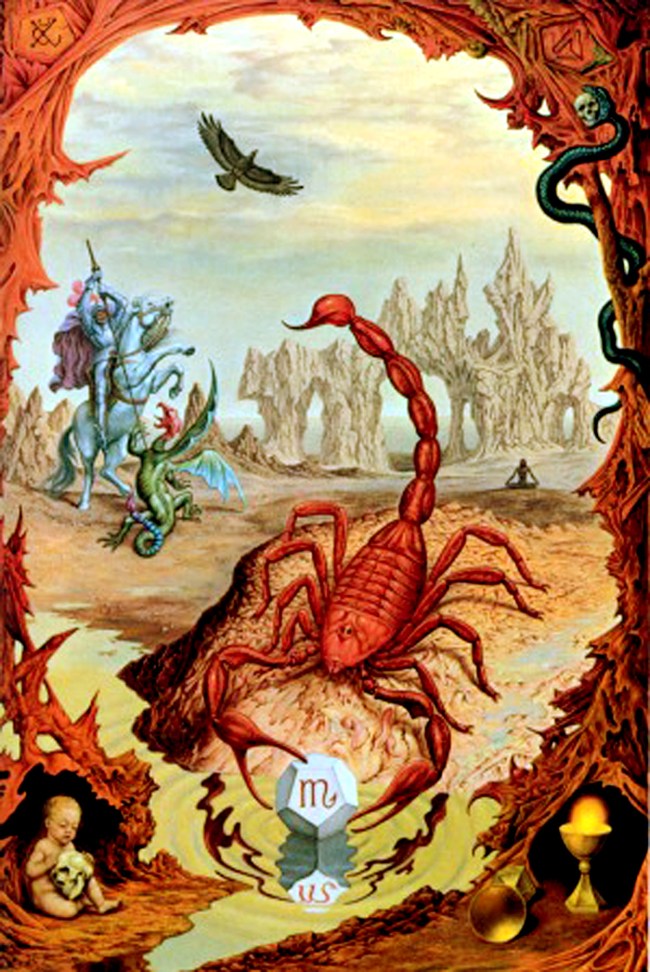
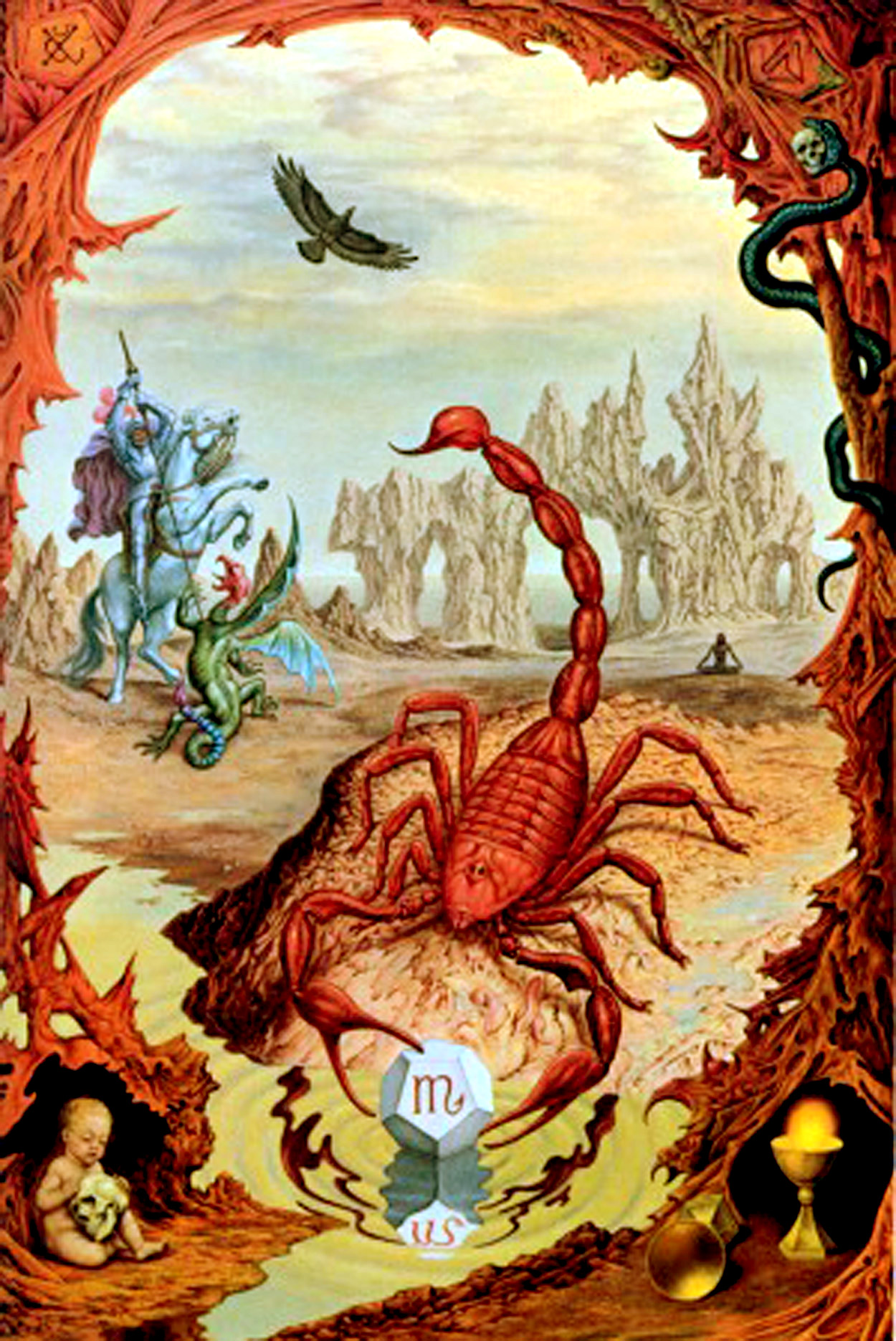
Johfra Bosschart, Scorpio
There has been so much Scorpionic energy this month that it has been very hard for me to translate all that subconscious, emotional intensity and tension into language. Also in my personal astrological line-up, Scorpionic energy abounds and is going to intensify in the near future. I understand very well now that Scorpio much prefers highly charged silences to any verbal outpourings. A small collection of symbols would be enough to capture its essence – that was probably Johfra’s rationale for the ascetic feel of his Scorpio image. It seems to be a contemplation of danger, degeneration, death and spiritual renewal. As early as in the ancient Babylonia, the scorpion was a harbinger of death. In the Epic of Gilgamesh, as Gavin White writes, a Scorpion-man and a Scorpion-woman are guardians to the mythic mountain under which the sun sets every night. Gilgamesh descends under the mountain, through a tunnel and into the underworld on his quest to find immortality.
THE SCORPION
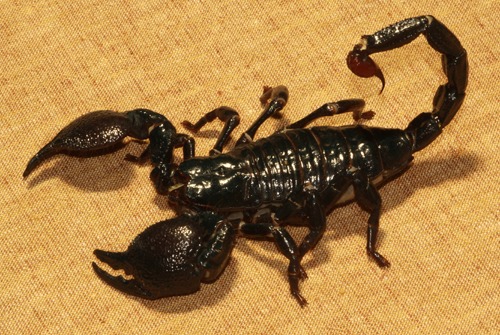
Scorpions are magical creatures. Putting their symbolism aside, it is enough to take a look at their habits and properties to feel sheer awe and amazement. I was encouraged by James Hillman, author of Animal Presences, to look at the real creature before I proceed to petrify it into its symbolic meaning. Hillman does not write about scorpions, unfortunately, because I would really welcome his brilliant insights. In my research, I have managed to come across some amazing facts about scorpions. Scorpions are very ancient creatures. The oldest fossil scorpion is 400 million years old and looks exactly like the modern one. Scorpions once existed along with dinosaurs. The ancestors of our scorpions once dominated the oceans and they could reach the length of eight meters (9 feet). The modern scorpion is extremely adept at survival: some species can live a year without food or water, and survive a few weeks under water. When food is scarce, they hibernate but become fully alert and ready to attack the moment they detect their prey. What is more, their detection skills are unsurpassed: they sweep the area like radar and can feel the tiniest flutter of butterfly wings. They are not fussy eaters: they would eat anything that falls into their clutches, including other Scorpions, which they kill instantaneously by injecting venom into their nervous system.
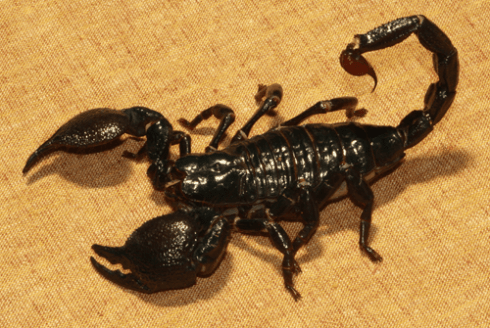
They are masters of energy conservation, which they achieve by building spiral tunnels where temperature and humidity remain at a constant desirable level (Scorpio is a fixed sign after all: it strives to concentrate energy). However, their mating dance can last for hours and their courtship rituals are quite extended, including “a cheliceral kiss,” which involves the male injecting the female with a small amount of his venom. When the mating is over, the male retreats quickly and does not look back, perhaps for fear of being cannibalized. Along with cockroaches, they are the only species able to survive a nuclear attack and deadly doses of radiation. Like other arachnids, including spiders, they have eight legs, fittingly, as Scorpio is the eighth sign of the Zodiac. They are nocturnal creatures; bright light is extremely unpleasant for them and that’s why they spend their days hidden in burrows, crevices and under buildings. They dislike the sun and the wind because it interferes with their sensitive detection devices. They cannot survive in environments that have no soil because they are burrowing animals.
All of the above are scientific facts, but they go with the symbolism of the Scorpio extremely well.
ALCHEMY
Rudhyar, with his talent to encapsulate the universe in one sentence, wrote this about Scorpio: “(Scorpio) deals with all that is at the foundation of being human…. It is dark and heavy, as roots are dark and deeply embedded in humus which is the product of disintegration.” He continues: “In Scorpio the individual is forced to touch bottom. He must be willing to surrender his individual uniqueness and individual prerogatives. As he does so, he descends in consciousness into the common Root of the group. He learns to live in terms of humanity as a whole. In a sense, this is symbolized by Christ’s descent into hell. Through such a descent the human depths are “redeemed;” that is, they are made significant. They are given an individualized meaning and a conscious value by this descent of the individual.” Scorpio is a sign opposing Taurus in the Zodiac. Do you remember the Taurean image (https://symbolreader.net/2013/04/24/images-of-the-zodiac-contemplating-taurus/) – the Spring in full bloom, lush green hills, Life thriving. The rich Taurean soil rests upon the dark, heavy and moist Scorpionic mud, the “long-accumulated sediment, water trapped by the coldness of ice or the heaviness of mud.” (Deborah Holding). The landscape here is stark and deathly: definitely not a place to nap, relax and unwind. In a landscape like this, one needs to stay alert and ready for a fight or a flight. This is the fundamental root, the underbelly of life, the materia prima of alchemy.
“Here destruction and creativity meet together, causing a tremendous alchemical reaction between attraction and repulsion, a transmutative force which deserves the highest respect since a negative or uncontrolled release is capable of destruction, just as a positive, controlled discharge is imbibed with the power to sweep away all boundaries of resistance. …
The Egyptians, who accorded great honour to scorpions and beetles, recognised the spiritual alliance between the creatures that dwelt beneath the earth and the magical, alchemical processes of life, death and regeneration. The most blessed state was to be born in a ‘rich compost’ of power, and the black, fertile mud of the Nile delta was their Prima Materia, the bubbling melting pot of creativity where decomposing elements underwent an attractive reaction that allowed the emergence of new life. Their word for this black, muddy earth was Kemit, adopted as khemia by the Greeks, and eventually forming the basis of the word alchemy which has dropped its spiritual dimension – but not its power to transmute and create – in the modern word chemistry. Whilst all the water signs are known for their fertile potential, it is with dark, still, muddy Scorpio that we encounter the truly powerful creative potential.”
Deborah Holding
The traditional ruler of Scorpio is Mars, the modern one – Pluto (the Greek Hades, god of the underworld and the ruler of precious minerals hidden in the earth). He was said to wear a cap of invisibility when he emerged to the surface of the earth. It is interesting that the planetary body that due to its size has lost its planetary status, has a nuclear effect when transiting the vital points in a birth chart. Similarly, the scorpion’s size has nothing to do with the deadliness of its venom; on the contrary, the sting of the smaller scorpions is actually much more dangerous. Stripped of its powers (seemingly) Pluto continues to wield his enormous influence from the underground.
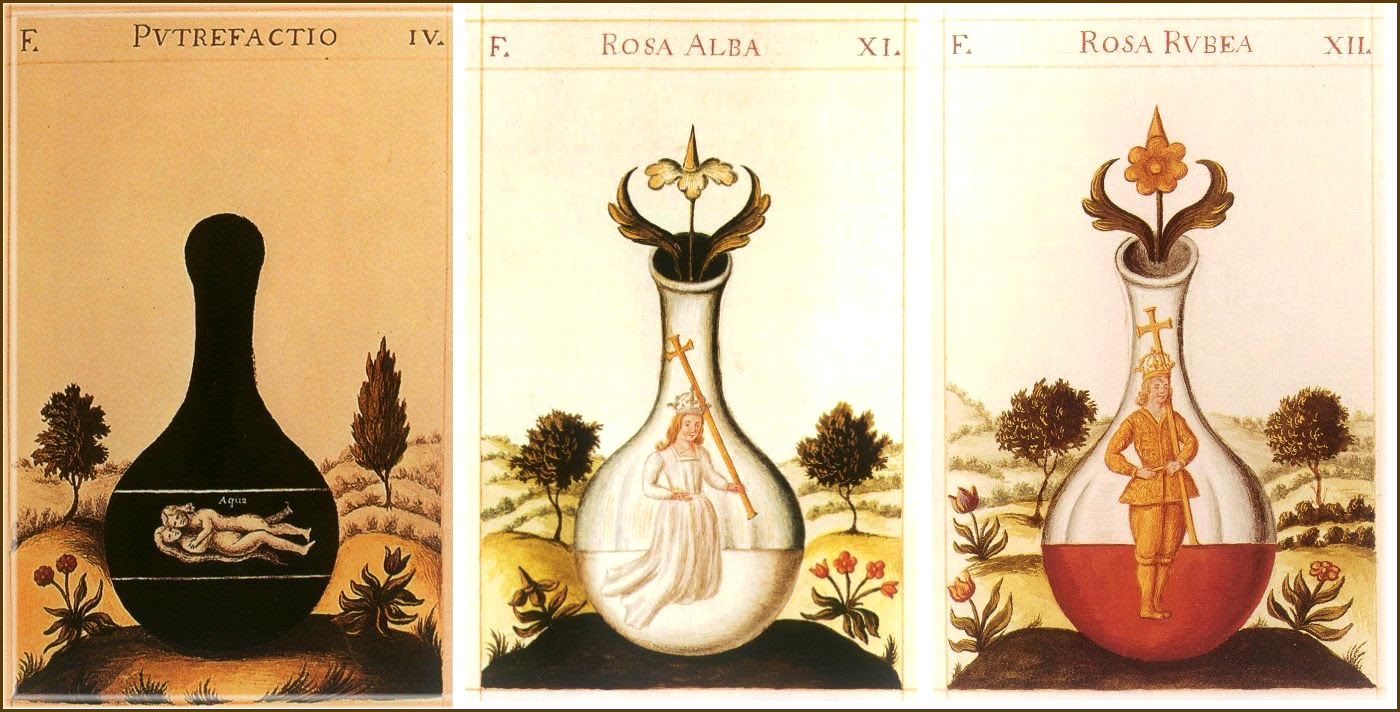
Johfra chose to remain with the old ruler and hence the red Martian colour dominating the painting. To me, that red looks a lot like blood, which immediately calls to mind the motifs of passion, power, and also sacrifice. The scorpionic inferno is the inferno of passions. Blood is life itself, its unceasing rhythm, being in its totality, the vibrant flow of life. One is immediately reminded of rubedo (reddening), which is the last stage of the alchemical opus and which denotes the existence that is both spiritual and material. The final stage of the alchemical opus brings a reconciliation of up-, down-, in- and out- turning impulses that so often tear Scorpios apart.
“In stage four, the alchemist awakens to the desire to return to the earth and to fully incarnate his or her state of “illuminated” consciousness into the mind and body. …Heaven and earth in the alchemist are now united.”
Nigel Hamilton

Three stages of alchemy: Nigredo, Albedo and Rubedo
As nobody puts new wine into old bottles, the chalice of the old life is knocked down and the awakened radiant psyche, the Holy Grail, the philosophical stone, resides in a new chalice. Jung wrote of “anima corporalis that dwells in the blood;” he emphasized that the mystery of psychic transformation is located in matter. The kundalini always rises from the prima materia, the earthly body. Entering a cave is a preludium to being reborn. Caves are the ultimate emblems of mystery and of alchemical furnaces where transformation and transmutation take place. The alchemical rubedo, wrote Jung, is symbolically related to the resurrection of Christ, coming back from his sojourn in the underworld: stepping from the shadow into the light.
THE SNAKE AND THE DRAGON
In his essay “The Snake is Not a Symbol,” included in his book Animal Presences, James Hillman provides a summary of possible meanings of the snake, warning us, as he always does, that the meaning does not replace the image and, what is more, it can even take away its power. He mentions twelve possible areas of meaning for the snake:
1.The snake is renewal and rebirth, because it sheds its skin.
2. A snake represents the negative mother, because it wraps around, smothers, won’t let you go, and swallows whole.
3. The snake is the Devil.
4. It is a feminine symbol, having a sympathetic relation with Eve and goddesses in Crete, India, Africa, and elsewhere.
5. The snake is a phallus, because it stiffens, erects its head, and ejects fluid from its tip. Besides, it penetrates crevices.
6. It represents the material earth world and as such is a universal enemy of the spirit. Birds fight it in nature and heroes fight it in culture.
7. The snake is a healer; it is a medicine. … It was kept in the healing temples of Asclepius in Greece, and a snake dream was the god himself coming to cure.
8. It is a guardian of holy men and wise men – even the New Testament says that serpents are wise.
9. The snake brings fertility, for it is found by wells and springs and represents the cool, moist element.
10. A snake is Death, because of its poison and the instant anxiety it arouses.
11. It is the inmost truth of the body, like the sympathetic and para-sympathetic nervous system of the serpent power of Kundalini yoga.
12. The snake is the symbol for the unconscious psyche – particularly the introverting libido, the inward-turning energy that goes back and down and in. its seduction draws us into darkness and deeps. It is always a “both”: creative-destructive, male-female, poisonous-healing, dry-moist, spiritual-material …
Hillman also draws our attention to the extraordinary characteristics of snake obliterating its prey to pulp before devouring it: “… a snake dislocates its jaw to swallow an animal larger than itself, … its digestive system works without chewing…, like a rhythmic peristalsis that squeezes its meal against the snake’s backbones, crushing its prey into a digestible pulp.”
We can just say that the snake is symbolic of energy itself, which can be both creative and destructive. The snake embodies the wisdom of the deeps and is a guardian of deep mysteries. It also relates to the shadow archetype signifying the temptations of matter, the material lust, the lust for power, the lowest instincts and desires, and as such is related to the dragon.
Scorpio is a sign torn between spirituality and sensuality. The next part of my post will speak of initiation but I cannot help thinking that perhaps, as long as we remain on this earth, there is always a possibility of slipping back, being sucked back into the abyss of our instincts and desires. Perhaps the fight with the dragon (the smothering shadow) is a never-ending one. Can we ever purge “the dirty alleyways and swamps” of our souls? – asks Liz Greene. Only the light of insight and consciousness can guarantee victory, but the forces of darkness cannot be conquered once and for ever. That is why the archetypal theme of the hero and the dragon is so characteristic of Scorpio; the battles are not singular but recurring. We cannot forget that the hero and the monster form a unity, a wholeness. Dostoevsky, the most distinguished writer among Scorpio natives, gave a full expression to the energy of this sign in his writing. The Brothers Karamazov contains such a wealth of intense, Scorpionic quotes that it is quite hard to choose. Here is one: “Is there in the whole world a being who would have the right to forgive and could forgive? I don’t want harmony. From love for humanity I don’t want it. I would rather be left with the unavenged suffering. I would rather remain with my unavenged suffering and unsatisfied indignation, even if I were wrong. Besides, too high a price is asked for harmony; it’s beyond our means to pay so much to enter on it.”
INITIATION
The mysterious yogi in the background of the image is the awakened one, who has mastered the serpent’s kundalini power. He has made a transition from the crawling scorpion to the soaring eagle, which is said to be the “higher” expression of Scorpio power. Scorpio never forgets, though, that higher does not mean better, since there is no high without low, no heights without depths and roots.
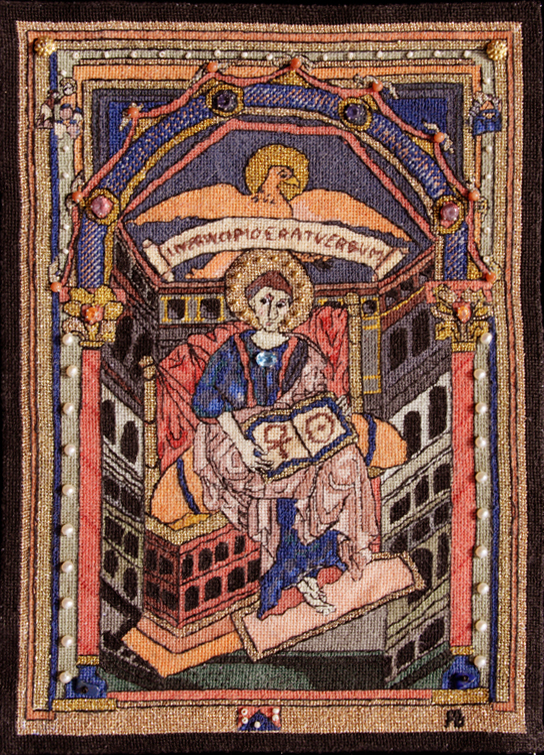
The association of the eagle with the scorpion is derived from the vision of Ezekiel, in which the prophet saw four living creatures, each with four faces: of the eagle, the lion, the ox and the man. The vision is directly related to astrological symbolism and the so-called fixed cross of matter. The four fixed signs: Scorpio, Leo, Taurus and Aquarius respectively correspond with the aforementioned four faces. Also, these four signs are related to the four evangelists and for us today the relevant evangelist is St. John – the eagle. St. John’s gospel is related to the sign Scorpio in its content: it speaks of redemption and the apocalypse (Greek for ‘un-covering’). He uncovers the deepest, esoteric mysteries in his gospel, equaling Christ with Logos. He speaks of Jesus’ Ascension and the redemption of matter through spirit.
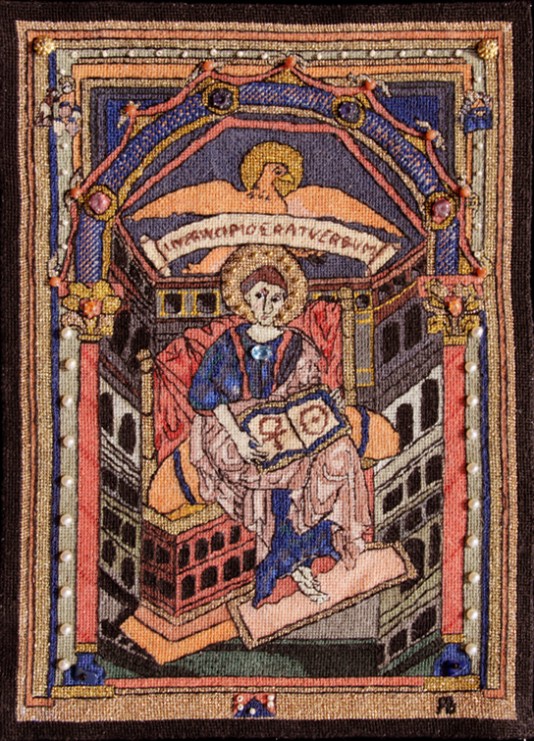
St. John
I leave you with a quote of yet another deep “Scorpionic” individual:
“You are at once both the quiet and the confusion of my heart.”– Franz Kafka
If you appreciate my writing, consider donating and make my day. Thank you in advance.
Sources:
Liz Greene, The Astrology of Fate
Nigel Hamilton, “The Alchemical Process of Transformation,” http://www.sufismus.ch/assets/files/omega_dream/alchemy_e.pdf
James Hillman, Animal Presences
Deborah Holding, “Scorpio the Scorpion,” http://www.skyscript.co.uk/scorpio.html
Carl Gustav Jung, Psychology and Alchemy
Dane Rudhyar, The Zodiac as the Universal Matrix
Gavin White, “Babylonian Star-lore,” http://www.skyscript.co.uk/babylonian_scorpio.pdf
Related posts:
Images of the Zodiac: Contemplating Aries
Images of the Zodiac: Contemplating Taurus
Images of the Zodiac: Contemplating Gemini
Images of the Zodiac: Contemplating Cancer
Images of the Zodiac: Contemplating Leo
Images of the Zodiac: Contemplating Virgo
Images of the Zodiac: Contemplating Libra
Images of the Zodiac: Contemplating Sagittarius
Images of the Zodiac: Contemplating Capricorn
Images of the Zodiac: Contemplating Aquarius
https://symbolreader.net/2014/03/02/images-of-the-zodiac-contemplating-pisces/


















 symbolreader