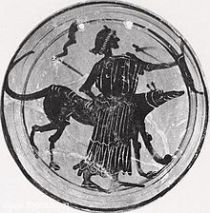
1. “Saffron-cloaked goddess of the Heavens,
The Underworld and the Sea
Unconquerable Queen, Beast-roarer,
Dishevelled one of compelling countenance
Keyholding Mistress of the Whole World”
Orphic Hymn to Hekate
2. “Hail, many-named Mother of the Gods,
Whose children are fair
Hail, mighty Hekate of the Threshold”
“Hekate goddess of midnight,
Discoverer of the future which yet sleeps in the bosom of chaos,
Mysterious Hekate! Appear. “
Immortalita, Gunderode
3. “I come, a virgin of varied forms, wandering through the heavens, bull-faced, three-headed, ruthless, with golden arrows; chaste Phoebe bringing light to mortals, Eileithyia; bearing the three synthemata (sacred signs) of a triple nature. In the Aether I appear in fiery forms and in the air I sit in a silver chariot.”
Chaldean Oracles
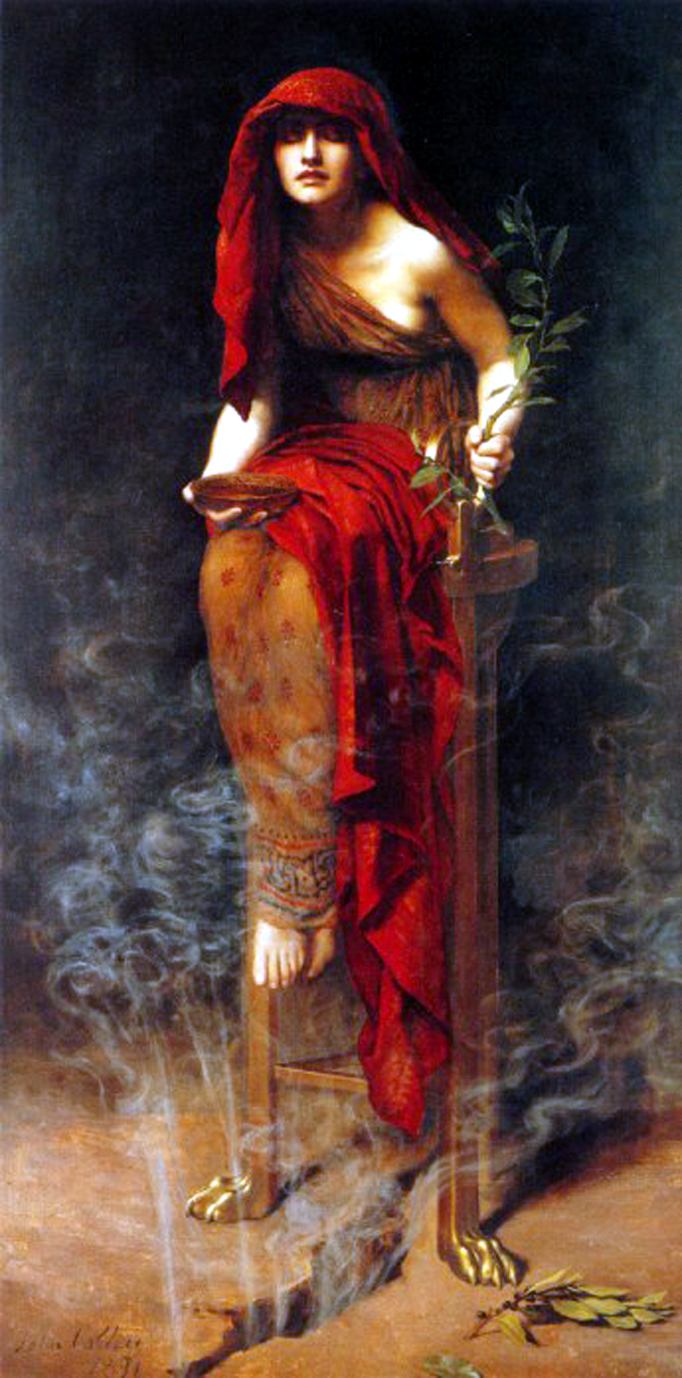
If I were ever to start a cult of a goddess I would choose Hekate as an object of worship. She is, next to Artemis, the one I am most drawn to in the entire Greek pantheon. Let me point out that she is in fact much older than all the gods of the Greek pantheon. Her origins are lost in the dark recesses of time. She may be as old and primordial as the time and the earth.
She may be the goddess most recognizable by those uninterested in Greek myth. In the mainstream culture she has been the recipient of many anti-feminine projections: she is the evil witch brewing her concoctions in the dark, a hag accompanied by whining and howling dogs, frequenting cemeteries and consorting with the dead. Even Alister Crowley had no love for her: “Hecate, a thing altogether of hell, barren, hideous and malicious, the queen of death and evil witchcraft.” Well, he was wrong or overly fixated on the dark aspect of the goddess.
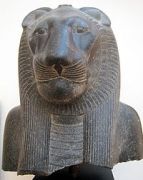
But once we go beyond the popular representations, Hekate will emerge as a much more complex deity, and her three faces will show her multi-faceted nature. Let’s consider her possible origins and her parental lineage. She goes as far back as the ancient Neolithic Mother Goddess. She was conflated with the Anatolian mother goddess Kybele, with whom she shares a repertoire of attributes, namely dogs, keys (symbolic of her being the guardian of deep mysteries and a goddess standing at the gates of transition), lions, serpents, torches and caves. With time her power lessened and she was relegated to the fringes of the mainstream patriarchal culture. But in the pre-Hellenic Greece she might have been the most prominent and all-powerful goddess.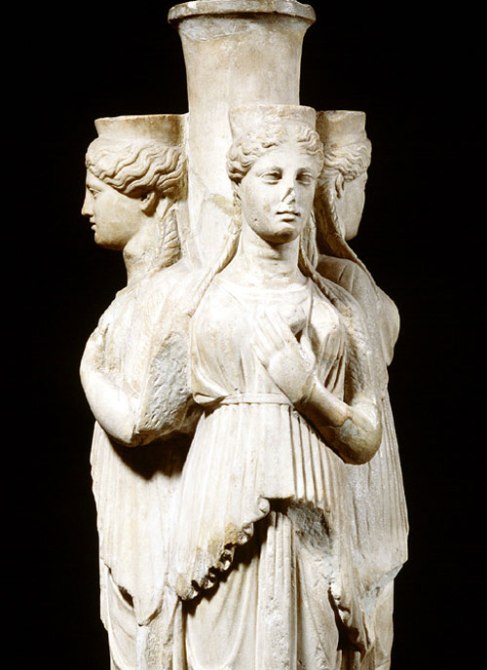
Her parents were Perses, the Titan God of Destruction and Asteria, Titan goddess of astrology and prophetic dreams. Asteria’s sister was Leto, mother of Apollo and Artemis, which makes them cousins of Hekate. Her lineage is very interesting because it explains why she was simultaneously revered as a goddess representing the cosmic order and a goddess of death and destruction of all outdated forms.

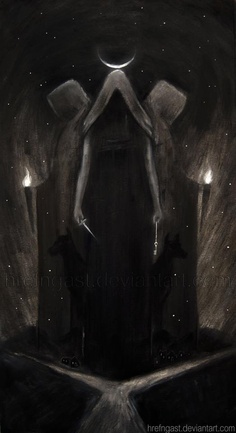
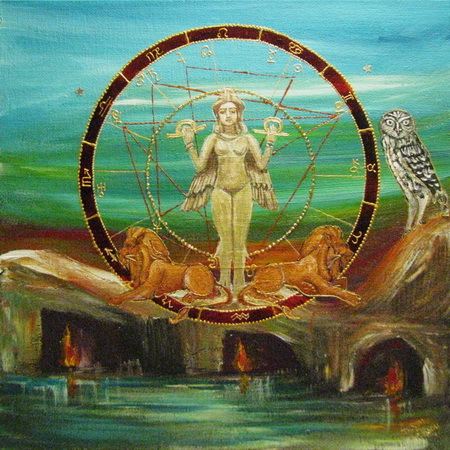
Image via http://hrefngast.deviantart.com/art/Hecate-209240765
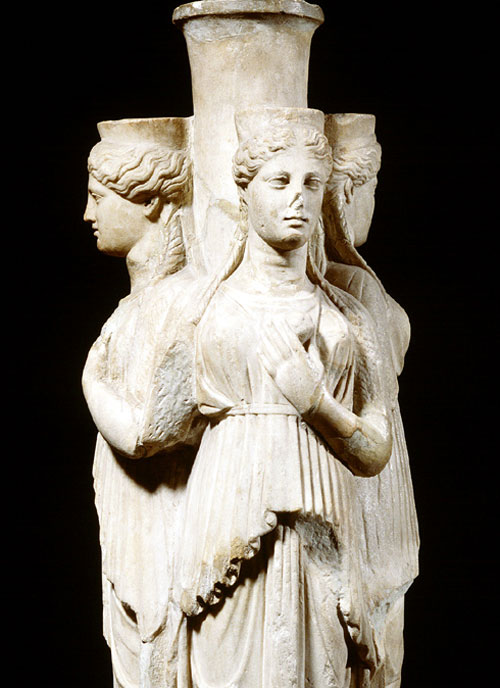
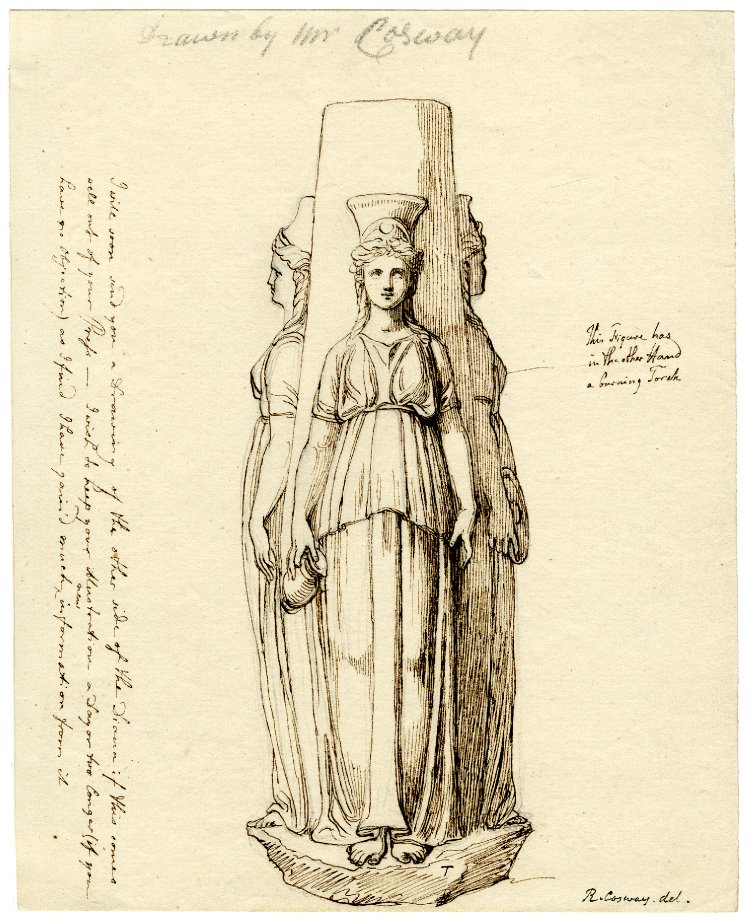
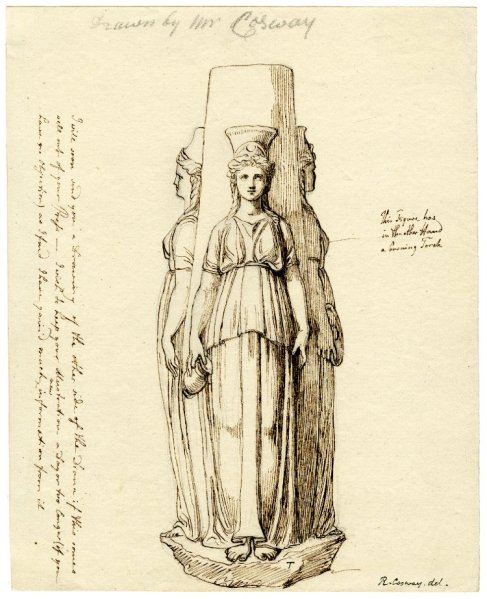
As a triple goddess she ruled the three phases of the moon (subsequently just the dark moon phase), she saw the past, the present and the future and presided over the sea, the earth (also the underworld) and the sky. An ancient ritual involved leaving food for her at the crossroads where three paths met. Why three? The Greek word for crossroads meant “the intersection of three roads,” while three roads denoted “leading everywhere, in all possible directions.” The ritual was performed when someone needed to take an important decision or before a trip: Hecate was helpful at this juncture as goddess of prophecy and vision. Her association with travel shows her deep connection with Hermes. They were frequently paired: their statues were often placed together at the gates of Greek cities. Hekate was regarded as a gate-warder in ancient Greece: her statues stood before palaces, temple and private homes. She was a guardian of the threshold much like the three-headed Cerberus, often associated with her, was a guardian of Hades. The three-way crossroads were also liminal. Yakov Rabinovich (see sources below) makes an interesting point reminding us that the Egyptian glyph for “city” shows a crossroads. He continues: “This may help explain the weird feeling associated with a desolate crossroads far from any town — it’s like a city center without a city, roads converging on nowhere, or perhaps on the invisible?”

Image via http://www.hecate.awebspider.com/history.htm
Hekate was further connected with Hermes through her role in the Eleusinian Mysteries. It is said that the mysteries most probably helped the initiates to improve their chances of having a good afterlife. During the mysteries the abduction of Persephone by Hades was reenacted. In the myth, Hekate saw the abduction from her cave and offered comfort and guidance to grieving Demeter. In the mysteries, she acted as a guide to Persephone in both her ascent and descent to and from the underworld. Hekate lit Persephone’s way with two torches while Hermes acted as psychopompos – guide of the souls.

Hekate, Hermes and Persephone
Like Hermes, Hekate was a mediator: between the Titans (and chthonic deities) and the Olympians, between the upper- and underworld. She was a patroness of transition offering quick understanding that can literally open new doors for us. One of her attributes was a dagger that cuts through illusion and dispels darkness. Her torches are connected with one of her epithets – Phosphoros (bringing light).
The dark face of Hekate should not obscure her light and benevolent aspect. Two prominent ancient sources portray Hecate as the goddess of light: Hesiod’s Theogony and The Chaldean Oracles.
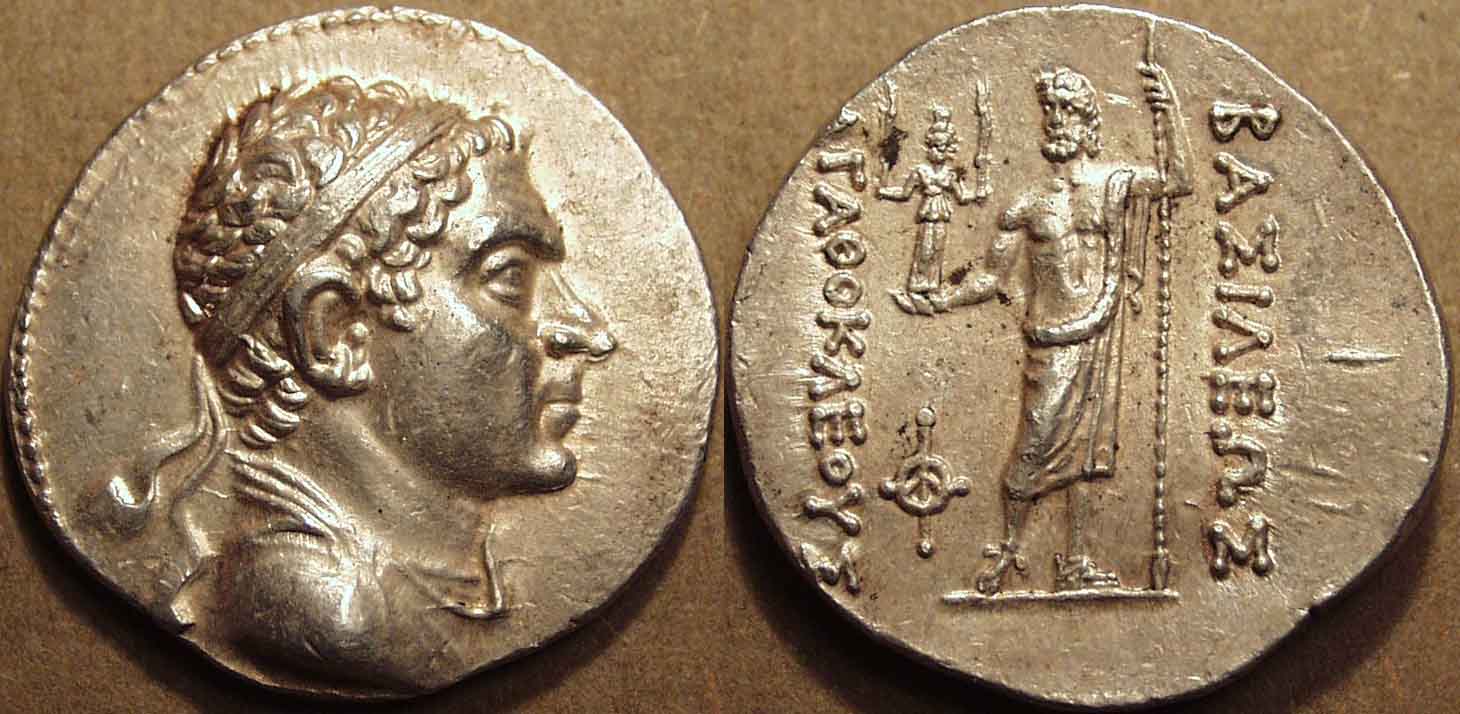
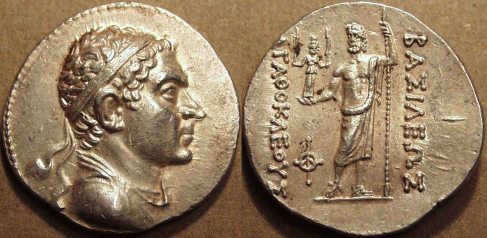
Hesiod wrote this of Hekate in Theogony: “And she conceived and bare Hekate whom Zeus the son of Kronos honoured above all. He gave her splendid gifts, to have a share of the earth and the unfruitful sea. She received honour also in starry heaven, and is honoured exceedingly by the deathless gods.” There were numerous coins excavated showing Zeus holding Hekate as a personification of the order of the universe that even the gods were subject to.
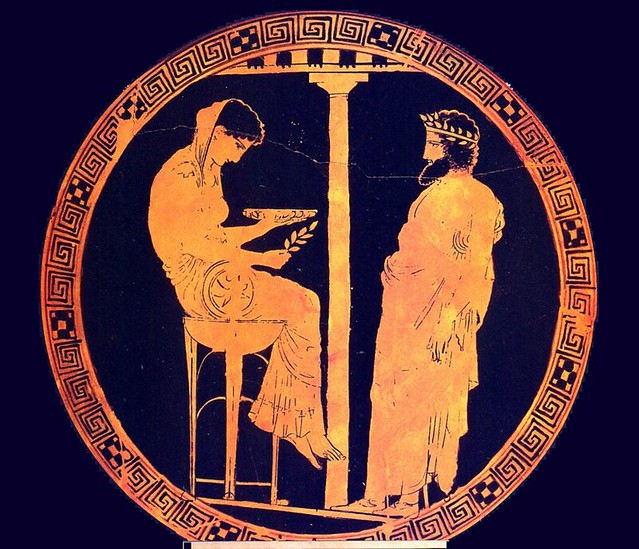
The Chaldean Oracles (2nd century AD) have not survived in their entirety: what we have are Hellenistic commentaries on a very ancient, prophetic poem. It is said to have originated in the ancient Chaldea (Babylonia). In the oracles Hekate is portrayed as the chief goddess, a cosmic force, the vital life force, the World Soul and the Saviour. She is not lunar but solar and fiery. The serpents she is holding are the fiery, upward-spiraling Kundalini energy. The text connects her with Apollo: they even shared the epithet Hekatos, meaning “the far reaching one,” “the one operating from afar,” or “the far-darting one.” Both Apollo and Hekate were thus associated with the gift of prophecy and a far-reaching vision. The prophecies also described Hekate as the one that bestows the gifts of prophecy through sleep and dream symbolism. Further, the oracles show Hekate as the one who separates the purely intellectual fire of the Father from the material fire from which everything was created: she mediates between the higher and the lower realms.
Hekate seems to be an important goddess right now when the whole humanity is on the threshold of the paradigm shift. All great deities demanded sacrifice: the very name Hekate is a relative to the word “hecatomb” (a sacrifice of a 100). Interestingly, the asteroid Hekate got its name precisely because it was a hundredth discovered asteroid. This asteroid is conjunct my Ascendant, which may explain why I consider this goddess to be an important guide to me. Let’s hope she will be a benevolent and merciful guide in all our transitions. She was a guardian of midwives, hailing from the Egypian goddess Hequet who breathed life into the body at birth and who assisted at the birth of the Sun every morning: let’s hope she assists us in the birth of the new times.
If you appreciate my writing, consider donating and make my day. Thank you in advance.