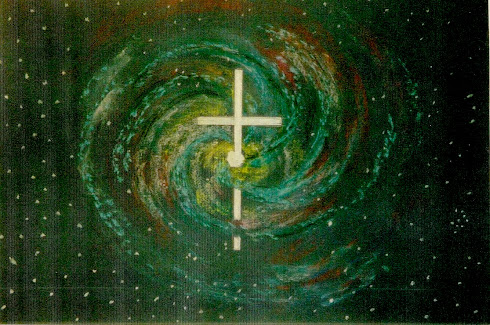
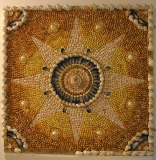
Image of the Self from Carl Jung’s Man & His Symbols
I am in a mood for a self-indulgent post. I just wanted to share my joy of inspiration. Someone was inspired by me today to create a haiku (http://martsart.wordpress.com/2013/04/01/water/) and this really made me happy.
I looked into the Online Etymology Dictionary:
c.1300, “immediate influence of God or a god,” especially that under which the holy books were written, from Old French inspiracion “inhaling, breathing in; inspiration,” from Late Latin inspirationem (nominative inspiratio), noun of action from past participle stem of Latin inspirare “inspire, inflame, blow into,” from in- “in” (see in- (2)) + spirare “to breathe” (see spirit). Literal sense “act of inhaling” attested in English from 1560s. Meaning “one who inspires others” is attested by 1867.
Ever since I started this blog, I have been feeling more and more inspired. This can be explained astrologically: the transiting Jupiter is approaching my Sun among other things. When I moved to Zurich, the Swiss city of bankers, two years ago, I hit a very dry spell inspiration-wise. I was almost completely stuck in and devoured by the material plane. It was as if the spirit had left me. There is a movie for children called the Golden Compass, in which the characters have their own dæmons, which basically are their souls in the form of animals. Dæmons and their humans are not of the same gender, which to me is a neat allusion to Carl Jung’s theory of anima and animus – the male and female soul respectively. Anima and animus literally animate our inner spirit by sending us on a spiritual quest and guiding us through the world of the unconscious forms. In the film Golden Compass the separation from one’s dæmon caused severe pain and trauma. The evil Magisterium constructed a special guillotine which separates people from their dæmon. A person whose dæmon has been separated loses creativity, intelligence, will and any traces of a divine spark, thus becoming empty and lifeless, in short: uninspired. It is a very Gnostic concept: robbing humans of the Divine Spark and separating them from the Divine Light. This is how I felt for quite a while but I am pleased to say that not any more. My Socratean dæmon has come back to me after years of exile.

Who or what is that Socratean dæmon? We hear it via the inner voice. The dæmon is a powerful archetypal call of something larger than us. Jung wrote that it had an autonomous force and was able to make demands on a person ‘possessed’ by it. It is supposed to be a powerful creative process that individuals get caught up in and which is beyond their conscious control. As a natural force it cannot be stopped by ego consciousness. The main role of the dæmon is to make the individual whole again by forcing him or her to integrate the split fragments of the psyche and to find connection with a larger, divine Self archetype. The dæmon releases all the buried unconscious energy and that’s why it should be handled with caution because of its destructive force.
I am grateful to experience this feeling of renovation of spirit.
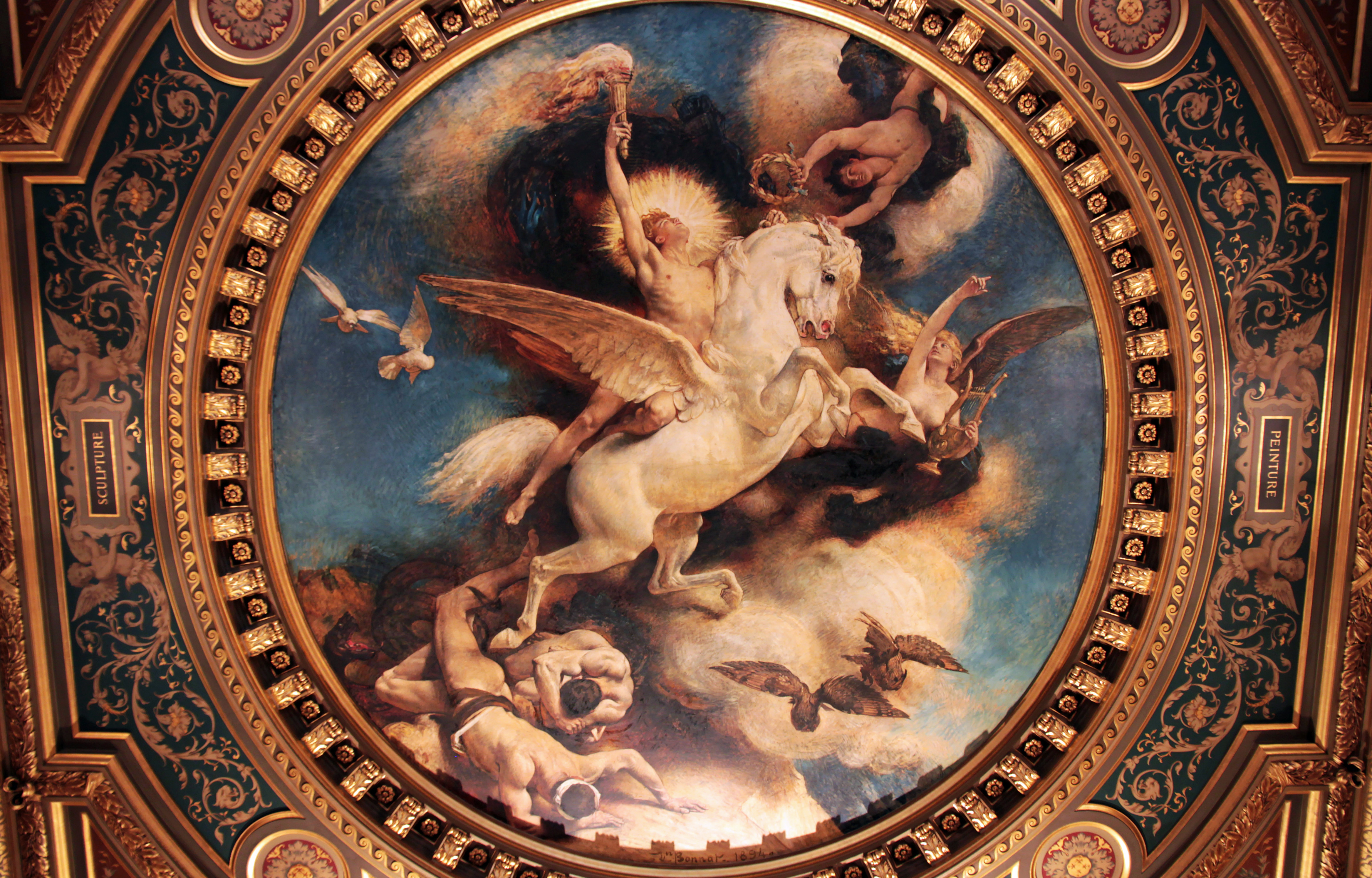
“Le Triomphe de l’Art”, 1894, by Léon Bonnat