The Wild Abandon of the Vine Month

1.“I know a bank where the wild thyme blows,

Where oxlips and the nodding violet grows,

Quite overcanopied with luscious woodbine,

With sweet musk roses and with eglantine.

There sleeps Titania sometime of the night,

Lulled in these flowers with dances and delight.

And there the snake throws her enameled skin,

Weed wide enough to wrap a fairy in.”

William Shakespeare, “A Midsummer Night’s Dream”

2.“…he drank a bottle of the scent of a summer evening, imbued with perfume and heavy with blossoms, gleaned from the edge of a park in Saint-Germain-des-Pres, dated 1753.”

Patrick Süskind, “The Perfume”

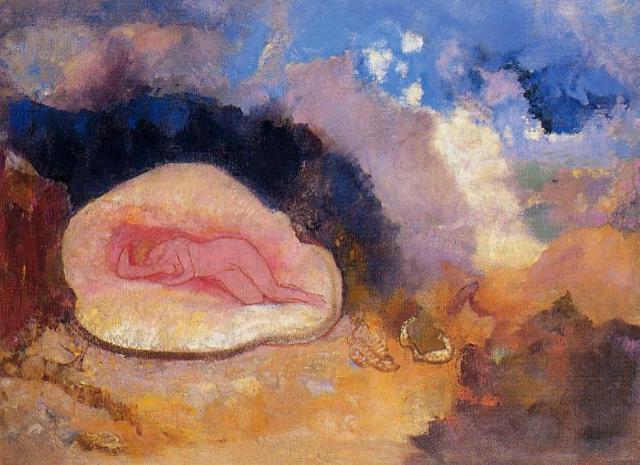
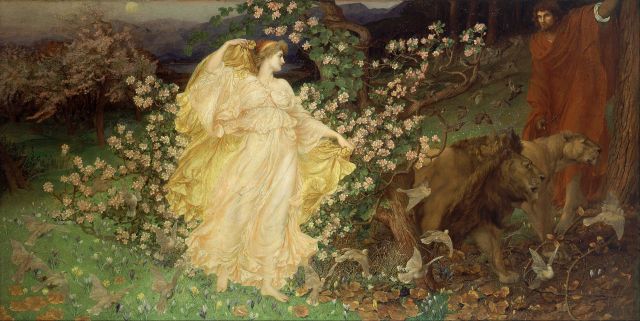
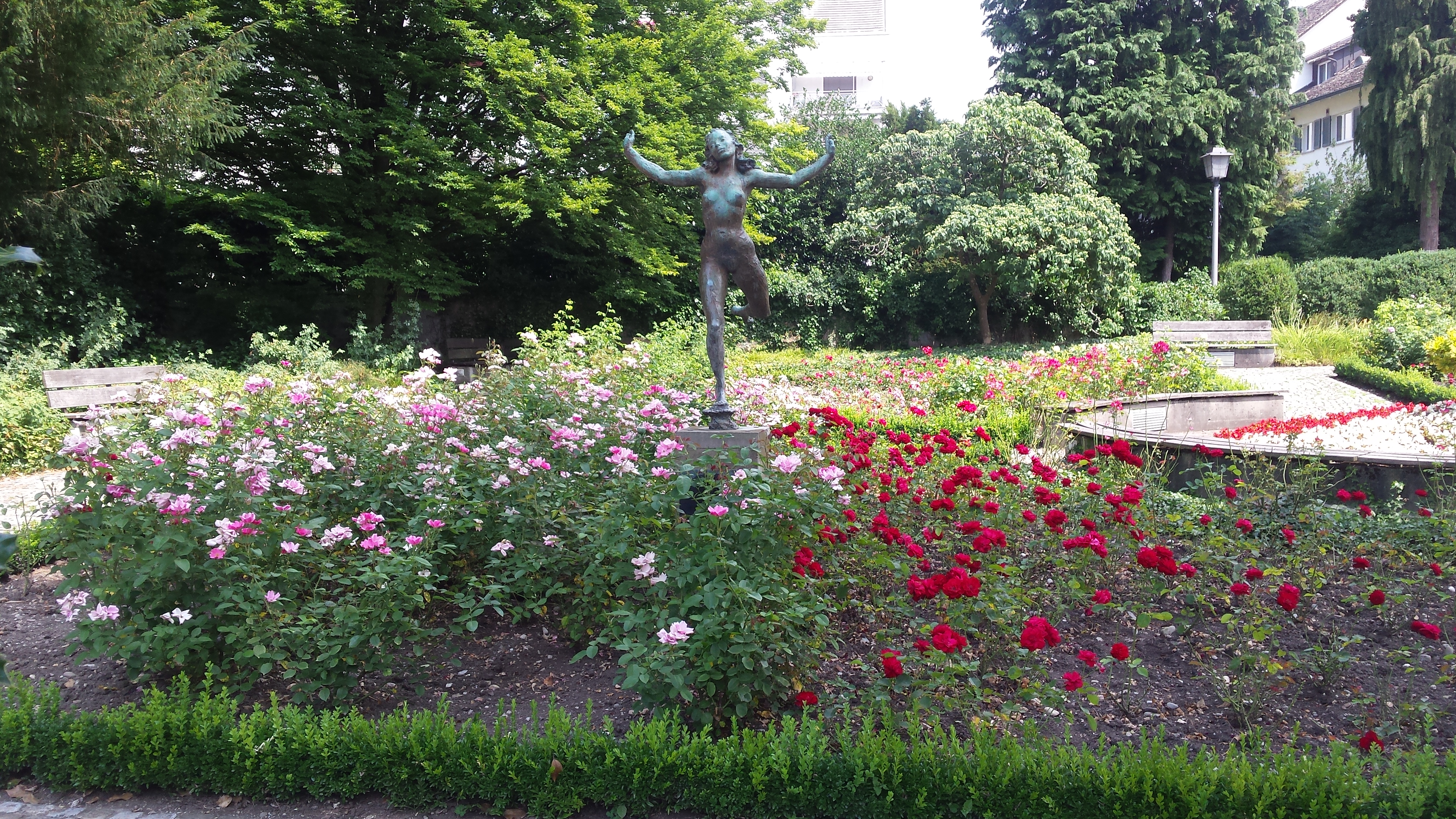
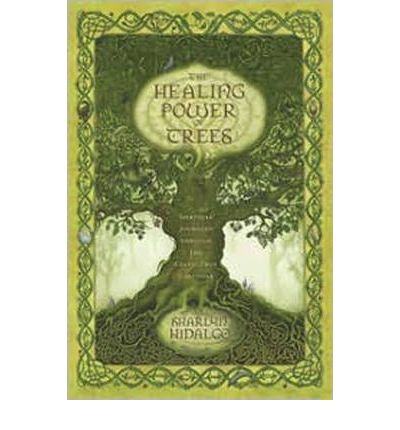
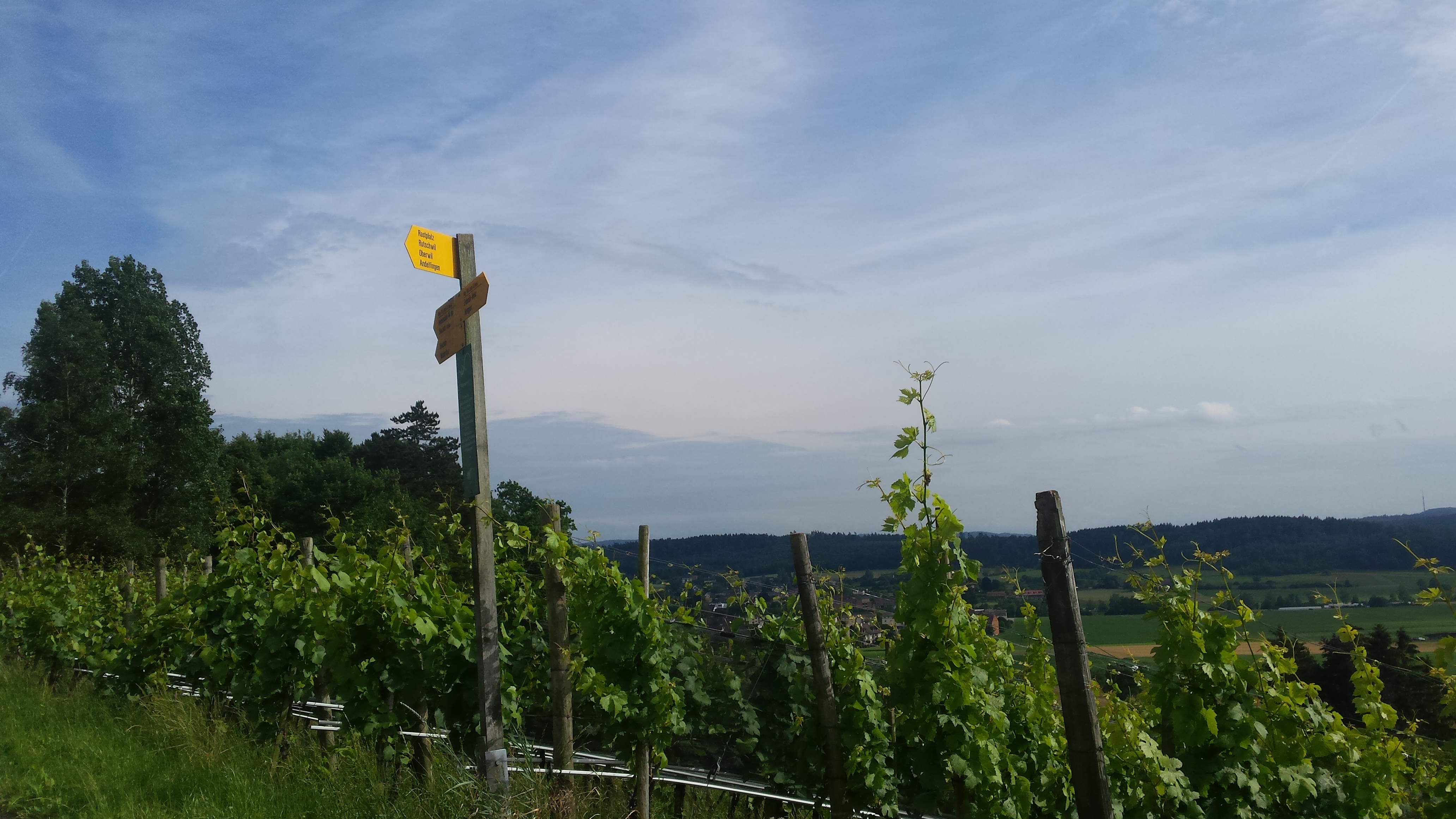
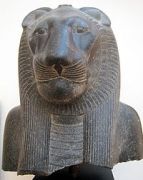
All color flowers in full bloom, canopy of leaves, carpet of grass, bees swarming, the sun oozing heat lavishly – wherever I look, I see bountifulness, I feel how life peaks in me, but how also summer weariness and sweet sensual confusion descend upon me. I am all smell. That reminds me of Christopher Moltisanti, a character from “The Sopranos,” who said he “got high off the smell of popcorn at Blockbuster.” Well, I do find all the collective aromas of the summer intoxicating; I keep catching myself wanting to smell everything around me, whilst imbibing on the hot air. I pick up The Healing Power of Trees: Spiritual Journeys through the Celtic Tree Calendar by Sharlyn Hidalgo, which is one of those effortless reads that keep me nodding and smiling lightly all the time. “I want to be able to understand the novel half-drunk on rosé,” wrote a critic from The New Yorker in an article recommending perfect summer reads. This is it but without losing the depth. Hidalgo’s book is not a scholarly work, but it does have enormous spiritual scope, lots of intuitive wisdom and was written with a true passion for the subject. I appreciate her ability to weave together various cultural traditions such as Celtic, Greek and Egyptian myths, astrology and the runes. Recently, the most exciting plant I have been checking upon in my immediate neighborhood has been the vine (below is a low-quality amateur snapshot I took of it). According to Hidalgo, on 11 July Celtic month of the vine started and will last until August 7. The guides and totems of this month are Lion, Dionysus, the Green Man, Pan, sylphs, nymphs, elves and fairies, the sun god Lugh, Strength card of the tarot, Sekhmet, Kuan Yin, and all mother aspects of the goddess (mother earth offering her bounty for the harvest).

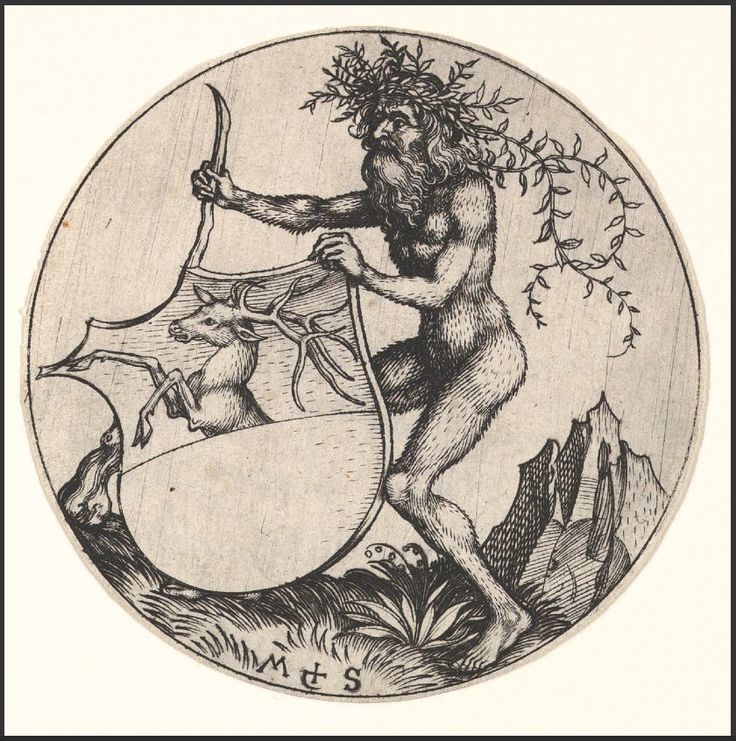
Martin Schongauer (German, c, 1435/50-1491), Shield with Stag Held by Wild Man. Engraving. Metropolitan Museum of Art, New York

Martin Schongauer (German, c, 1435/50-1491), Shield with Stag Held by Wild Man. Engraving. Metropolitan Museum of Art, New York

A few glasses of wine bring a feeling of warm gregariousness, loosen ego boundaries, open the heart and endow with a feeling of expansiveness. In a further stage, imbibing on wine may result in ecstatic frenzy, in the likelihood of the female followers and priestesses of Dionysus – the Maenads, whose name signified “the raving ones.”

Wine brings forward the deepest emotions by dissolving the boundaries that hold us back from full self-expression. Hans Biedermann writes this on the symbolism of wine in his Dictionary of Symbolism:

“The custom of intemperate drinking, in various cultures that revered Dionysus, was part of a religious tradition and was believed to join mortals with the god of ecstasy. Wine supposedly could break any magic spell, unmask liars (“in vino veritas”), and slake the thirst even of the dead when it was poured out as a libation and allowed to seep into the ground. Called ‘the blood of the grape, wine was often closely linked symbolically with blood, and not only in the Christian Eucharist. Poured out as a libation, it could replace blood sacrifices for the dead.”

Bacchantes (Maenads) dancing

Bacchantes (Maenads) dancing

In John’s gospel, the very first miracle Christ performs was turning water into wine. This miracle underscored the ambivalent significance of wine, as Juan Eduardo Cirlot in his Dictionary of Symbols aptly noted, wine pertains both to fecundity and sacrifice. It is a symbol of life in its fullness, and life in its fullness must encompass death and suffering. The vine will not produce good quality wine without ample sun: almost no other plant channels the vigor of the sun in such a marked way. But the height of the summer carries the seeds of death within, symbolized by the harvesting scythe. Sharlyn Hidalgo writes:

“The idea of the sacrament of the last supper of Christ was originally a Dionysian ritual wherein women ate a piece of bread shaped like him (representing his body) and drank wine (his blood). Through this ritualized consumption, the women took in and absorbed the wild, potent power of nature. The ancient Greeks used tools resembling T-squares to cultivate grapevines. Later, these Tau crosses morphed into the structure adopted by the Romans for crucifixion.”

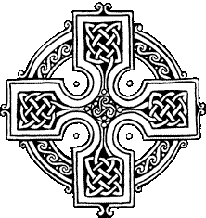
Celtic cross (Celtic art is said to have imitated vine)

Celtic cross (Celtic art is said to have imitated vine)

Quite a free leap in associations, but I appreciate it. Christ said of himself that he was the vine, while his disciples were the branches. He was the one who gave life to his followers. He poured his divine substance into them. In medieval art, the cross and the tree of life were both represented as grapevines. Saint Hildegard von Bingen said that wine was endowed with the mysterious and secret vital force (viriditas). The poet Dylan Thomas understood viriditas perfectly,  because he knew that life force and death force are essentially the same; in one of his most wonderful poems he wrote: “The force that through the green fuse drives the flower/Drives my green age;/ that blasts the roots of trees/ Is my destroyer.”

From the point of view of the soul, the miracle work of wine endows us with wings of fertile creativity. This creativity sometimes seeks to destroy, for example by dissolving any boundaries or barriers in order to claim a wider territory on grounds of the psyche. The creative spirit of the season was best captured by the genius of Shakespeare in his Midsummer Night’s Dream:

“Lovers and madmen have such seething brains,
Such shaping fantasies, that apprehend
More than cool reason ever comprehends.
The lunatic, the lover and the poet
Are of imagination all compact:
One sees more devils than vast hell can hold,
That is, the madman: the lover, all as frantic,
Sees Helen’s beauty in a brow of Egypt:
The poet’s eye, in fine frenzy rolling,
Doth glance from heaven to earth, from earth to heaven;
And as imagination bodies forth
The forms of things unknown, the poet’s pen
Turns them to shapes and gives to airy nothing
A local habitation and a name.”

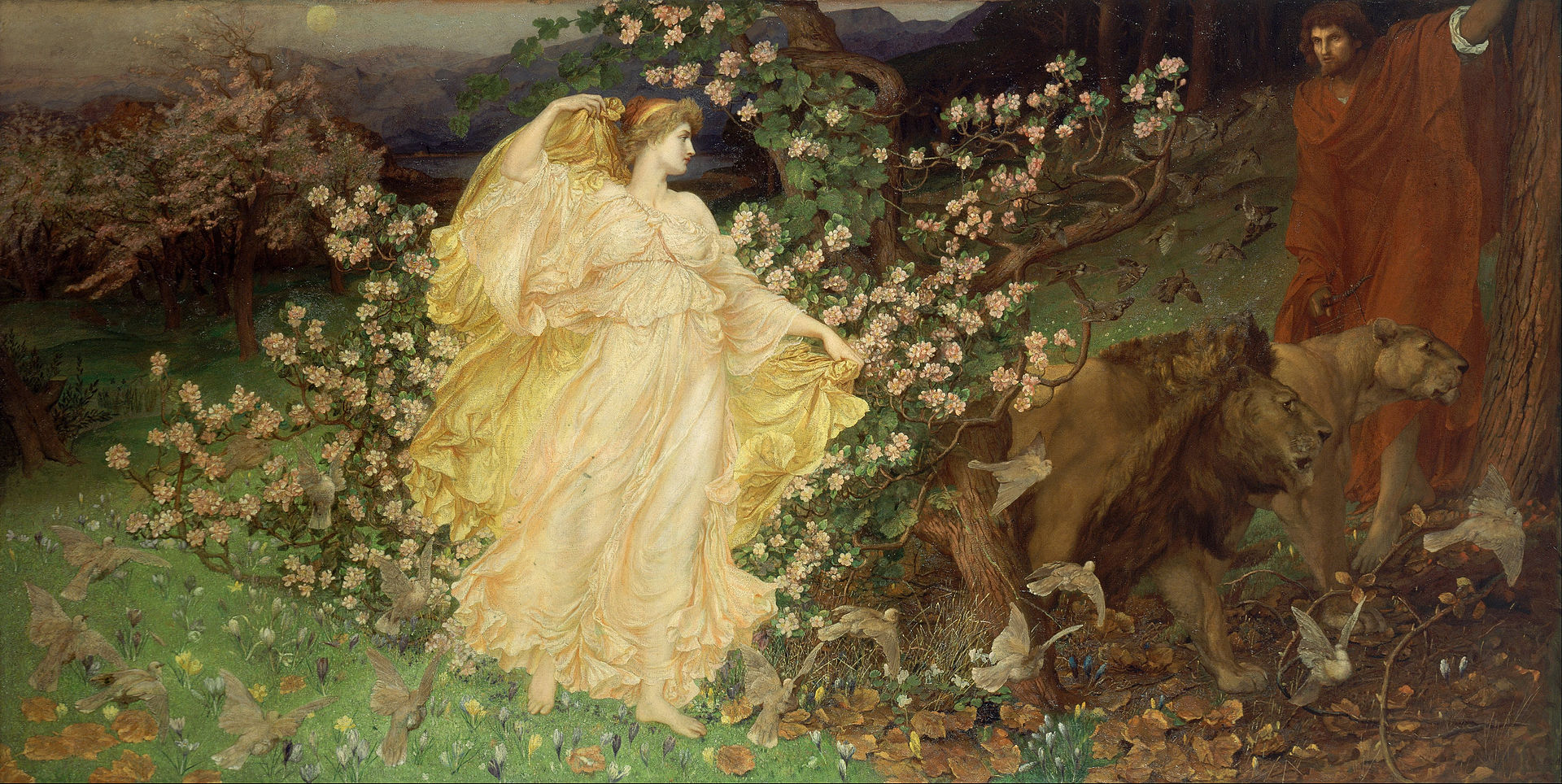
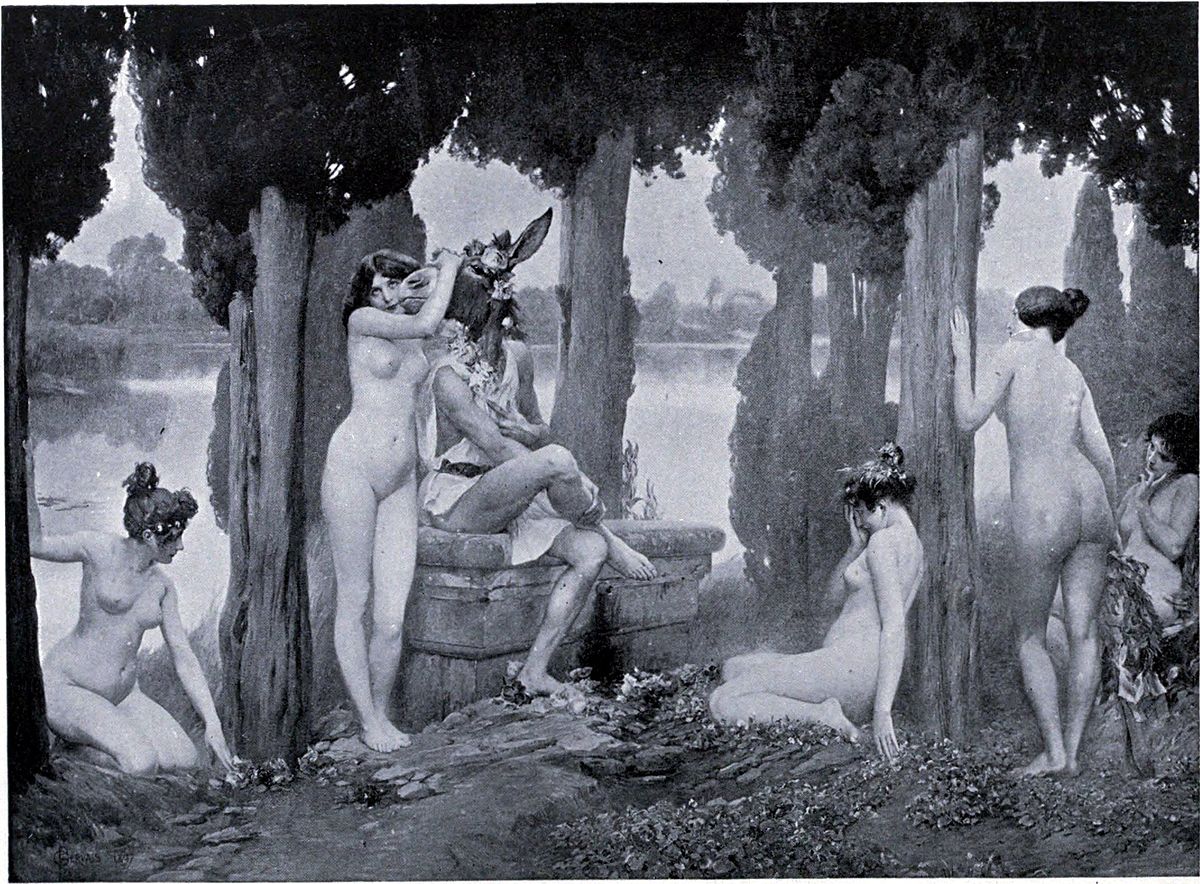
Paul Gervais,

Paul Gervais, “Folie de Titania”

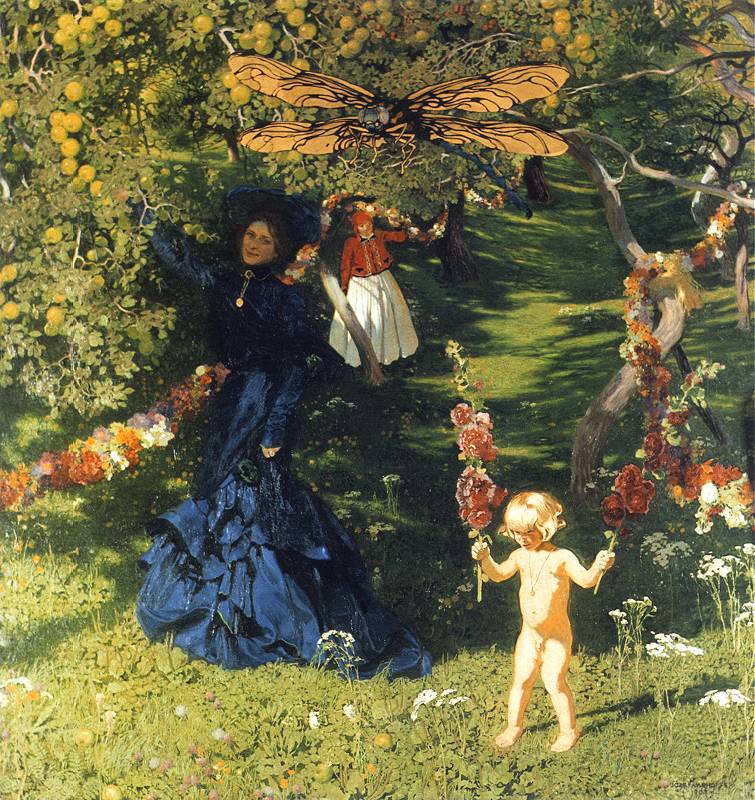
I remember seeing it many years ago in the theater and being completely overpowered by its Dionysian message of loosening of boundaries, and an invitation to unbridled revelry. I remember being struck by the impression that I was being exposed to an unlimited geyser of creative force. Summer is often the time taken off from our everyday, constraining social roles. As the character in Shakespeare’s play, we are invited to frolic around in the woods governed by freedom giving divine laws of the fairies.

Jozef Mehoffer,

Jozef Mehoffer, “Strange Garden”

Posted in Summer, The Vine | Tagged , , , , , , , , , , , , , , , | 12 Comments

“The Starry Night” by Anne Sexton

Anselm Kiefer, "The Renowned Orders of the Night"

Anselm Kiefer, “The Renowned Orders of the Night”

“The town does not exist
except where one black-haired tree slips
up like a drowned woman into the hot sky.
The town is silent. The night boils with eleven stars.
Oh starry starry night! This is how
I want to die.

It moves. They are all alive.
Even the moon bulges in its orange irons
to push children, like a god, from its eye.
The old unseen serpent swallows up the stars.
Oh starry starry night! This is how
I want to die:

into that rushing beast of the night,
sucked up by that great dragon, to split
from my life with no flag,
no belly,
no cry”

Posted in Poetry | Tagged , , , , | 6 Comments

Rose Red: Symbolism of Blood

1.“White and red combined are the colour of the mysterious rose, the whiteness of milk and the redness of blood, the white of light and the redness of fire.”

Eliphas Levi, “The Book of Splendors”

2.“Blood is the first incarnation of the universal fluid; it is the materialized vital light. Its birth is the most marvellous of all nature’s marvels; it lives only by perpetually transforming itself, for it is the universal Proteus. The blood issues from principles where there was none of it before, and it becomes flesh, bones, hair, nails . . . tears, and perspiration. It can be allied neither to corruption nor death; when life is gone, it begins decomposing; if you know how to reanimate it, to infuse into it life by a new magnetization of its globules, life will return to it again. The universal substance, with its double motion, is the great arcanum of being; blood is the great arcanum of life.”

Eliphas Levi, quoted by Madame Blavatsky in “Isis Unveiled”

Many years ago, at the time when I studied alchemy for hours every day, I had a vivid dream whose climax involved blood gushing forward in jets from a man’s liver. The vividly red blood flew through the air in tiny red droplets and landed on my books. Black flies started feasting on it. Gruesome as it may sound, the dream was a revelation. To me it felt like it meant that all my learning would be infused with life and energy carried by blood.

Blood of life flows through our veins. The tissues of our bodies form the substance of our heredity. Our blood ties are our fate. Blood is also symbolically linked with death, often a violent one. Its colour is the result of the high content of iron, a metal associated with Mars, the fiery god of war. Blood is fiery water. It is not surprising that Mars is associated with blood since he represents “the masculinity of the body, rather than the masculinity of the spirit,” as Liz Greene puts it in Astrology of Fate. And the body belongs to the Goddess. Ares emerged from the world of instinct and “the old matriarchal realm of flesh.”

Mars

In the old times, blood was people’s constant companion: women felt the pungent smell of blood on their newborns, there were no tampons to diffuse and absorb the menstrual blood before it can be seen or smelled, when warriors died in combat or when people sustained mortal wounds, nobody was sanitized and rushed to hospital. Nowadays we experience blood shedding vicariously through fiction, movies and TV shows. But the memory of history’s violent bloodbaths still runs through the veins of our unconsciousness. When the advent of Christianity ushered in the Age of Pisces, forgiveness and mercy teachings of Jesus were not subsequently adopted by many of his followers. The ritual of Holy Communion was meant to be an atonement for the atrocities committed during the Age of Aries, and a symbolic transference of the teachings of Christ to his disciples:

“When Jesus says, ‘Drink … this is my blood,’ what else was meant, it was simply a metaphorical assimilation of himself to the vine, which bears the grape, whose juice is its blood – wine. It was a hint that as he had himself been initiated by the ‘Father,’ so he desired to initiate others. His father was the husbandman, himself the vine, his disciples the branches.”

Blavatsky, “Isis Unveiled”

Moving away from symbolism to the realm of literal meaning, the Inquisition spilled torrents of blood in the whole of Europe. This infamous torch has been taken over by religious terrorists in our times.

Blood is synonymous with life itself, always in motion, ceaseless in its circulation. It is the opposite of “stagnation, absorption, calcification from old age, and death,” says Madame Blavatsky in Isis Unveiled. When we feel most alive, when we experience passion, jealousy, or other overpowering emotions, blood rushes through our veins, we breathe faster, our cheeks redden. As Cirlot noticed in his Dictionary of Symbols:

“In cases of relationships as close as that between blood and the colour red, it is evident that both are reciprocally expressive: the passionate quality characteristic of red pervades the symbolism of blood, and the vital character of blood informs the significance of the colour red.”

Color red is the theme of one of my favorite novels – My Name Is Red by Orhan Pamuk. In one of the chapters it is actually the color red which speaks to us:

“I hear the question upon your lips: What is it to be a color?

Color is the touch of the eye, music to the deaf, a word out of the darkness. …

I am so fortunate to be red! I’m fiery. I’m strong. I know men take notice of me and that I cannot be resisted.

I do not conceal myself: For me, delicacy manifests itself neither in weakness nor in subtlety, but through determination and will. So, I draw attention to myself. I’m not afraid of other colors, shadows, crowds, or even of loneliness. How wonderful it is to cover a surface that awaits me with my own victorious being! Whenever I’m spread, I see eyes shine, passions increase, eyebrows rise and heartbeats quicken. Behold how wonderful it is to live! Behold how wonderful to see. Behold: Living is seeing. I am everywhere. Life begins with me and returns to me.”

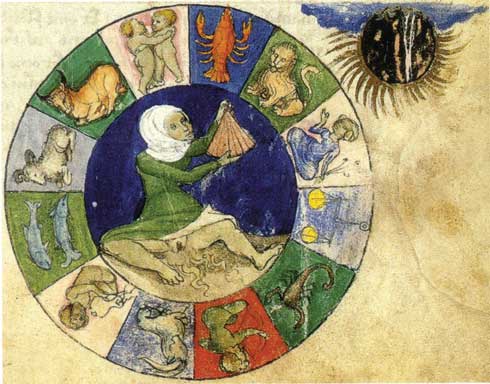
In Mysteries of the Dark Moon, Demetra George devotes considerable space to the significance of the menstrual time for a woman, and equates this time with the symbolism of the dark moon. Menstrual blood was sacred for many ancient cultures. Demetra George writes that menstruation time is “a woman’s most powerful time of month, a time when her psychic and spiritual energies are most highly sensitized.” Because men feared the women’s psychic powers during that time, they created laws to isolate women while they were bleeding. A menstruating woman withdraws from others because she needs to nurture herself and draw from her psychic power within. What is more, “because a woman’s greatest sexual desire occurs around her period, men became terrified of what they perceived to be her assertive, voracious sexuality that would devour them.” Apparently, if we want to distill the wisdom of the ancients we may say that the flow of blood changes women into powerful sorceresses full of erotic fury, channeling the dark goddess. Of course in the West we call it PMS.

Image from Aurora Consurgens, a woman bleeds within a zodiac circle

Image from Aurora Consurgens, a woman bleeds within a zodiac circle

The Egyptian goddess Sekhmet wore red garments. In one of the myths associated with her, Sun god Ra sent her to punish humanity, but she fell into frenzy doing it and got inebriated on the blood she was drinking. That put the whole humanity in danger of extinction. Ra made Sekhmet drink beer colored by red dye to deceive her and thus subside her frenzy. In India, the dark goddess Kali was a counterpart of the Egyptian Sekhment. She was the one who drank blood. The blood of Kali was believed to have had regenerative qualities. As Barbara Walkers wrote in Women’s Encyclopedia of Myths and Secrets:

By Susan Seddon Boulet

By Susan Seddon Boulet

“In Kali’ s cave-temple, her image spouted the blood of sacrifices from its vaginal orifice to bathe Shiva’ s holy phallus while the two deities formed the lingam-yoni, and worshippers followed suit, in an orgy designed to support the cosmic life-force generated by union of male and female, white and red.”

Frida Kahlo, “Just a Few Nips”

Frida Kahlo, “Just a Few Nips”

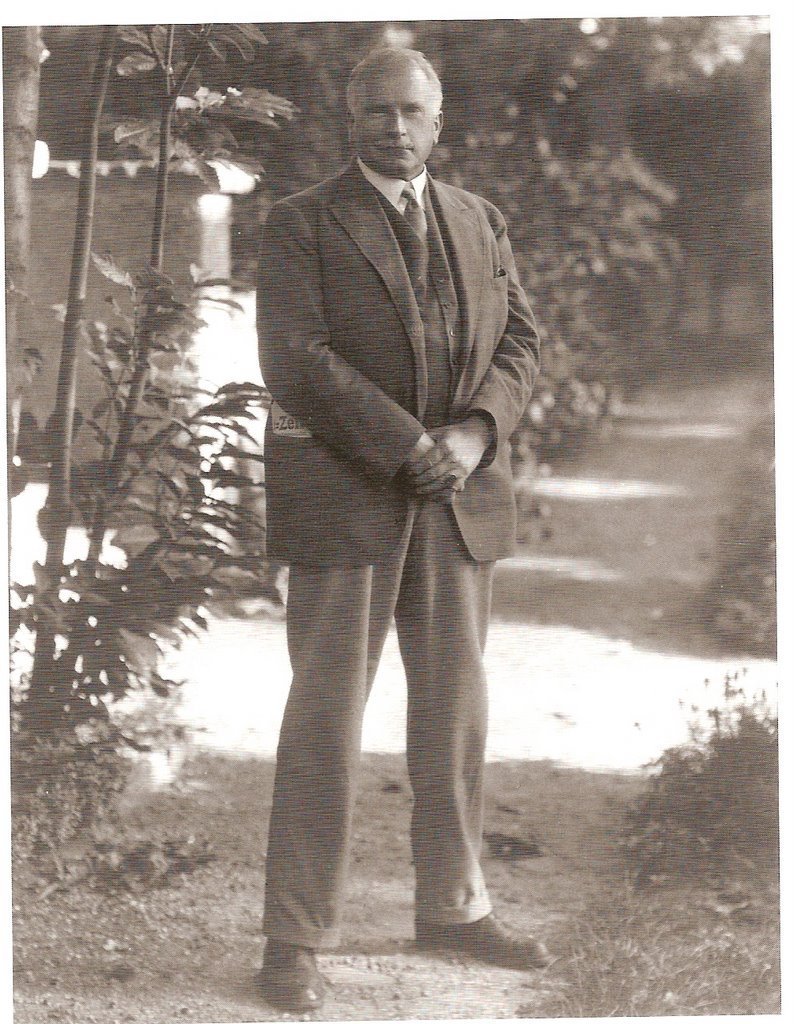
As usual, Jung’s reflections on the color red and the feminine strike me as the deepest and most appealing:

“The relation of the love-goddess to red dates back to ancient times. Scarlet is the colour of the Great Whore of Babylon and her beast. Red is the colour of sin. The rose is also an attribute of Dionysus. Red and rose-red are the colour of blood, a synonym for the aqua permanens and the soul, which are extracted from the prima material and bring ‘dead’ bodies to life. … The stone … is the son of this whore. …

Certain of the ecclesiastical symbols prove to be acutely dualistic, and this is also true of the rose. Above all it is an allegory of Mary and of various virtues. Its perfume is the odour of sanctity… At the same time it symbolizes human beauty (venustas), indeed the lust of the world (voluptas mundi).

Like the rose, the figure of the mother-beloved shines in all the hues of heavenly and earthly love. She is the chaste bride and whore who symbolizes the prima materia, which ‘nature left imperfected.’”

C.G. Jung, “Mysterium Coniunctionis,” CW vol. XIV, pars. 420-422

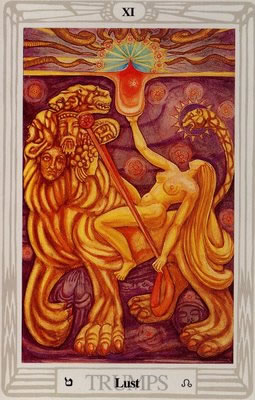
Lust, XI Arcanum of the Thoth deck

Lust, XI Arcanum of the Thoth deck

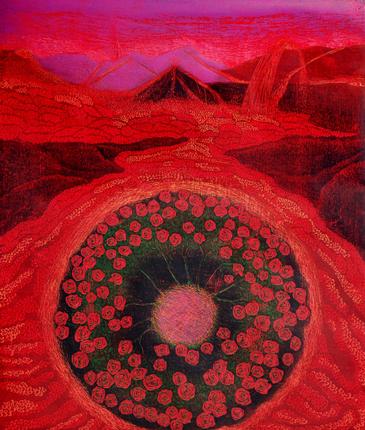
In alchemy rubedo (reddening) is the crowning stage of the opus. Having achieved illumination outside the body in the Albedo (whiteness) stage, during Rubedo the adept returns to the earth in order to fully incarnate his new enlightened consciousness into the body’s flesh and blood. The alchemical gold, claimed Greek alchemists, was “the red blood of silver.” The Red Sea had to be crossed in order to reach the Promised Land. We all have to cross our own sea “bloodied with wounds and sacrifice” (Cirlot, Dictionary of Symbols).

Jeff Grygny, Alchemy Series, via http://www.jeffgrygny.com/Alchemy_series.htm

Jeff Grygny, Alchemy Series, via http://www.jeffgrygny.com/Alchemy_series.htm

Posted in Blood | Tagged , , , , , , , , , , , , , , , , , , , , , , , | 17 Comments

Hathor: the Exuberant Goddess of Abundant Life

I.”Who fills the earth with golden motes of sunlight, who comes alive in the liminal east and sets in the liminal west.”

II.”I give thee everything that the sky provides, that the earth creates, and the Nile brings from his source.”

III.”O perfect, O luminous, O venerable!

O great sorceress!

O luminous mistress,

O gold of the gods!”

IV.“We laud thee with delightful songs,

For thou art the mistress of jubilation,

The mistress of music, the queen of harp-playing.

The lady of the dance,

The mistress of the chorus-dance,

The queen of wreath-weaving.”

V:”I am the one who guides the great ones who are lost and exhausted on the roads of the reborn…
Who guides those who are lost in the underworld,
I am Hathor, Queen of the northern sky,
Who watches over the reborn,
I am a haven of tranquility for the just,
A ferry for the chosen.”

From Hymns to Hathor, quoted after Lesley Jackson, “Hathor: A Reintroduction to an Ancient Egyptian Goddess,” published by Avalonia, Kindle edition
All quotes in this post come from this book, unless otherwise stated.

All quotes in this post come from this book, unless otherwise stated.

The Egyptian calendar started around 21 June with the star Sirius (Sothis) rising on the horizon, announcing the start of the inundation of the Nile. This annual spectacle always amazed the Egyptians: the river started swelling in its banks first turning red from the silt, then green because of vegetation floating on top of it. This was seen as equally magical as the daily eastern rising of another star – the Sun, which travelled across the sky to set over the western horizon every evening amidst a spectacular symphony of colors. Two deities ruled these two magical occurrences: Hathor and the sun god Ra. New Year’s Day in Egypt was also Hathor’s birthday. Egyptians believed that on that day she returned from her self-imposed exile. The Distant Goddess was back and celebrations could start. At the break of dawn, the priests carried her statue to the rooftop Chapel of the Union with the Sun Disc, where the rising sun bathed it in its light, rejuvenating the goddess believed to be present in the statue. This was the signal to start ecstatic New Year celebrations full of dance, laughter and wine. Hathor was celebrated as mistress of drunkenness and the fertility of the soil due to the silt carried during the inundation promised abundant grape harvest.

By Susan Seddon Boulet

By Susan Seddon Boulet

Hathor was the greatest goddess of Egypt (before Isis took over in that role much later); originally she was called HetHert (“the House or Womb Above), later her name became the familiar Hat-Hor (“the House or Womb of Horus”). She was the sky in which the Great Falcon – Horus, the original sun god – lived; she was the womb from which he was born. She was a sky goddess of the primeval sky waters and a solar goddess, thus a bringer of all life. She was the Source of the Nile. In her Handbook of Egyptian Mythology, Geraldine Pinch thus summarizes her role: “Hathor was the golden goddess who helped women to give birth, the dead to be reborn, and the cosmos to be renewed. This complex deity could function as the mother, consort, and daughter of the creator sun god. As Lady of the Stars, Hathor was associated with the nocturnal sky. As the Eye of Ra, she could be identified with the solar disk or the morning or evening star (Venus). By the Greco-Roman Period, Hathor was honored as a moon deity. She was the goddess of all precious metals, gemstones, and materials that shared the radiant qualities of celestial bodies, such as gold, silver, copper, turquoise, lapis-lazuli, and faience.” Naturally, because of her connection with the sun god, she was mostly associated with gold. In fact, she was seen as almost a personification of gold, which was the metal most valued by the Egyptians. Her most notable epithets included:

Beautiful of Face

Eye of Ra upon his disk

Goddess of drunkenness

Lady of All

Lady of Heaven

Lady of Horns

Lady of the Sky

Mistress of all the Gods

The Great One

The Hand of Atum

The ruler-goddess

Great Female Hawk in the House-of-the-Falcon

God’s mother of the Falcon of Gold

King before Hathor

King before Hathor

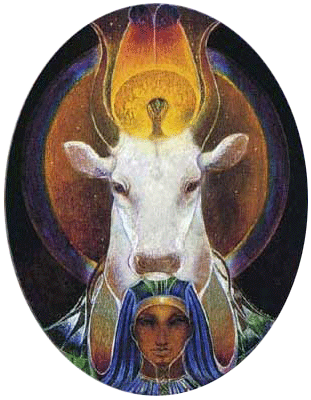
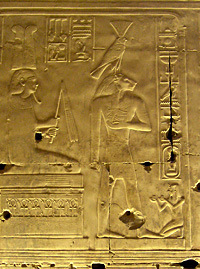
The Egyptians believed that the sun god was lifted up into the heavens on the head of the celestial cow. As Pinch summarizes, “the union of Hathor and the creator could be thought of in sexual terms or, more abstractly, as a merging of the creator with his own active power. Hathor was the goddess who personified both the hand that made Atum ejaculate and the divine ‘seed’ itself.” As the solar goddess, she took the weary sun god in his arms in the West. As a symbolic extension of that role, she was also the Lady of the Necropolis, who eased the transition from death to new life. She offered the newly dead nourishment under the shade of the sycamore tree. As Lesley Jackson points out, for the Egyptians shades and shadows were not sinister but benevolent, offering protection from the relentless desert sun. The canopy of the sycamore tree was a sacred space where Hathor offered refuge to her followers, also after their death. The presence of trees marked a change in the landscape and the much awaited presence of water.

The nursing cow goddess

The nursing cow goddess

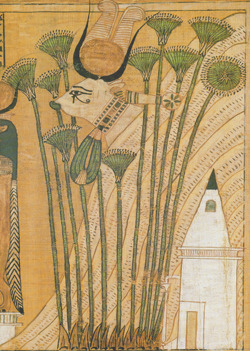
Hathor, the Cow goddess was not named after a domesticated cow but after a wild cow which lived in the marshes where papyrus grew – a plant sacred to her and extremely important to the daily survival of the Egyptians. A hieroglyph in the form of a papyrus plant meant “fresh, flourishing, and green.” As Jackson explains: “In ancient Egyptian cosmology, the world was created when the first god stood on a mound that emerged from limitless and undifferentiated darkness and water, a mythical echo of the moment each year when the land began to reappear from beneath the annual floodwaters. Papyrus marshes were thus seen as fecund, fertile regions that contained the germs of creation. Papyrus thickets were seen as liminal zones at the edges of the ordered cosmos, symbols of the untamed chaos that surrounded and perpetually threatened the Egyptian world.”

For the Egyptians, cows symbolized loving care, nourishment and fertility. Significantly, the verb “to be joyful” was connected with a hieroglyph showing “a cow turning round to the calf at her side,” explains Jackson. Women were often depicted with their arms upraised to resemble the horns of a cow, the lunar crescent and the protective embrace of the goddess. The Celestial Cow who straddled the earth was the embodiment of the Milky Way. On this primeval ocean the solar barque guided by Hathor travelled each night. Each morning the sun was born and placed between the horns of Hathor. For the Egyptians, the sky was feminine and the mother. The goddess Nut represented the abstract, divine sky while Hathor its visible, physical and life giving aspect.

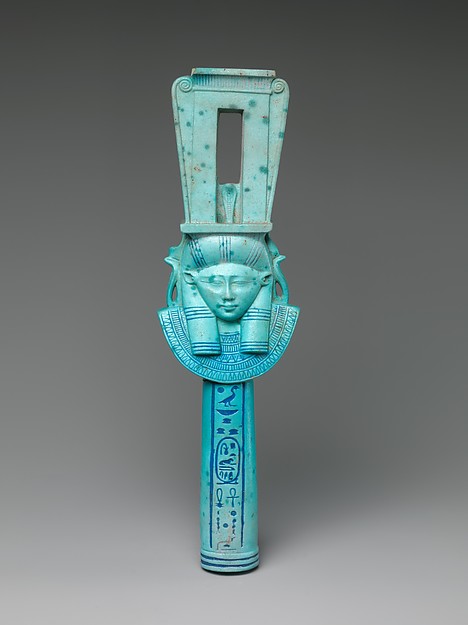
Hathor’s role was invariably of the one who regenerated, rejuvenated, and infused with life energy. She was fertility embodied. Very popular votive offerings she rejoiced in accepting were wooden and stone phalluses symbolizing abundance and fertility. Women would visit the crypts of her temple in Dendera if they had difficulty conceiving. She brought joy and ecstasy to her followers. As the Eye of Ra she embodied the active feminine principle, since the Egyptian word for eye, irt, sounded like the verb “to do.” Hathor had the power to revitalize anything and anybody that felt listless or stagnant. An instrument sacred to her was the sistrum, whose rattle was believed to promote fertility and scare the powers of evil. The shaking of sistrum brought about revitalizing powers and was used in all major rites of passage. Hathor was so closely associated with the sistrum that her face usually formed the handle. Also the menat, whose sound resembled the rustling of papyrus, was thought to make a revitalizing sound. Another object sacred to the goddess was the mirror, which was called “a living one.” It was regarded as “an active object, illuminating rather than merely reflecting as we would understand it now, and so was compared to the Eye of the Sun,” writes Jackson. Tomb paintings often show mirror dances dedicated to Hathor. Their significance is not clear, though perhaps they were associated with a play of lights and Hathor’s solar power. Aside from their role as an obvious symbol of eroticism and beauty, mirrors may have also been viewed as portals to other worlds. Hathor was after all a midwife assisiting women in labor but also by natural extension she was the one who assisted the deceased in their in the transition between death and rebirth. As Jackson says: “In many ways Hathor is a link to other worlds; those of the distant mines and foreign places, the otherworldly experiences of ecstasy and drunkenness and the afterworld of death and rebirth.”

Faience Sistrum Inscribed with the Name of Ptolemy I, via http://www.metmuseum.org/collection/the-collection-online/search/546038

Faience Sistrum Inscribed with the Name of Ptolemy I, via http://www.metmuseum.org/collection/the-collection-online/search/546038

A menat from the Temple of Dendera

A menat from the Temple of Dendera

One of the most important festivals dedicated to Hathor was the Festival of Drunkenness. To achieve a state of ecstasy meant to honor the goddess. Hathor was the one who got the largest number of votive offerings, which she was more fond of than of hymns, and wine was a particularly suitable gift for her. The sacred state of drunkenness was believed to help her followers to get rid of anger and all negativity. Hathor had a dual nature as a benevolent goddess but with periodical bouts of anger in her Angry Eye aspect during which she withdrew and was referred to as the Distant Goddess. The god Thoth would bring her wine and calming words during these times in order to appease her. The angry side of Hathor was connected with Sekhmet, one of the aspects of Hathor.

Although it was Isis who had the most heka (magic power) and was known as the Great One of Magic, Hathor had at her disposal infinite energy and strength due to her solar aspect. After the younger Horus (son of Isis) escaped to the desert having been blinded by Seth, Hathor healed his eyes with the milk of a gazelle. Jackson saw this magic healing act as restoring the sun and the moon and ensuring the survival of all creation. Hathor buried the damaged eyes, which grew back as lotus flowers. The lotus was a sacred plant of Hathor dedicated to her son Nefertum, god of perfume, portrayed as a lion-headed man with a lotus headdress (in other versions Nefertum was son of Sekhmet or Nut). One of the Egyptian myths of creation tells about a giant lotus which emerged from primordial waters of Nun and which brought forth the sun god.

Nefertum

Nefertum

Nefertum

The magic powers of Hathor did not end with healing Horus. In her guise as the Seven Hathors she determined the destinies of all newborns in Egypt, weaving their fate with a scarlet thread. The Seven Hathors had a very strong magical aspect and would be frequently invoked in love charms. They were also able to predict a manner of a person’s death. In fact, as is stated in the Coffin Texts, Hathor was the goddess who held keys to the afterlife. She was “the doorkeeper of the house of life … she in whose hand are the keys to the West, to whom the portal has been assigned, without whom they do not close, nor do they open without her knowing.” On the prow of the solar barque she was the mistress of was the scarab – a symbol representing “the plenitude of life and its continual renewal.”

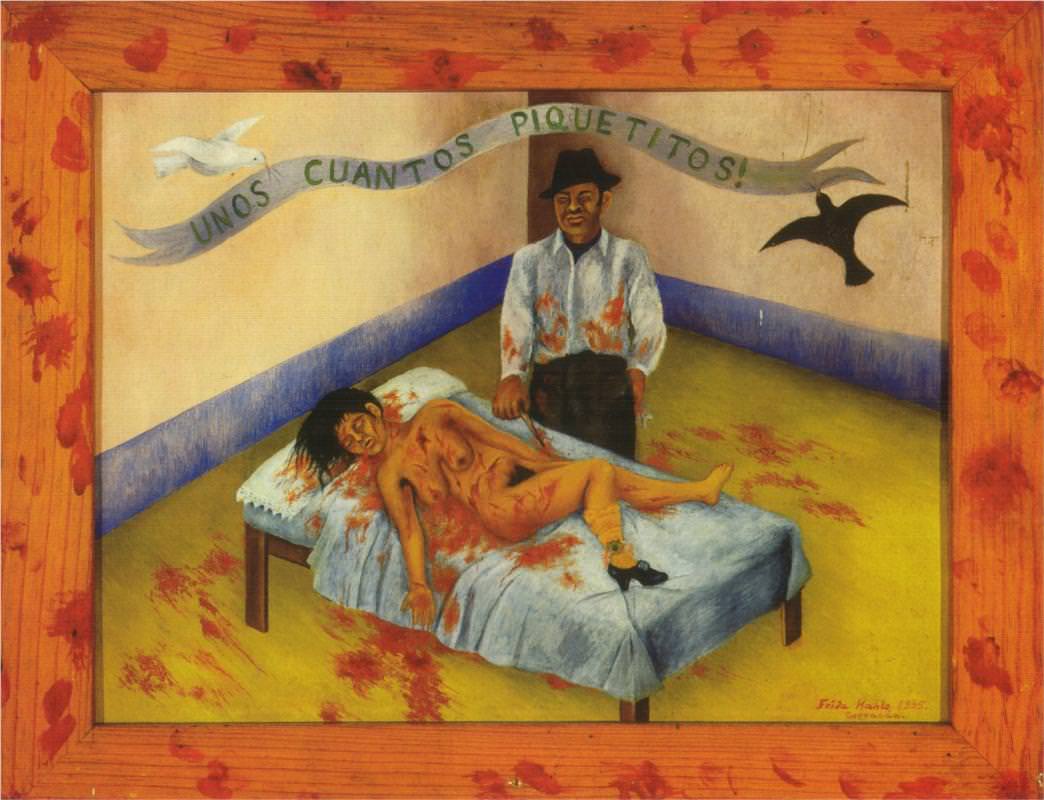
The Seven Hathors from the Temple of Dendera

The Seven Hathors from the Temple of Dendera

Hathor was the main Egyptian goddess in the Old and Middle Kingdom but by the end of the Greco-Roman era she had been overshadowed by and eventually assimilated with Isis. This marked a clear cultural and archetypal shift and was a very significant occurrence. Hathor was the goddess who existed in her own right, which meant that all her relationships or offspring were secondary. Isis, on the other hand, was committed to and entangled with her spouse Osiris and their son Horus. The festivals of Hathor were full of joy and celebration, festivals of Isis focused on her mourning the death of her husband. Just as Isis lovingly collected all the pieces of his dead body, so she encompassed all Egyptian goddesses into her. She wore the cow horn sun disc of Hathor. She took over her epithets. As Jackson sums up, “By late antiquity Isis was the unrivaled Great Goddess of Egypt and her cult spread across the Roman Empire and reached Britain.” What was the reason of Isis prevailing over all other goddesses? I suspect it was the dawn of the Age of Pisces which brought about the archetype of wholeness. Isis epitomized “loss, suffering, compassion, healing and wholeness.” She was a savior goddess who brought hope to all those who suffered. What was lost at this juncture, however, was the angry and dangerous side of the feminine principle, which was highly pronounced in Hathor as Sekhmet and as the Distant Goddess. Isis, as Jackson puts it, was “the more socially acceptable face of the female divine.” Another aspect of Isis that was the sign of the coming times was the secrecy and exclusivity of her cult. With Isis the esoteric knowledge went underground.

This does not change the fact that the Summer Solstice carries the energy of Hathor who says in one of the hymns: “I am the Woman who lightens darkness.”

Birth of the sun in Hathor Temple at Dendera, via Wikipedia

Birth of the sun in Hathor Temple at Dendera, via Wikipedia

Beautiful images of Hathor:

https://www.academia.edu/12489681/The_Goddess_Hathor_Iconography

Support my blog

If you appreciate my writing, consider donating and make my day. Thank you in advance.

$1.00

Posted in Hathor | Tagged , , , , , , , , , , , , , , , , , | 27 Comments

Clarissa Pinkola Estés on the Animus as a Merchant of Soul

“By classical Jungian definition, animus is the soul-force in women, and is considered masculine. However, many women psychoanalysts, including myself, have, through personal observation, come to refute the classical view and to assert instead that the revivifying source in women is not masculine and alien to her, but feminine and familiar.

Nevertheless, I believe the masculine concept of animus has great relevance. There is tremendous correlation between women who are afraid to create—afraid to manifest their ideas in the world, or else are doing so in some manner that is disrespectful or haphazard—and their dreams may present many images of injured or injuring men. Conversely, the dreams of women strong in outer manifesting ability often feature a strong male figure who consistently appears in various guises.

Animus can best be understood as a force that assists women in acting in their own behalf in the outer world. Animus helps a woman put forth her specific and feminine inner thoughts and feelings in concrete ways—emotionally, sexually, financially, creatively, and otherwise—rather than in a construct that patterns itself after a culturally imposed standard of masculine development in any given culture.

The male figures in women’s dreams seem to indicate that animus is not the soul of a woman, but ‘of, from, and for’ the soul of a woman. In its balanced and non-perverted form, animus is an essential ‘bridging man.’ This figure often has wondrous capabilities that cause him to rise to the work as bringer and bridger. He is like a merchant of soul. He imports and exports knowledge and products. He chooses the best of what is offered, arranges the best price, supervises the integrity of the exchanges, follows up, follows through.

Another way to understand this is to think of Wild Woman, the soul-Self, as the artist and the animus as the arm of the artist. Wild Woman is the driver, the animus hustles up the vehicle. She makes the song, he scores it. She imagines, he offers advice. Without him the play is created in one’s imagination, but never written down and never performed. Without him the stage may be filled to bursting, but the curtains never part and the marquee remains dark.

If we were to translate the healthy animus into Spanish metaphor, he would be el agrimensor, the surveyor, who knows the lay of the land and with his compass and his thread measures the distance between two points. He defines the edges and establishes boundaries. Also call him el jugador, the gamesman, the one who studies and knows how to and where to place the marker to gain or to win. These are some of the most important aspects of a robust animus.

So the animus travels the road between two territories and sometimes three: underworld, inner world, and outer world. All a woman’s feelings and ideas are bundled up and carted across those spans – in every direction – by the animus, who has a feeling for all worlds. He brings ideas from “out there” back into her, and he carries ideas from her soul-Self across the bridge to fruition and ‘to market.’ Without the builder and maintainer of this land bridge, a woman’s inner life cannot be manifested with intent in the outer world.

You needn’t call him animus, call him by what words or images you like. But also understand that there is currently within women’s culture a suspicion of the masculine, for some a fear of ‘needing the masculine,’ for others, a painful recovery from being crushed by it in some way. Generally this wariness comes from the barely- beginning-to-be-healed traumas from family and culture during times previous, times when women were treated as serfs, not selves. It is still fresh in Wild Woman’s memory that there was a time when gifted women were tossed away as refuse, when a woman could not have an idea unless she secretly embedded and fertilized it in a man who then carried it out into the world under his own name.

So, rather than being the soul-nature of women, animus, or the contra-sexual nature of women, is a profound psychic intelligence with ability to act. It travels back and forth between worlds, between the various nodes of the psyche. This force has the ability to extrovert and to act out the desires of the ego, to carry out the impulses and ideas of the soul, to elicit a woman’s creativity, in manifest and concrete ways.

The key aspect to a positive animus development is actual manifestation of cohesive inner thoughts, impulses, and ideas. Though we speak here of positive animus development, there is also a caveat: An integral animus is developed in full consciousness and with much work of self-examination. If one does not carefully peer into one’s motives and appetites each step of the way, a poorly developed animus results. This deleterious animus can and will senselessly carry out unexamined ego impulses, pumping out various blind ambitions and fulfilling myriad unexamined appetites. Further, animus is an element of women’s psyches that must be exercised, given regular workouts, in order for her and it to be able to act in whole ways. If the useful animus is neglected in a woman’s psychic life, it atrophies, exactly like a muscle that has lain inert too long.

While some women theorize that a warrior-woman nature, the Amazonian nature, the huntress nature, can supplant this ‘masculine-within-the-feminine element,’ there are to my sights many shades and layers of masculine nature, such as a certain kind of intellectual rule making, law giving, boundary setting, that are extremely valuable to women who live in the modem world. These masculine attributes do not arise from women’s instinctual psychic temperament in the same form or tone as those from her feminine nature.

So, living as we do in a world that requires both meditative and outward action, I find it very useful to utilize the concept of a masculine nature or animus in woman. In proper balance animus acts as helper, helpmate, lover, brother, father, king. This does not mean animus is king of the woman’s psyche, as an injured patriarchal point of view might have it. It means there is a kingly aspect existent in the woman’s psyche, a kingly element that when developed attitudinally, acts and mediates in loving service to the wild nature. Archetypally, the king symbolizes a force that is meant to work in a woman’s behalf and for her well-being, governing what she and soul assign to him, ruling over whatever psychic lands are granted to him.”

Clarissa Pinkola Estés, Women Who Run with the Wolves

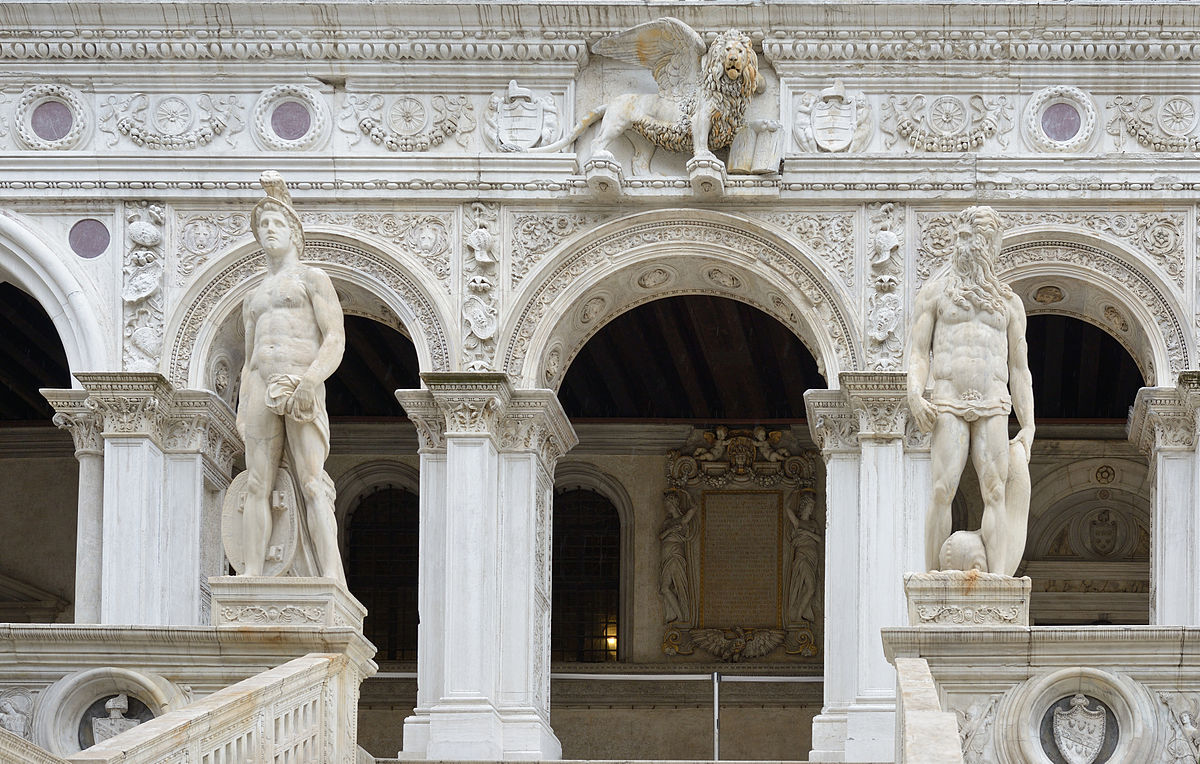
Jacopo Sansovino,

Jacopo Sansovino, “Mars and Neptune” in Doge’s Palace, Venice, via http://commons.wikimedia.org/wiki/File:Jacopo_Sansovino_Marte_e_Nettuno_45.43434_E_12.34037.JPG

Support my blog

If you appreciate my writing, consider donating and make my day. Thank you in advance.

$1.00

Posted in Animus, Quotations | Tagged , , , , , , , , , , | 19 Comments

Wordless Moments of Being

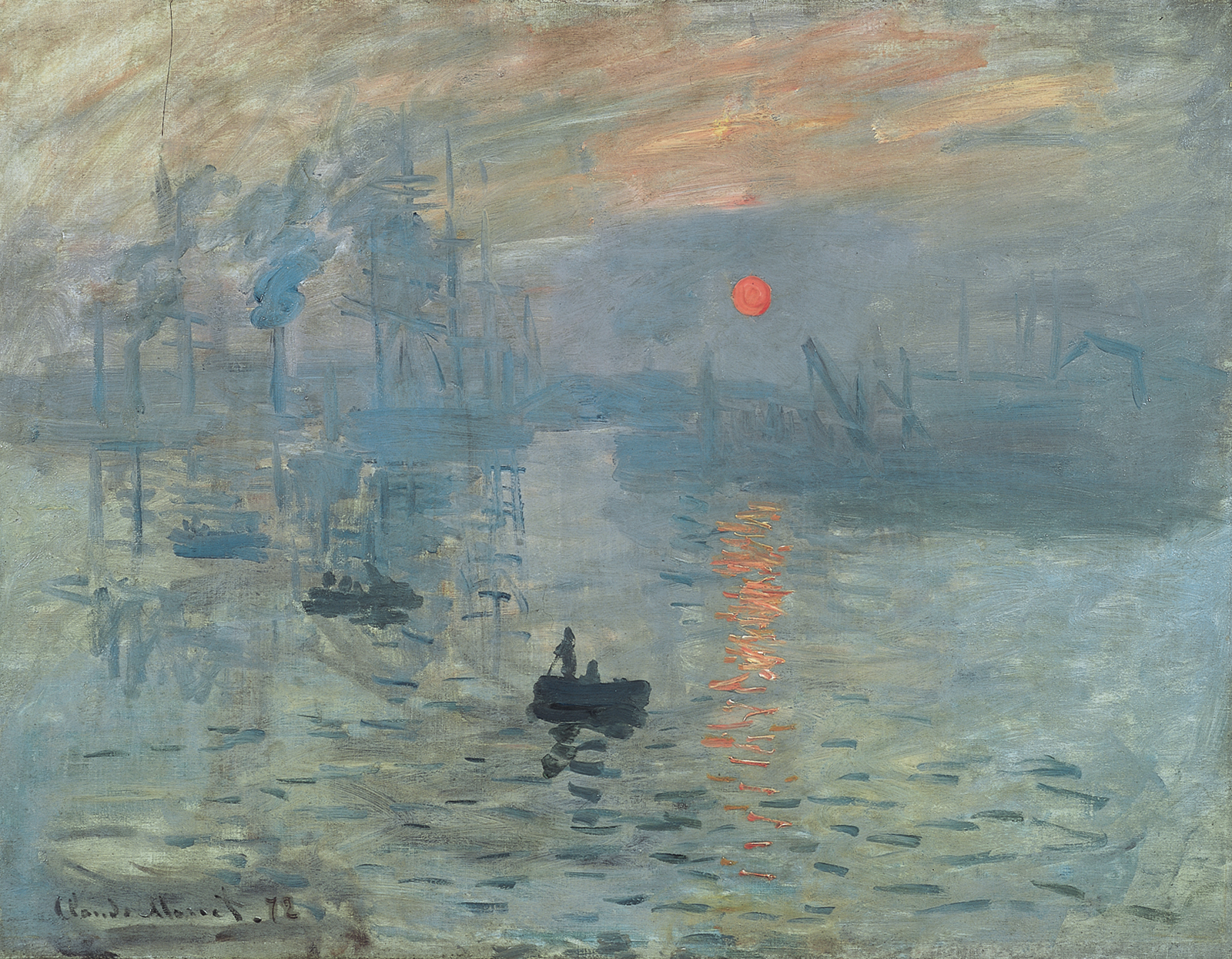
Claude Monet, "Impression Sunrise"

Claude Monet, “Impression Sunrise”

Throughout my life I have been a collector of memorable moments. If I decide I want to capture a certain moment, I stop in my tracks and tell myself to register the impression. I do not have an eidetic sense, so what I commit to memory is more like an impression, often an unstable reflection, a flickering image always intertwined with the accompanying emotion. All of this without any words. Words actually can murder a moment, as it happened to Faust, who died because he said, “Stay a while, you are so beautiful¨!” The moments I have chosen to remember have always included me in solitary space, often in a natural setting, usually communing with the surroundings. Like in Monet’s Impression Sunrise, the mind had to be fast and busy capturing the transient and ephemeral moments of impression. No matter if weak or transient, the moments left an indelibleimprint on my memory. They are like a well I can draw from when my inspiration runs dry or when I feel disconnected and inattentive.

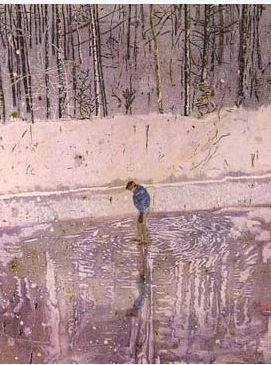
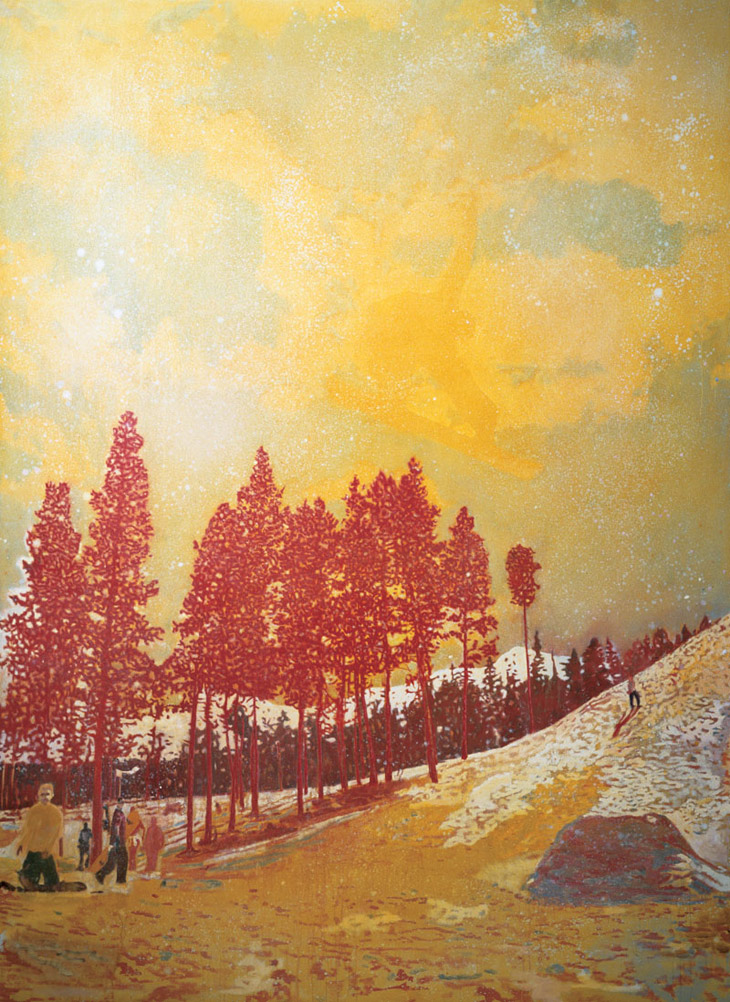
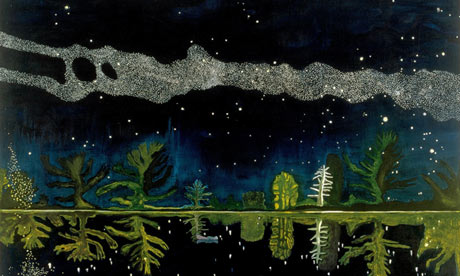
These thoughts accompanied me while I have recently been contemplating the work of Peter Doig, a Scottish painter whose art hit me like a revelation not so long ago. I have come across an excerpt from an interview with him, in which he said:

“People often say that my paintings remind them of particular scenes from films or certain passages from books, but I think it’s a different thing altogether. There is something more primal about painting. In terms of my own paintings, there is something quite basic about them, which inevitably is to do with their materiality. They are totally non-linguistic. There is no textual support to what you are seeing. Often I am trying to create a ‘numbness’. I am trying to create something that is questionable, something that is difficult, if not impossible, to put into words … I often use heightened colours to create a sense of the experience, or mood or feeling of being there … I think the paintings always refer back to a reality that we all have experience of … I am using … natural phenomena and amplifying them through the materiality of paint and the activity of painting.”

Via http://www.tate.org.uk/art/artworks/doig-echo-lake-t07467/text-summary

While I am looking at his works, all my moments of wordless magic etched in my memory resurface and haunt me. Someone wrote that the world of his art is felt rather than understood. To me, his paintings are a true expression of Heidegger’s concept of dasein (being there), as the philosopher explained it in Being and Time:

“Body’, ‘soul’, and ‘spirit’ may designate phenomenal domains which can be detached as themes for definite investigations; within certain limits their ontological indefiniteness may not be important. When, however, we come to the question of man’s Being, this is not something we can simply compute by adding together those kinds of Being which body, soul, and spirit respectively possess–kinds of being whose nature has not as yet been determined. And even if we should attempt such an ontological procedure, some idea of the Being of the whole must be presupposed.”

Being is more primal to any concepts, words or ideas about what Being is.

Peter Doig, "Blotter"

Peter Doig, “Blotter”

Peter Doig, "Orange Sunshine"

Peter Doig, “Orange Sunshine”

Peter Doig, "Reflection"

Peter Doig, “Reflection”

Peter Doig, "Orange Forest"

Peter Doig, “Orange Forest”

Peter Doig, "Grasshopper"

Peter Doig, “Grasshopper”

Peter Doig, "Milky Way"

Peter Doig, “Milky Way”

Posted in Painting | Tagged , , , , , , , , | 18 Comments

In Praise of Witches

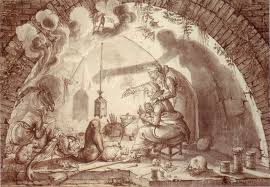
Jacques de Gheyn II,

Jacques de Gheyn II, “Witches in a Cellar”

1. “We are an evolving, dynamic tradition and proudly call ourselves Witches. Honoring both Goddess and God, we work with female and male images of divinity, always remembering that their essence is a mystery that goes beyond form. Our community rituals are participatory and ecstatic, celebrating the cycles of the seasons and our lives, and raising energy for personal, collective, and earth healing.”
Starhawk, “Spiral Dance”

2.“Like the word wild, the word witch has come to be understood as a pejorative, but long ago it was an appellation given to both old and young women healers, the word witch deriving from the word wit, meaning wise. This was before cultures carrying the one-God-only religious image began to overwhelm the older pantheistic cultures which understood the Deity through multiple religious images of the universe and all its phenomena. But regardless, the ogress, the witch, the wild nature, and whatever other criaturas and integral aspects the culture finds awful in the psyches of women are the very blessed things which women often need most to retrieve and bring to the surface.”

Clarissa Pinkola Estés, “Women Who Run with the Wolves”

The witch is the most important archetype for contemporary women, claims Wojciech Eichelberger, a well-known Polish therapist in an interview I have read recently. Author of the bestselling A Woman Without Blame and Shame, believes that a wise woman in close contact with natural cycles, one who does not need patriarchal go-betweens between herself and the sacred realm, is back for good and is becoming more and more mainstream. What still seems to stop Her is the legacy of the witch burning era, which continues to loom over the feminine psyche. There has been no atonement, no apologies for the mass extermination of witches (up to 9 million victims are postulated) that started in the sixteenth century. In the span of three hundred years as many as an estimated 9,000,000 women were incarcerated, degraded (the humiliation included shaving their bodies looking for marks left by the devil) and burnt at the stake or hanged. This mass trauma to this day continues to instill fear and anxiety in women, who wonder what might happen if they dare to go against the established social order.

Francisco Goya, “The Witches’ Sabbath”

Francisco Goya, “The Witches’ Sabbath”

One book deserves a dishonorary mention here – The Malleus Malleficarum (The Witch Hammer or The Hammer of the Witches), a fifteenth century treatise which served as a sort of manual for witch hunters of the time. The book enjoyed wide popularity, at one point almost as high as the Bible. Here I offer a handful of quotes pertaining to women that can be found in that learned tome:

“When a woman thinks alone, she thinks evil.”

“…they have slippery tongues, and are unable to conceal from the fellow-women those things which by evil arts they know; and, since they are weak, they find an easy and secret manner of vindicating themselves by witchcraft.”

“But because in these times this perfidy is more often found in women than in men, as we learn by actual experience, if anyone is curious as to the reason, we may add to what has already been said the following: that since they are feebler both in mind and body, it is not surprising that they should come more under the spell of witchcraft.”

“For as regards intellect, or the understanding of spiritual things, they seem to be of a different nature from men; a fact which is vouched for by the logic of the authorities, backed by various examples from the Scriptures. Terence says: Women are intellectually like children.”

“But the natural reason is that she is more carnal than a man, as is clear from her many carnal abominations. And it should be noted that there was a defect in the formation of the first woman, since she was formed from a bent rib, that is, a rib of the breast, which is bent as it were in a contrary direction to a man. And since through this defect she is an imperfect animal, she always deceives.”

Via http://www.malleusmaleficarum.org/downloads/MalleusAcrobat.pdf

William Blake, “The Triple Hecate”

William Blake, “The Triple Hecate”

Barbara G. Walker, author of Women’s Encyclopedia of Myths and Secrets, in the entry dedicated to witches, emphasizes that all persecutors of witches greatly feared their victims. This fear can be read as the fear of the wild, the dark, the unbridled, the instinctive and the natural. All victims were forced to confess by torture. Looking in a witch’s eyes was considered dangerous, crossing oneself constantly was highly recommended. Charges of witchcraft were bandied indiscriminately, as Walkers retells:

“The so-called Witch of Newbury was murdered by a group of soldiers because she knew how to go ‘surfing’ on the river. Soldiers of the Earl of Essex saw her doing it, and were ‘as much astonished as they could be,’ seeing that ‘to and fro she fleeted on the board standing firm bolt upright … turning and winding it which way she pleased, making it pastime to her, as little thinking who perceived her tricks, or that she did imagine that they were the last she ever should show.’ Most of the soldiers were afraid to touch her, but a few brave souls ambushed the board-rider as she came to shore, slashed her head, beat her, and shot her, leaving her ‘detested carcass to the worms.’”

It is easy to understand why the self-blame tendency is still something women find very hard to shake off:

 “If crops failed, horses ran away, cattle sickened, wagons broke, women miscarried, or butter wouldn’t come in the churn, a witch was always found to blame…. Witches were convenient scapegoats for doctors who failed to cure their patients, for it was the ‘received’ belief that witch-caused illnesses were incurable.”

Women were given no right for defense, and denying of the accusations was considered “contrary to the libel” and taken for a confession.

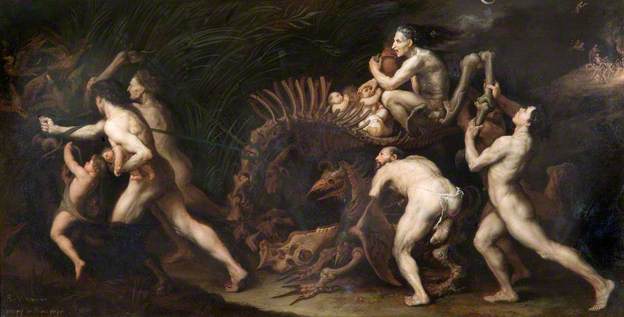
In popular imagination, witches have not been rehabilitated yet. As Starhawk puts it, “Witches are ugly, old hags riding broomsticks, or evil Satanists performing obscene rites. Modern Witches are thought to be members of a kooky cult, primarily concerned with cursing enemies by jabbing wax images with pins, and lacking the depth, the dignity, and seriousness of purpose of a true religion.” For me, the witch connects to the goddess Hekate, whom Robert Graves called the Goddess of Witches. Hekate was a primordial goddess, older than the whole Greek pantheon. Once the most powerful Neolithic goddess, she subsequently got relegated to demonic fringes, which did nothing to lessen her power. As the guardian of the threshold, she ruled cosmic order and creation on the one hand, and chaos and destruction on the other. Our culture being at a crossroads, which is one of the main symbols of Hekate, we had better open up to the possibility that the witches are going to usher in a new era. Her name is related to “hecatomb” (sacrifice of a hundred). Hopefully, the sacrifice of the millions of witches will never again be brushed off or forgotten.

Jusepe de Ribera, “Procession to a Witches’ Sabbath” (“Hecate was the ancient Greek goddess of magic, whose retinue included the souls of those who died before their time, particularly children, or who were killed by force. Hence she is here shown picking up children and putting them into a brazier, while the heroic figures in her train also represent those who died before their time.” Via http://www.bbc.co.uk/arts/yourpaintings/paintings/hecate-procession-to-a-witches-sabbath)

Posted in The Witch | Tagged , , , , , , , , , , , , , , | 16 Comments

Wanderings of Spirit: Ovid’s “Metamorphoses”

The joyful, anti-didactic spirit of Ovid’s Metamorphoses has always been close to my heart. As I have come across a new, modern translation by Charles Martin, I have decided to reread this timeless classic. I always remembered that Shakespeare loved it, which I think says a lot. What is palpable in the way Ovid orchestrates his “mock epic” is the trickster spirit. The narrator seems to jump from one story to the next without any warning but always with a lot of gusto. The most famous Greek myths are retold in a fascinating and playful manner. In the translator’s introduction, Charles Martin quotes Italo Calvino from his Six Memos for the New Millennium, where he describes what he calls “the manifold text, which replaces the oneness of the thinking ‘I’ with a mul­tiplicity of subjects, voices and views of the world.” There is a multiplicity of characters in Metamorphoses, shapeshifting and transforming all the time, but there is a continuity and oneness in this multitude. In book XV called “Prophetic Acts and Visionary Dreams,” Ovid devotes a lot of space to the teachings of Pythagoras. In the following passage (Ovid quoting Pythagoras) it is easy to see what it is that binds Metamorphoses into a unified, meaningful whole:

 “Everything changes and nothing can die, for the spirit wanders wherever it wishes to, now here and now there, living with whatever body it chooses, and passing from feral to human and then back from human to feral, and at no time does it ever cease its existence; and just as soft wax easily takes on a new shape, unable to stay as it was or keep the same form, and yet is still wax, I preach that the spirit is always the same even though it migrates to various bodies.”

Translated by Charles Martin

As an interesting synchronicity, I came across an alternative translation of the passage above while reading something completely unrelated: an article dedicated to an accomplished British translator of Proust – C.K. Scott Moncrieff. He was a precocious child, who at the age of thirteen translated the very same passage of Metamorphoses in a fabulous way, I think:

“Everything is changed but nothing perishes. The spirit wanders, going hence, thither, coming thence, hither and takes possession of any limbs it pleases. With equal ease it goes from beasts into human bodies and from us into beasts, nor in any length of time does it fail. And as wax is easily moulded in new shapes, nor remains as it had been before, nor keeps the same form, but yet is itself the same; so do I teach that the soul is ever the same, but migrates into different shapes.”

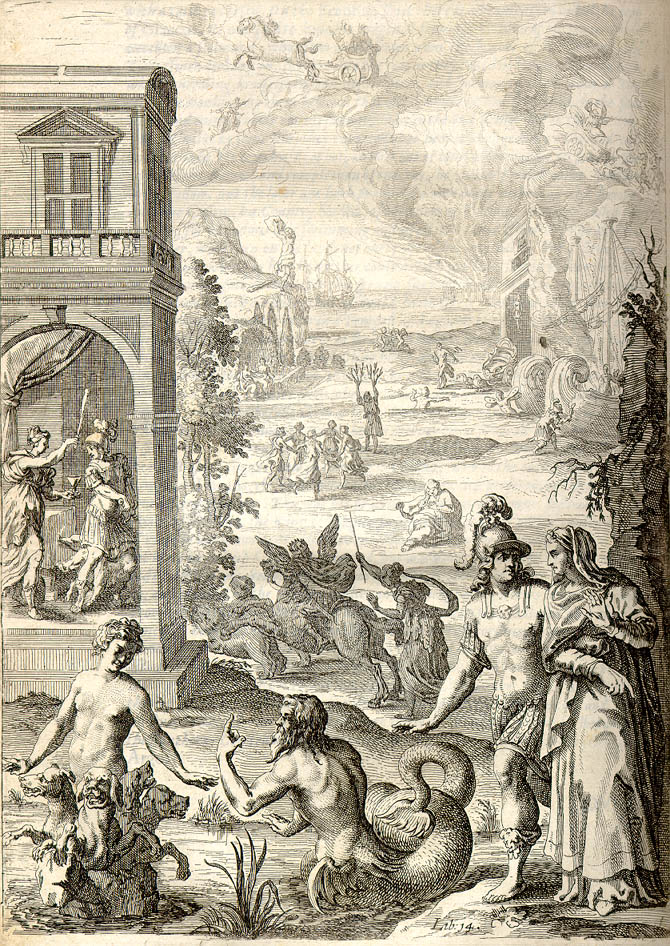
Illustration from George Sandys' Ovid's Metamorphosis Book XIV, via http://ovid.lib.virginia.edu/sandys/bk14start.htm

Illustration from George Sandys’ Ovid’s Metamorphoses Book XIV, via http://ovid.lib.virginia.edu/sandys/bk14start.htm

Posted in Ovid's Metamorphoses | Tagged , , , , , , , , , | 13 Comments

Nature and Consciousness – Seeing Things as They Are

Deborah J. Brasket's avatarDeborah J. Brasket, Author

© Luc Viatour (CC BY-SA 3.0)

Every time I write about nature I get deep into human consciousness. You can’t really separate the two. There is no “nature” – no way to identify, quantify, categorize, articulate, or understand it—apart from human consciousness, from how we think and talk about it.

We can’t study or explore or write about nature as something separate from ourselves, our own senses and experiences, our own thinking, perceiving, observations, experimentation. In that sense, nature is subjective, no matter how hard we try to objectify it.

This is not new, of course. Better writers and thinkers, from different disciplines, have explored this in more depth and detail that I can here.

This grand book the universe . . . is written in the language of mathematics, and its characters are triangles, circles, and other geometric figures without which it is humanly impossible to understand a single word…

View original post 492 more words

Posted in Uncategorized | Leave a comment

Symbolism of Lakes

“And near him stood the Lady of the Lake,
Who knows a subtler magic than his own–
Clothed in white samite, mystic, wonderful.
She gave the King his huge cross-hilted sword,
Whereby to drive the heathen out:  a mist
Of incense curled about her, and her face
Wellnigh was hidden in the minster gloom;
But there was heard among the holy hymns
A voice as of the waters, for she dwells
Down in a deep; calm, whatsoever storms
May shake the world, and when the surface rolls,
Hath power to walk the waters like our Lord.”

Alfred, Lord Tennyson, “Idylls of the King”

The Lady of the Lake taking the infant Lancelot, illustration by George Wooliscroft Rhead & Louis Rhead

While my train was approaching Lausanne, suddenly, though certainly not expectedly, which nevertheless did not spoil the effect – Lake Geneva (French Lac Léman) came to view in all its glory. Sparkling blue in the sun, nested by imposing mountains, surrounded by hills of vineyards, it took my breath away. Of all bodies of water, I have always felt particularly drawn to lakes for their depth replenishing power. So were many Romantic poets, notably Lord Byron and Percy B. Shelley with his wife Mary, who spent the summer of 1816 in Cologny near Geneva, drinking from Lac Léman’s  fountain of inspiration.

Lake Geneva

The summer of 1816 was very special for the whole world since a few months before there had been a huge volcanic eruption in Indonesia, as a result of which the whole Northern Hemisphere suffered from torrential rains and high winds also in summer months. 1816 was dubbed “the year without summer.” Restrained by ghastly weather, Byron and the Shelleys spent most of the time indoors, drinking wine, taking opium and working on their masterpieces:

“One night, when Byron read aloud a haunting poem, Shelley leapt up and ran shrieking from the room, having hallucinated that Mary had sprouted demonic eyes in place of nipples. It was in this surreal, claustrophobic atmosphere that she experienced the famous nightmare that became the lurid plot of Frankenstein…”

Tony Perrottett, “Lake Geneva as Shelley and Byron Knew It,” The New York Times of 27 May 2011, retrieved from http://www.nytimes.com/2011/05/29/travel/lake-geneva-as-byron-and-shelley-knew-it.html?_r=0

J.M.W. Turner, “The Castle of Chillon” featured in Byron’s narrative poem “The Prisoner of Chillon” (“Lake Leman lies by Chillon's walls: /A thousand feet in depth below / Its massy waters meet and flow / … and like a living grave / Below the surface of the lake / The dark vault lies wherein we lay: / We heard it ripple night and day”)

J.M.W. Turner, “The Castle of Chillon” featured in Byron’s narrative poem “The Prisoner of Chillon” (“Lake Leman lies by Chillon’s walls: /A thousand feet in depth below / Its massy waters meet and flow / … and like a living grave / Below the surface of the lake / The dark vault lies wherein we lay: / We heard it ripple night and day”)

This particular quote attests to an important aspect of lake symbolism, namely their association with death and the underworld. In his Dictionary of Symbolism, Hans Biedermann writes about the concentric circles found on the walls of megalithic graves as suggesting “ripples in the surface of a lake when an object is dropped into the water, and thus seem to symbolize the descent of the soul into the waters of death.”

Circles at Knowth, Ireland

Circles at Knowth, Ireland

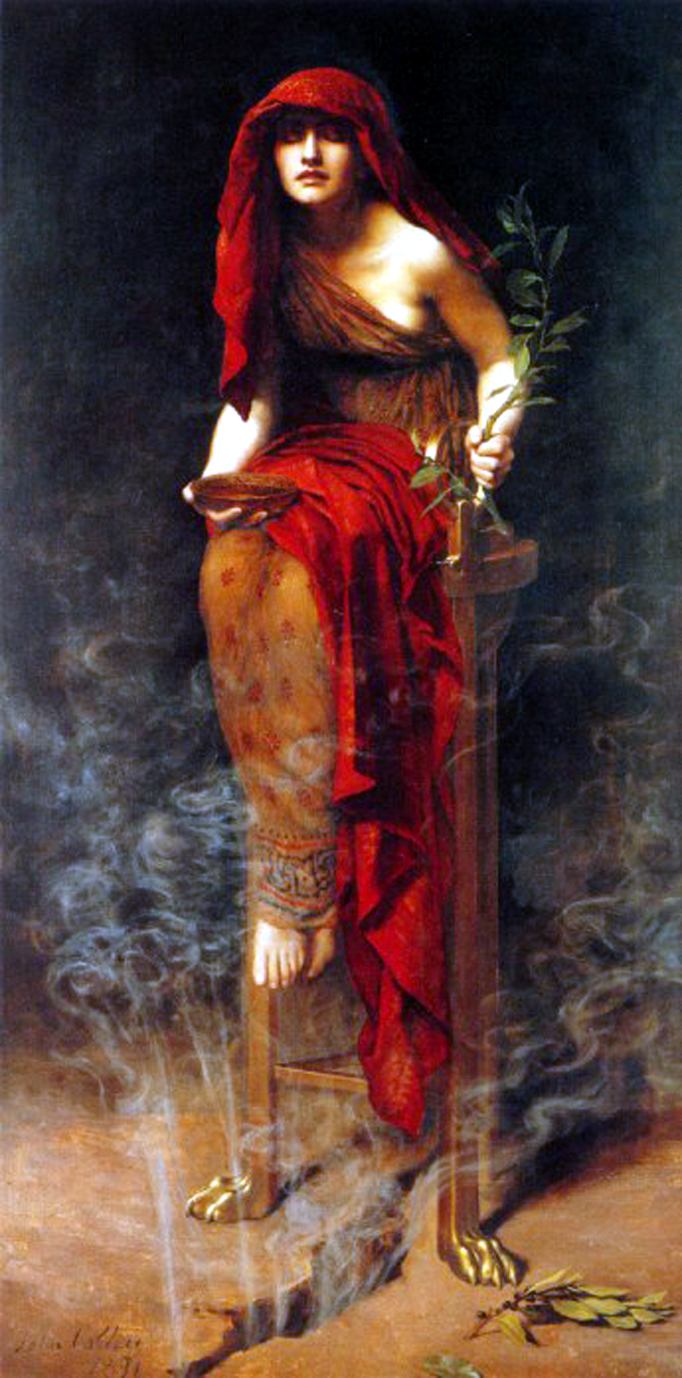
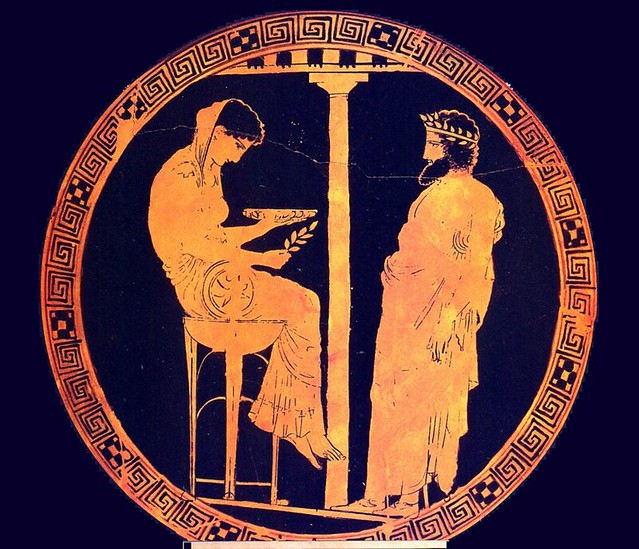
The Romans believed that the entrance to Hades led through Lake Avernus. In Virgil’s Aeneid, Aeneas is planning a visit to the Underworld to talk to the ghost of his father. He is guided there by the most famous Roman prophetess – The Sybil of Cumae.

J.M.W Turner, “Aeneas and the Sibyl, Lake Avernus”

J.M.W Turner, “Aeneas and the Sibyl, Lake Avernus”

Also for the English Bohemian group their stay by Lake Geneva was quite a portent of death:

“In retrospect, the ‘Frankenstein summer’ seems a fantastical interlude of happiness in lives marked by tragedy. In 1822, Percy Shelley drowned in Italy, at age 29; Dr Polidori had committed suicide the year before, at age 25. Claire’s daughter with Byron died at age 5, and only one of Mary Shelley’s four children with Percy survived. Byron died in Greece in 1824, at the ripe old age of 36.”

Tony Perrottett, “Lake Geneva as Shelley and Byron Knew It,” The New York Times of 27 May 2011, retrieved from http://www.nytimes.com/2011/05/29/travel/lake-geneva-as-byron-and-shelley-knew-it.html?_r=0

Cirlot’s Dictionary of Symbols further unravels the archetypal significance of lakes by giving a few very important bits of information. He writes: “In the Egyptian system of hieroglyphs, the schematic figure of a lake expresses the occult and the mysterious, probably by allusion to the underground lake which the sun has to pass over during its ‘night-crossing’ (but also simply by associating it with the symbolism of level, given that water always alludes to the ‘connection between the superficial and the profound’)”. There is an age-old analogy between the sun setting in the west and the death of a person. Hathor, a chief Egyptian goddess, was called The Lady of the West in her role as the one who nourished souls after death. At the heart of lake symbolism seems to be a consciousness of transition between here and there, this shore and the one barely visible, between life and death. Cirlot adds: “At the same time, the lake—or, rather, its surface alone—holds the significance of a mirror, presenting an image of self-contemplation, consciousness and revelation.”
One of the most beautiful poems inspired by lake contemplation was written by Adam Mickiewicz, a celebrated Polish Romantic poet. The following comes from his “Lausanne Lyrics”:
“Within their silent perfect glass

The mirror waters, vast and clear,

Reflect the silhouette of rocks,

Dark faces brooding on the shore.


Within their silent, perfect glass The mirror waters show the sky; Clouds skim across the mirror’s face, And dim its surface as they die.


Within their silent, perfect glass

The mirror waters image storm;

They glow with lightning, but the blast

Of thunder do not mar their calm.


Those mirror waters, as before, Still lie in silence, vast and clear.


They mirror me, I mirror them,

As true a glass as they I am:

And as I turn away I leave

The images that gave them form.


Dark rocks must menace from the shore,

And thunderheads grow large with rain;

Lightning must flash above the lake,

And I must mirror and pass on,

Onward and onward without end.”

Translated by Cecil Hemley

J.M.W. Turner, “Moonlight on Lake Lucerne”

J.M.W. Turner, “Moonlight on Lake Lucerne”

Support my blog

If you appreciate my writing, consider donating and make my day. Thank you in advance.

$1.00

Posted in Lakes | Tagged , , , , , , , , , , , , , , , , , , , | 22 Comments