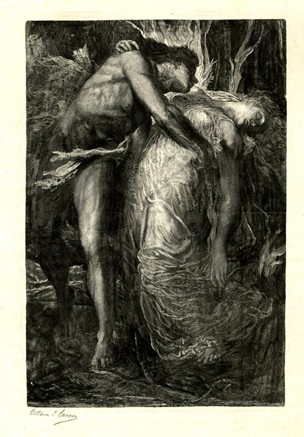
The Soul after Death: Hermes and Eurydice

Titian, “Orpheus and Eurydice” (on the left Eurydice dies bitten by a snake, on the right Orpheus makes an error of looking back and loses her forever)

Titian, “Orpheus and Eurydice” (on the left Eurydice dies bitten by a snake, on the right Orpheus makes an error of looking back and loses her forever)

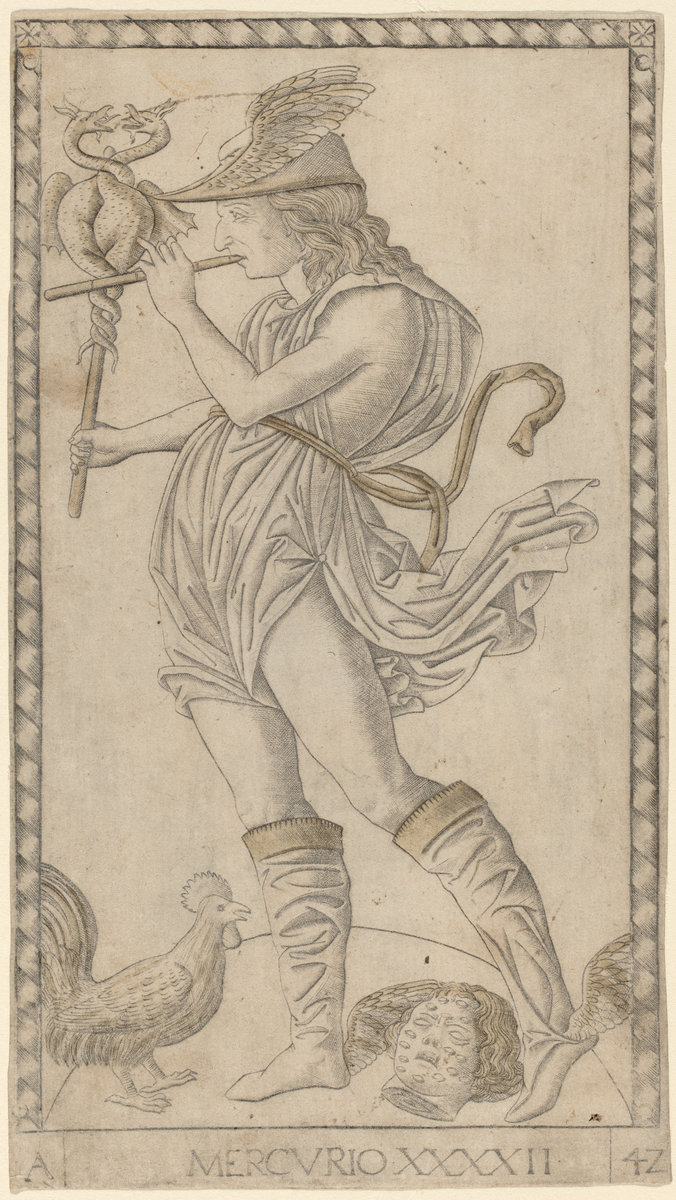
The transitional, in-between state of the soul after death was believed to be the domain of Hermes by ancient Greeks. They worshiped Hermes as the one god who will guide them to the right place of exit after they die. In this role, Hermes was gentle and compassionate, much like the angels from the Judeo Christian tradition. In his beautiful poem “Orpheus. Eurydice. Hermes,” Reiner Maria Rilke captures the moment when Hermes guides Eurydice back to life while Orpheus is walking in front of them, trying to heed the order not to look back. First, Rilke describes the world in-between in these words translated by Edward Snow):

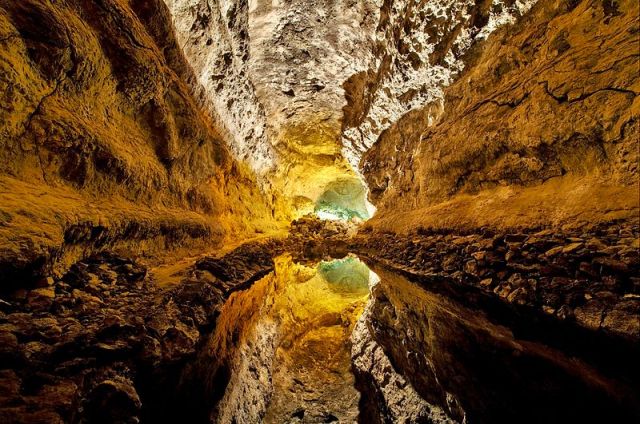
“It was the souls’ strange mine.

Like silent silver ore they wandered

through its dark like veins. Between roots

the blood welled up that makes its way to men,

and it looked hard as porphyry in the dark.

Nothing else was red.

Rocks were there

and unreal forests. Bridges spanning voids

and that huge gray blind unmoving lake

that hung above its distant bed

like rainy sky above a landscape.

The god of faring and of distant messages,

the travelling helmet over shining eyes,

the slender staff held out before the body,

and at the ankles the flutter of wings;

What makes Rilke’s vision unique is the way he portrays the state of the soul after death. The mission of Hermes to bring Eurydice back was futile because her consciousness has already transitioned to the supernatural realm. She had already lost touch with her former self and her soul was ready for a new phase:

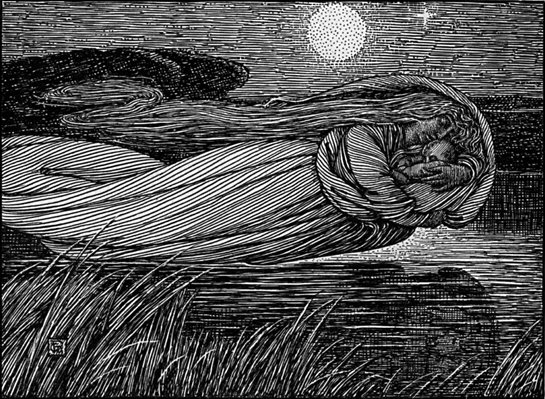
“She was within herself, like a woman close to birth,

and thought not of the man who walked ahead,

and not of the path ascending into life.

She was within herself. And her having died

filled her with abundance.

Like a fruit with sweetness and night

she was filled with her great death,

which was so new that she understood nothing.

She was in a new virginity

and untouchable; her sex had closed

as a young flower at approach of evening,

and her hands had been so weaned

from marriage, that even the light god’s

infinitely soft, guiding touch

hurt her like too great a liberty.

She was no longer the blonde wife

who echoed often in the poet’s songs,

no longer the vast bed’s scent and island,

and that man’s property no longer.

She was already loosened like long hair,

and given over like fallen rain

and handed out like a limitless supply.

She was already root.”

Posted in Poetry | Tagged , , , , , , , , , , | 15 Comments

Drawing with Light: on Photography

Camera obscura, image via Wikipedia

Camera obscura, image via Wikipedia

It is easy to romanticize the dawn of photography (literally “drawing with light”). I am not pretending I understand the technical intricacies of the entire process but I am drawn to the alchemical feel and terminology of the first photographic experiments. Apparently, it all started with “sun drawing” or heliography. Joseph Nicéphore Niépce created the first permanent photograph of the image in a camera obscura (“dark room”). Niepce partnered with Louis Daguerre, who invented the daguerreotype – a process which involved fixing images on a silver-plated copper sheet. The next phase in the history of photography was the calotype (“beautiful image”) invented by Henry Fox Talbot. This process utilized a silver salt solution, which made paper sensitive to light. As a result, multiple positive prints were able to be reproduced from negatives. But maybe it all started much earlier – with the Neolithic cave painters, who may have observed the camera obscura effects on cave walls. At least, this is a controversial theory put forward by one Matt Gatton (http://www.paleo-camera.com/ ). Whatever the truth may be, it can be safely asserted that the earliest uses of camera obscura always involved the interplay of darkness and light. In Ancient Greece, Aristotle observed how during a partial eclipse of the sun light that was passing through a small opening in a dark chamber produced an image on the opposite wall. Right until the 16th century astronomers had only this technique to make solar observations without causing damage to their eyes. In his essay “Camera Lucida: Reflections on Photography,” Roland Barthes wrote: “It seems that in Latin ‘photograph’ would be said ‘imago luci opera expressa’; which is to say: image revealed, ‘extracted,’ ‘mounted,’ ‘expressed’ (like the juice of a lemon) by the action of light.”

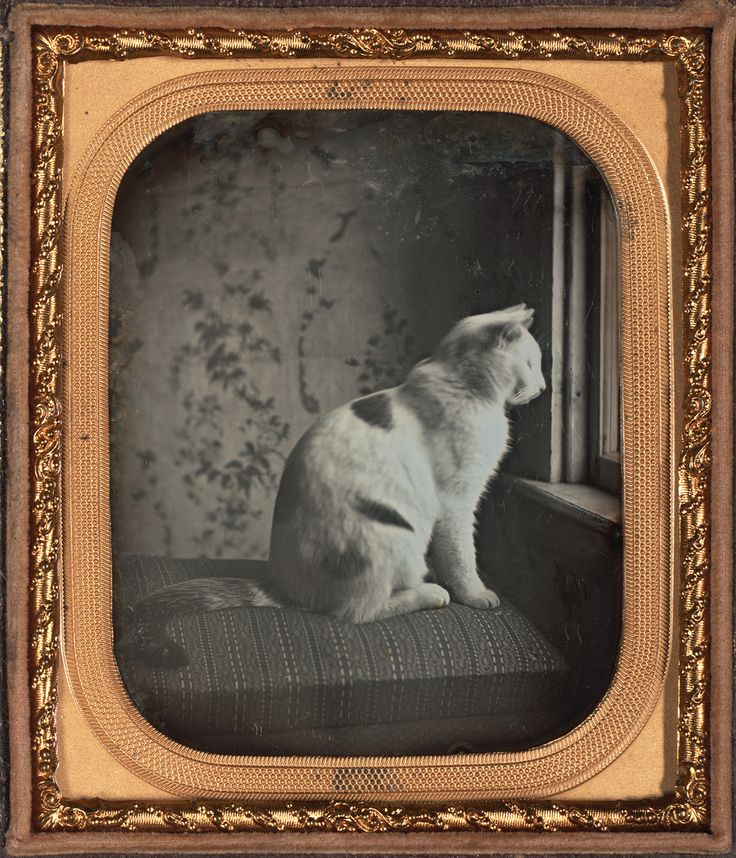
 Subject worth of daguerreotype

Subject worth of daguerreotype

As every art form, also photography has offered us a new way of glimpsing the eternal. However, already at its advent there appeared critics who saw its dangers. Notably, Charles Baudeleaire, a prominent objector to middle-class values, did not welcome photography. He did not mince words in the review of the Salon of 1859: “From that moment our squalid society rushed, Narcissus to a man, to gaze at its trivial image on a scrap of metal. A mad­ness, an extraordinary fanaticism took possession of all these new sun-worshippers. Strange abominations took form.” Exactly same words could be used to describe the aggressive predominance of narcissistic images flooding us from every direction nowadays. Susan Sontag, in a brilliant essay “On Photography,” argues that nowadays photography is used by most people as “a social rite, a defense against anxiety, and a tool of power.” Family albums achieve the same purpose as portraits of royalty in times of yore: they are there to immortalize, to build a monument, to assert one’s public stance. Yet, much as they want to preserve the moment, photographs deal with Death, says Sontag:

 “Photography is an elegiac art, a twilight art. Most subjects photographed are, just by virtue of being photographed, touched with pathos. … All photographs are memento mori. To take a photograph is to participate in another’s person (or thing’s) mortality, vulnerability, mutability. Precisely by slicing out this moment and freezing it, all photographs testify to time’s relentless melt. A photograph is both a pseudo-presence and a token of absence. Like a wood fire in a room, photographs – especially those of people, of distant landscapes and faraway cities, of the vanished past – are incitements to reverie. The sense of the unattainable that can be evoked by photographs feeds directly into the erotic feelings of those for whom desirability is enhanced by distance. The lover’s photograph hidden in a married woman’s wallet, the poster photograph of a rock star tacked up over an adolescent’s bed, …, the snapshots of a cabdriver’s children clipped to the visor – all such talismanic uses of photographs express a feeling both sentimental and implicitly magical: they are attempts to contact or lay claim to another reality.”

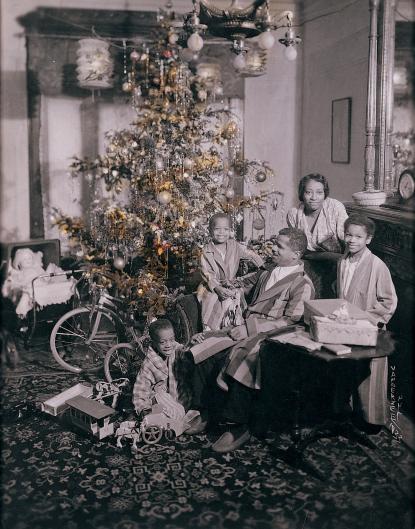
Christmas Morning, c.1933, Harlem New York. photo by James Van Der Zee

Barthes goes further by claiming that “however ‘lifelike’ we strive to make it… Photography is a kind of primitive theater, …, a figuration of the motionless and made-up face beneath which we see the dead.”

Sontag compares the camera to the gun, taking a picture to sublimated murder. How so? The camera trespasses, violates, intrudes, presumes, exploits and at the farthest reach of metaphor, assassinate(s).” It turns people into “objects that can be symbolically possessed.” The same can often be said of tourist photography, which lays claim to a foreign space and attests that good time was had indeed:

 “A way of certifying experience, taking photographs is also a way of refusing it – by limiting experience to a search for the photogenic, by converting experience into an image, a souvenir. The very activity of taking pictures is soothing, and assuages general feelings of disorientation that are likely to be exacerbated by travel. Most tourists feel compelled to put the camera between themselves and whatever is remarkable that they encounter. … The method especially appeals to people handicapped by ruthless work ethic – Germans, Japanese, and Americans. Using the camera appeases the anxiety which the work-driven feel about not working when they are on vacation and supposed to be having fun.”

Barthes wonders whether a photographic image can ever capture the profound self. He concludes that “: ‘myself’ never coincides with my image; for it is the image which is heavy, motionless, stubborn (which is why society sustains it), and ‘myself’ which is light,  divided, dispersed; like a bottle-imp, ‘myself’ doesn’t hold still, giggling in my jar…” Soulful photography, the one that captures the profound and ineffable, is extremely rare but possible.

A series of portraits of an artist Jean-Michel Basquiat by James Van Der Zee

A camera, as Sontag put it, can be “the arm of consciousness.” We are anaesthetized nowadays by a proliferation of images showing both beauty (or just prettiness) and atrocity. Can we still be pierced or arrested by a photograph, though? Can it touch us “like the delayed rays of a star?” asks Barthes, and writes further:

 Ultimately – or at the limit – in order to see a photograph well, it is best to look away or close your eyes. ‘The necessary condition for an image is sight,’ Janouch told Kafka;· and Kafka smiled and replied: ‘We photograph things in order to drive them out of our minds. My stories are a way of shutting my eyes.’”

The laughing Kafka

The laughing Kafka

It is the invisible that makes photography into art, what we may see when we close our eyes. The last word belongs to Barthes:

“Always the Photograph astonishes me, with an astonishment which endures and renews itself, inexhaustibly. Perhaps this astonishment, this persistence reaches down into the religious substance out of which I am molded; nothing for it: Photography has something to do with resurrection: might we not say of it what the Byzantines said of the image of Christ which impregnated St. Veronica’s napkin: that it was not made by the hand of man, acheiropoietos [made without hands]?”

Posted in Photography | Tagged , , , , , , , , , , , , , , , , , | 18 Comments

Insects: Smaller-Than-Small in Appearance, Bigger-Than-Big in Effect

ahimsa

Jainism, an Indian religion prescribing a path of nonviolence towards all living beings, professes a doctrine of Ahimsa (non-injury, absence of desire to harm), one expression of which is sweeping the ground with very small brushes before stepping on it so that no life forms get trodden on. In the West, our approach to insects is quite the opposite: we despise them, associate with dirt and diseases, we are repulsed by them. In that, we are very far in our approach from ancient Egyptians, who revered the humble dung beetle as the symbol of the rising sun, renewal, transformation and resurrection.

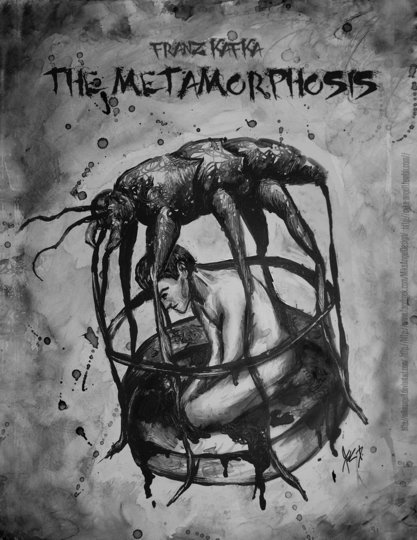
In Kafka’s Metamorphosis, the monstrous vermin the main character transforms into is the ultimate symbol of utter repulsion and rejection. But there is a deeper meaning to Kafka’s story. Gregor Samsa’s metamorphosis into an insect is his psyche’s reaction against sadistic one-sidedness of patriarchy. Because our dominant Western religion has been removed from the earth and has lost connection to its chthonic roots, we can see nothing sacred in the humble insect. In the original German of Metamorphosis the insect is called “ungeheures Ungeziefer,” which means “an animal unfit to sacrifice,” dirty, unholy.

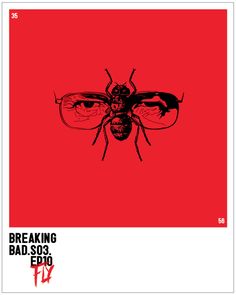
Drawing from popular culture, a psychological affinity between human and insect is quite significant in the symbolism of a TV series “Breaking Bad.” Hank Schrader, a macho DEA agent relentless in combating drug crime, compares the offenders he tracks to cockroaches who crawl from under the fridge and need to be stepped on and squashed out. In a related scene, Jesse Pinkman, a meth manufacturer with a heart of gold, spots a black beetle on the ground. He crouches to take a closer look at the little creature, cradling it tenderly on his finger, then releasing it gently. In another scene, a young boy catches a tarantula into a jar while biking through a desert. A few hours later he becomes and unwitting witness to a crime and gets shot in cold blood – squished like an insect. As time goes by and the main protagonist’s (Walter white, chemistry teacher turning into a drug lord) soul gets more and more calloused, he begins to view murder as a mere act of swatting a fly. In fact, he seems to walk the opposite path than that of Raskolnikov, the protagonist of Crime and Punishment, who murders a greedy pawnbroker for cash to prove to the world and to himself that some people can commit murder for higher purpose (to rid the world of vermin). He says: “I killed a loathsome, harmful louse, a filthy old moneylender woman who brought no good to anyone, to murder whom would pardon forty sins, who sucked the lifeblood of the poor, and you call that a crime?” Dostoevsky’s novel tells the story of Raskolnikov gradually reclaiming his humanity, while Walter White gradually loses it. Simultaneously, the New Mexico desert in all its glory, the sky above it, the whole natural world, life itself, the cosmos, preside over all events, eternally beautiful and constant in their cycles. Insects seem to be visitors from the non-human cosmos, which we, the moderns, have lost touch with.

In his essay “Going Bugs” included in the tome Animal Presences, James Hillman offers a comprehensive look into the significance of insects for our psychology:

 “We have yet to understand why the bugs raise such anxiety that eradication becomes the automatic response. This automatic step from fear to eradication leads to a further one into the world – pesticides. … This overkill may have its source in four frightening fantasies attributed to insects as their qualities.”

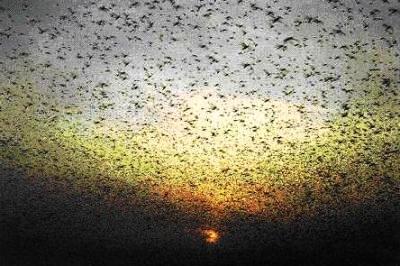
The qualities he attributes to insects are multiplicity, monstrosity, autonomy and mystery. The sheer number of insects, swarming in our imaginations, poses a threat to our uniqueness and individuality. This point to “fragmentation and the lowering of individualized consciousness to an undifferentiated, merely numerical or statistical level.” Symbolically, it threatens with the loss of centralized ego control. An ant colony, a locust cloud, a swarm of bees also demonstrate “wholeness, not as an abstract ideal but as a busy, buzzing body of life going every which way at once.” Because they are autonomous, impossible to control, we want them to be “crushed, burnt, and poisoned because they do not submit.” “The pesticidal ego” is terrified that it will be stripped of power and control, as it knows it is surrounded by flesh eating, relentless forces of nature. Bugs thrive on our “vegetative roots”  – we are sharing our bodies, our food and our property with them.

Locust

Locust

In depth psychology terms, insects demonstrate a terrifying vision of “being eaten up by one’s complexes.” We fear “disintegration into myriad parts, infestation with discarded filth (the return of the repressed), affected by monstrosities.” In science fiction movies, insects are responsible for alteration of personality – the ego’s ultimate threat. The ego’s view of the personality is narrow and limiting while insects symbolize “the hungry unlived life that also needs food at your table.” Further, insects show us that in fact we humans are parasitic as well:

 “If, as Jung said, the unconscious turns the face to you that you turn to it, then a parasitical invasion brings home to the host specifically how it depends in tiny hidden ways upon other psychic organisms, how it is influenced by complexes, how we use their blood to sustain our ambitions. The complexes, upon which we depend for our daily personality and from which we draw our energetic compulsion, show up in the dream as parasites, showing us up to be one among them, feeding off life’s banquet by taking care of number one, whether in workplace, family, friendship – or feeding off the dreams themselves, interpretation as a parasitical blood-sucking act, taking all, giving nothing back.”

Most naturally, insects feed our fear of death. They appear to come out from beyond, from the soil, from the underground, from hidden corners of “day-world structures.” They startke, appearing seemingly out of nowhere and suddenly, frequently announcing their arrival with otherworldly buzzing and ominous sounds. As Hillman says: “We re-enact the conquest of Christ over Pluto with our aerosol can of bug spray, swinging that censer in secular ritual, ridding each our own Garden of underworld demons.” No matter how many of them we exterminate, often harming ourselves with pesticides in the process, insects will remain primordial messengers of the unconscious life of the psyche and a symbol of all that we reject and are repulsed by in ourselves.

Source of quotes:

James Hillman, Animal Presences, “Going Bugs” (Kindle edition)

Posted in Insects | Tagged , , , , , , , , , , , , , , , , , , , , , , | 29 Comments

Salammbô

Illustration by Georges Rochegrosse

Illustration by Georges Rochegrosse

I.“Her hair, which was powdered with violet sand, and combined into the form of a tower, after the fashion of the Chanaanite maidens, added to her height. Tresses of pearls were fastened to her temples, and fell to the corners of her mouth, which was as rosy as a half-open pomegranate. On her breast was a collection of luminous stones, their variegation imitating the scales of the murena. Her arms were adorned with diamonds, and issued naked from her sleeveless tunic, which was starred with red flowers on a perfectly black ground. Between her ankles she wore a golden chainlet to regulate her steps, and her large dark purple mantle, cut of an unknown material, trailed behind her, making, as it were, at each step, a broad wave which followed her.

It was the moon that had made her so pale, and there was something from the gods that enveloped her like a subtle vapour. Her eyes seemed to gaze far beyond terrestrial space.”

II.“An influence had descended upon the maiden from the moon; when the planet passed diminishing away, Salammbo grew weak. She languished the whole day long, and revived at evening. During an eclipse she nearly died.”

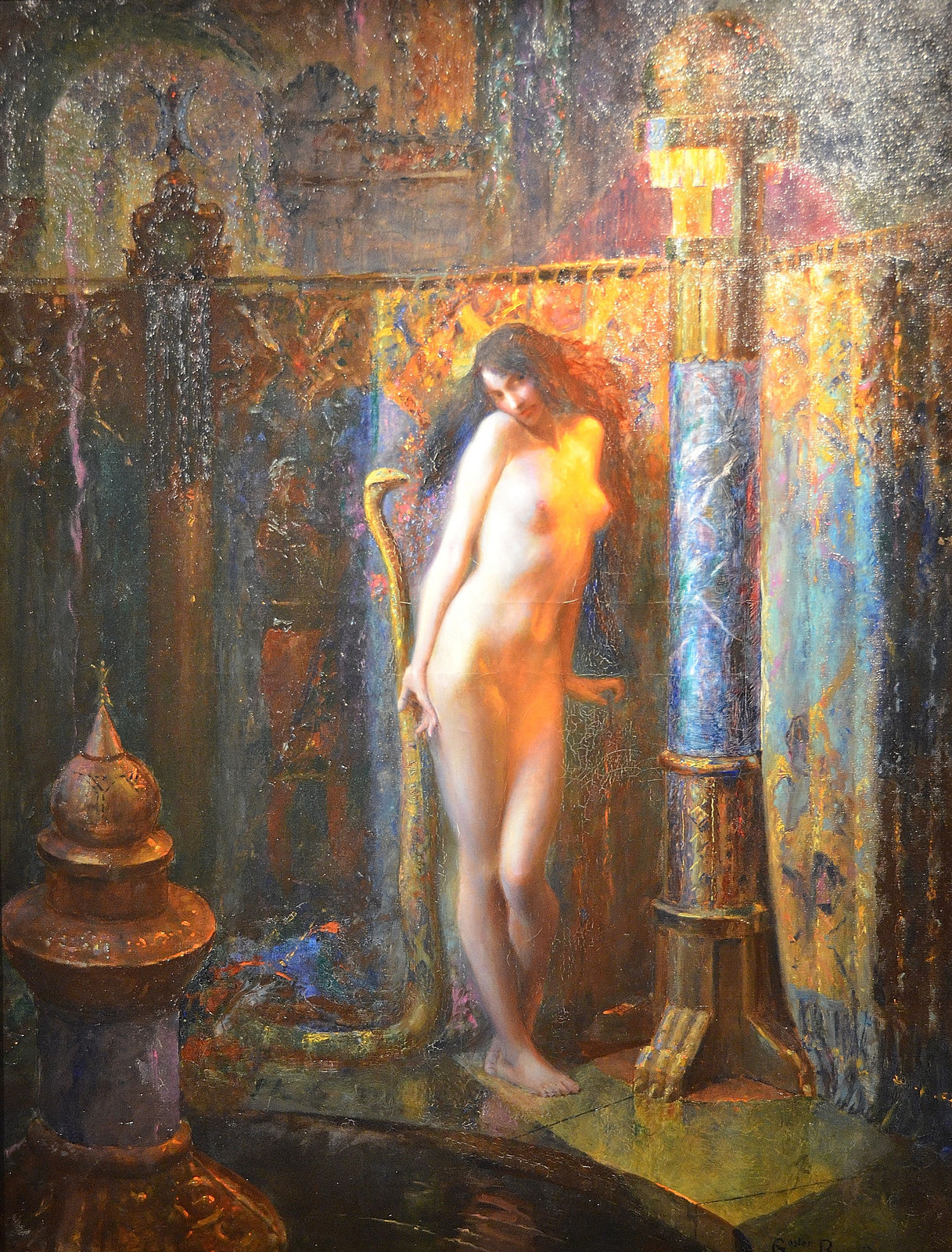
Gaston Bussiere, "Salammbo"

Gaston Bussiere, “Salammbo”

III.“Salammbô crouched down upon the onyx step on the edge of the basin; she raised her ample sleeves, fastening them behind her shoulders, and began her ablutions in methodical fashion, according to the sacred rites.

Next Taanach brought her something liquid and coagulated in an alabaster phial; it was the blood of a black dog slaughtered by barren women on a winter’s night amid the rubbish of a sepulchre. She rubbed it upon her ears, her heels, and the thumb of her right hand, and even her nail remained somewhat red, as if she had crushed a fruit.

The moon rose; then the cithara and the flute began to play together.

Salammbô unfastened her earrings, her necklace, her bracelets, and her long white simar; she unknotted the band in her hair, shaking the latter for a few minutes softly over her shoulders to cool herself by thus scattering it. The music went on outside; it consisted of three notes ever the same, hurried and frenzied; the strings grated, the flute blew; Taanach kept time by striking her hands; Salammbô, with a swaying of her whole body, chanted prayers, and her garments fell one after another around her.

Illustration by Gabriel Ferrier

Illustration by Gabriel Ferrier

The heavy tapestry trembled, and the python’s head appeared above the cord that supported it. The serpent descended slowly like a drop of water flowing along a wall, crawled among the scattered stuffs, and then, gluing its tail to the ground, rose perfectly erect; and his eyes, more brilliant than carbuncles, darted upon Salammbô.

A horror of cold, or perhaps a feeling of shame, at first made her hesitate. But she recalled Schahabarim’s orders and advanced; the python turned downwards, and resting the centre of its body upon the nape of her neck, allowed its head and tail to hang like a broken necklace with both ends trailing to the ground. Salammbo rolled it around her sides, under her arms and between her knees; then taking it by the jaw she brought the little triangular mouth to the edge of her teeth, and half shutting her eyes, threw herself back beneath the rays of the moon. The white light seemed to envelop her in a silver mist, the prints of her humid steps shone upon the flag-stones, stars quivered in the depth of the water; it tightened upon her its black rings that were spotted with scales of gold. Salammbo panted beneath the excessive weight, her loins yielded, she felt herself dying, and with the tip of its tail the serpent gently beat her thigh; then the music becoming still it fell off again.”

Gustave Flaubert, “Salammbô”

Salammbô is the title character of a historical novel by Gustave Flaubert. Although the well-researched novel focuses on the mercenary rebellion in Carthage in 237 B.C., the story of Salammbô steals the spotlight. We first encounter her as a pure maiden, raised by her father away from society, in a castle surrounded with luxury and with servants constantly waiting on her. She is a striking ethereal being, always gazing at the moon and stars, accepting “pure symbols and even manners of speech as being true in themselves.” She devotes her entire time to worshipping the moon goddess Tanith. The zaimph – the sacred veil of the goddess – gives the city of Carthage its moral strength. The prophesy says that whoever shall touch it, will die. As the story progresses, Salammbô gathers more and more flesh without losing any of her sublime elevation. Touching the veil of the goddess can end only in one way for her, though.

Illustration by Lobel Riche

Illustration by Lobel Riche

Posted in Salammbo | Tagged , , , , , , , , , , , , , , , | 12 Comments

Jung on Alchemy (4): Prima Materia – The One, Who Art All

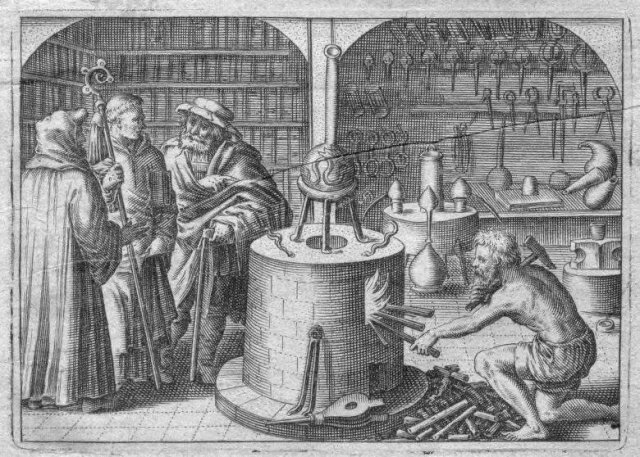
The Library and the Laboratory (From Michael Maier, Tripus Aureus, Frankfurt, 1677)

The Library and the Laboratory (From Michael Maier, Tripus Aureus, Frankfurt, 1677)

In this vignette found in Michael’s Maier’s Tripus Aureus Jung saw “the double face of alchemy.“ On the right hand side, a man is busy at a furnace, engaged full on in the physical and transformative experience, while in the library three learned men are having a philosophical debate. Theorizing and applying the theory were of equal importance to alchemists: learning required an equal measure of doing, throwing oneself into an experience without hesitation or holding back. In the round flask on the tripod there is a winged dragon – a crucial symbol in the alchemical opus:

“The dragon in itself is a monstrum – a symbol combining the chthonic principle of the serpent and the aerial principle of the bird. It is … a variant of Mercurius. … When the alchemist speaks of Mercurius, on the face of it he means quicksilver, but inwardly he means the world-creating spirit concealed or imprisoned in matter. … Time and time again the alchemist reiterate that the opus proceeds from the one and leads back to the one, that it is a sort of circle like a dragon biting its own tail. For this reason the opus was often called circulare or else rota (the wheel). Mercurius stands at the beginning and end of the work: he is the prima materia, the caput corvi [crow’s head], the nigredo; as dragon he devours himself and as dragon he dies, to rise again as the lapis [stone]. He is the play of colours in the cauda pavonis [peacock’s tail] and the division into four elements. He is the hermaphrodite that was in the beginning, that splits into the classical brother-sister duality and is reunited in the coniunctio, to appear once again at the end in the radiant form of the lumen novum, the stone. He is metallic yet liquid, matter yet spirit, cold yet fiery, poison and yet healing draught – a symbol uniting all opposites.“ (Jung, Psychology and Alchemy, par. 404)
image

Mercurius – the embodied mind and the sublime mind; mind both practical and philosophical, the Creating Word that was at the beginning – is the key to alchemical process, and was frequently equated with prima materia – First Matter. In Martin Ruland’s Alchemical Lexicon, we can find a list of expressions that various alchemists used to refer to prima materia. Some of the more interesting ones are:

Water of Life, Dew, Bride, Spouse, Mother, Eve, Pure and Uncontaminated Virgin, A Spiritual Blood, The Soul and Heaven of the Elements, The Matter of All Forms, Heart of the Sun, Shade of the Sun, Heart and Shade of Gold, Chaos, Venus, Isis, Mother, The Sea, Bird of Hermes, The Woman, Water of Gold, Soul of Saturn, the Earth, Spirit.

Via http://www.rexresearch.com/rulandus/rulxm.htm

All of the above possess the undeniable ability of stirring imagination and inspiring a creative vision. All of them speak of begetting fertility of the world soul (anima mundi) that permeates the whole fabric of being bringing all its elements together. Alchemists visualized matter as spiritual, and spirit as material. The distinction into matter and spirit was actually only a matter of degree: from the crude and gross to the subtle (subtilis), though the essential ingredients were there all along, lying dormant, waiting to be discovered by an adept on the path to Self-actualization.

Cabala mineralis manuscript, the first book, via http://www.alchemywebsite.com/cab_min1.html

Cabala mineralis manuscript, the first book, via http://www.alchemywebsite.com/cab_min1.html

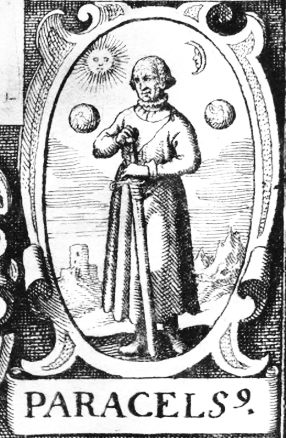
Earth is one of the thousand names given to materia prima by such alchemists as Basilius Valentinus, who believed that the earth-spirit, itself nourished by the stars, “gives nourishment to all the living things it shelters in its womb.” (Psychology and Alchemy, par. 444). The minerals and all life forms are hatched in the earth’s womb thanks to the grace of the spirit received from on high. Paracelsus used the term Yliaster to refer to prima materia he imagined to consist of body and soul, matter and stars. Yliaster was the star seed present in all matter, its spiritual core and its formless base (the bedrock of archetypes).

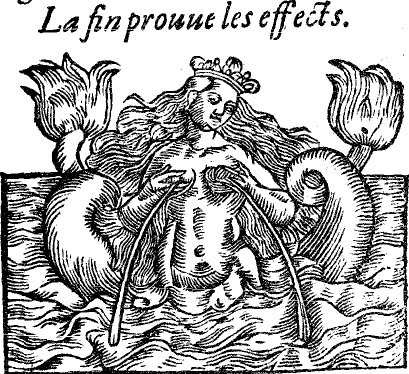
Water was another very apt and popular metaphor for prima materia. Alchemists spoke of divine or miraculous water, humidum radicale (root moisture). This aqueous soulful substance was imprisoned in matter and could be extracted by means of cooking over fire, and also by the process of dismemberment – dissolution and separation of the elements with the view to transforming them. The alchemical water had the power to dissolve and to animate inert matter, to resurrect the dead, as well as to wash the blackness (nigredo) into whiteness (Jung, Alchemical Studies, par. 89). Water was believed to be the soul of all substances. Caesariud of Heisterbach, an alchemist quoted by Jung, believed the soul to be moist like dew, speaking of its spherical nature, “like the globe of the Moon,  or like a glass vessel that is ‘furnished before and behind with eyes” and ‘sees the whole universe.‘“ Thus, the soul contains the starry heaven within (Alchemical Studies, par. 114).
Twin-tailed mermaid

Twin-tailed mermaid

The feminine aspect of the prima materia – as the mother of the philosopher’s stone – was essential to all alchemists. Says Jung in Mysterium Coniunctionis:

“Materia prima in its feminine aspect: it is the moon, the mother of all things, the vessel, it consists of opposites, has a thousand names, …, as Mater Alchimia it is wisdom and teaches wisdom, it contains the elixir of life in potentia and is the mother of the Saviour and of the filius Macrocosmi, it is the earth and the serpent hidden in the earth, the blackness and the dew and the miraculous water which brings together all that is divided.“ (par. 15).

“She is that piece of chaos which is everywhere and yet hidden, she is that vessel of contradictions and many colours – a totality in the form of massa confusa, yet a substance endowed with every quality in which the splendour of the hidden deity can be revealed.“ (par. 422)

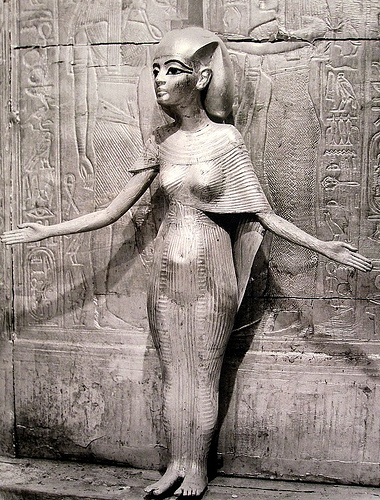
The deity hidden in prima materia was most frequently identified with Isis: the healing goddess, who not only healed Ra of poisoning but also put together the dismembered Osiris:

“… she personifies that arcane substance, be it dew or the aqua permanens, which unites the hostile elements into one. … The cognomen of Isis was the Black One. … since ancient times she was reputed to possess the elixir of life as well as being adept in sundry magical arts. She was also … rated as a pupil of Hermes, or even his daughter. … She signifies earth, according to Firmicus Maternus, and was equated with Sophia, … the vessel and the matter of good and evil. An inscription invokes her as ‘the One, who art All.‘ She is named the redemptrix. In Athenagoras she is ‘the nature of the Aeon, whence all things grew and by which all things are.‘ (Mysterium Coniunctionis, par. 14)

Since etymologically alchemy means “dark earth“ we may venture a statement: alchemy and Isis are closely intertwined. Isis is at the primal heart of alchemy, at the beginning of the opus. She is pure and untouched, waiting to be transmuted by the ensuing alchemical operations.
Support my blog

If you appreciate my writing, consider donating and make my day. Thank you in advance.

$1.00

Related posts:

Jung on Alchemy (1): The Moist and Earthly Foundation

Jung on Alchemy (2): The Mandala

Jung on Alchemy (3): Meditation and Imagination

Jung on Alchemy (5): Hermes, the Arcane Interpreter of All

Jung on Alchemy (6): Sol and Sulphur – the Fiery Ferment of the Soul’s Hidden Depth

Posted in Alchemy | Tagged , , , , , , , , , , , , , , | 28 Comments

“Law, Like Love“ by W.H. Auden

“Law, say the gardeners, is the sun,
Law is the one
All gardeners obey
To-morrow, yesterday, to-day.

Law is the wisdom of the old,
The impotent grandfathers feebly scold;
The grandchildren put out a treble tongue,
Law is the senses of the young.


Law, says the priest with a priestly look,
Expounding to an unpriestly people,
Law is the words in my priestly book,
Law is my pulpit and my steeple.


Law, says the judge as he looks down his nose,
Speaking clearly and most severely,
Law is as I’ve told you before,
Law is as you know I suppose,
Law is but let me explain it once more,
Law is The Law.

Yet law-abiding scholars write:
Law is neither wrong nor right,
Law is only crimes
Punished by places and by times,
Law is the clothes men wear
Anytime, anywhere,
Law is Good morning and Good night.


Others say, Law is our Fate;
Others say, Law is our State;
Others say, others say
Law is no more,
Law has gone away.


And always the loud angry crowd,
Very angry and very loud,
Law is We,
And always the soft idiot softly Me.


If we, dear, know we know no more
Than they about the Law,
If I no more than you
Know what we should and should not do
Except that all agree


Gladly or miserably
That the Law is
And that all know this
If therefore thinking it absurd
To identify
Law with some other word,


Unlike so many men I cannot say
Law is again,
No more than they can we suppress


The universal wish to guess
Or slip out of our own position
Into an unconcerned condition.


Although I can at least confine
Your vanity and mine
To stating timidly
A timid similarity,
We shall boast anyway:
Like love I say.

Like love we don’t know where or why,
Like love we can’t compel or fly,
Like love we often weep,
Like love we seldom keep.”
Albrecht Dürer, "Melancolia I"

Albrecht Dürer, “Melancolia I”

Support my blog

If you appreciate my writing, consider donating and make my day. Thank you in advance.

$1.00

Posted in Poetry | Tagged , , , | 8 Comments

Reflections on Don Quixote: The Universe of Fiction

Giuseppe Arcimboldo, "The Librarian"

Giuseppe Arcimboldo, “The Librarian”

“Idle Reader: Without my swearing to it, you can believe that I would like this book, the child of my understanding, to be the most beautiful, the most brilliant, and the most discreet that anyone could imagine. … I wanted only to offer it to you plain and bare, unadorned by a prologue or the endless catalogue of sonnets, epigrams, and laudatory poems that are usually placed at the beginning of books.

For how could I not be confused at what that old legislator, the public, will say when it sees that after all the years I have spent asleep in the silence of obscurity, I emerge now, carrying all my years on my back, with a tale as dry as esparto grass, devoid of invention, deficient in style, poor in ideas, and lacking all erudition and doctrine, without notes in the margins or annotations at the end of the book, when I see the other books, even if they are profane fictions, are so full of citations from Aristotle, Plato, and the entire horde of philosophers that readers are moved to admiration and consider the authors to be well-read, erudite, and eloquent men? … My book will lack all of this, for I have nothing to note in the margin or to annotate at the end, and I certainly don’t know which authors I have followed so that I can mention them at the beginning, as everyone else does, in alphabetical order, beginning with Aristotle and ending with Xenophon, and with Zoilus and Zeuxis, though one was a slanderer and the other a painter. My book will also lack sonnets at the beginning, especially sonnets whose authors are dukes, marquises, counts, bishops, ladies, or celebrated poets …

I am by nature too lazy and slothful to go looking for authors to say what I know how to say without them.”

Miguel de Cervantes, Don Quixote (from the Author’s Introduction)

I am currently feasting on Don Quixote in a gorgeous translation by Edith Grossman. Having read a large number of books on the adventures of chivalrous knights, Don Quixote decides to become a knight errant himself, and sets out into the world in order to live what he has read about. “Don Quixote reads the world in order to prove his books,” says of him Michel Foucault in The Order of Things, “His whole being is nothing but language, text, printed pages, stories that have already been written down.” Having spent days on pondering on the names for himself and for his horse, proving thus that his reality is first and foremost the language, he embarks on his first adventure. The most important thing about Don Quixote is that he never leaves the books he has so avidly engrossed himself in. Everything he sees on his travels is transformed in his mind into what he has read about. For example, the inn he sees appears to him “a castle complete with four towers and spires of gleaming silver,” and when a swineherd blows his horn to gather the pigs, the knight sees him as a dwarf signaling his arrival.

Gustave Dore, "Don Quixote goes mad from reading of books of chivalry"

Gustave Dore, Don Quixote goes mad from reading of books of chivalry

They pleasures of reading Don Quixote are endless, the layers of meaning plentiful, but the one I am focusing on today is the joy of reading, of burying oneself in an alternative universe conjured up between the pages of a great book. The comic genius of Cervantes pervades the pages, for example in the following tribute paid by Don Quixote to the lady of his heart, Dulcinea:

 “… her condition must be that of princess, at the very least, for she is my queen and lady, and her beauty is supernatural, for in it one finds the reality of all the impossible and chimerical aspects of beauty which poets attribute to their ladies: her tresses are gold, her forehead Elysian fields, her eyebrows the arches of heaven, her eyes suns, her cheeks roses, her lips coral, her teeth pearls, her neck alabaster, her bosom marble, her hands ivory, her skin white as snow, and the parts that modesty hides from human eyes are such, or so I believe and understand, that the most discerning consideration can only praise them but not compare them.”

Gustave Dore

Gustave Dore

Don Quixote lives in the symbolic order, his feet barely touching the ground. His world is heady, insubstantial, made of paper. Still, as will be shown in the subsequent posts, he makes a tremendous difference to his surroundings. Although he is a self-proclaimed knight, and not born one, his nobility is real and pure, because it springs straight from the source and has not been contaminated by the embodied reality. He is a pure reflection of the knight archetype – he is a symbol, not a man any more. According to Cirlot’s Dictionary of Symbols, the knight “is the master, the logos, the spirit which prevails over the mount (that is, over matter).” The medieval ceremony of knighthood emphasized the head of the knight as its most important symbolic component:

 “In the Middle Ages, a knight was created by a symbolic imitation of the ritual that used to make a man into a god: beheading him. Touching first one shoulder then the other with a sword implied that the sword had passed through the neck. Celtic tribes especially revered man-gods who were preserved in the form of severed heads, which were believed to give oracles. In Greece also, savior-gods like Orpheus spoke to their followers of the after-life through the mouths of their own mummified heads.”

Barbara G. Walker, “The Woman’s Encyclopedia of Myths and Secrets”

The beheading was an effective death of the ego preceding a rebirth to a higher, spiritual order. Just as Don Quixote owes his knighthood to no one but himself, so does Cervantes differentiate himself from erudite, snobbish writers of his era in the Introduction quoted at the beginning of this post. Don Quixote is a fiesta of pure, unbridled creativity, fantasy and imagination. It was dubbed the first modern novel because it created its own alternative literary reality. Fiction is not a mirror set to the world, but a whole new world in itself: an infinite world with endless possibilities. It is a domain of Mercurius: a trickster god building reality out of language. In a poem “The Joy of Writing,” written in a Quixotic tradition, Wislawa Szymborska captured the spirit of writing as a sort of lucid dreaming:

“Why does this written doe bound through these written woods?
For a drink of written water from a spring
whose surface will xerox her soft muzzle?

Is there then a world
where I rule absolutely on fate?
A time I bind with chains of signs?
An existence become endless at my bidding?

The joy of writing.
The power of preserving.
Revenge of a mortal hand.”

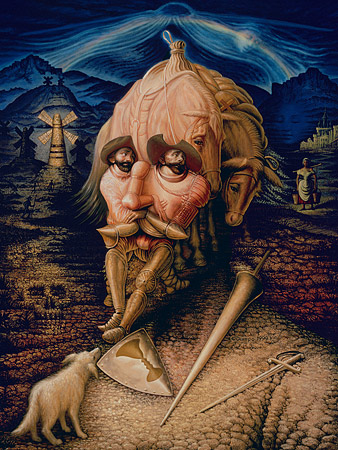
Octavio Ocampo, "Friendship of Don Quixote"

Octavio Ocampo, “Friendship of Don Quixote”

Support my blog

If you appreciate my writing, consider donating and make my day. Thank you in advance.

$1.00

Posted in Don Quixote | Tagged , , , , , , , , , , , , , , , , , , | 19 Comments

A Heaven in a Wild Flower

“When I heard the learn’d astronomer,
When the proofs, the figures, were ranged in columns before me,
When I was shown the charts and diagrams, to add, divide, and measure them,
When I sitting heard the astronomer where he lectured with much applause in the lecture-room,
How soon unaccountable I became tired and sick,
Till rising and gliding out I wander’d off by myself,
In the mystical moist night-air, and from time to time,
Look’d up in perfect silence at the stars.”
Anselm Kiefer, "For Robert Fludd"

Anselm Kiefer, “For Robert Fludd”

About the image:

“’For Robert Fludd’ … is dedicated to the … English metaphysical philosopher and alchemist (1574–1637), for whom the essence of each and every one of the universe’s elements could be found in mankind, a notion that established a cosmological order between different spheres of the universe. …

Kiefer began to make books and paintings with underlying themes devoted to Fludd in the early 1990s. This particular book contains a series of photographs illustrating the process of growth in a sunflower field. For Kiefer, sunflowers offer an optimal analogy for Fludd’s thinking about the relationship between the microcosm and the macrocosm. … The book’s cover features a black-and-white photograph of a sunflower. Inside, photographs chart sunflowers growing, ripening, and losing their seeds, which Kiefer represents with real sunflower seeds collaged on the pages. The sunflowers ultimately shrivel and disappear, until only the seeds are left. In the subsequent sheet, the scattered seeds are replaced by an image of a starry sky.”

Via http://www.guggenheim-bilbao.es/en/works/for-robert-fludd/

Posted in Poetry | Tagged , , , , , , , | 12 Comments

Color Symbolism: Purple

Claude Monet, "Water Lillies"

Claude Monet, “Water Lillies”

In Woody Allen’s movie “The Purple Rose of Cairo,” Mia Farrow’s character, frustrated by her marital woes, falls in love with a character in a movie. The movie character also becomes attracted to her, and exits the screen to profess his love to her. The symbolism of the title is quite telling, a purple rose of Cairo standing for rare beauty and unreachable fantasy. The color purple is associated with the seventh chakra as the seat of archetypes, and the movie makes us ponder the ontological status of fantasy. The underlying thought seems to be that the real and the fantastical are not distinct: the spiritual realm is as real and has a direct impact on the main character’s life.

Violet is the highest vibrating color both in physics and in spirituality, which associates it with the crown chakra. In occultism, it is the color of the Seventh Ray of ceremonial order and magic. Chanelers of angel wisdom view it as the color of transformation, forgiveness and freedom. It is an extraordinary color rarely seen in nature. According to Manly P. Hall, tt was first obtained from “the blood of a sea shell-fish,” by the Phoenicians, who set an extremely high price on this rare and luxurious commodity. Purple combines the blue of spiritual heights and ocean depths with the energy and vitality of blood red. Only those with highest rank in society, namely clergymen and royalty, used to wear robes of that hue.

Mark Rothko, "Purple"

Mark Rothko

In Women’s Encyclopedia of Myths and Secrets, Barbara G. Walker claims that for the ancients purple did not mean violet but actually dark wine red. This made me wonder because in my native language the adjective “purpurowy” does not mean violet but actually dark wine red. Walker writes: “Royal purple meant the same as royal blood: matrilineal kinship in a sacred clan. … Purple still meant blood color in the time of Shakespeare, who spoke of the ‘purpled hands‘ of Caesar’s assassins, stained with ‘the most noble blood of all the world.‘” In Christian symbolism purple is often associated with the sacrificial blood of Christ, and consequently with penance and expiation, which is supposed to lead to purification and transformation. Also, since it combines the coolness of blue with the hotness of red, it fosters contemplation and may have a calming effect on those suffering from disruptive, negative emotions. In purple the sublime meets passion and energy of earthly desires, creating a new and surprising quality. As Anodea Judith explains in Eastern Body, Western Mind:

 “The separation of spirituality from the rest of life leaves us spiritually homeless. In reflection of the archetypal divorce between Earth Mother and Sky Father, we are taught to seek enlightenment by denying the basic nature of our biological existence. This chasm between Heaven and Earth creates a corresponding abyss between spirit and soul that many fall into as they engage in ascetic practices, sign their will over to gurus, and disengage from the world. Denying our basic nature in order to achieve unity is a contradiction steeped in dualistic thinking, which will never lead to unity or wholeness.

Paul Klee, "Fish Magic"

Paul Klee, “Fish Magic”

The crown chakra is the thousand-petaled lotus. Most people think of the petals as reaching up into the heavens; actually, the lotus petals turn downward like a sunflower, dripping nectar into the crown and down through the chakras. In this way, the two ends of the spectrum are profoundly connected. … The crown chakra is a two-way gate to the beyond. It opens outward, beyond ourselves to the infinite, and it opens inward and downward to the world of visions, creation, and eventual manifestation.”

Ines Honfi, "Yogi" via http://www.ineshonfi.com/yoga-gallery

Ines Honfi, “Yogi”
via http://www.ineshonfi.com/yoga-gallery

Judith stresses that the goal of the seventh chakra is in equal measure transcendence and immanence, i.e. reaching out towards divinity, transcending the earthly plane, and finding divinity within, on the plane of earthly manifestation and embodiment. She calls transcendence “a cleansing bath in the waters of spirit a blissful relief from that which binds us to limitation.” The ultimate goal is to find the application for the treasures one acquired thanks to the expansion of consciousness. Immanence is about the soul’s individuality, transcendence about the spirit’s universality. The goal of individuation is to encompass both worlds and never lose a vital connection between them. Judith continues: “The soul is like a gatherer of spirit, forming the abstract into a composite being.” If the spirit does not receive anchoring and embodiment of the soul, the sacred process ends in a vacuum, not leaving the abstract realm. Also in occult traditions, the main work of the Seventh Ray is to infuse the spirit with matter. The ending of The Purple Rose of Cairo shows Cecilia immersed in the fantastical realm of cinema again, neglecting her immediate reality. She seems to have not met the challenges of the seventh chakra’s call for immanence, though she did leave an abusive relationship. True healing is achieved by aligning with the evolutionary soul purpose, materializing our highest potential in accordance with our soul’s archetypal blueprint. The movement is from below to above and simultaneously from above to below.

Georgia O'Keeffe, "Lavender Irises"

Georgia O’Keeffe

Support my blog

If you appreciate my writing, consider donating and make my day. Thank you in advance.

$1.00

Posted in The Color Purple | Tagged , , , , , , , , , , , , , , , | 30 Comments

The Lake of Dreams, the Sea of Rains, the Gulf of Dews, the Ocean of Fecundity

Susan Seddon Boulet, "Moon Cup"

Susan Seddon Boulet, “Moon Cup”

“What special affinities appeared to him to exist between the moon and woman? Her antiquity in preceding and surviving successive tellurian generations: her nocturnal predominance: her satellitic dependence: her luminary reflection: her constancy under all her phases, rising and setting by her appointed times, waxing and waning: the forced invariability of her aspect: her indeterminate response to inaffirmative interrogation: her potency over effluent and refluent waters: her power to enamour, to mortify, to invest with beauty, to render insane, to incite to and aid delinquency: the tranquil inscrutability of her visage: the terribility of her isolated dominant implacable resplendent propinquity: her omens of tempest and of calm: the stimulation of her light, her motion and her presence: the admonition of her craters, her arid seas, her silence: her splendour, when visible: her attraction, when invisible.”

James Joyce, “Ulysses”

Posted in Quotations | Tagged , , , , , , | 13 Comments