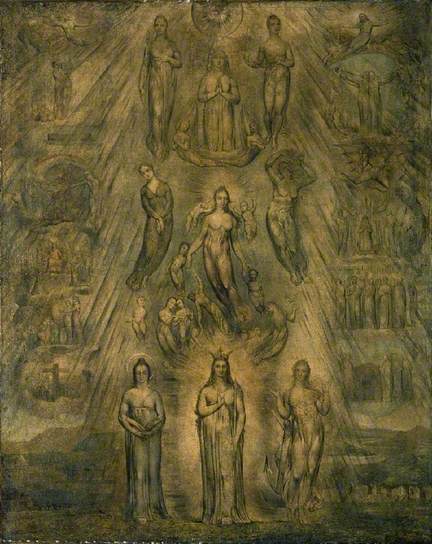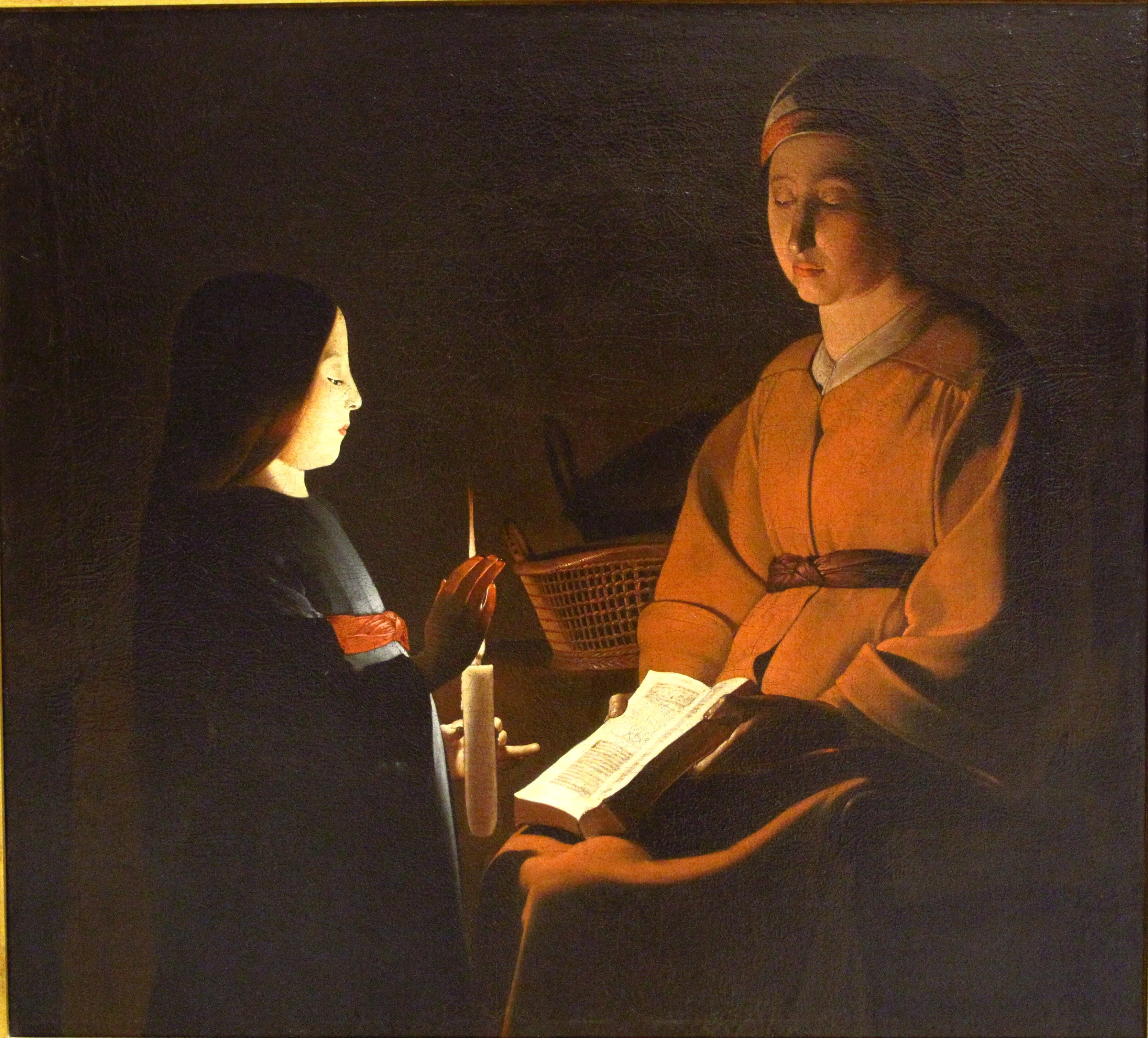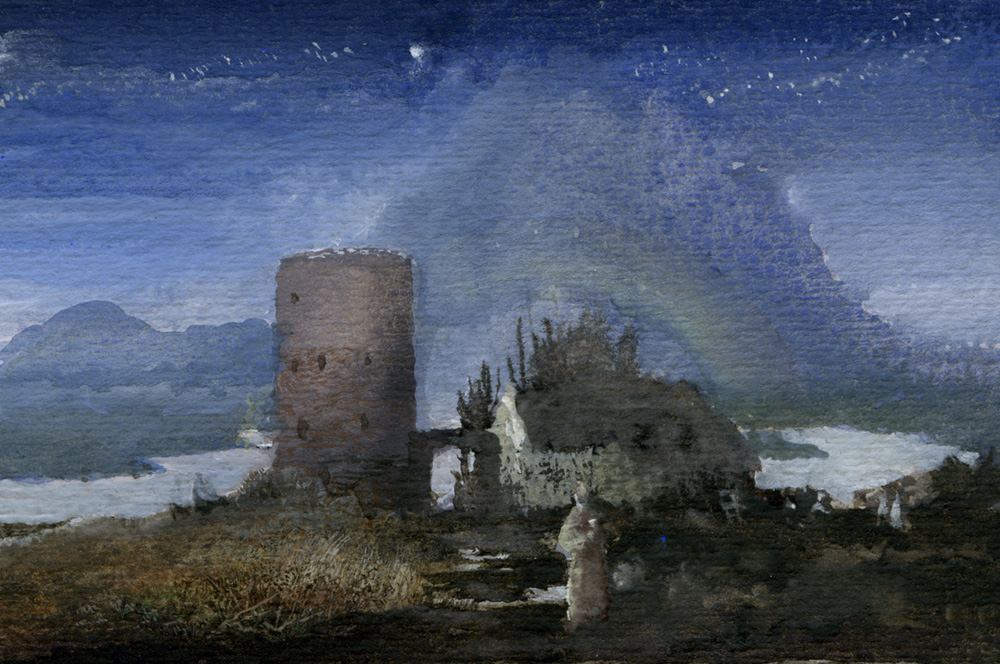

“Evening” by Reiner Maria Rilke in Two Translations

I. EVENING

Slowly now the evening changes his garments

held for him by a rim of ancient trees;

you gaze: and the landscape divides and leaves you,

one sinking and one rising toward the sky.

And you are left, to none belonging wholly,

not so dark as a silent house, nor quite

so surely pledged unto eternity

as that which grows to star and climbs the night.

To you is left (unspeakably confused)

your life, gigantic, ripening, full of fears,

so that it, now hemmed in, now grasping all,

is changed in you by turns to stone and stars.

translated by F.C. MacIntyre 

II. EVENING

The sky puts on the darkening blue coat

held for it by a row of ancient trees;

you watch: and the lands grow distant in your sight,

one journeying to heaven, one that falls;

and leave you, not at home in either one,

not quite so still and dark as the darkened houses,

not calling to eternity with the passion of what becomes

a star each night, and rises;

and leave you (inexpressibly to unravel)

your life, with its immensity and fear,

so that, now bounded, now immeasurable,

it is alternately stone in you and star.

translated by Stephen Mitchell

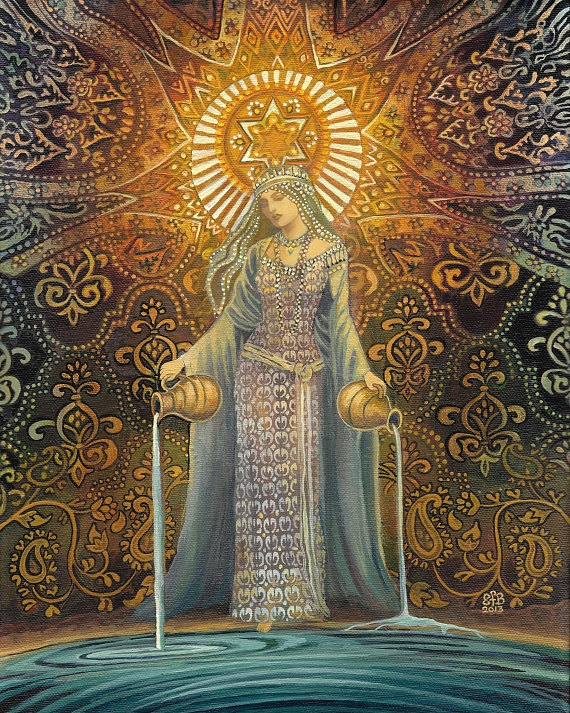
“Evening” is one of the most famous poems by Rilke. It is also a poem that I have always regarded as unbelievably, sublimely beautiful, expressing how we humans are torn between the simultaneous boundedness and unboundedness of existence. Our substance consists both of the immense stars and of the perfect and silent stones. Our life, “gigantic, ripening, full of fears” is dramatically poised between the two. I am reminded of Jung’s Red Book and his beautiful vision in the desert:

 “How beautiful it is here! The reddish color of the stones is wonderful; they reflect the glow of a hundred thousand past suns these small grains of sand have rolled in fabulous primordial oceans, over them swam primordial monsters with forms never beheld before. Where were you, man, in those days? On this warm sand lay your childish primordial animal ancestors, like children snuggling up to their mother. /o mother stone, I love you, I lie snuggled up against your warm body, /your late child. Blessed be you, ancient mother.”

stonecircle

Circle of Stones, Tenere Desert

I have been wondering about how a translation can make or break a poem. Stephen Mitchell’s translation of the poem by Rilke I am featuring today is the most celebrated but, frankly, I do not understand why. The translation I favor is the first one. Edward Snow, another renowned translator, called Rilke “…the poet of thresholds and silences, of landscapes charged with remoteness and expectancy.” After a careful study of the poem in the original German I can say just this: while I was able to understand both Rilke’s original verse and MacIntyre’s translation, if I had just been presented with Mitchell’s rendition, I would have been rather lost and confused. The emotional reaction I experience is also much more palpable when I read the first translation.

gerzhedovich

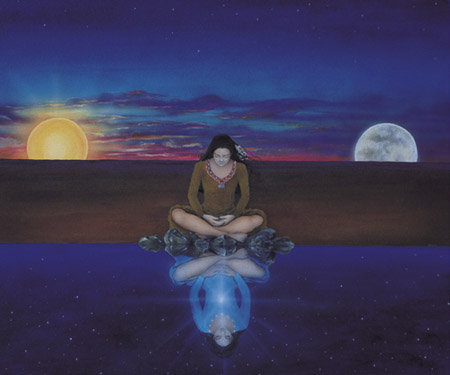
Yaroslav Gerzhedovich, “The Midnight Stars“

Posted in Poetry | Tagged , , , , , , , , , , , | 30 Comments

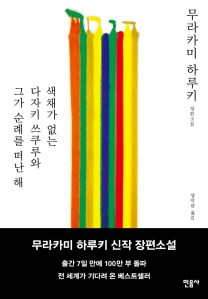
Passionate Longing for Dialogue (1): Colorless Tsukuru Tazaki and His Years of Pilgrimage

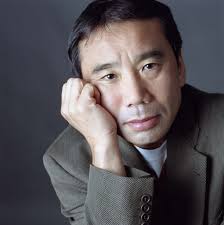
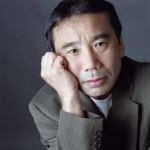
tsukurucover and board togethermurakami

I am starting a new series on my blog which will consist of conversations regarding books, films and potentially other soulful topics of interest. I am calling the series “Passionate Longing for Dialogue,” which is a quote from Martin Buber’s I and Thou. The following is my exchange with Gray of graycrawford.net about the new novel by Haruki Murakami. I met Gray through blogging on wordpress and we understood immediately that we have a strong mercurial connection and that our thought processes resonate with each other very deeply.


Monika: Murakami has been one of my favorite novelists for a long time now, so I try not to miss any of his novels. The most recent one, Colorless Tsukuru Tazaki and His Years of Pilgrimage, really enchanted me. I finished it in just four days, I think. I love everything about his writing: the meditative sentences and the fathomless depths he goes into. In an interview for “The Guardian” that I have read recently, Murakami said:

“I’d like to be a perfect tinker. So I have to write good sentences – honest and beautiful and elegant and strong sentences.”

First of all, I am captivated by his style and imagery. I sometimes sit and meditate on individual sentences that he wrote because they convey so much depth and can be so tenderly beautiful at the same time. I think the English translator did a good job with the book, as far as I can tell without knowing any Japanese. Another aspect of Murakami’s writing I strongly relate to is its dreamlike quality. To write like this, one has to descend deep into the unconscious (as he says in the interview, “You have to be strong to descend into the darkness of your mind.”). You can really feel the depth of his thought and how he is able to bring back to the light the fruits of his encounters with the imaginary figures of his unconscious mind. What you get from him as a reader is an exhilarated feeling of the vastness of the Self, the deep conviction that the human psyche has no spatial or temporal limits; yet at the same time all his stories are firmly rooted in the here and now: he can be obsessive in describing daily chores, etc. One of the novels by him that I really loved was Kafka on the Shore, where one of the characters says:

“Narrow minds devoid of imagination. Intolerance, theories cut off from reality, empty terminology, usurped ideals, inflexible systems. Those are the things that really frighten me. What I absolutely fear and loathe.”

If you agree with this, you will like Murakami, I think. It takes a special kind of imagination and sensitivity to get his writing and its introverted charm. Also, I think that each novel has a sound spiritual message.

About Colorless Tsukuru, compared to his other works, this one lacks Byzantine adornments and mad encounters with talking cats, but it is still profound and honest in exploring the inner workings of an individual soul. The colorless protagonist is a brilliant idea, I think. In the first part of the novel we read: “He set up a tiny place to dwell, all by himself, on the rim of a dark abyss.” That sentence I think is a very strong carrier of the theme of the book, which for me is an encounter with the void. And this place, the void, turned out to be “a place of strange abundance” for him. Even though the book is minimalist, there is abundance in it, I think.
 

Maureen_Fleming_Black_Madonna_IV_2011

Gray: Colorless Tsukuru is the first novel I have read by Haruki Murakami, yet in one book he has become one of my all-time favorite writers. For me this is a book that arrived at the perfect time in my life, a work whose themes penetrated into the subterranean realm of my mind. It has already become one of my favorite books ever, and I am not sure if I have ever had so much delight in reading a novel.  The joy Murakami brings to me is indeed in his immaculate sentences full of deep contemplation, written with awareness of the space between words and the space between characters.  I agree that he reveals the expanse of Self, and our soul unbound by temporal or spatial limitations.  As you said, the magic is that he does all this through attention to the details of everyday life.  A decision to order an espresso and sit on a bench leads to a journey into the deepest recesses of consciousness.

Tsukuru’s name in Japanese means “to make,” and though he is an engineer involved in the design of train stations, he spends much of his time making himself empty in the beginning of the book, clinging to his daily routines and tasks “like a person in a storm desperately grasping at a lamppost” (p. 4). Yet in this “dark, stagnant void” he sleepwalks through with a blank mind (p. 4), he finds the very source of his own regeneration, a place from which he falls like a star burning, burning with desire for the character of Sara Kimoto.

Death, thoughts of death and suicide, emerge in the very first sentence of this story and linger.  Murakami etched into my mind with every sentence the necessity of death and emptiness in the process of finding true love; in sharp relief he revealed that to open to the divine of the Other we desire with full presence and possession, we must have done the work of facing and staying present with our past wounds of relationship lurking in our unconscious until we have bled them to death. Murakami teaches that it takes courage, confidence, and boldness to do this work of psyche, turning the work of facing the deepest recesses of one’s soul into a hero’s journey.  Yet instead of action sequences and attacks from monsters to hold back, the characters mostly sit and talk, sit in silence, and listen to music. Still, there are nonetheless terrors to be found in the unconscious of these characters, like dragons awakening from slumber in the caves of their mind.

Tsukuru found himself on the edge of a “huge, dark abyss that ran straight through to the earth’s core” (p. 5), because he had been abandoned, cut off from a close-knit group of friends.  Five friends,  a fifth harmonic of human interaction that contained within the alchemical mix of personalities a Venusian sense of harmony.  These four friends each have a name that is a color in Japanese:   two males, Aka (red) and Ao (blue), and two females, Shiro (white) and Kuro (black). Tsukuru is the only one of the five friends whose name is “colorless,” and in line with this symbol he feels a lack of color, lack of distinction, lack of Self.  The Mystery of the story that initiates Tsukuru into a pilgrimage not unlike a path of individuation in a Jungian sense, is why his friends chose to cut him out of their life.

B.Madonna1_photo-by-Odo

M: It is precisely because Tsukuru lacks the “outside color” that allows him to have a rich inner life of deep, passionate emotions. This character’s intensity is extraordinary. If you just focus on the appearances then yes – you might say his persona is not spectacular – but he is far from “middling, palling, lacking in color” if we look at his inner life. I appreciate his quiet perfectionism and his earnest approach to the quest that Sara sends him on. This hero does not say no to a call to adventure. I particularly love how Murakami described Sara’s effect on Tsukuru:

“He wasn’t normally conscious of it, but there was one part of his body that was extremely sensitive, somewhere along his back. This soft, subtle spot he couldn’t reach was usually covered by something, so that it was invisible to the naked eye. But when, for whatever reason, that spot became exposed and someone’s finger pressed down on it, something inside him would stir. A special substance would be secreted, swiftly carried by his bloodstream to every corner of his body. That special stimulus was both a physical sensation and a mental one, creating vivid images in his mind.

The first time he met Sara, he felt an anonymous finger reach out and push down forcefully on that trigger on his back.”

In the meantime, I am also reading a book about the history of the notion of Genius and I am starting to believe that Tsukuru is the Genius that our times need: an individual who bravely faces his own shadow and past woundings, works through his pain and emotional turmoil, being brutally honest with himself in the process in order to undergo a transformation. Vulnerability is another quality of his I find particularly touching. What did you think of his jealousy dream? Here I quote the relevant passage:

“That night he had a strange dream, one in which he was tormented by strong feelings of jealousy. …

… he had never once personally experienced these emotions. …

In this dream, though, he burned with desire for a woman. It wasn’t clear who she was. She was just there. And she had a special ability to separate her body and her heart. I will give you one of them, she told Tsukuru. My body or my heart. But you can’t have both. … I’ll give the other part to someone else, she said. But Tsukuru wanted all of her. He wasn’t about to hand over one half to another man. …

A horrendous pain lashed out at him, as if his entire body were being wrung out by enormous hands. His muscles snapped, his bones shrieked in agony, and he felt a horrendous thirst, as if every cell in his body were drying up, sapped of moisture. … His body shook with rage… Darkish, agitated blood pulsed to all his extremities.

…just as a powerful west wind blows away thick banks of clouds, the graphic, scorching emotion that passed through his soul in the form of a dream must have canceled and negated the longing for death, a longing that had reached out and grabbed him around the neck.”

I find it amazing that it was the dream that spurred his transformation, and not an outside event.
Maureen_Fleming_Axis_Mundi__1988_

G: Yes, his dream of jealousy is crucial in the story, and a premonition of his desire for Sara Kimoto that would further pull him forward and put him in touch with the kundalini like energy you described. He had never felt real jealousy before the dream because he had never felt passionately in love with someone before.  Whether he had never allowed himself to feel passion previously, or had just not met the right person, like a lightning strike of Uranus and a Neptunian dissolution of his former self, it is Sara Kimoto that drives him to face his past and resurrect his sense of Self.  In astrology, you know that both Uranus and Neptune are associated with our dream reality, so it makes sense to me that this dream would arise at a point in his life when he was emerging from the void.

It makes me think of how typical therapeutic and new age philosophy can be all about negating romantic desire as a projection of an ideal on another person- we are told what we sense in this other is something that is really inside of us, and we are cautioned about the illusion of love.  We are told it is “bad” to feel jealousy.  Yet strong desire, desire that can come out as jealousy at times, is a soul force animating our existence. It brings us alive and we can feel every particle of our body burning with feeling.  The woman Tsukuru desires in the dream offers him a choice of her body or her heart, but Tsukuru is not satisfied- he wants all of her and does not want to share part of her with another.  While this can be judged as the perspective of a typical possessive, patriarchal modern man, in another sense this is desire for full union with the divinity of the Other, two beings merging in complete openness with one another, opening the awareness of each to a new dimension of Soul.  I do not mean that jealousy turning into destructive anger and violence is anything to commend or approve of, only that the type of jealousy Tsukuru feels welling up inside of him is the force that motivates him to finally face and release his past so that he can regenerate.

And regenerate he does- from his time on the edge of a “huge, dark abyss that ran straight through to the earth’s core” (p. 5), a place with no color, “with not a drop of water, nor a blade of grass” (p. 45), Tsukuru finds his physical form transformed and his perception of physical matter opened wide:  “The feeling of the wind, the sound of rushing water, the sense of sunlight breaking through the clouds, the colors of flowers as the seasons changed- everything around him felt changed, as if they had all been recast” (p. 49).

His consciousness shifting from a dark void to a state perceiving previously unseen aliveness in the universe, it is the dream of jealousy that actually makes Tsukuru want to live.  Further, it is his desire for Sara Kimoto that makes him finally face the wounds of abandonment inflicted upon him by his former circle of beloved friendship and fellowship.

When I was reading the scene of Tsukuru’s physical transformation, an image of Dionysus came to my mind for some reason.  And then later, I came across this quote from Joseph Campbell about Dionysus, illuminating my visualization:   “Dionysus represents sudden inspiration, the energy of life pouring through time and throwing off old forms to make new life . . . the thrust of time that destroys all things and brings forth all things . . . the generative power, thrust out of darkness” (Goddesses, p. 215-216).

Yet Tsukuru never becomes a Dionysian monster of violence and devouring through his jealousy.  Instead, he goes inward, and his feelings of jealousy dismember his own being internally as he feels ripped apart and emptied.  This seems to be an interesting process symbolized by his name of Tsukuru, meaning “to make,” as Murakami reveals a creative process of going deep within, risking tearing oneself apart from the inside, creating a space in the process to birth something new into the world.
Maureen_Fleming_Flower_1_Revolution__2001_

M: I love your Dionysian reference and I also agree that Tsukuru shows tremendous nobility of character in his approach to inner work. He takes responsibility for his own shadow and works with it instead of projecting it on others and tormenting them with his issues.

Another thing I really wanted to discuss with you is his friendship and homoerotic fascination with Fumiaki Haida . It seems to me that after his transformative dream about jealousy Tsukuru’s soul was ready to give itself over to a new relationship or we could say that his dream revealed his longing for a deep and transformative encounter with the Other. Isn’t it fascinating (and obvious on the other hand) that Tsukuru’s dreams have an influence on his waking life? Right after he dreams of a sexual encounter with Haida, Haida abandons him exactly as Tsukuru’s five friends had done before. I believe that in every relationship there are two channels of exchange: the outer conscious one and the ocean of unconscious messages constantly transmitted back and fourth between two souls. The latter has much, much more substance and a tremendous power of manifestation. You mentioned Uranus before – I think it is a theme of Tsukuru’s life – sudden abandonments, which cause trauma but also spur him to look deeper into himself and undergo substantial inner work. I have always thought that Murakami’s writing is indeed like dreaming: in many of his novels the storylines have an inner logic and feel of a dream. I think it is irrelevant to debate whether Tsukuru is gay or not; I think that eros is a soul making force that does not know gender. Perhaps Tsukuru’s dream revealed to him how badly he had missed deep human connection, how starved he had been for passion. What words cannot express, music is able to communicate with ease. Haida is the one who brings music into Tsukuru’s life, particularly Liszt and his poignant piece “Le mal du pays,” (“a groundless sadness called forth in a person’s heart by a pastoral landscape,” “homesickness”). I am glad you noticed how silence is significant for Murakami and how this writer presents the interplay of distance and proximity, the ebb and flow of expression in relationships. Eating together seems like a holy ritual in his writing, doesn’t it?

Another interesting character Murakami introduces is Mirodikawa, who seems to possess a whole array of supernatural gifts. He says:

“Each individual has their own unique color, which shines faintly around the contours of their body.  Like a halo. Or a backlight. I’m able to see these colors clearly.”

Earlier you mentioned kundalini, here Murakami is clearly talking about being able to perceive an aura. The reason why Murakami’s writing appeals to us so much is perhaps because he seems to side with the “people like us,” those who are sensing the paradigm shift happening around. I do not know about you but it is increasingly difficult for me to read literature which refuses to acknowledge the existence of divine mystery permeating our universe.

Speaking of mystery, one feature of Murakami’s writing I absolutely adore is that not all mysteries are solved in his novels, not all thoughts finished, not all questions answered. If it is true what I said before, that his writing is like dreaming, than you cannot expect it to unfold as a doctoral dissertation. You need to learn to accept the limits of how much you can know as an individual consciousness. I also suspect that Murakami is sitting on such a creative geyser of ideas that he frequently has issues with following many of them to their resolution. Actually, critics have said that Tsukuru Tazaki has a surprisingly tight structure for that novelist. Still, not all the mysteries get solved… I do not mind that at all.
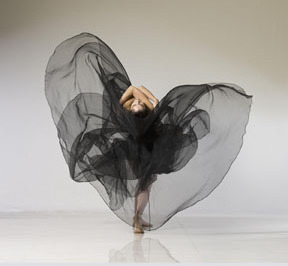
Maureen_Fleming_The_Immortal_Rose_III_2007

G: There is great Mystery in this story, so I agree it makes sense that Murakami does not find it necessary to leave the reader with an idea of “ending,” as he is too Mercurial for that, too aware of the constant shifting and motion of life.  I love how you brought up the idea of Eros knowing no gender, as it goes to the core of the primordial Eros of myth, and this makes a lot of sense in the relationship between Tsukuru and Haida.  Returning to Uranus, it is interesting that Haida brings so much Uranian energy into Tsukuru’s life, including how he comes from a different type of conditioning than Tsukuru.  In contrast to Tsukuru, who had a father talented at making money and acclimated to the world of business, Haida had a father with no talent or interest in making money, acclimated to the world of ideas and philosophy.  In addition to music, Haida also brings the concept of freedom of thought to Tsukuru and in their dialogue Murakami explores the fabric of our nature.

On pages 74-75, Haida elaborates on an idea from Voltaire that “Originality is nothing but judicious imitation” and where they take this concept fascinated me:

 Haida began, “Everything has boundaries. The same holds true with thought. You shouldn’t fear boundaries, but you also should not be afraid of destroying them. That’s what is most important if you want to be free: respect for and exasperation with boundaries . . .”

This statement made Tsukuru question the ecstasy prophets are said to experience when receiving a message.  He ruminated, “And this takes place somewhere that transcends free will, right?  Always passively . . . And that message surpasses the boundaries of the individual prophet and functions in a broader, universal way . . . And in that message there is neither contradiction nor equivocation . . . I don’t get it, if that’s true, then what’s the value of human free will?”

You also went straight to the center of one of the essential ideas of the book when you wrote about how important that unconscious communication is between people in relationship, Monika.  This idea comes up over and over again in the story.  I agree that one of the most enchanting scenes in the story is Haida’s description of his father’s experience with Midorikawa, whose name fittingly means “Green River” as the Haida family name means “Gray Field.”  Murakami’s description of this storytelling is as mesmerizing as a lucid dream.  At the heart of this scene is our realization that Midorikawa has accepted death, and that by embracing this darkness his perception has been blown open:

“At the point when you agree to take on death, you gain an extraordinary capacity.  A special power, you could call it. Perceiving the colors that people emit is merely one function of that power, but at the root of it all is an ability to expand your consciousness. You’re able to push open what Aldous Huxley calls ‘the doors of perception.’ Your perception becomes pure and unadulterated. Everything around you becomes clear, like the fog lifting. You have an omniscient view of the world and see things you’ve never seen before.”

I love how this connects with our human nature, our life on this planet and the interplay between day and night, life and death. Our every breath is taken within the knowledge that one day the heart in our chest will stop beating.  It makes me think of when I was young boy sleeping in my bedroom at night.  On a side note, I think you will find it funny that my bedroom walls were painted sky blue by my parents at my request, with stencils of white clouds, and in one spot my father accidentally painted one of the cloud stencils upside down, a small outlier symbol.  Anyway, I do not remember how old I was exactly, but in one period of time I remember staying up at night thinking about my death. I thought about it over and over again, what would happen to my mind upon death.  Where would all of my thoughts go, how would my mind function in death, and after death if there was anything I could experience with any of my senses.  I would think about this at great length before falling asleep, night after night.  I am not sure exactly when I stopped doing this, only that at some point I became satisfied that there was nothing further I could understand at that point, I guess.  I am not sure how this period of intense speculation as young boy impacted my later perception, only that eventually I have become fascinated by these types of themes of darkness and the void as our found in this novel by Murakami.
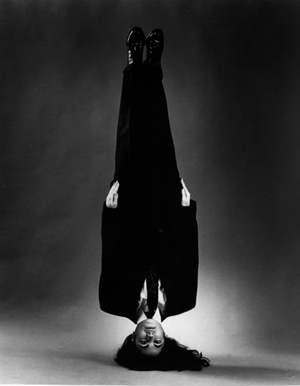
Maureen_Fleming_Eros__1993_

M: That made me smile – a renegade cloud. In a sense Tsukuru was also an outsider in their five-member group. He considered his role in a conversation with Ao: “I’ve always seen myself as an empty person, lacking color and identity. Maybe that was my role in the group. To be empty. … An empty vessel. A colorless background, “ to which Ao replied, “It’s hard to explain, but having you there, we could be ourselves. You didn’t say much, but you had your feet solidly planted on the ground, and that gave the group a sense of security. Like an anchor.” To me Tsukuru seems to be  someone who is like the centre of gravity and an empty canvas in his environment.   His name means “to make,” as we have said before: he wants to create things of material substance (train stations) and he also facilitates the release and manifestation of the energy that exists as a potential in his friends’ subconscious minds. I do not wish to give away the reason of him being ostracized, but suffice it to say that there was a mystery involving a sex crime. I think Tsukuru’s sexual dreams about the victim of the crime that happened prior to the crime being committed show his extraordinary ability to absorb the unconscious energy of others’  and mirror it back. A thought occurred to me that Tsukuru “extracts” the color from others.

I feel we have not said quite enough about Murakami’s extraordinary use of color symbolism in his novel. I mean, he is painting with word, isn’t he? You once recommended Goethe’s Theory of Colours to me. The whole book is available online and I have looked through it today, coming across this striking quote: “For where dark passes over light … yellow appears; and on the other hand, where a light outline passes over the dark background, blue appears.” In other words, colors arise out of the dynamic interplay between light and darkness. Darkness is not a passive agent in that respect but a very active principle.  I think Murakami did a wonderful job demonstrating the pivotal role of darkness, void and emptiness in the process of creation and individuation. I am thinking of the findings of quantum physics that space is not a passive background, but instead a flexible medium that can bend, twist and flex. In a spiritual sense, Tsukuru was not passive: he was actively creating the world around him.

Being a writer Murakami’s obvious primary medium is words, which he infuses wonderfully with color, rhythm and sound. Don’t you love him for sentences like this: “Unspoken feelings were as heavy and lonely as the ancient glacier that had carved out the deep lake.”  He carves his sentences out from a deep, deep lake somewhere in the heart of the mountains, I feel. There is no unnecessary verbosity but every word is used with deep resolve and attention to meaning –  it is enough just to look at the names of the characters to realize this. We have mentioned a lot of them but I was especially enchanted that Sara means “sal tree” and Kimoto “under the tree.” The sal tree has enormous religious significance in the east as a tree under which Buddha was born. Its resin is used as powerful medicine, its wood burned as incense. Sara is the one who spurred on Tsukuru’s healing, she is the one with whom he shared his deepest wounds and she is the one he decides to give himself to so that she can help him melt the frozen core of his emotional suffering. As he realizes during a very pivotal scene: “One heart is not connected to another through harmony alone. They are, instead, linked deeply through their wounds.”
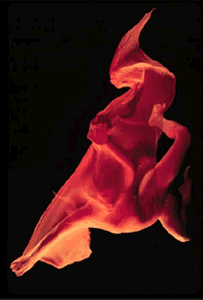
Maureen_Fleming_Birth_Song_1984

G: Monika, I love your description of how Tsukuru gives himself to Sara so that she can melt the frozen core of his emotions. I did not know there was a connection between the name Sara and “sal tree,” as I had thought it was connected with “Princess.”  I was just fumbling around the Internet looking for the meaning, and found this additional meaning on Wikipedia:  “Sara is the usual transliteration of an old Sanskrit word (सार) approximately meaning “essence” or “core”, or “speckled.”  All of these symbols, combined with her last name meaning “under the tree,” are so fitting for her impact on Tsukuru, and of course “under the tree” makes us think of the Buddha gaining his enlightenment.  This connection between Sara being a profound teacher for Tsukuru, a guru-like focus of his desire who inspires his release of past suffering, is fascinating considering that Tsukuru is thirty-six years old in the story and so experiencing a Jupiter return.  As it takes Jupiter approximately twelve years to make it around the zodiac, we experience a Jupiter return at age 12, 24, and 36.  At these ages we often have a significant event occur, and this can include an inspirational new relationship such as Sara Kimoto. It does not mean that everything is going to go harmoniously, as when I think back to when I had my Jupiter return around the age of thirty-six I had a lot of difficult experiences.  I do feel, however, that the events around a Jupiter return are significant in terms of our destiny and where we are ultimately headed, and are a pivotal period holding signs of where our future cycle is heading.  All of this directly connects to the desire Tsukuru feels for Sara, a woman with an “indefinably vital and alive . . . face” with “dark eyes, never timid, brimming with curiosity.”  Sara is able to be a grounding force for Tsukuru and can calmly, and bluntly, speak truth to him with words that go directly into the soul of Tsukuru:

 “You can hide memories, but you can’t erase the history that produced them.” Sara looked directly into his eyes. “If nothing else, you need to remember that.  You can’t erase history, or change it.  It would be like destroying yourself.”

“Why are we talking about this?” Tsukuru said, half to himself, trying to sound upbeat. “I’ve never talked to anybody about this before, and never planned to.”

Sara smiled faintly. “Maybe you needed to talk with somebody. More than you ever imagined.” (p.44)

I enjoyed reading your thoughts on how Tsukuru, like his name, was able “to make” unconscious dynamics come out and played the role of a stabilizing force in the group.  In fact, at one point Murakami described Tsukuru as feeling “like a young tree absorbing nutrition from the soil” (p. 18) when he was in the group of five friends, the only one whose name did not signify a color.  Even though Tsukuru puts himself down over and over again as having no unique qualities or special talents like his colorless name, he is the only member of the group who had the courage to individuate at a young age and leave the safe confines of their community in order to follow his calling in the monstrous urban environment of Tokyo.  However, we do end up discovering that another one of the five friends also ultimately individuated, and again Murakami’s choice of name for this character is compelling:  Kuru, whose name means “black.”

The contrast between the two women in the five friends, Shiro and Kuru, White and Black respectively, is striking.  They had been best friends since being young girls in school together, described by Murakami as “a unique and captivating combination of a beautiful, shy artist and a clever, sarcastic comedian” (p. 14).  While Murakami described Shiro as a sort of white light being with a beautiful face, “with a model’s body and the graceful features of a traditional Japanese doll,” there is something of the ideal in Shiro that does not appear to be fully grounded and integrated with her shadow, or dark side.  She is described as having extraordinary talent in music, capable of mesmerizing her friends with her beautiful piano playing.  Yet she is also described as being embarrassed of her own physical beauty, a shy and sheltered personality who seems to come the most alive when nurturing the musical talents of young, innocent children.  There is a side to Shiro that comes off as secretive, removed, or distant.

In contrast, Kuru’s name meaning black is fitting as she is more integrated with her shadow.  Kuru is described as being an avid reader who is very curious about the world around her, and we can imagine that instead of hiding from the darker sides of things that Kuro was willing to investigate everything, including the dark. She is also described as being hilariously sarcastic, and as we know usually it is the ones who are the most sarcastic who are also the ones willing to look the most deeply into things, leading to their comedic gift.  It is further fascinating that we eventually learn that Kuru was aware of having strong romantic desire for someone in their circle of friends, and was somehow able to manage consciously integrating this desire while at the same time holding herself back from pursuing the desire for the sake of the group’s platonic ideal. As an individuated adult, Kuru puts her creativity into the medium of pottery and manipulation of earthy matter, another symbol of her being grounded in her physical environment.
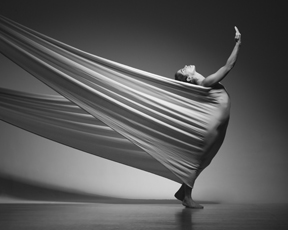
1680_Fleming_0334

M: Thank you for elaborating on Shiro – she seemed like a fascinating and mysterious character to me, fragile, angelic even, but, as you said, not cut out to live in the world of dense matter. She seems so inaccessible: like an expensive porcelain doll in a high-end shop. And yet she was the one in the group who had an artist’s soul and genuine musical talent. I have a feeling we could go on and on discussing the book but instead of that I will let Murakami have the last word. Here Tsukuru remembers how Shiro used to play the piano:

“The Yamaha grand piano in the living room of her house. Reflecting Shiro’s conscientiousness, it was always perfectly tuned. The lustrous exterior without a single smudge or fingerprint to mar its luster. The afternoon light filtering in through the window. Shadows cast in the garden by the cypress trees. The lace curtain wavering in the breeze. Teacups on the table. Her black hair, neatly tied back, her expression intent as she gazed at the score. Her ten long, lovely fingers on the keyboard. Her legs, as they precisely depressed the pedals, possessed a hidden strength that seemed unimaginable in other situations. Her calves were like glazed porcelain, white and smooth. Whenever she was asked to play something, this piece was the one she most often chose. ‘Le mal du pays.’ The groundless sadness called forth in a person heart’s by a pastoral landscape. Homesickness. Melancholy.”
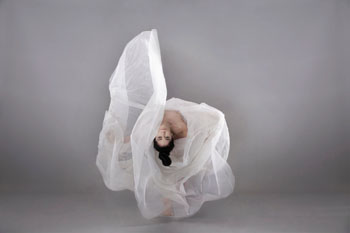
Maureen_Fleming_Black_Madonna_I_2011

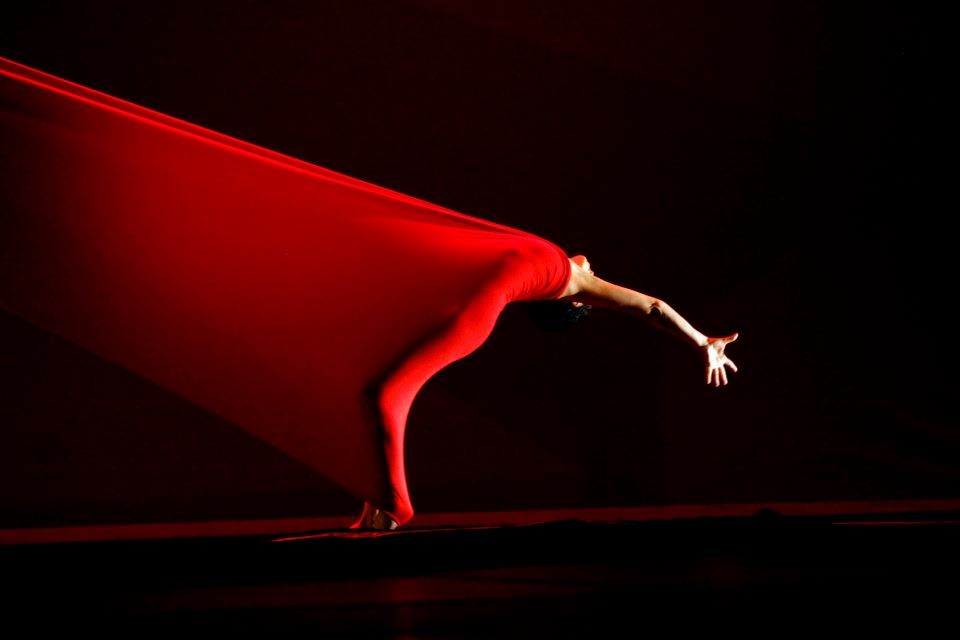
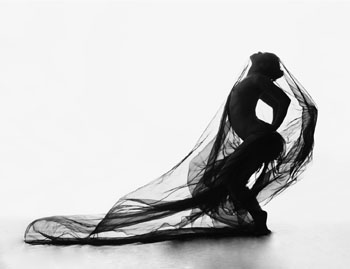
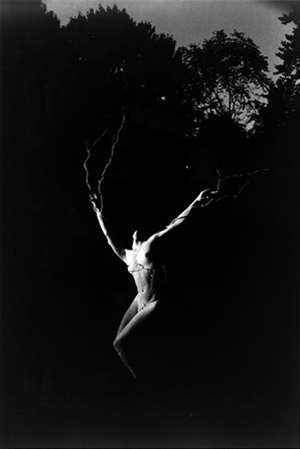
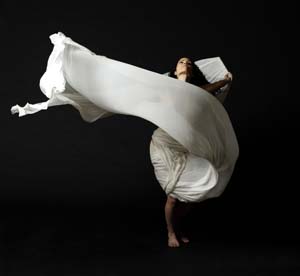
All the photographs used in this post depict Maureen Fleeming, a magnificent dancer. Most come from her website http://www.maureenfleming.com/index.html


Posted in Soulful Dialogue | Tagged , , , , , , , , , , , , , , , | 9 Comments

Jung on Sacred Egoism

“Perhaps this sounds very simple, but simple things are always the most difficult. In actual life it requires the greatest art to be simple, and so acceptance of oneself is the essence of the moral problem and the acid test of one’s whole outlook on life. That I feed the beggar, that I forgive an insult, that I love my enemy in the name of Christ all these are undoubtedly great virtues. What I do unto the least of my brethren, that I do unto Christ. But what if I should discover that the least amongst them all, the poorest of all beggars, the most impudent of all offenders, yea the very fiend himself that these are within me, and that I myself stand in need of the alms of my own kindness, that I myself am the enemy who must be loved what then?

If I wish to effect a cure for my patients I am forced to acknowledge the deep significance of their egoism, I should be blind, indeed, if I did not recognize it as a true will of God. I must even help the patient to prevail in his egoism; if he succeeds in this, he estranges himself from other people. He drives them away, and they come to themselves as they should, for they were seeking to rob him of his ‘sacred’ egoism. This must be left to him, for it is his strongest and healthiest power; it is, as I have said, a true will of God, which sometimes drives him into complete isolation. However wretched this state may be, it also stands him in good stead, for in this way alone can he get to know himself and learn what an invaluable treasure is the love of his fellow beings. It is, moreover, only in the state of complete abandonment and loneliness that we experience the helpful powers of our own natures.”

Carl Gustav Jung, Psychology and Religion, The Collected Works of C.G. Jung, Bollingen series XX, volume 11, translated by R.F.C. Hull, pp. 339-342

meditation

Cathy McClelland, “Meditation

Posted in Quotations | Tagged , , , , | 18 Comments

On Genius (2): Genius in Antiquity

“Sing in me, Muse, and through me tell the story…”

Homer, “The Odyssey”

L_Inspiration_ca_1893

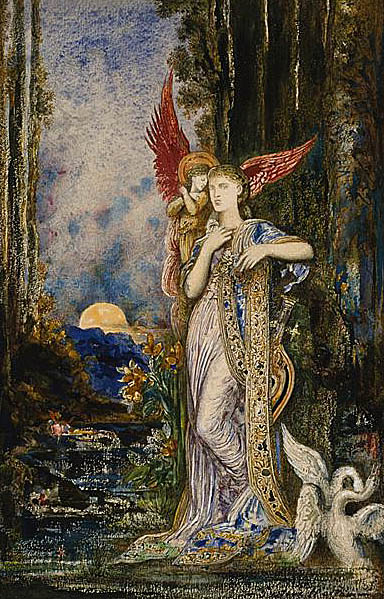
Gustave Moreau, “l’Inspiration”

I am still making my way through a very beautifully written book by Darrin M. McMahon called Divine Fury: A History of Genius. Its chapter “The Genius of the Ancient“ is the subject of my musings today.

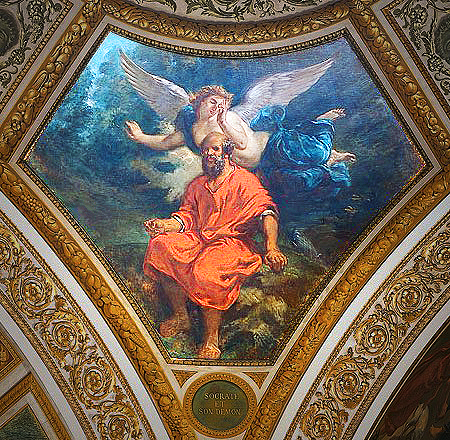
The Greeks had two words for “god”: theos, which referred to a specific god, and daimōn (a noun) or daimonion (a neuter adjective), which referred to an unspecified god or hero who intervenes in human life. Daimon was a mystical superhuman force (“the divine unknown,” as Gregory Nagy puts it) descending from on high and bestowing humans with supernatural gifts, making them daimoni īsos (equal with daimōn). Both Homer and Hesiod referenced daimōn in their work. While Homer did not make a distinction between gods and daimones, for Hesiod, daimones were originally heroes of the Golden Age, who died out and subsequently became watchers of mortals as their guardian spirits. Darrin M. McMahon mentions also that the followers of Pythagoras claimed that being able to see one’s daimōn was a clear indication of enlightenment. Socrates, the wisest of men according to the oracle of Delphi, claimed that an inner guiding voice had spoken to him ever since he was a child – but never told him what to do, but only what not to do.

Socrates_and_his_Daemon

Eugene Delacroix, “Socrates and His Daemon”

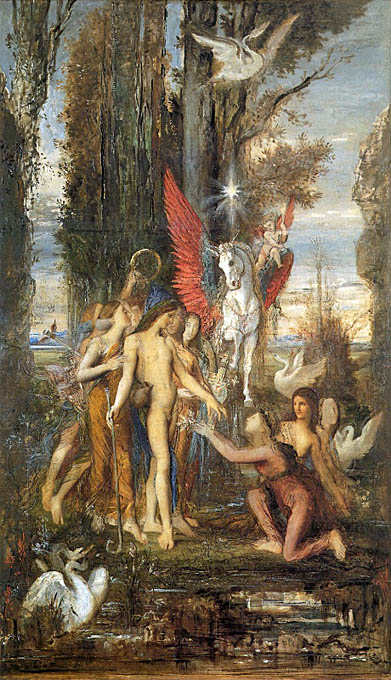
Both Homer and Hesiod emphasised that they owed their poetic inspiration (Latin inspirare – to breath into) to the Muses:

 “Hesiod uses a different word, a variant of the Greek verb ‘pneo,’ to breathe, but his stress is on the same pneumatic source of poetic revelations, which are blown directly into the mind by the Muse. When we consider that poetry itself comes from the verb ‘poeien,’ to create, it follows clearly enough that poems are the creation of the gods, realized through their human artisans and agents.”

Darrin M. McMahon

Hesiod_and_the_Muses_1860

Gustave Moreau, “Hesiod and the Muses”

Plato’s theory of divine possession demonstrated by poets exerted a tremendous influence on subsequent thinkers of all ages. He compared poets to soothsayers, prophets and seers and simultaneously deemed their power dangerous. Poets were to be banned from the ideal city of Plato’s Republic. McMahon offers an explanation of the paradox of Plato’s seeming fascination with beauty and art on the one hand and his ardor to ban poets on the other:

 “Plato’s subtle critique of the poets, however, should not be read as animus toward poetry per se —his entire oeuvre resounds with a love of poetic language and skill—but rather as a frank acknowledgment of poetry’s seductive power. The divine gifts of language and imagination, he recognized, may easily be abused, above all in a political setting, where they can quickly inflame the passions and sway the soul. If the poet, in Plato’s celebrated description, was a ‘light, winged, holy thing,’ this same angelic being could prove a demon.”

In the twenty-first century, we know exactly what Plato prophesized when he talked about abusing words in a political setting. Of all seductive powers, words have always been the most dangerous.

What the Greeks called daimōn, bore the name genius in ancient Rome. The Latin word genius has an extremely enlightening etymology: it comes from the verb gigno, gignere, which means to generate, birth, beget. Related words in our modern language are for example gene and genitals. Says McMahon:

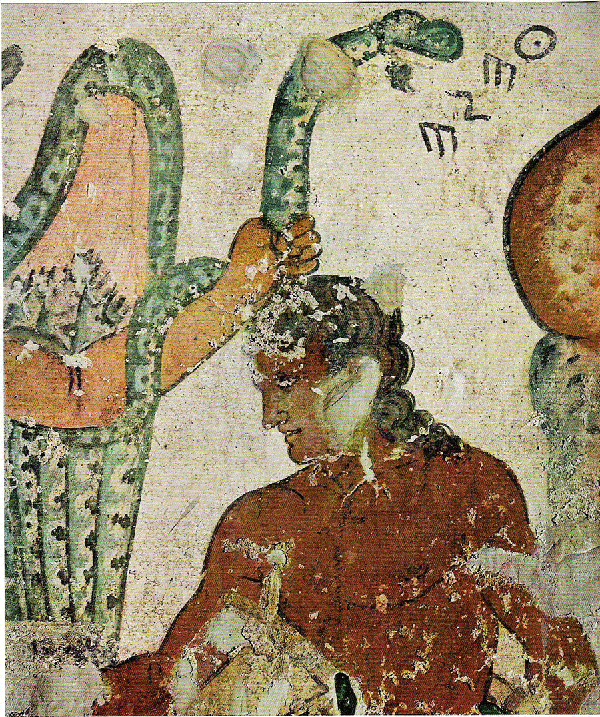
 “…this much is clear: ‘genius’ from its earliest origins was power—an elemental ‘life force,’ in one classicist’s description, a ‘ubiquitous divine power penetrating the world of appearances,’ in the words of another. Genius was energy, a sacred presence akin to what the Romans called ‘numen,’ the aura of a god, or the ‘mana’ of animistic cultures, strange spirits and forces of nature. In the Roman case, however, the power of ‘genius’ seems always to have been linked to generation. And so there are indications, stretching all the way back to the time of the Etruscans in the eighth century BCE, of a connection between this propagating life force and the phallus, the Etruscans’ lord and giver of life. The Romans associated it in art with the horn of plenty and the snake, both symbols of reproductive capacity. The horn, with its undulating shaft, was as ubiquitous in early Italian religion, probably preceding even the founding of the Roman Republic at the end of the sixth century BCE, the snake appears to have served as a totem of ‘genius,’ a sacred creature that watched over the family and clan, embodying its reproductive power and guarding its lands.

Even more specifically, the power of the ‘genius’ gathered about the ‘lectus genialis,’ the marital bed, which served as a magical site of generation. It was here, at the point of procreation, where the clan and the family were conceived—where its ‘genes’ were passed from one ‘generation’ to the next—that the sacred power of ‘genius’ revealed itself and was fully disclosed.”

etruscanmuralorcusnz2

Etruscan mural: These (Theseus) threatened by a demon, Tomb of Orcus, Tarquinia

By an ingenious analogy, also the Greeks believed that people become daimoni īsos (like daimones) during the climax of a marriage ceremony. By merging with the Other, the ancients seem to have believed, we merge with divinity.

McMahon emphasizes that when the Romans spoke of genius they spoke only of male genius. However, he does not mention in his book that a female genius was called a juno. I think this is the greatest flaw in the whole book, which I am otherwise enjoying tremendously. We must realize that Roman women had a very limited form of citizenship. Bearing that in mind and in an act of modern feminist rebellion I hereby profess that all that was said about the Roman genius could and should be applied to both genders, notwithstanding what male Cives Romani would think of that usurpation.

For the Romans, the notion of genius was closely connected with that of the birth-star (astrum natale) and astrology. McMahon explains: “a genius was the god of our conception, honored on our birthday, the day on which the stars aligned in such a way as to assign our fate and form our character, giving us a ‘personality’ and particular traits.”  Two words and two concepts: genius and ingenium (i.e. inborn nature) were very closely connected, almost merging into one.

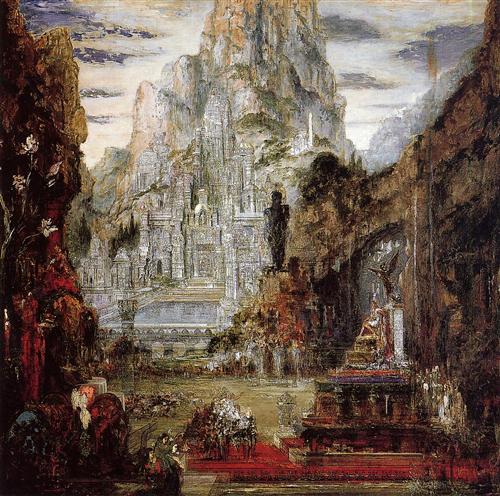
There was one genius of the glorious Past that was worshipped by the (male) Romans above all others: Alexander the Great.

the-triumph-of-alexander-the-great-1892.jpg!Blog

Gustave Moreau, “Triumph of Alexander the Great”

His mother was Olympias, a woman fascinated with snakes, who were often spotted crawling in her bed chamber. The reptilian connection to genius, “magical serpentine origins” in the words of McMahon, were also ascribed to Emperor Augustus: according to legends, a serpent shaped mark had also appeared on the body of his mother. Both Octavian Augustus and Alexander the Great possessed that ineffable quality that to this time we call charisma, and which derives from the Greek word kharis, meaning “divine favor or grace, a gift of the gods.”  That numinous aura, the ancients believed, could be read from a natal chart of a person. In McMahon’s words:

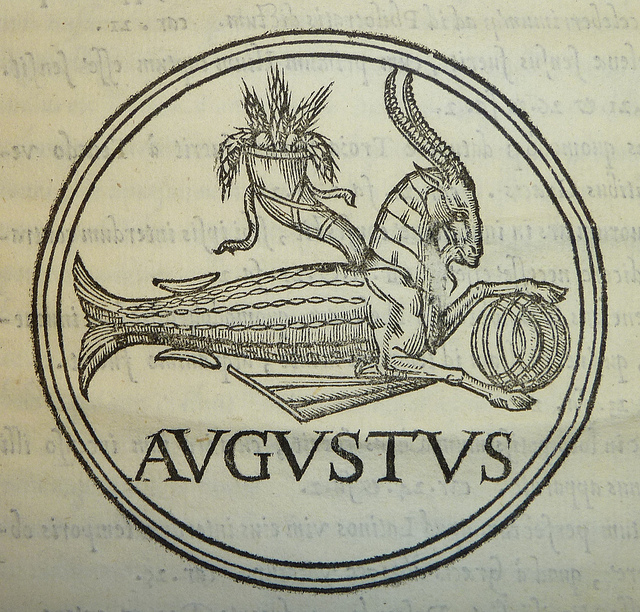
 “The historian Suetonius recounts how, as a young man, Octavian visited an astrologer with Agrippa, his close friend and ally, the future general of renown. When the astrologer predicted the commander’s brilliance, Octavian remained silent, withholding the details of his own birth for fear that he might be shown to possess a less exalted fate than his friend. But when he finally agreed to share them, the astrologer jumped up and venerated him, overcome by the brilliance of his destiny. ‘Soon,’ Suetonius writes, ‘Augustus had acquired such faith in fate that he made public his horoscope and had a silver coin struck with the image of the star sign Capricorn, under which he was born.’ Later, famously, when a comet appeared at games sponsored by Octavian in honor of the slain Julius Caesar, the young man interpreted the celestial disturbance as a sign that Caesar’s birth-star, his ‘genius,’ had returned to signal his favor, urging the adopted son to fulfill his father’s fate. Henceforth, he would claim the ‘sidus Iulium,’ the ‘Julian star,’ as his own.”

augustus
Capricorn’s one expression is that of patriarchal imperialism. Augustus’ s Sun was in fact Libra, a sign ruled by Venus, but he chose Capricorn (perhaps his rising sign) as his birth star for political reasons.

The ancient notion of genius/juno being a divine animating power, enchanting us into creative expression, stimulating our procreative urges is one I find very attractive. Thanks to our inner juno/genius we “do not walk alone in the universe,” McMahon concludes. Carl Jung spoke jokingly of the clown called “I” that frequently shuts out or strongly interferes with what our inner ingenious voice wants to tell us.

Sources:

Darrin M. McMahon, Divine Fury: A History of Genius

Gregory Nagy, The Ancient Greek Hero in 24 Hours

Related posts:

On Genius (1)

On Genius (3): Angels, Demons and Cult of Relics

Posted in Genius, Psyche | Tagged , , , , , , , , , , , , , , , , , , , , , | 17 Comments

LADY, WEEPING AT THE CROSSROADS by W.H. Auden

“Lady, weeping at the crossroads

Would you meet your love

In the twilight with his greyhounds,

And the hawk on his glove?


Bribe the birds then on the branches,

Bribe them to be dumb,

Stare the hot sun out of heaven

That the night may come.


Starless are the nights of travel,

Bleak the winter wind;

Run with terror all before you

And regret behind.


Run until you hear the ocean’s

Everlasting cry;

Deep though it may be and bitter

You must drink it dry.


Wear out patience in the lowest

Dungeons of the sea,

Searching through the stranded shipwrecks

For the golden key.


Push on to the world’s end, pay the

Dread guard with a kiss;

Cross the rotten bridge that totters

Over the abyss.


There stands the deserted castle

Ready to explore;

Enter, climb the marble staircase

Open the locked door.


Cross the silent empty ballroom,

Doubt and danger past;

Blow the cobwebs from the mirror

See yourself at last.


Put your hand behind the wainscot,

You have done your part;

Find the penknife there and plunge it

Into your false heart.”

the-fourteen-daggers-1942

Kay Sage, “The Fourteen Daggers”


Posted in Poetry | Tagged , , , , , , , , , | 22 Comments

The Secret Life of Words: Desire

1.“When you were a wandering desire in the mist, I too was there, a wandering desire. Then we sought one another, and out of our eagerness dreams were born. And dreams were time limitless, and dreams were space without measure.”
Khalil Gibran, “The Forerunner“

2.Etymology of Desire:

Early 13c., from Old French desirrer (12c) ‘wish, desire, long for,‘ from Latin desiderare ‘long for, wish for; demand, expect,‘ original sense perhaps ‘await what the stars will bring,‘ from the phrase de sidere ‘from the stars,‘ from sidus (genitive sideris) ‘heavenly body, star, constellation.‘

http://www.etymonline.com/

3.“Desire itself derives from a Latin nautical term which means ‘of the star.’ To have desire is to have a vector, an intentionality, a direction. To lose desire is to be as adrift as a mariner who has lost the guiding star across otherwise trackless seas.”

James Hollis, “Finding Meaning in the Second Half of Life”

thestar

Emily Balivet, “The Star – Goddess of Hope”

Posted in Psyche | Tagged , , , , , , , | 17 Comments

The Song We Have Sung For Ourselves

This is perhaps the longest piece I have ever reblogged but I think you will be rewarded with every single word.

astralvisions's avatarjourneys in the astral light

ChironCave art from India, circa 2000 BC

 An exploration of Chiron

for Mateusz and Scorpia

“In the time of the Seventh Fire, a New People would emerge. They would retrace their steps to find the wisdom that was left by the side of the trail long ago. Their steps would take them to the elders, who they would ask to guide them on their journey. If the New People remain strong in their quest, the sacred drum will again sound its voice. There will be an awakening of the people, and the sacred fire will again be lit. At this time, the light-skinned race will be given a choice between two roads. One road is the road of greed and technology without wisdom or respect for life. This road represents a rush to destruction. The other road is spirituality, a slower path that includes respect for all living things…

View original post 11,249 more words

Posted in Uncategorized | 4 Comments

On Genius (1)

Genius-of-Art-1817-1820-xx-State-Russian-Museum-Russia

Karl Brullof, “Genius of Art“

I have started to read a book Divine Fury: A History of Genius by Darrin M. McMahon. I am approaching this book with a substantial bias: I think that the term “genius“ is an old vestige of patriarchal thinking, which denied women their souls (the female equivalent of “genius“ for the Romans was “juno“). From Encyclopedia Mythica:

 “In Roman mythology, the genius was originally the family ancestor who lived in the underworld. Through the male members he secured the existence of the family. Later, the genius became more a protecting or guardian spirit for persons. These spirits guided and protected that person throughout his life. Every man had a genius, to whom he sacrificed on birthdays. It was believed that the genius would bestow success and intellectual powers on its devotees.

Women had their own genius, which was called a juno. …

However, not only individuals had guardian spirits: families, households, and cities had their own. Even the Roman people as a whole had a genius. The genius was usually depicted as a winged, naked youth, while the genius of a place was depicted as a serpent.“

http://www.pantheon.org/articles/g/genius.html

640px-Pompeii_-_Casa_del_Centenario_-_MAN

Agathodaimon (“good divinity“), genius of the soil around Vesuvius

I have also been warming up recently to the thought of Henry Miller from his Tropic of Cancer, who said that genius is dead, we have no need for him but instead we have need for “strong hands, for spirits who are willing to give up the ghost and put on flesh…“ In the latest instalment of her Fairy Tale Fridays, Amanda of dreamrly posted a tale about a woman who has a tea shop. I encourage you to read that story. It is the miraculous powers that she possesses that I think are exactly the type of juno/genius that our times are in need of. That woman reminded me of the main female protagonist of a wonderful novel by Jose Saramago entitled Blindness.

blindness

In the story, a massive epidemic of blindness affects everyone in an unnamed city. To protect the healthy citizens, blind people are quarantined in a filthy asylum, where crime is rampant and the inmates are constantly threatened and humiliated in their struggle for survival. The doctor’s wife is the only resident who can see, though she hides that fact. She had pretended to be blind in order to accompany her husband to the asylum. I believe The Seeing Woman is a wonderful remedy for our civilization struck by collective blindness.

With all my initial trepidation, the book by McMahon does seem worthwhile and I am going to devote my time to reading it. I reproduce the first two paragraphs to whet your appetites and I promise to post more in the near future:

 “GENIUS. SAY THE WORD OUT LOUD. Even today, more than 2,000 years after its first recorded use by the Roman author Plautus, it continues to resonate with power and allure. The power to create. The power to divine the secrets of the universe. The power to destroy. With its hints of madness and eccentricity, sexual prowess and protean possibility, genius remains a mysterious force, bestowing on those who would assume it superhuman abilities and godlike powers. Genius, conferring privileged access to the hidden workings of the world. Genius, binding us still to the last vestiges of the divine.

Such lofty claims may seem excessive in an age when football coaches and rock stars are frequently described as “geniuses” The luster of the word—once reserved for a pantheon of eminence, the truly highest of the high—has no doubt faded over time, the result of inflated claims and general overuse. The title of a BBC television documentary on the life of the Nobel Prize–winning physicist Richard Feynman sums up the situation: “No Ordinary Genius.” There was a time when such a title would have been redundant. That time is no more.”

Divine-Fury-book-cover_large

Related posts:

On Genius (2): Genius in Antiquity

On Genius (3): Angels, Demons and Cult of Relics

Posted in Genius, Psyche | Tagged , , , , , , , , , | 28 Comments

Shadow Before Equinox

 1. “Sometimes fate is like a small sandstorm that keeps changing directions. You change direction but the sandstorm chases you. You turn again, but the storm adjusts. Over and over you play this out, like some ominous dance with death just before dawn. Why? Because this storm isn’t something that blew in from far away, something that has nothing to do with you. This storm is you. Something inside of you. So all you can do is give in to it, step right inside the storm, closing your eyes and plugging up your ears so the sand doesn’t get in, and walk through it, step by step. There’s no sun there, no moon, no direction, no sense of time. Just fine white sand swirling up into the sky like pulverized bones. That’s the kind of sandstorm you need to imagine.

And you really will have to make it through that violent, metaphysical, symbolic storm. No matter how metaphysical or symbolic it might be, make no mistake about it: it will cut through flesh like a thousand razor blades. People will bleed there, and you will bleed too. Hot, red blood. You’ll catch that blood in your hands, your own blood and the blood of others.

And once the storm is over you won’t remember how you made it through, how you managed to survive. You won’t even be sure, in fact, whether the storm is really over. But one thing is certain. When you come out of the storm you won’t be the same person who walked in. That’s what this storm’s all about.” 

Haruki Murakami, “Kafka on the Shore”

lion-in-sandstorm-sandra-poirier

Sandra Poirier, “Lion in Sandstorm“

2.

D. H. Lawrence

Snake

A snake came to my water-trough
On a hot, hot day, and I in pyjamas for the heat,
To drink there.

In the deep, strange-scented shade of the great dark carob-tree
I came down the steps with my pitcher
And must wait, must stand and wait, for there he was at the trough before
me.

He reached down from a fissure in the earth-wall in the gloom
And trailed his yellow-brown slackness soft-bellied down, over the edge of
the stone trough
And rested his throat upon the stone bottom,
And where the water had dripped from the tap, in a small clearness,
He sipped with his straight mouth,
Softly drank through his straight gums, into his slack long body,
Silently.

Someone was before me at my water-trough,
And I, like a second comer, waiting.

He lifted his head from his drinking, as cattle do,
And looked at me vaguely, as drinking cattle do,
And flickered his two-forked tongue from his lips, and mused a moment,
And stooped and drank a little more,
Being earth-brown, earth-golden from the burning bowels of the earth
On the day of Sicilian July, with Etna smoking.
The voice of my education said to me
He must be killed,
For in Sicily the black, black snakes are innocent, the gold are venomous.

And voices in me said, If you were a man
You would take a stick and break him now, and finish him off.

But must I confess how I liked him,
How glad I was he had come like a guest in quiet, to drink at my water-trough
And depart peaceful, pacified, and thankless,
Into the burning bowels of this earth?

Was it cowardice, that I dared not kill him? Was it perversity, that I longed to talk to him? Was it humility, to feel so honoured?
I felt so honoured.

And yet those voices:
If you were not afraid, you would kill him!

And truly I was afraid, I was most afraid, But even so, honoured still more
That he should seek my hospitality
From out the dark door of the secret earth.

He drank enough
And lifted his head, dreamily, as one who has drunken,
And flickered his tongue like a forked night on the air, so black,
Seeming to lick his lips,
And looked around like a god, unseeing, into the air,
And slowly turned his head,
And slowly, very slowly, as if thrice a dream,
Proceeded to draw his slow length curving round
And climb again the broken bank of my wall-face.

And as he put his head into that dreadful hole,
And as he slowly drew up, snake-easing his shoulders, and entered farther,
A sort of horror, a sort of protest against his withdrawing into that horrid black hole,
Deliberately going into the blackness, and slowly drawing himself after,
Overcame me now his back was turned.

I looked round, I put down my pitcher,
I picked up a clumsy log
And threw it at the water-trough with a clatter.

I think it did not hit him,
But suddenly that part of him that was left behind convulsed in undignified haste.
Writhed like lightning, and was gone
Into the black hole, the earth-lipped fissure in the wall-front,
At which, in the intense still noon, I stared with fascination.

And immediately I regretted it.
I thought how paltry, how vulgar, what a mean act!
I despised myself and the voices of my accursed human education.

And I thought of the albatross
And I wished he would come back, my snake.

For he seemed to me again like a king,
Like a king in exile, uncrowned in the underworld,
Now due to be crowned again.

And so, I missed my chance with one of the lords
Of life.
And I have something to expiate:
A pettiness.

Podpis_had_cranach_starsi

Signature of Cranach the Elder: winged snake with ruby ring

Posted in Poetry, Quotations | Tagged , , , , , , , , , , | 28 Comments

Juno: the Source of the Soul’s Procreation

hera02L

Erte, “Hera”

Before Her reign was overthrown as the Achaean tribes took over Greece Hera (Roman Juno) was the supreme mother goddess, a benevolent cow-eyed triple goddess of the earth and the sky, the creator of the Milky Way, which she painted in the heavens with the milk from her breasts. “As goddess of birth and death, of spring and autumn, Hera held the emblems, respectively, of a cuckoo and a pomegranate,” writes Patricia Monaghan. The chief god of her conquerors was Zeus. Naturally, his worshippers saw Hera’s widespread cult as a threat. An arranged (forced) marriage between the two deities seemed like an only solution. For Demetra George and many other contemporary devotees of the Goddess, Hera is “the image of the turbulent nation princess coerced, but never really subdued, by an alien conqueror. “ She may have been subdued, her old ways supplanted by the new patriarchal order, but she never lost an ounce of her glory, even though a lot of male authored myths made her into a jealousy-stricken, frustrated and manipualtive wife. Still, her chief emblem – the peacock – will always remind us of her unflinching haughtiness, pride and glory (for more on the peacock symbolism check out my post on the All-Seeing Eye symbolism).

I believe something else also happened: Hera had fallen in love with Zeus. She had imagined theirs would be a sacred marriage that would seal their alchemical union. She put a lot of effort into purifing herself before her wedding and into adorning the bridal chamber, where the marriage hearse will be kept ablaze. Hera’s cult with Greece was connected with sacred sexuality:

 “Hera is goddess of the bed—she even worries if old Oceanus and Tethys, who brought her up as a girl, are depriving themselves of it. For her, the veil, the first veil, is the pastós, the nuptial curtain that surrounds the thálamos (the most private part of a house). In Paestum, in Samos there is still evidence that the bed was a central devotional object of the cult. And when Hera makes love to Zeus on top of Mount Gargaron, the earth sprouts a carpet of flowers for the occasion. Thick and soft, it lifted them up off the ground. The pseudo-bed is then surrounded by a golden cloud, to substitute for the pastós. The bed, for Hera, was the primordial place par excellence, the playpen of erotic devotion. In her most majestic shrine, the Heraion in Argos, the worshiper could see, placed on a votive table, an image of Hera’s mouth closing amorously around Zeus’s erect phallus. No other goddess, not even Aphrodite, had allowed an image like that in her shrine.“

Roberto Calasso

Juno Hamilton nec spec

Gavin Hamilton, “Juno and Jupiter“

By letting herself be bound to Zeus, however, she gave a large portion of her power away. Almost nothing worked as she had imagined. All she wanted was a committed partnership based on equality and a balance of power. All she got were power struggles, constant conflicts, disappointments, and an overwhelming feeling of powerlessness and a resulting rage, most definitely too high a price to pay for her high position in the pantheon and in the Greek and Roman establishment. For Demetra George, this tormented goddess archetype puts her wings over all those who feel oppressed and disempowered in relationships: “ abused women and children, victims of seduction, rape and incest, minorities and the disabled.”  She carries a promise of renewal for all the downtrodden, anguished souls, for all the victims of inequality. She periodically retreated into solitude to nurse her wounds, to cleanse and sublimate her rage in a sacred spring. These were very fruitful periods for her:

 “After spending a year in solitary retreat, Hera bore the Typhaon of Delphi, a creature with a hundred burning snake heads, who later became a fearsome enemy of Zeus. Later, Hera conceived Ares, god of war and strife, when she touched the fertility-inducing May blossom administered to her by the goddess Flora. … Finally, Hera bore Hephaestus, skilled artisan and smith god.”
Demetra George

Luis_López_Y_Piquer_-_The_Goddess_Juno_in_the_House_of_Dreams_-_WGA13453

Luis Lopez Y Piquer, “The Goddess Juno in the House of Dreams“

As much as she symbolizes the principle of relatedness, she also reminds us of a vital need to be just by ourselves, to renew our individual soul’s connection with heaven and earth, to figure out things on our own in order to renew the reservoir of our inner strength. The triplicity of her parthenogenetic offspring is a testimony to breathtaking feminine power: a force that today’s world is only learning to reckon with.

Hera was reborn as Juno in the Roman pantheon. An Orphic Hymn praising her unveils her deeper, spiritual significance:

” O Royal Juno of majestic mien,
Aerial-form’d, divine, Jove’s blessed queen,
Thron’d in the bosom of cærulean air,
The race of mortals is thy constant care.
The cooling gales thy pow’r alone inspires,
Which nourish life, which ev’ry life desires.
Mother of clouds and winds, from thee alone
Producing all things, mortal life is known:
All natures share thy temp’rament divine,
And universal sway alone is thine.
With founding blasts of wind, the swelling sea
And rolling rivers roar, when shook by thee.
Come, blessed Goddess, fam’d almighty queen,
With aspect kind, rejoicing and serene.”

612d

Gustave Moreau, “The Peacock Complaining to Juno”

While reading this hymn a reflection came upon me. Both Hera and Zeus were sky gods, residing up in the clouds in their magic kingdom of eternal delights. When they were joined in matrimony both must have felt suddenly constrained and narrowly defined by the new role and responsibility of being a spouse. Hera chose steadfast commitment and poured her life and soul to perfect this union while Zeus never resigned from any of his freedoms. The hymn takes us deeper into the mystery of Juno, who was so much more than the faithful wife, though. According to Proclus, a Greek Neoplatonic philosopher, who was initiated into mystery cults derived from Chaldean Oracles, the Orphic theologians called her “the vivific goddess” and “the source of the soul’s procreation.” In Roman vocabulary, the juno was the female form of the genius – a protective guardian spirit of a person, who bestowed success and intellectual powers on those who showed him or her their devotion. Juno seems to embody our fertile spiritual core bound to earth and heaven. She can guide us to our inner shining brilliance and she can help us bring out our inner spiritual gifts for the whole world to see. Scholars connect the etymology of her name with youthfulness and vitality (Latin ‘iuvenis’ for youth), which is related to a Greek word ‘aion’ signifying a fertile time. It seems that her name suggests élan vital, the vital force and energy, which lies at the root of soul making.

heratiffanydang

Tiffany Dang, “Hera”

It seems that similarly to the Greek oldest myths, also Roman myth saw Juno as a universal, all-encompassing deity. She channeled the universal Indo-European mother goddess that was there at the beginning of time. Goddess specialization was a much later invention. Barbara G. Walker says that Juno was derived from “Sabine-Etruscan Uni, the Three-in-One deity cognate with ‘yoni’ and ‘Uni-verse.’” Her Roman emanations were countless: Juno Fortuna (Goddess of Fate), Juno Sospita (the Preserver), Juno Regina (Queen of Heaven), Juno Lucina ( Goddess of Celestial Light), Juno Moneta (the Advisor and Admonisher), Juno Martialis (the virgin mother of Mars), Juno Caprotina (goddess of erotic love), Juno Populonia (Mother of the People), to name just a few. Apart from the peacock, Juno had another sacred symbol associated with her – the lily or lotus, “universal yonic emblem,” says Barbara G. Walker:

“With her sacred lily, Juno conceived the god Mars without any assistance from her consort, Jupiter; thus she became the Blessed Virgin Juno. The three-lobed lily that used to represent her parthenogenetic power was inherited by the virgin Mary, who still retains it.”

fleur-de-lis-print-c10293514_hc69

I have always felt close to Juno, having been born in June, her sacred month, and also having the asteroid Juno in conjunction with my Sun. In Rome, she was revered not only in June but also on every first day of the lunar month. As a primordial goddess she was associated with the beginnings and with the god Janus, a two-faced god of transitions. As our culture is currently in the throes of transformation, I hope Juno will empower us and guide us into a more vibrant and life-affirming future.

juno

Support my blog

If you appreciate my writing, consider donating and make my day. Thank you in advance.

$1.00

Sources:

Roberto Calasso, The Marriage of Cadmus and Harmony
Demetra George and Douglas Bloch, Asteroid Goddesses
Patricia Monaghan, Encyclopedia of Goddesses and Heroines, volume II
Barbara G. Walker, Women’s Encyclopedia of Myths and Secrets


Posted in Juno | Tagged , , , , , , , , , , , , , , | 34 Comments