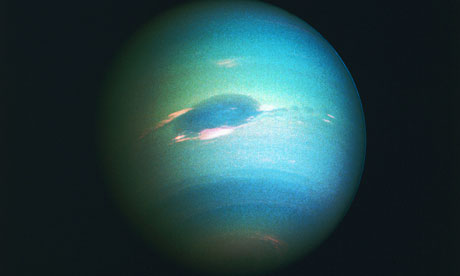
Neptune, Redemption and the Nature of Archetypes

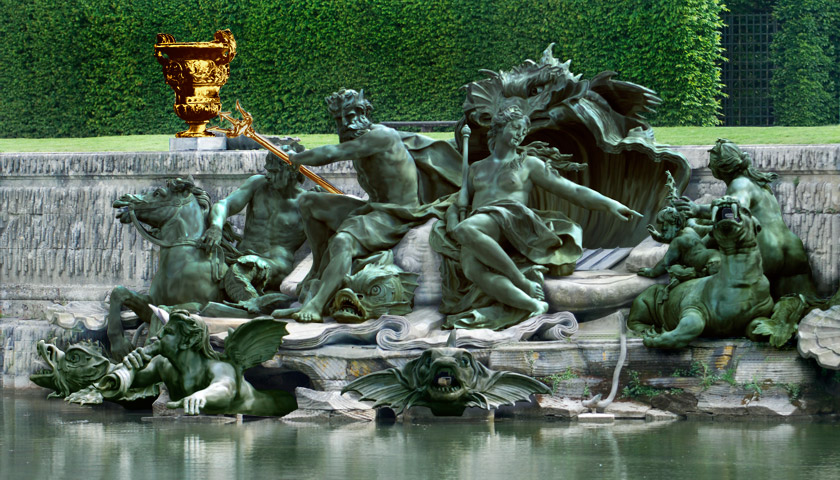
Bassin de Neptune, Versaiiles

Bassin de Neptune, Versailles

“The longing for redemption is an ancient, strange and many-headed daimon, which dwells within even the most earthbound and prosaic of souls. Sometimes eloquent and sometimes mute, this daimon aspires toward some dimly sensed union with an all-seeing, all-loving, ineffable Other, in whose encircling embrace may be found ultimate solace for the harsh limits of mortality and the frightening isolation of individuality which lie embedded somewhere, albeit unconscious, in every life. Even if we do not call the Other by any divine name, but instead direct our devotion and our yearning toward unrecognized surrogates such as humanity en masse, family, nature, art, love, or admiration for a particular person or thing. The hallmarks of the longing for redemption are, first, that it is a longing; that it is compulsive and absolute, and often collides violently with individual values; and third, that its goal is not relationship, but rather, dissolution.

Jung speculated on the possibility that the longing for redemption is innate – an archetypal predisposition as primordial and irresistible as the urge to procreate. The main revelation of “Symbols of Transformation,” … is that it is … the unconscious psyche itself, which seeks to transform its own compulsive and doomed instinctuality through the mediating influence of the symbols which it creates. Not society or superego, but soul, in Jung’s view, is ultimately responsible for the transformation of raw libido into the work of devotional art, the noble humanitarian ideal, the awesome dignity of the sacred rite, the profound and cruelly beautiful initiatory work of turning human lead into human gold. In other words, what we call God is really Nature, the chthonic nature described by Freud’s id, seeking freedom from its own death-shadowed inertia through a gradual evolution not only of form, as Darwin would have it, but of expression and of consciousness. And the instrument of this transformation is that eternally elusive faculty which we call the imagination.

What then is this poignant yearning which justifies any sacrifice, this eternal cry from the wasteland of incarnation? Is it truly the clear voice of the soul making itself heard through the prison walls of earthy substance? Or is it the desperate defence-mechanism of the fragile personality, bruised and rendered stubbornly infantile by incompetent parenting and its own regressiveness, and unwilling or unable to make the difficult foray into the jungle of everyday life and death?

Neptune

Neptune

Astrology has a planetary symbol to describe all human urges, and the longing for redemption is as human as the rest. In astrological language, it is called Neptune, named after the Roman god of the watery depths. … The longing for redemption is the longing for dissolution in the waters of pre-birth – maternal, cosmic, or both. … Neptune should have been named after a sea goddess, not a sea god. The source of life with which we seek to merge brandishes a masculine name, but wears a feminine face.”

Liz Greene, The Astrological Neptune and the Quest for Redemption, pp. xi-xiv

Emily Balivet, “Nereid”

Emily Balivet, “Nereid”

“Clear-cut distinctions and strict formulations are quite impossible in this field, seeing that a kind of fluid interpenetration belongs to the nature of all archetypes. They can only be roughly circum­scribed at best. Their living meaning comes out more from their presentation as a whole than from single formulation. Every attempt to focus them more sharply is immediately punished by the intangible core of meaning losing its luminosity. No archetype can be reduced to a simple formula. It is a vessel which we can never empty, and never fill. It has a potential existence only, and when it takes shape in matter it is no longer what it was. It persists throughout the ages and requires inter­preting ever anew. The archetypes are the im­perishable elements of the unconscious, but they change their shape continually.

It is a well-nigh hopeless undertaking to tear a single archetype out of the living tissue of the psyche; but despite their interwovenness they do form units of meaning that can be apprehended intuitively.”

Carl Gustav Jung, Collected Works 9i, Archetypes and the Collective Unconscious, pars 301-302)

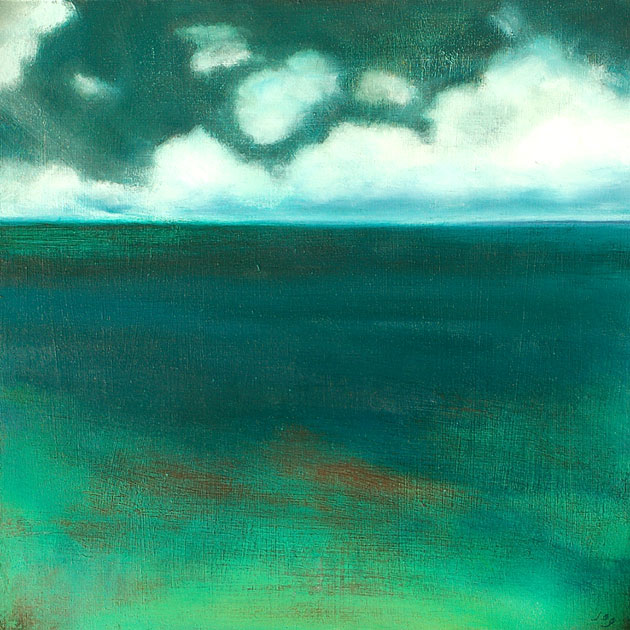
John O’Grady, “The Edge of the Deep Green Sea”  http://www.johnogradypaintings.com/the-edge-of-the-deep-green-sea-160/

John O’Grady, “The Edge of the Deep Green Sea”
http://www.johnogradypaintings.com/the-edge-of-the-deep-green-sea-160/

Posted in Neptune, Quotations | Tagged , , , , , , , , | 26 Comments

On Genius (3): Angels, Demons and Cult of Relics

Frida Kahlo, "Memory of the Heart"

Frida Kahlo, “Memory of the Heart”

As much as early Christians wanted to break ties with antiquity, aiming at redefining the concept of divine possession, their cult of angels and saints bore a striking resemblance to the worship of gods and goddesses of ancient Greece and Rome. The demon of Socrates was never really put to rest. What happened, instead was a mere replacement of the old terminology with the new one, while the underlying meaning remained strikingly similar. Saints and patrons replaced geniuses only in the name:

 “…gradually, in late antiquity, men and women transferred much of the language and longing previously reserved for the genius, daimon, and other invisible companions to the saint. The saint was the genius’s heir, watching over people and places alike and protecting their human charges from birth until death. Saints bore messages and prayers, interceding for the people before God.” (Darrin M. McMahon, “Divine Fury: A History of Genius,” p.41)

Ostensibly monotheistic, early Christianity with its rampant cult of saints could be likened to a polytheistic religion with its multitude of divine beings. Alongside saints, dangerous demons were firmly believed to lurk in every corner of the world, “laying traps of temptation, snares of iniquity and sin.”

Early Christians delighted in etymology. After Plato, they derived the word “demon” (daimon) from the Greek daêmôn, “knowing,” associated with demonic foreknowledge and omniscience. Demons had their luminous counterparts in Angels. Both had wings, both could appear “everywhere in a single moment.” McMahon writes that “saints were canonized as saints precisely because they resisted the demons and it was largely for this reason that the cult of angels generated such consternation in the early church.” Very early on, at Christian councils, invoking angels was deemed inappropriate and highly dangerous because it entailed a grave risk of facing a demon instead. Boasters such as the French priest Adalbert who announced that he had received “holy relics, a letter from Jesus, and revelations from the angels, with whom he claimed to be in regular contact” were vehemently condemned.

 Evelyn de Morgan, "Angel with Serpent"

Evelyn de Morgan, “Angel with Serpent”

Mikhail Vrubel, "Demon Seated"

Mikhail Vrubel, “Demon Seated”

It is quite striking to me that already in early Christianity direct contact with divinity was frowned upon or even condemned by church authorities. What seems to have been encouraged was blind acceptance and faith in the official dogma. The arduous cult of saints and their relics, however, apparently fulfilled the need of a more direct religious experience. As is true of everything, relic worship was already known in antiquity in relation to the cult of a hero, who was considered to be “olbios,” i.e. blessed:

 “…the cult hero is olbios, ‘blessed’, after he or she dies, and the worshipper of a cult hero can become olbios, ‘blessed’, by making mental contact with the earth that contains the corpse of the hero or even with a relic or simulacrum of the hero.”

Gregory Nagy, The Ancient Greek Hero in 24 Hours, Kindle Edition

In Christianity, however, the cult of the relics was “tied to concepts of wholeness, corporeal integrity, and the resurrection of the body,” as Holger A. Klein notices in his article “Sacred Things and Holy Bodies: Collecting Relics from Late Antiquity to the Early Renaissance.” The enormous popularity of relics continued well until the 16th century:

 “For more than a thousand years in Europe, all the important deeds of life were carried out under saints’ blessings, assured by the proximity of their relics. One did not plant crops, launch a ship, start a building, convene a gathering, give birth to a baby, or bury a relative without seeking to have the remains of saints physically nearby. As the special dead, saints were believed to be spiritual and invisible, but their power to heal, to bless, and to defend worked—or worked best—if they were materially and bodily present as relics.“

Andrew Butterfield, “What Remains”

What makes relics so fascinating is that they sanctify matter as “a medium of the divine,” or as a magic talisman of remembrance, Butterfield remarks. He goes on to explain:

 “Relics are an example of what James Frazer called ‘contagious magic.‘ Any thing that Jesus, Mary, or the saints touched was thought to retain the glow of sanctity, so items of their clothing, and objects from the life of Christ, particularly pieces of the True Cross, were also venerated as holy.“

The Stealing of St. Mark's Body, Chapel of San Clemente, Basilica of San Marco, 12th century (image via http://venice11.umwblogs.org/the-myth-of-st-mark/)

The Stealing of St. Mark’s Body, Chapel of San Clemente, Basilica of San Marco, 12th century (image via http://venice11.umwblogs.org/the-myth-of-st-mark/)

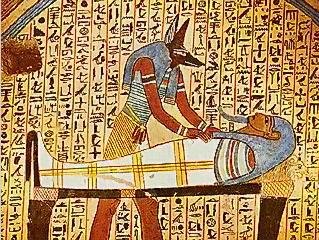
Physical objects are concrete, touchable, and as such they evoke a presence that is longed for. The relics were believed to ooze blood, milk, oil and water, to radiate light and give off perfume. It is worth remembering that in ancient Egypt, mummies were embalmed with resins and other sweet-smelling spices so that they would be acceptable to the deities. Anubis, a jackal-headed god associated with mummification, checked each newcoming mummy with his keen nose for the required “Odor of Sanctity.“

Anubis

Anubis

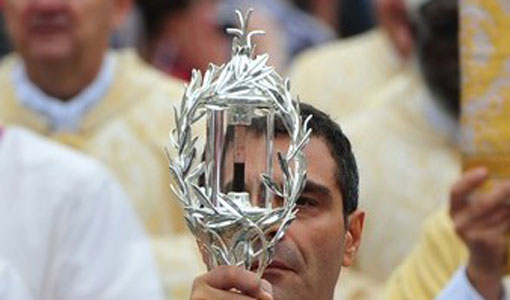
The vile containing the small amount of blood was drawn from the late Pope John Paul II after the attempt on his life on May 13, 1981. It was displayed for veneration for the first time on May 1, 2011, during his beatification.

The vile containing the small amount of blood was drawn from the late Pope John Paul II after the attempt on his life on May 13, 1981. It was displayed for veneration for the first time on May 1, 2011, during his beatification.


“Thomas Becket’s body was still on the cathedral floor when people from Canterbury came in and tore off pieces of his clothes and then dipped these pieces in his blood. They believed that they would bring them luck and keep evil away.“ Via http://www.historylearningsite.co.uk/thomas_becket.htm

“Thomas Becket’s body was still on the cathedral floor when people from Canterbury came in and tore off pieces of his clothes and then dipped these pieces in his blood. They believed that they would bring them luck and keep evil away.“ Via http://www.historylearningsite.co.uk/thomas_becket.htm

In the 16th century reformation started and Calvin declared with his typical sternness: “All flesh is dust … [and relics are] heaps of foolish trifles.” But in other parts of the world relics continued to be venerated as magical embodiment of a once-revered presence. Behold the Age of Reason. In the 19th century most rational scientists fell prey to what seems to be a common human predilection: endowing matter with spirit. The cult of genius focused on the brain. Mcmahon remarks:

 “And yet, what Hegel rightly perceived with his dialectical gaze was that even the phrenologists’ most reductive attempts to reduce mind to matter had the paradoxical effect of endowing matter with a strangely spiritual significance. By isolating genius above the shoulders, they made a totem of the skull. And by concentrating genius’s power in the brain, they made of its flesh a fetish that radiated with powerful allure. Behold the mystery of genius made manifest. Behold the secret of genius revealed.” (p. 139)

Einstein_brain_-_T.Harvey

Even our times are not free of relic worship. Once again Butterfield remarks with perspicacity:

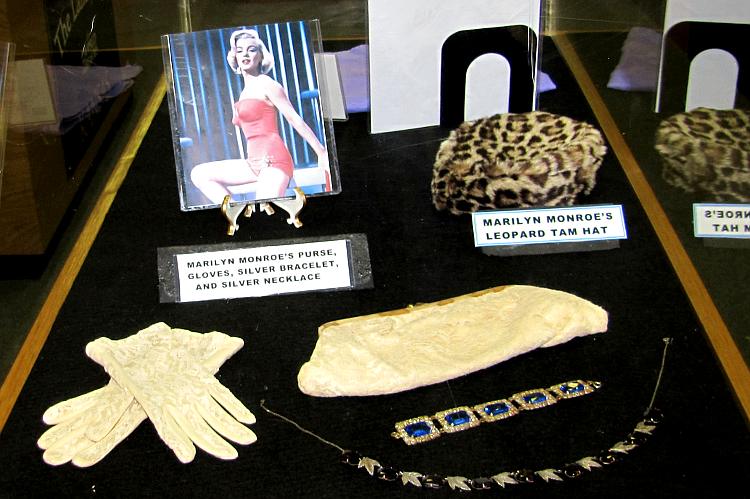
“And yet relics are, in one form or another, everywhere. We all have material objects that help freshen memory and recall emotion: locks of hair, baby shoes, heirlooms, and so on. There is no substitute for things of this kind. Nothing else provides the same experience or the same essential service. The intense interest in memorabilia is a version of this obsession. The property of stars and celebrities can generate intense longing, and also wild prices: two million dollars for Jimi Hendrix’s guitar..“

(also her chest x-ray fetched  $45,000 at an auction...)

(also her chest x-ray fetched $45,000 at an auction…)

The last witticism belongs to McMahon: “Einstein’s brain has since been digitized and is now available as an iPad app in 350 microscopic slides. For a mere $9.99, genius may be downloaded to your touchscreen and venerated in your home.”

Related posts:

On Genius (1)

On Genius (2): Genius in Antiquity

Posted in Genius | Tagged , , , , , , , , , , , , , , , , , , , | 15 Comments

“Light Breaks Where No Sun Shines” by Dylan Thomas

“Light breaks where no sun shines;

Where no sea runs, the waters of the heart

Push in their tides;

And, broken ghosts with glow-worms in their heads,

The things of light

File through the flesh where no flesh decks the bones.


A candle in the thighs

Warms youth and seed and burns the seeds of age;

Where no seed stirs,

The fruit of man unwrinkles in the stars,

Bright as a fig;

Where no wax is, the candle shows its hairs.


Dawn breaks behind the eyes;

From poles of skull and toe the windy blood

Slides like a sea;

Nor fenced, nor staked, the gushers of the sky

Spout to the rod

Divining in a smile the oil of tears.


Night in the sockets rounds,

Like some pitch moon, the limit of the globes;

Day lights the bone;

Where no cold is, the skinning gales unpin

The winter’s robes;

The film of spring is hanging from the lids.


Light breaks on secret lots,

On tips of thought where thoughts smell in the rain;

When logics dies,

The secret of the soil grows through the eye,

And blood jumps in the sun;

Above the waste allotments the dawn halts.”

ellaby_sun

Robert Ellaby, “Sun“

Posted in Poetry | Tagged , , , , , , , , , , , , , | 16 Comments

Awe-Inspiring Sculptures: “Night” by Michelangelo

1280px-Tomb_of_Giuliano_de'_Medici_(casting_in_Pushkin_museum)_by_shakko_03

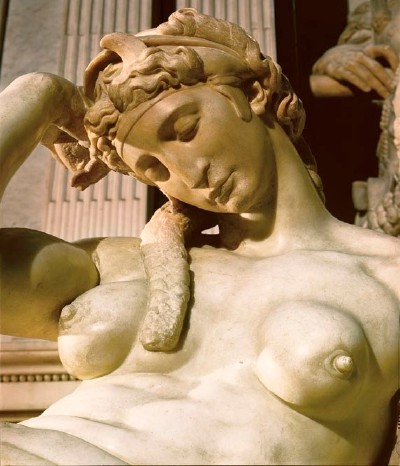
“Night” by Michelangelo was sculpted in white marble and put to rest on the tomb of Giuliano de Medici in San Lorenzo Church, Florence. Her attributes are an owl and a mask. I remember seeing the sculpture for the first time many years ago and having a powerful, visceral reaction to it. It was haunting, disturbing, arresting, extremely powerful. I still cannot look at her without feeling shaken to the core of my being. Her angelic face with the moon and star on the forehead is serene and lovely, yet her body is quite muscular, manly, contorted and nothing but inert. I learnt later that Michelangelo used to work with male models for female nudes. That may have been so, but that fact does not make the figure of the Night any less feminine for me. Looking at her today, I am thinking of Jung’s concept of Animus – the unconscious aspect of the feminine psyche – who at the highest stage of individuation is her psychopomp (i.e. guide of her soul). Alternatively, I think we can appreciate how Michelangelo captured the wholeness of the archetype of Night by showing that she who in myth arose from Chaos holds the totality of the opposites in herself.

There has been some controversy regarding her breasts which were called “ugly” by some and even “cancerous” by an oncologist. This author makes an excellent counter-suggestion:

“But why did Michelangelo make Night’s breasts like that?  He represented them as life-giving fruit, great stores of nourishment and fertility.  He turned down the “spigot”, as mothers do, to make it more accessible and alluring. The unusual relief is his characteristic way of giving it life and movement.”

via https://100swallows.wordpress.com/2009/01/31/night-by-michelangelo/

Nyx, the Greek goddess of the night, was a figure of exceptional power, feared by both gods and humans. In the Orphic Hymn to the Night she appears as the principle of all creation,

“Night [Nyx], parent goddess, source of sweet repose, from whom at first both Gods and men arose,
Hear, blessed Venus [Kypris], deck’d with starry light, in sleep’s deep silence dwelling Ebon night!
Dreams and soft case attend thy dusky train, pleas’d with the length’ned gloom and feaftful strain.
Dissolving anxious care, the friend of Mirth, with darkling coursers riding round the earth.
Goddess of phantoms and of shadowy play, whose drowsy pow’r divides the nat’ral day:
By Fate’s decree you constant send the light to deepest hell, remote from mortal sight
For dire Necessity which nought withstands, invests the world with adamantine bands.
Be present, Goddess, to thy suppliant’s pray’r, desir’d by all, whom all alike revere,
Blessed, benevolent, with friendly aid dispell the fears of Twilight’s dreadful shade.”

http://www.theoi.com/Text/OrphicHymns1.html#2

In her Mysteries of the Dark Moon, Demetra George refers to her as “Mother Night, in the form of a great black-winged spirit hovering over a vast sea of darkness.” Revered for her oracular powers, she ruled the Universe before Uranus took over and the era of patriarchal gods ensued. The magnificent sculpture by Michelangelo reminds us that, as Demetra George writes: “The wisdom of Black Mother Night, spanning Greek, Eastern, and Egyptian traditions, is that the preexisting nature of all life is a universally connected matrix of living energy whose first expression is as love.”

michelangelo-sculptures-32

Posted in Sculpture, The Night | Tagged , , , , , , , , , , , , , , | 31 Comments

The November Song of the Pleiades

Pleiades_by_CORinAZONe (1)

2 November, All Soul’s Day is a universal day of judgement:

“I believe this is the source of the Judgement of the Dead linked with the month of November, when the Pleiades are high in the night sky.  In the Halls of Amenti, Maat and Thoth weighed the souls of the dead against the feather of truth as did Archangel Michael on the day of judgement, All Soul’s Day, 2nd November.“

Olga Morales http://www.cosmicintelligenceagency.com/eclipse-gate-2012/

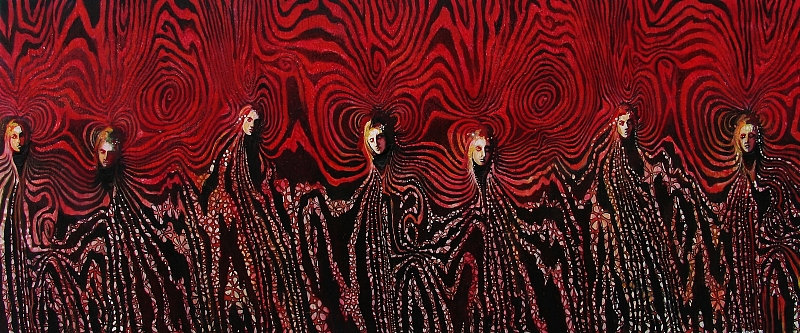
November is often called the month of the Pleiades because in this month the stars of the Celestial Serpent shine brightly from dusk till dawn. In esoteric lore and in myth, the Seven Sisters are referred to as the Seven Mothers of the World. Both Madame Blavatsky and Barbara Hand Clow, author of The Pleiadian Agenda, have associated the stars of the Pleiades with the Harmony of the Spheres and the creation of the universe by means of sound and vibration. According to Madame Blavatsky, quoted here after Munya Andrews, author of The Seven Sisters of the Pleiades, “it is the stars of Ursa Major acting in concert with the Pleiades that govern the various cycles of time, including the cyclical destruction and reconstruction of the cosmos.”

Elihu_Vedder_-_The_Pleiades,_1885

Elihu Vedder, “The Pleiades”

The Pleiades are also called the Seven Doves. I have recently realized that the Semitic word for ‘dove’ – ione, is related to ‘yoni’ and also to the Roman name of the goddess Hera – Juno. While “Juno” means a female genius, the Dove is a well-known symbol of Sophia (by some equated with the Holy Spirit) –an emanation of divine wisdom. Quite amazingly, the brightest star in the Pleiades cluster is Alcyone:

 “Many ancient traditions state that Alcyone was the central spiritual Sun that emits creative light, that which sends great teachers of light into the world.  It was believed to be the centre of the Universe around which our own solar system revolves but this idea is not supported by our current astronomers although in the 1850’s it was well accepted.  …  It is now ascertained that the Sun is also in motion, around some other and vastly mightier centre.  Astronomers are not fully agreed as to what or where that centre is.  Some, however, believe that they have found the direction of it to be the Pleiades, and particularly Alcyone. To the distinguished astronomer Prof. J.H. Maedler belongs the honour of having made this discovery.  Alcyone, then, as far as science can perceive, would seem to be the ‘midnight throne’ in which the whole system of gravitation has a central seat …

Alcyone was called Al Wasat, the Central One by the Arabs, and Temennu, the Foundation Stone by the Babylonians.

… The ancient name Alcyone, now so celebrated in the annals of science, is evidently of Oriental origin, having the Arabic and old Hebrew article Al, prefixed to its root Cyon, centre.  Its meaning, centre, foundation, anticipates one of the greatest achievements of modern astronomy, the discovery that to this point, this centre, gravitates the whole magnificent arrangement of the stars called the Galaxy, to which our sun belongs.’“

Olga Morales http://www.cosmicintelligenceagency.com/eclipse-gate-2012/

To that etymology, I think we can also add my yoni/Juno association.

il_fullxfull.275460985

Emily Balivet, “The Pleiades – Seven Sisters”

But how exactly did the Pleiades bring the visible universe about? One utterly fantastic esoteric theory states that a race of “Interstellar Serpents“ came to Atlantis from the Pleiades:

 “According to Dhyani Ywahoo and the records of Cherokees, these androgynous Serpents are known as the ‘sacred seven,’ and are said to have travelled from the universal seat of Divine Mind, the Pleiades, in order to instil within developing humankind the spark of the individuated mind. Once on the Earth the Pleiadian missionaries mated with the human population and their progeny spread throughout Atlantis.’”

Olga Morales http://www.cosmicintelligenceagency.com/eclipse-gate-2012/

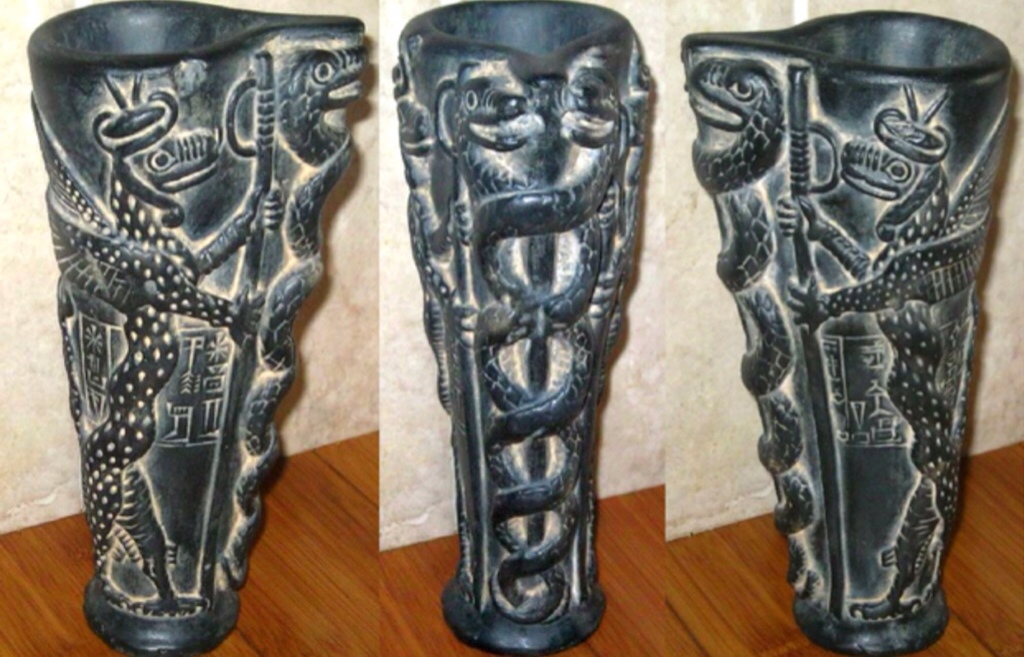
Are the serpents twining around the Caduceus a representation of the Seed Serpents of the Pleiades? The earliest known representation of the Caduceus is Ningishzida – the Sumerian underworld deity, known as the Lord of the Good Tree. Interestingly, in Sumerian myth the winged and horned snake/dragon Ningishzida was both a guardian of the portal to the Underworld and the guardian of the Highest Heaven of Anu. The universal (not only Biblical) symbol of the Tree of Life which as axis mundi connects the heavens, earth and the underworld, has always been associated with the snake of wisdom entwined in its roots:

ningishzuda

“The Underworld aspect of Nin-ĝišzida was serpentine, the roots of the good tree that he represented, the sign for tree root, ‘arina’, which consists of two crossed signs for serpent (MUŠ), this must be understood as a vast underground network and source of power.“

Via http://traveltoeat.com/ishtar-and-tammuz-ram-in-a-thicket/

The Pleiadian Celestial Serpent symbolically echoes the coiling serpentine roots of the Tree of Life. Modernity/patriarchy has severed the connection between heaven, earth and the underworld, uprooting us spiritually by severing the connection with our serpentine, moist roots. An ancient Sumerian hymn to Ningishzida reads:

“Lord, your mouth is that of {a pure magician} … a snake with a great tongue,

Your holy word is known to them that know it, but is unknown to them that do not know it.

You fall upon the river as a flood-wave, you rise in the fields as a devastating flood.“

Via http://etcsl.orinst.ox.ac.uk/cgi-bin/etcsl.cgi?text=t.4.19.2#

We desperately need to hear the healing rain song of the Pleiades (water nymphs). Their singing is about the new waters of life flooding our dried out spiritual landscape.

William_Blake_Eve_Tempted_by_the_Serpent

William Blake, “Eve Tempted by the Serpent”

Posted in The Pleiades | Tagged , , , , , , , , , , , , , , , , | 19 Comments

Eros and Thanatos

I. The Way of the West

“… each organism only lives through contact with other matter, assimilation, and contact with other life, which means assimilation of new vibrations, non-material. Each individual organism is vivified by intimate contact with fellow organisms: up to a certain point.

So man. He breathes the air into him, he swallows food and water. But more than this. He takes into him the life of his fellow men, with whom he comes into contact, and he gives back life to them. This contact draws nearer and nearer, as the intimacy increases. When it is a whole contact, we call it love. Men live by food, but die if they eat too much. Men live by love, but die, or cause death, if they love too much.

There are two loves: sacred and profane, spiritual and sensual.

In sensual love, it is the two blood-systems, the man’s and the woman’s, which sweep up into pure contact, and almost fuse. Almost mingle. Never quite. There is always the finest imaginable wall between the two blood-waves, through which pass unknown vibrations, forces, but through which the blood itself must never break, or it means bleeding.

In spiritual love, the contact is purely nervous. The nerves in the lovers are set vibrating in unison like two instruments. The pitch can rise higher and higher. But carry this too far, and the nerves begin to break, to bleed, as it were, and a form of death sets in.

But as a matter of fact this glowing unison is only a temporary thing, because the first law of life is that each organism is isolate in itself, it must return to its own isolation.

Yet man has tried the glow of unison, called love, and he likes it. It gives him his highest gratification. He wants it. He wants it all the time. He wants it and he will have it. He doesn’t want to return to his own isolation. Or if he must, it is only as a prowling beast returns to its lair to rest and set out again.”

D.H. Lawrence, “Edgar Allan Poe”
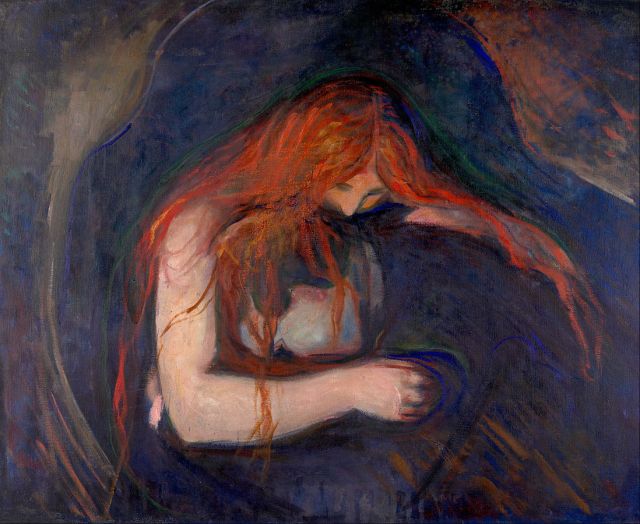
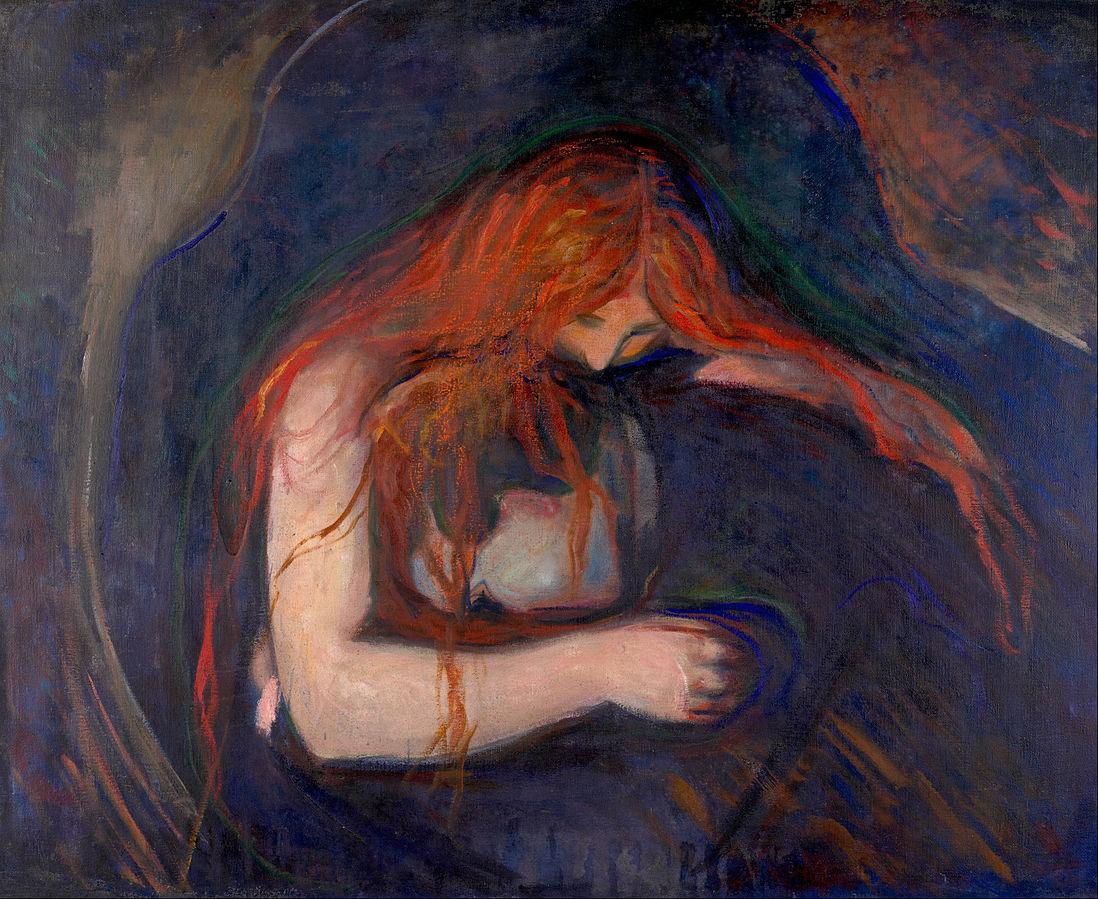
Edvard_Munch_-_Vampire_-_Google_Art_Project

Edward Munch, “Vampire”

II. The Way of the East

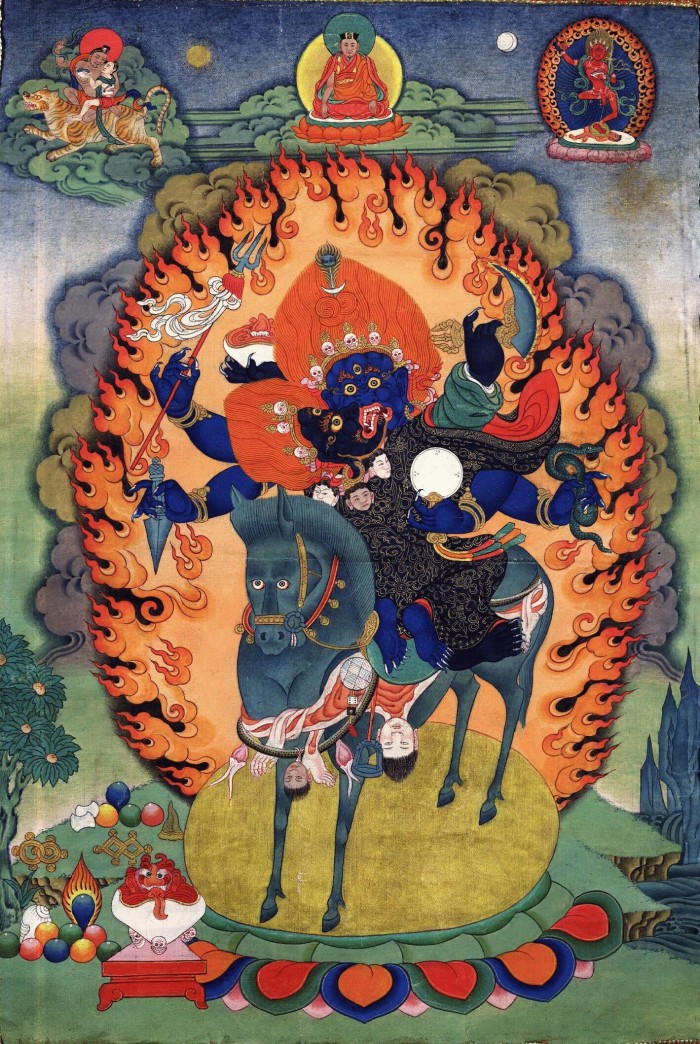
“Black Coat holds the skull-cup

containing the life-blood of the ego and

the chopping-knife which destroys all

hindrances. The cut-off heads worn as a

garland around his neck signify the conquest

of all enlightened mental functions.

When he appears in union sitting with

his consort Radiant Goddess , it denotes the

highest level of insight. They then ride an

indestructible mule through oceans of

blood. In her four hands, Radiant Goddess

holds a mirror showing the world, a

diamond dagger … cutting

the disturbing feelings, a trident showing

her awakened inner energies and a snake-

lasso with which she catches all disturbing

infuences.”

Invocation of the Protector Black Coat: Diamond Way Buddhism
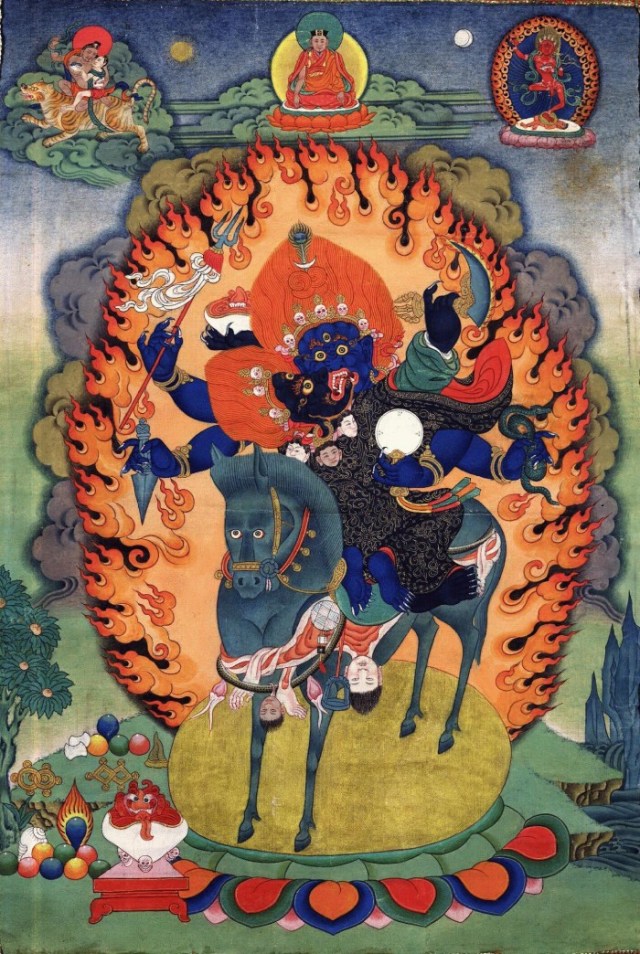
Black-Coat-Radiant-Goddess-e1298995755474

III. The Way of Poetry

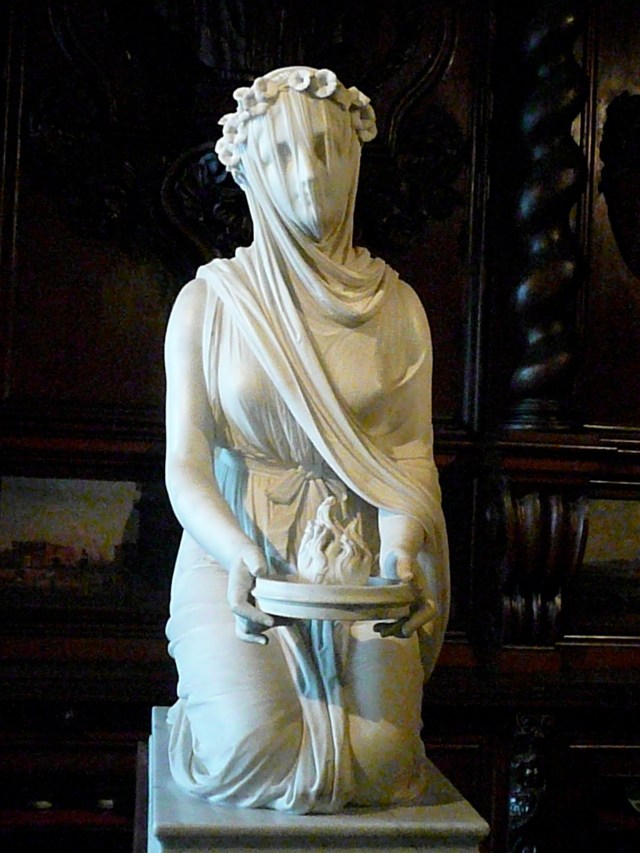
SACRIFICE, by Reiner Maria Rilke

Translated by Edward Snow

“How my body blooms from every vein

more fragrantly, since I first saw you;

look, I walk slimmer now and so much straighter,

and you only wait -: who are you then?


See: I feel how I’m moving away,

how I’m shedding my old life, leaf by leaf.

Only your smile stands like pure stars

over you and, soon now, over me.


Everything that from my childhood years

still floats namelessly and gleams like water:

I will christen it yours on the altar,

which your hair has set on fire

and your breasts have gently wreathed.”
monti

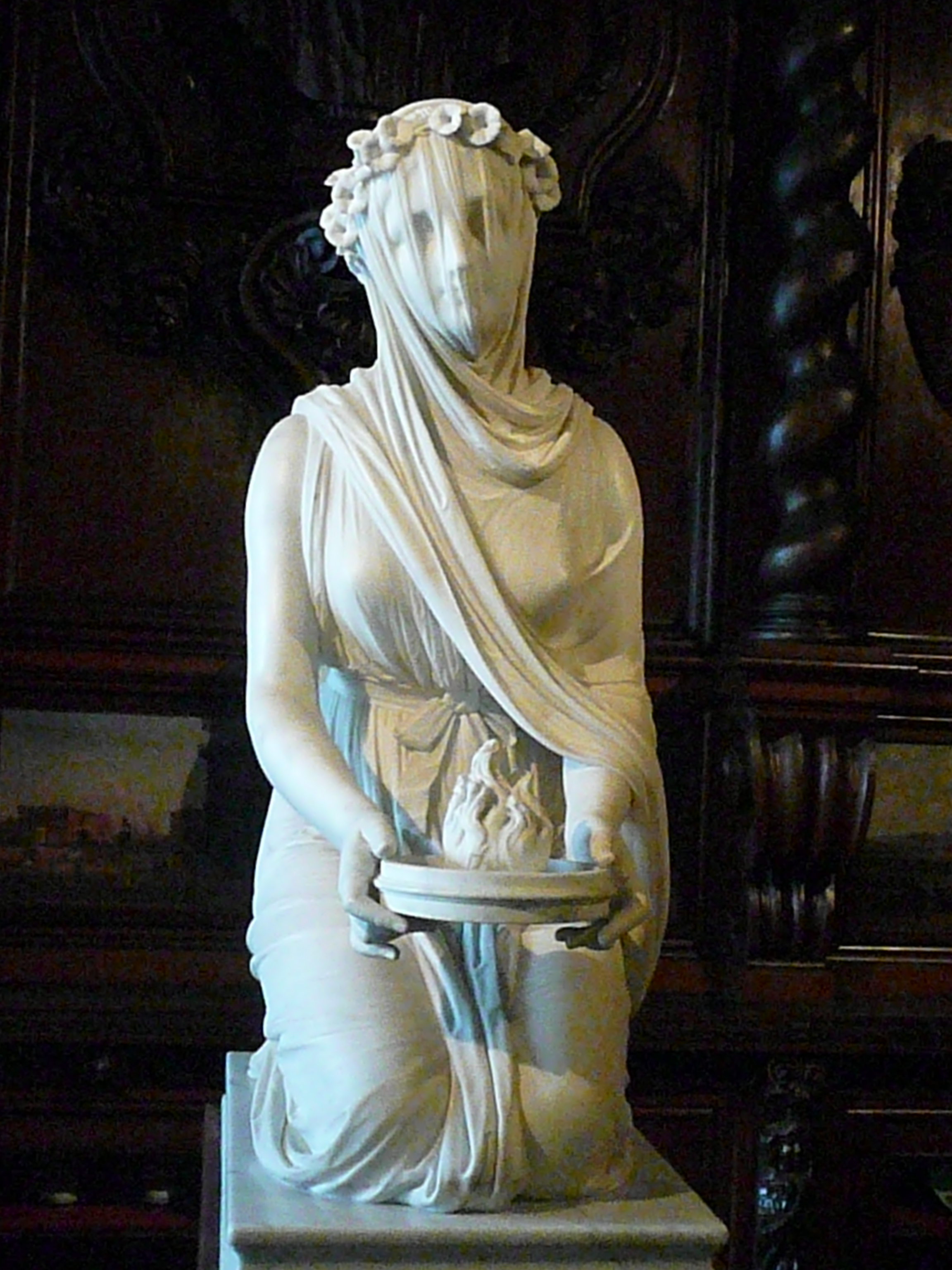
Raffaele Monti, “Vestal Virgin”
Posted in Quotations | Tagged , , , , , , , , , | 17 Comments

Black Blacker than Black

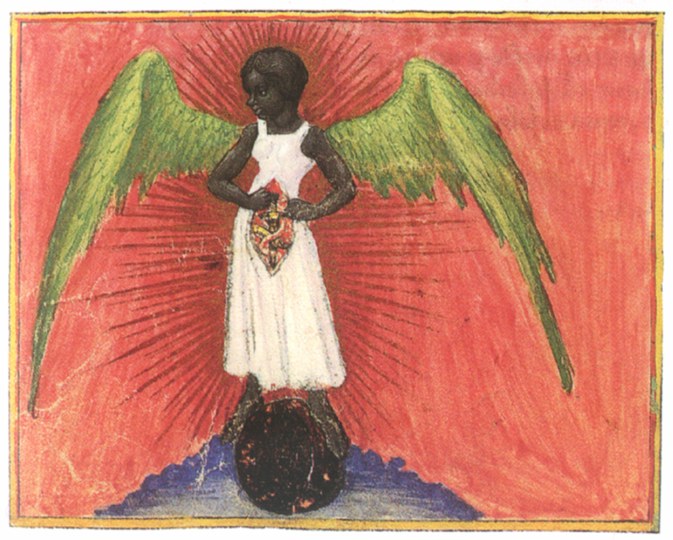
Aurora_consurgens_blackangel

Illustration of a black angel found in Aurora consurgens

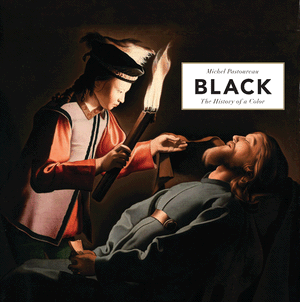
Black: The History of a Color, by Michel Pastoureau is one of the most fascinating books I have read in recent months. There are moments in life when the need of comforting, enveloping blackness predominates all other needs; this is where I am right now. I was intrigued to learn from Pastoureau’s book that it was the imperial Rome that started to define that colour black in negative terms. Previously, it was a color much revered:

black

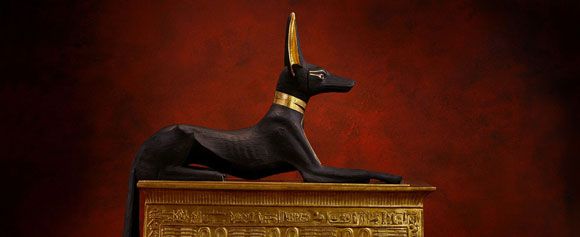
“As the color of night and darkness, as the color of the bowels of the earth and the underground world, black is also the color of death. From the Neolithic, black stones were associated with funeral rites, sometimes accompanied with statuettes and objects very dark in color. The same is true in the historical periods throughout the Near East and in pharaonic Egypt. Yet this chthonic black is neither diabolical nor harmful. On the contrary, it is linked to the fertile aspect of the earth; for the dead, whose passage to the beyond it ensures, it is a beneficial black, the sign or promise of rebirth. That is why among the Egyptians the divinities related to death were nearly always painted black, like Anubis, the jackal-god who accompanies the dead to the tomb; Anubis is the embalmer-god and his flesh is black.

au_ar_tutanchamun_anubis_c_semmel-a.m.v.sarosdy_580x237

Anubis, the Tomb of Tutenkhamun reconstructed at a Berlin exhibition

 Similarly, the deified kings and queens, ancestors of the pharaoh, were generally represented with black skin, a color that was not the least bit depreciatory. In Egypt the negative, suspect color was red rather than black: not the admirable red of the solar disc as it rose or set, but the red of the forces of evil and the god Seth, murderer of … Osiris and a great destructive force.”

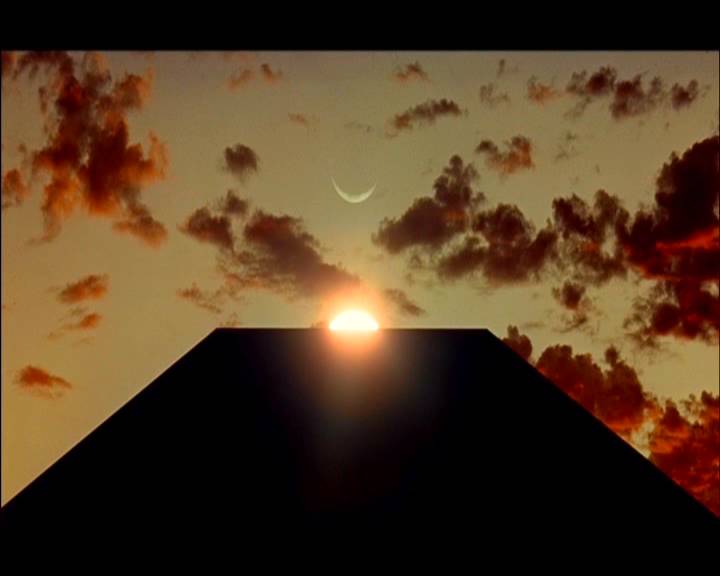
I happened to watch A Space Odyssey 2001 yesterday. I was quite captivated with Kubrick’s ingenious use of the colour black symbolism. First the movie starts with a long shot of a completely dark screen (there are also similar intermissions throughout the movie), then there are amazing long shots of the dark mantle of night enveloping our little fragile Earth like a powerfully protective Black Coat – an emblem of Mahakala, the powerful protector of Dharma in Buddhism; and finally, most importantly, a mysterious black monolith mystifies both our humanoid ancestors and our technologically evolved human successors.

monolith1

The black monolith turns out to be a force equally primal, overpowering and mystifying regardless of the level of technological development of those confronted with it. The people of the future in Kubrick’s vision are startlingly dry and emotionless, though. I was perplexed, and quite outraged, to be honest, that a great space expedition of what for Kubrick was a distant future did not include any women. There were five men on the ship and a computer called Hal, who was the most emotional member of the crew. I see the black monolith as a representation of the shunned feminine, which of course does not exhaust its rich symbolism. As a meaningful synchronicity, a strikingly similar black monolith jumped to me yesterday from the pages of Jung’s Red Book:

Red Book Image 2

In the part of the Red Book entitled “Descent into Hell in the Future“ we find the following fascinatingly dark passage:

 “I see a gray rock face along which I sink into great depths. I stand in black dirt up to my ankles in a dark cave. Shadows sweep over me. I am seized by fear, but I know I must go in. I crawl through a narrow crack in the rock and reach an inner cave whose bottom is covered with black water. But beyond this I catch a glimpse of a luminous red stone which I must reach. I wade through the muddy water. The cave is full of the frightful noise of shrieking voices. I take the stone, it covers a dark opening in the rock. I hold the stone in my hand, peering around inquiringly. I do not want to listen to the voices, they keep me away. But I want to know. Here something wants to be uttered. I place my ear to the opening. I hear the flow of underground waters. I see the bloody head of a man on the dark stream. Someone wounded, someone slain floats there. I take in this image for a long time, shuddering. I see a large black scarab floating past on the dark stream. In the deepest reach of the stream shines a red sun, radiating through the dark water. There I see-and a terror seizes me-small serpents on the dark rock walls, striving toward the depths, where the sun shines. A thousand serpents crowd around, veiling the sun. Deep night falls. A red stream of blood, thick red blood springs up, surging for a long time, then ebbing. I am seized by fear. What did I see?”

red-book-images-ch-5

He saw the Stone amidst blackness.

The nigredo or blackness, the initial stage of the alchemical process, is the original dark chaos (massa confusa) with all the elements swirling around together or it may also indicate a state of separation, in which the elements are in separated condition. If the latter is the case, a union of opposites is called for: male and female lay together to produce a third. This third product of their union (lesser coniunctio) must die, leading to a period of mourning: the nigredo. The next stage is the washing which “leads direct to the whitening (albedo), or else the soul (anima) released at the ‘death‘ is reunited with the dead body and brings about its resurrection, or again the ‘many colours‘ (omnes colores) or ‘peacock’s tail‘ (cauda pavonis), lead to the one white colour that contains all colours. At this point the first main goal of the process is reached, namely the albedo … highly prized by many alchemists as if it were the ultimate goal. It is the silver or moon condition, which still has to be raised to the sun condition. The albedo is, so to speak, the daybreak, but not till the rubedo is it sunrise. The transition to the rubedo is formed by the citrinitas, though this… was omitted later. The rubedo then follows direct from the albedo as the result of raising the heat of the fire to its highest intensity. The red and the white are King and Queen, who may also celebrate their “chymical wedding“ at this stage.“ (C.G. Jung, Psychology and Alchemy, CW vol. 12, pp. 231-232).

Aurora-dragon (1)

Depiction of the Ouroboros found in Aurora consurgens 

The arrangement of the stages does not mean that the goal of every alchemist was the white and red tincture or the hermaphrodite that contains both. Some of them defined their goal as lapis philosophorum (philosopher’s stone), which was very ambiguously defined: it was identified with prima materia as the means of producing the gold, but the gold was also identified with the philosopher’s stone. This ambiguity is an extraordinary value of alchemy to me, which I see in the wisdom and illumination achievable in every stage of the process. I choose to rest in Black for now:

 “It is then the black earth in which the gold of the lapis is sown like the grain of wheat … It is the black, magically fecund earth that Adam took with him from Paradise, also called antimony and described as a ‘black blacker than black.‘“

C.G. Jung, Psychology and Alchemy, CW vol. 12, p. 327

image018

Support my blog

If you appreciate my writing, consider donating and make my day. Thank you in advance.

$1.00

Posted in Alchemy, Black | Tagged , , , , , , , , , , | 34 Comments

Three Thoughts for the Eclipse: Light Meets Life

TheBathKarras (1)

Karena A Karras, “The Bath”

I.”The Zodiac & the Dying/Rising God
While the daily rising and setting of the sun told the tale of Atum -Re’s deadly boat journey, the moon’s monthly crescendo and diminuendo portrayed the myth of Inanna’s death and rebirth.  But, after she rose from the Underworld, the goddess Inanna was warned that, if she hoped ‘to escape the pit alive, she must leave another who shall wait in her place.’

Henceforth, it was Damuzi, her shepherd-king and consort that descended into the dark Underworld.  Though he passed through the same Mythologem of Death and Rebirth as Inanna, Damuzi descended, died and rose again yearly, with the seasonal cycle of rain and drought. Like Osiris in Egypt, Attis in Syria, and Baal in Canaan, the ‘Son of the Abyss’ became a new Iconologue of Time’s Measure, marking the span of the sacred year.
The dying/rising god marked the passage of a year by mythologizing the signs that recurred in the earth’s fertile cycle.  Like the fertile seed at the time of the harvest, Damuzi was seized, thrashed and cut to pieces … And, like the seed buried under the earth so as to gestate and sprout again, he was dragged into the Underworld, where he remained – until the re-emergence of the crops themselves embodied his resurrection …

Each time the fields manifest new growth, the god of vegetation also became manifest.  Through the image of the dying/rising god, the intervals of the fertile year were measured and, through his earthly epiphany, that span was rendered sacred.  …
Meanwhile,  a fascinating series of images have come down to us from Sumerian culture …  This array of images, when taken together, also symbolizes the yearly cycle. From the vantage point of the spiraling ziggurats, the Sumerian priesthood were able to discern a multitude of ancient images in the night-sky.

Eventually, they learned to read the heavens like a book – which is what they called astrology, Shitir Shame, ‘The Book of Heaven.’ By following the path of Sin, the moon, over the course of the year, they recognized twelve celestial figures: Luhunga ‘the Hired Man’ (Aries), Guanna ‘the Bull of Heaven’ (Taurus), Mastabbagalgal ‘the Great Twins’ (Gemini), Allul ‘the Crab’ (Cancer), Urgula ‘the Lion’ (Leo), Absin ‘the Furrow’ (Virgo), Zibanitum ‘the Scales’ (Libra), Girtab ‘the Scorpion’ (Scorpio), Pabilsag ‘the Centaur’ (Sagittarius), Sahurmasku ‘the Fish-tailed Mountain Goat’ (Capricorn), Gula ‘the Great’ (Aquarius) and Kummes ‘the Tails’ (Pisces). Together, these twelve images formed, what the Greeks called, ‘the wheel of the Zodiac’ (from zôé, life, zôidion, small figure, and kyklos, circle or wheel, giving us zodiakos ‘the wheel of life’.)

Thus, in Mesopotamia, there were two iconologues to measure the passage of a year, one celestial  and one terrestrial.”

Caruana, Enter through the Image: The Ancient Image Language of Myth, Art and Dreams, pp. 75-76

zodiac

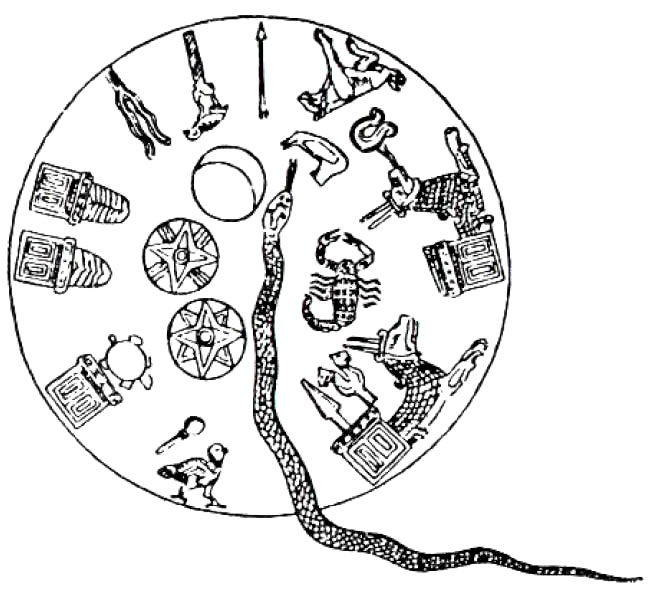
“Almost two thousands years before the circular zodiac of Bet-Alpha, Near Eastern rulers, especially in Babylon, invoked their Gods on treaty documents; boundary stones (Kudurru) were emblazoned with the celestial symbols of these Gods – planets and zodiacs – within the heavenly circle, embraced by an undulating serpent that represented the Milky Way” (via http://www.bibliotecapleyades.net/sitchin/whentimebegan/whentimebegan07.htm)

II.“The Moon … represents all raw materials, all elemental or psychic energies not yet organic or individuated. But it is not only the inorganic as such. It is the inorganic striving to become organized. It is the ‘woman’ yearning to be fecundated and to become a mother, longing for her ‘home’. It is not chaos; but rather, the response of chaos to light; an unsteady, changeful, moody response, now waxing, then waning — yet it is light nevertheless; as much of light as the resurgent past may mirror and reflect. And the Earth and all living things thereon are the temples where the song of light and the song of life resound. Light gives to men the will to be whole and integrated. Life gathers their chaotic soul-energies, churns them up, dissolves and boils them in the alchemical vessel in which may be generated the gold of consciousness and of individual selfhood.”

Dane Rudhyar, New Mansions for New Men: A Spiritual Interpretation of Astrology in the Light of Universal Symbolism http://khaldea.com/rudhyar/nmnm/nmnm_moon.php

mundus-subterraneus-kircher-moon-phases

III.“The Goddess is the Encircler, the Ground of Being; the God is That-Which-Is-Brought-Forth, her mirror image, her other pole. She is the earth; He is the grain. She is the all encompassing sky; He is the sun, her fireball. She is the Wheel; He is the traveler. He is the sacrifice of life to death that life may go on. She is the Mother and Destroyer; He is all that is born and is destroyed.”

Starhawk, The Spiral Dance: A Rebirth of the Ancient Religion of the Goddess: 20th Anniversary Edition, p. 72

mother-goddess-breatfeeding

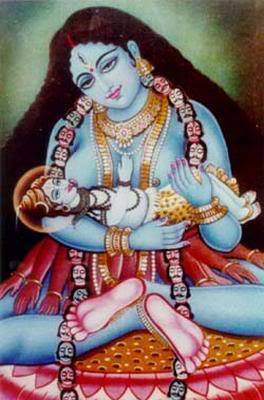
Goddess Kali as Great Mother

Posted in Quotations | Tagged , , , , , , , , , , , | 21 Comments

Esse Est Percipere (To Be Is to Perceive)

1.“…he [William Blake] did everything he could to make his figures lose substance, to become transparent and indeterminate one from the other, to defy gravity, to be present but intangible, to glow without a definable surface, not to be reducible to objects.”

John Berger, “Ways of Seeing”

2.“’Mental things,’ Blake declared, ‘are alone Real. What is Called Corporeal Nobody Knows of its dwelling Place; it is in Fallacy & its Existence is Imposture.’”

“’I question not my Corporeal or Vegetative Eye any more than I Would Question a Window concerning a Sight.’”

Leopold Damrosch, “Symbol and Truth in Blake’s Myth”

(c) The Fitzwilliam Museum; Supplied by The Public Catalogue Foundation

William Blake, “An Allegory of the Spiritual Condition of Man”

Posted in Painting | Tagged , , , , , , , , , | 20 Comments

Education on Beauty

education-of-the-virgin

Georges de la Tour, “Education of the Virgin”
“We spend the first year of a child’s life teaching it to walk and talk and the rest of its life to shut up and sit down. There’s something wrong there.”
Neil de Grasse Tyson

When you are chosen to attend Hogwarts School of Witchcraft and Wizardry, an owl shows up with a letter informing you that you are the chosen lucky one. It does not matter what background you come from, however humble – the letter will inevitably arrive at your doorstep if you show magical abilities. It does not matter either who your parents were – whether non-magical people or wizards and witches themselves – you will be admitted only on your own merit. The following two quotes are only seemingly similar – the first relates to Ivy League colleges, the second to Hogwarts.

 1.“The physical form of the university—its quads and residential colleges, with their Gothic stone façades and wrought-iron portals—is constituted by the locked gate set into the encircling wall. Everyone carries around an ID card that determines which gates they can enter. The gate, in other words, is a kind of governing metaphor—because the social form of the university, as is true of every elite school, is constituted the same way. Elite colleges are walled domains guarded by locked gates, with admission granted only to the elect. The aptitude with which students absorb this lesson is demonstrated by the avidity with which they erect still more gates within those gates, special realms of ever-greater exclusivity—at Yale, the famous secret societies, or as they should probably be called, the open-secret societies, since true secrecy would defeat their purpose. There’s no point in excluding people unless they know they’ve been excluded.”

William Deresiewicz, “The Disadvantages of an Elite Education

branford-gate

Yale old Campus and Branford College

 2.“The school has numerous charms and spells on and around it that make it impossible for a Muggle  (i.e. a non-magical person) to locate it. Muggles cannot see the school; rather, they see only ruins and several warnings of danger.”

Source: Wikipedia

harry-potter

I think the open-secret approach of Ivy League colleges is a sad aberration and bespeaks spiritual emptiness of these places. There is no sacred knowledge guarded there. Recently, I have read a fascinating essay by William Deresiewicz about an elite education in the USA. The main idea proposed by the author is that an elite education in Ivy League colleges trains student to be nothing more than “excellent sheep,” whose entire sense of self is “built around their ability to succeed.” Such expectations feed conformity and mediocrity, but paradoxically – also a vast sense of superiority and self-congratulation:“We were ‘the best and the brightest,’ as these places love to say, and everyone else was, well, something else: less good, less bright. … I never learned that there are smart people who don’t go to elite colleges, often precisely for reasons of class.” The most important point that the author makes is that we tend to forget that academic achievement does not translate into objective superiority. Deresiewicz ironically remarks that getting through the gate may be extremely difficult but once you are in, the old-boy network will keep you in at all costs: “Not the most abject academic failure, not the most heinous act of plagiarism, not even threatening a fellow student with bodily harm—I’ve heard of all three—will get you expelled.” Once you are in the club, you will stay in the club and as a member of the elite you can always count on “another extension—a bailout, a pardon, a stint in rehab—always plenty of contacts and special stipends—the country club, the conference, the year-end bonus, the dividend.”

harvard-university-canteen2

Harvard University Canteen

Deresiewicz muses about the true purpose of education, which, according to him, is “to make minds, not careers.” He says: “Only a small minority have seen their education as part of a larger intellectual journey, have approached the work of the mind with a pilgrim soul.” He emphasizes the need to rebel, to go into spiritual exile, to distance yourself from the system and not conform to it – by being a seeker, not a thoroughbread. Instead, Ivy Leage hopefuls:

 “Long before they got to college, they turned themselves into world-class hoop-jumpers and teacher-pleasers, getting A’s in every class no matter how boring they found the teacher or how pointless the subject, racking up eight or 10 extracurricular activities no matter what else they wanted to do with their time.”

A very similar reflection on modern depersonalized education I have found in Dane Rudhyar’s Directives for New Life:

 “The entire process is career-conscious and profit-oriented. It is ‘functional’, of course, in an institutional sense; but this means that the goal is to feed our various institutions (business, professions, government bureaucracy) instead of individual persons. One used to speak of army-recruits as cannon-fodder; our schools seek to produce machine-fodder for the artificial mechanisms of our corporate state.”

pink-floyd-wall kids

Pink Floyd, The Wall Movie

Although Deresiewicz focuses on elite schools, I think we can safely say that the almost entire system of education is there to “produce machine-fodder for the artificial mechanisms of our corporate state.”  Yes, Ivy League colleges educate the elites, other colleges lower-rank employees, but what is more significant is that neither nourishes or encourages one to look within, follow one’s true calling or just wait and “loafe and invite your soul.” In short, imagination is banned if the chief orientation of educational institutions is to produce efficient workforce. As C.G. Jung remarked:

 “For everyone whose guiding principle is adaptation to external reality, imagination is . . . something reprehensible and useless. And yet we know that every good idea and all creative work are the offspring of the imagination, and have their source in . . . infantile fantasy. . . . The dynamic principle of fantasy is play, a characteristic also of the child, and as such it appears inconsistent with the principle of serious work. But without this playing with fantasy no creative work has ever yet come to birth. The debt we owe to the play of imagination is incalculable.

C.G. Jung, “Psychological Types,” quoted after “Education and Imagination: Post-Jungian Perspectives”

education

wingardiumleviosa

Rudhyar also emphasizes that enriching education needs to stir the imagination as well as should be “a way of periodical rebirth in consciousness.” In his essay “The Education of the Soul: The Platonist Tradition and the Ordering of Knowledge,” Brian K. Etter reminds us that the true object of knowledge is to have a vision of beauty as a whole, which is hard to obtain in modern education, “fragmented into jealously guarded disciplines and approached by means of a smorgasbord of courses.”  He quotes Marsilio Ficino on Beauty: “Beauty is a certain act or ray from it penetrating through all things: first into the Angelic Mind, second into the Soul of the whole, and other souls, third into Nature, fourth into the Matter of bodies” and adds:

 “The sciences, the arts, history, and philosophy are the steps toward knowledge of Beauty in itself. They constitute a vision of liberal education that is not utilitarian, but whose value must be understood precisely through the moral concept of nobility that is the end of such an education. In embracing the concept of beauty or nobility, liberal education affirms the value of life itself.”

F15.1Kheiron

Chiron tutoring the boy Achilles, Roman fresco from Pompeii


Posted in Education | Tagged , , , , , , , , , , , , | 28 Comments