Images of the Zodiac: Contemplating Libra

Image

Johfra Bosschart, Libra

 “…to know how to think with emotions and to feel with intellect…”

Fernando Pessoa

“Let your judgements have their own quiet, undisturbed development, which must, like all progress, come from deep within, and cannot in any way be pressed or hurried.”
Rainer Maria Rilke, Letters to a Young Poet

We started our visual journey through the Zodiac with Aries, and now we arrive at the point opposite the Arian instinctual realm and we encounter an inanimate object – the scales (the only non-living entity in the Zodiac). Aries just acts, Libra, on the other hand, judges, reflects and only then proceeds to make a choice. As a matter of fact, in early Mesopotamian  astrology the name Libra was not even used: the sign was merged with that of Scorpio. “It is as though our noble faculty of judgement emerged from something much older, more archaic and more primitive,” comments Liz Greene in The Astrology of Fate. Cirlot adds an interesting observation in his Dictionary of Symbols:

… the scales has two tendencies, symbolized by the two symmetrically disposed pans, one tending towards the Scorpion (denoting the world of desires) and the other towards the sign of Virgo (sublimation).

CHAOS AND ORDER

Looking at this image of Libra I canot help thinking of an air bubble formed on the surface of the ocean of tar. Out of the four corners of the painting black lava threatens to suck it back into the abyss. The order is extracted out of chaos and appears very delicate, fragile and temporary. The harmony, balance and symmetry are achieved at a great expense and only for a little while. “You must have chaos within you to give birth to a dancing star,” said Nietzsche once and I think this quote has a lot to do with Libra. In the painting you can actually see a beautiful seven-pointed star between Hathor’s horns; seven being the number of perfect order and the reconciliation of spirit (three) and matter/earth (four). According to the Bible, the world was created in seven days.  In number seven divine order unites with the earthly order.

THINKING AND FEELING

Johfra focuses on the archetypal Libran balance between head ad heart, intelligence and feeling. In Jungian psychology, the thinking function forms an opposition to and compensates the feeling function. Also in the Kabbalah, the sephira Hod that rules the intellect stands opposite Netsah (feeling), which is placed at the bottom of the pillar of mercy. In the painting, the feeling function is represented by the goddess Hathor (she stands for the goddess Venus, who rules the sign Libra), while the thinking function is represented by the ibis-headed Thoth, the Egyptian counterpart of the Roman god Mercury and the Greek Hermes. Jung had a very specific understanding of the concept of feeling, demonstrated in the following passage from The Psychological Types:

Feeling is primarily a process that takes place between the ego and a given content, a process, moreover, that imparts to the content a definite value in the sense of acceptance or rejection (‘like’ or dislike’); … Feeling therefore is an entirely subjective process. … Hence feeling is also a kind of judging, differing, however, from an intellectual judgement, in that it does not aim at establishing an intellectual connection but is solely concerned with the setting up of a subjective criterion of acceptance or rejection. … When the intensity of feeling is increased an affect results, which is a state of feeling accompanied by appreciable bodily innervations. Feeling is distinguished from affect by the fact that it gives rise to no perceptible physical innervations, i.e. just as much or as little as the ordinary thinking process. … just as thinking marshals the conscious contents under concepts, feeling arranges them according to their value.

This passage shows the essence of Libran judgement: it can be based on objective intellectual criteria or on a subjective value system.  I think it explains very well that Libran ‘feeling’ has an airy, rational quality, which is very different from a common affect, which in turn has a distinct physiological feel.

THE SCALES OF MAAT

The pivotal symbol of the whole painting are the scales: the left one with the feather of Maat, the right one with the heart. The mythology of Libra has first and foremost Egyptian roots. The concept of maat was central to the Egyptian philosophy. It signified Order. The following quotation comes from the book Arts and Humanities through the Eras: Ancient Egypt, edited by Bleiberg and others:

The Egyptian philosophical view of existence was based on the idea that all existence was either orderly or chaotic. Order was called maat while chaos was called isfet. Maat encompassed the physical world,political conditions, and ethical conduct. In the physical world maat meant that the sun rose and set in a regular pattern. Maat also meant that the Nile flooded Egypt on a regular schedule and provided fertility to agricultural fields. In politics, maat meant that the true king sat on the throne and ensured order within Egypt. In Egyptian thought, maat depended on correct personal conduct. In fact correct personal conduct ensured loyalty to the king, which, in turn, supported an orderly physical world. For individuals, maat also meant telling the truth, and dealing fairly with others in addition to obedience to authority. Ultimately an individual who supported maat through his actions could enter the afterlife as a reward.

…the Egyptians believed that the heart was the organ of thought. Yet Egyptian philosophers advised that the silent man who ignored his emotions and who thought before he acted was the ideal. The opposite of the silent man was the heated man, one who immediately submitted to his emotions without giving adequate thought to his actions. Much of Egyptian philosophy counseled against impulsive action without thought.

Justice, a tenet of any philosophical system, was also part of the right order that maat guaranteed. The prime minister, whose job included dispensing justice, was a priest of Maat…. Court decisions also found one party to be “the one who is performing maat,” and therefore the innocent party.

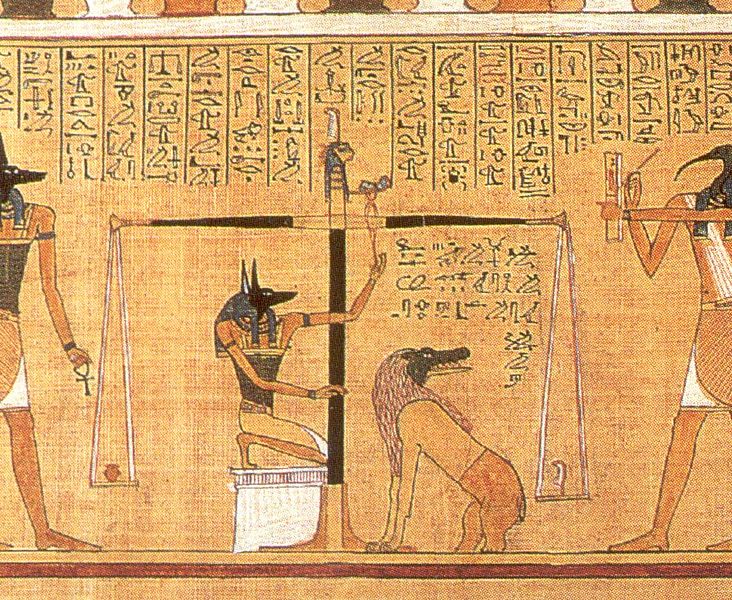
Maat dictated correct and proper behaviour in all social situations and also in relationships, which in astrology fall under the domain of Libra. Maat was especially integral to The Book of the Dead and it is this part of the myth that Johfra focuses on in his painting. The heart of the deceased is weighed against the symbol of maat (the feather denoted truth in Egyptian hieroglyphs). If the two were in balance, the dead were allowed to enter the afterlife. Maat also stood for cosmic order and celestial harmony. The feather as her symbol denotes spiritual lightness understood as the karma that weighs a person down. The ostrich feather was known for its symmetry and harmony of divine design. Having maat meant being attuned to both earthly and cosmic harmony, being free from negative karma, having the heart as light as the feather. Failing the test of Maat meant that the heart was thrown to be devoured by the monster Ammit – part lion, part hippopotamus and part crocodile. The results of judgement were recorded by Thoth.

Image

Weighing of the Heart

THE ROSY CROSS

The scales in the image are adorned with the Rosy Cross. Rosicrucianism was a secret society which, among other things, advocated the balance between head and heart. The Rose Cross symbolism is extremely rich. I refer you to my post on the symbolism of the cross, which, very briefly, stands for the collision (and possible reconciliation) of matter and spirit and the suffering resulting from incarnation. Numerologically, it resonates with number four, symbolic of terrestrial space and organization. The following quotes come from A Brief Study of the Rose Cross Symbol written by a member of the Rosicrucian order, Fra. Thomas D. Worrel:

The rose … is at once a symbol of purity and a symbol of passion, heavenly perfection and earthly passion; virginity and fertility; death and life. The rose is the flower of the goddess Venus but also the blood of Adonis and of Christ. It is a symbol of transmutation – that of taking food from the earth and transmuting it into the beautiful fragrant rose. The rose garden is a symbol of Paradise. It is the place of the mystic marriage. In ancient Rome, roses were grown in the funerary gardens to symbolize resurrection. The thorns have represented suffering and sacrifice as well as the sins of the Fall from Paradise.

The rose has also been used as a sign of silence and secrecy. The word sub rosa “under the rose” referring to the demand for discretion whenever a rose was hung from the ceiling at a meeting. In the Mysteries roses were sacred to Isis. It is also the flower of her son Harpocrates or younger Horus, the god of silence.

It is the flower of Venus, the Goddess of Love.

According to Cirlot, the rose corresponds symbolically to the mandala. The beauty of its form is undeniable and speaks for itself. The many petals of the rose are symbolic of the unfoldment of the soul. It may also be treated as the symbol of the divine feminine. The red rose is symbolic of awoken instincts while the white lily at the bottom of the painting brings to mind calmness, harmony, and the purification of the senses.

THE ANKH, THE SISTRUM AND THE LEMNISCATE

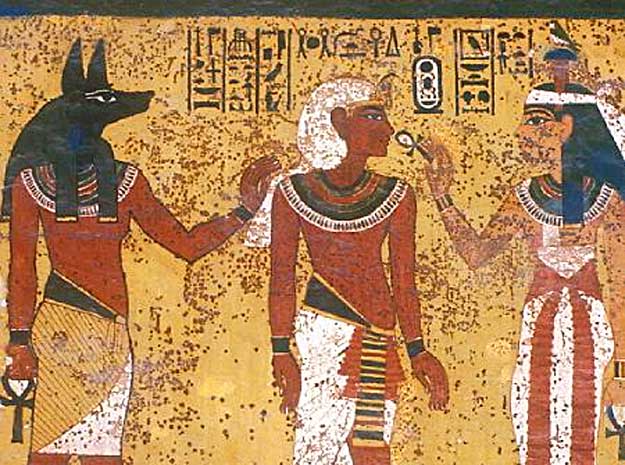
The god and the goddess are both holding objects of great symbolic values. Hathor has got a sistrum (a kind of a rattle), Thoth – the ankh. Pat Remler writes very interestingly on the sistrum in her book Egyptian Mythology A to Z. A sistrum was shaken to honour the gods and to ward off evil spirits (to ward off the forces of chaos). It could also have been used as an instrument of punishment – sinners could be struck blind by its power. The ankh is quite a mysterious symbol. The hieroglyph means to ‘live’ and a popular interpretation equates it with eternal life. It is the Key of Life and Creation, a life force per se. It is a harmonious blending of the masculine (the T-cross) and the feminine (the circle) polarities. It symbolized the union of Isis and Osiris. The ankh was also the breath of life, as can be seen in this image, where the goddess places it in front of the nostrils of the pharaoh:

Image

The ankh resonates with the lemniscate (the symbol of infinity) featured at the top of the painting. It is a symbol of the infinite wisdom of cycles, which create balance in the universe. The yin/jang is rendered beautifully with wisps of air, reminding us that Libra is an air sign, and the balance of opposites can never be set in stone but is subject to whirlwinds.

THE TWO SPHINXES, THE CRYSTAL CUBE AND THE CHESSBOARD

The two Assyrian sphinxes form a pair of opposites: one is masculine, one is feminine. The sphinx being a symbol of wholeness, they show the unity of man and beast, consciousness and the unconscious. Libra is a sign of partnership: it is in partnership, in the meeting with the other, that human wholeness and individuation is achieved. The rose (the soul) is born out of this union. The sphinxes are guarding an altar in the form of a cube. The transparent cube is the cornerstone of manifest reality, at its centre lies a golden circle or a philosopher’s stone (the goal of individuation, the indestructible spiritual essence). Says Johfra:

 If the cube were opened out, the six surfaces would form the Christian cross and the golden embryo would be lying in the centre of the cross, a direct reference to the Rosicrucian belief where the rose is also placed in the centre of the cross…

Finally, the chessboard floor is an expression of the interplay of opposites, on the one hand, but on the other, it alludes to the faculty of strategic thinking characteristic of Libra.

The heights of harmony and symmetry achieved in the painting are extraordinary. Each element resonates with another; the painting is a series of juxtapositions, resonances and counterpoints. However, in everyday life “any order is a balancing act of extreme precariousness,” as Walter Benjamin once wrote. The heart of the image is pure light of the Self – the counterbalance to the forces of chaos.

Support my blog

If you appreciate my writing, consider donating and make my day. Thank you in advance.

$1.00

Related posts in the Images of the Zodiac series:

Images of the Zodiac: Contemplating Aries

Images of the Zodiac: Contemplating Taurus

Images of the Zodiac: Contemplating Gemini

Images of the Zodiac: Contemplating Cancer

Images of the Zodiac: Contemplating Leo

Images of the Zodiac: Contemplating Virgo

Images of the Zodiac: Contemplating Scorpio

Images of the Zodiac: Contemplating Sagittarius

Images of the Zodiac: Contemplating Capricorn

Images of the Zodiac: Contemplating Aquarius

Images of the Zodiac: Contemplating Pisces

Posted in Johfra Bosschart | Tagged , , , , , , , , , , , , , , , , , , , , , | 19 Comments

Two Abysses

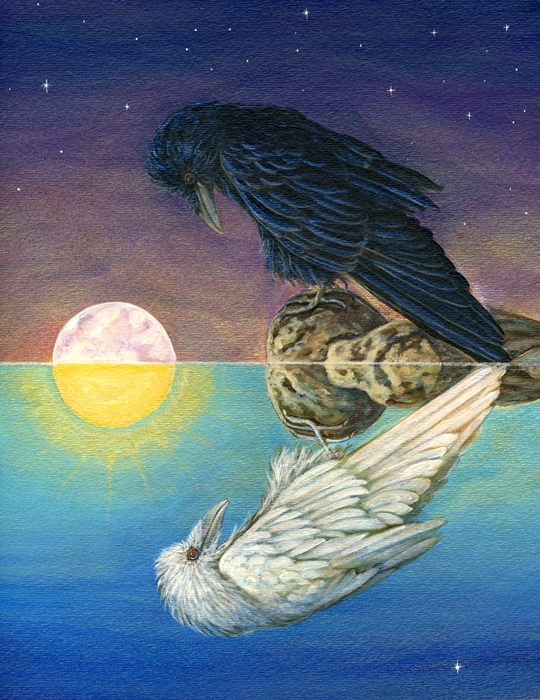
 “We are two abysses – a well staring at the sky.”

Fernando Pessoa

Image

Cathy McClelland, Raven Reflection (image credit: http://www.cathymcclelland.com/enlarge_htm_pages/Animal/raven_reflection.htm)

Posted in Quotations | Tagged , | 13 Comments

Cartography of the Deep Human Psyche (7)

It seems very appropriate that my LSD research series should finish with this last, seventh part. Number seven relates to the seven chakras. Now when I looked back at the themes of each part, I saw how the first three parts relate to the personal realm of experience and how the fourth part, which describes the oceanic bliss we experience in our mother’s womb, marks the transition from the personal to the transpersonal (collective). It is the fourth chakra also known as the heart chakra that through compassion and love lets us transcend our ego boundaries and get in contact with our Self. Individuation happens through a constant and fruitful interchange between consciousness and unconsciousness in a person. It is love that dissolves the rigidity of the ego.

Image

Image credit: http://www.deviantart.com/art/heart-chakra-51249642

The final chapter of Grof’s report on his LSD research deals with transpersonal experiences during LSD sessions. Such experiences occur rarely in preliminary sessions, but they are fairly common in subjects who have successfully accessed and integrated their personal traumas and have also lived through the perinatal matrices I described in my previous posts. What characterizes transpersonal experiences is the feeling that the ego has expanded beyond the boundaries of space and time. The first type of such experiences are ancestral memories.

ANCESTRAL MEMORIES

Such memories can reach back over generations, even centuries. They are distinct from past-life memories, which I will describe later. One case of ancestral memories was a subject of a Scandinavian origin, who during their LSD experience witnessed various scenes from the conquests of the Vikings with an incredible vividness of detail in regard to clothes, weapons or their naval techniques. The significance of awakening ancestral memories is well phrased in the following passage:

Some subjects have reported in this context that as a result of such experiences they have developed a new understanding of some of their personal problems and conflicts. They could trace them back to friction points, incompatibilities, and incongruences between their maternal and paternal lineages and realized that what was considered to have been primary intrapsychic problems were actually introjected and internalized conflicts between generations of their dead kinsmen.

The way I see it, the intrapsychic does not need to preclude the external, but I would rather look at both as reflecting the same core archetypal conflict. I think this example can serve to show the difference between Freudian and Jungian thinking. Freudian psychoanalysis would look for a core event that changed the person, preferably a childhood trauma that, like an old wound, is festering in the dark recesses of the unconscious. They would explain someone’s behaviour as a direct result of that particular trauma. Jungians, however, would see both the childhood trauma and the subsequent behaviour of a person as an expression of an archetypal constellation, not as a cause-effect relation. With regards to astrology, this is even clearer: we have certain conflicts manifested in our natal chart in the form of challenging aspects between planets, for example. The chart is our archetypal blueprint. My Polish astrology teacher used the term “planetary inheritance” to indicate how the same conflicts and aspects are passed on across generations of the same family. As an Arab proverb says: What the father buried in the garden, the son will dig out. The archetypal approach offers more freedom than Freudian thinking. We are not caught in a causal loop and therefore doomed but we can choose to consciously access the archetypal blueprint that constellated a given life situation. We do not literally bear the sins of our fathers but we rather repeat the same patterns over and over again in our lives.

Image

TIME AND SPACE TRAVELS

Quite frequently the subjects experienced events set in times and places unrelated to their ethnic background.

The degree of historical or ethnographic knowledge that emerges is clearly incongruent with the subject’s previous education and level of information in these areas. On occasion, unsophisticated individuals described details of Egyptian funeral services, including the form and meaning of various amulets ad sepulchral boxes, the colors of funeral cones, the technology of embalment and mummification, and the sequence of ritual procedures followed:

It is not uncommon that in association with specific LSD experiences some subjects discover the meaning of various symbolic gestures (mudras) or spontaneously assume quite unusual postures (asanas). … In several instances individuals enmeshed in elements of a certain culture felt a strong need to dance. Without any previous training or specific exposure to these cultures, they were able to perform complicated dance forms.

Such phenomena show that the human psyche on its unconscious level is able to transcend time and space limitations. According to Grof, these experiences are not connected with reincarnation but they are rather indicative of the psyche’s ability to travel in time and space to gain insights into different aspects of life. Past-incarnation experiences form a distinct category and will be described later.

EVOLUTIONARY MEMORIES

Quite distinct group of experiences is formed by evolutionary memories. Some of the subjects relived the evolution of various species by identifying themselves with animals. Those could have been the most primitive life forms and the most advanced. Subjects reported illuminating insights into what it feels like to be a hungry snake, a sexually excited turtle, some were talking about spinning spider webs, etc. On occasion, subjects have accurately described courtship dances, complicated reproductive cycles, techniques of nest-building, patterns of aggression and defense, and many other zoological and ethological facts about the animals they have experienced in sessions.

Image

Image credit: http://www.hinduhumanrights.info/evolution-a-hindu-perspective/

PAST-INCARNATION EXPERIENCES

Yet another form of transpersonal experiences are past-incarnation experiences. What characterizes these experiences is that the subjects maintain their identity while experiencing themselves in a different form and another time and place. The individual has a strong conviction that he or she is confronted with a memory from a previous life; the experience is accompanied by a distinct feeling of déjà vu. There were subjects who had consciously rejected the concept of reincarnation or knew nothing about it before the session, and yet they offered “complex and detailed insights into this area that were strikingly similar to those described in various religious and occult scriptures.”

Grof observed two types of past-incarnation experiences. The first group were memories of deep love or friendship bonds, memories of being understood, nurtured and nourished by another. The second group were intensively charged events characterized by highly charged emotional content bringing pain, bitterness, suffering, hatred, murderous aggression, lustful passion, insane jealousy or intense greed. Amazingly, all these emotions at a certain point started to meld and lose their distinguishing features. I’m quoting a longer passage so that I do not distort its profound message:

LSD subjects have repeatedly stated that it does not seem to make a difference whether they were the oppressor or the victim in a negative karmic situation; it appears as though it is the dyadic traumatic pattern that is imprinted. On a deep level, the emotional state of the sadistic torturer is similar to that of the tortured, and the raging drive of the murderer fuses with the anguish of his dying victim. The inability to forgive and transcend one’s suffering appears to be as conducive to karmic imprinting as actively performed injustice or violence.

This kind of intoxication on the raging and undifferentiated passions sounds very Dionysian to me. Fittingly, Dionysos was the god of reincarnation and the afterlife. Perhaps these are our paroxysms of passions that send us back to this plane of existence. We are driven to be reborn: this is not a conscious, Apollinian choice.

Grof reports that during some of the sessions karmic patterns appeared to have been broken. All subjects reported a feeling of intense bliss and relief when a karmic pattern or bond was thus overcome during a session. Furthermore, people mentioned by the subject as involved in the resolved karmic pattern also experienced a change and a feeling of relief. Grof was able to verify this by interviewing all the parties involved. These feelings occurred even in people who lived far away from the subject during his or her LSD session.

EXPERIENCES OF IDENTIFICATION

Merging with another entity is yet another type of LSD experiences. This could take a form of an identification with another person, for example a significant other who is not present in the room. After the sessions was over subjects reported a profound and lasting feeling of unity with the person the had symbolically merged with during their session. Such an experience, according to Grof, frequently led to tantric and oceanic sex that the subjects were able to open themselves to.

Furthermore, subjects reported merging with both organic and inorganic matter:

He can experience himself as a germinating seed, a leaf in the course of photosynthetic activity, or a root reaching out for water and nourishment.

Reading this, I remembered an extraordinary experience of mine during meditation when I suddenly felt myself to be a green leaf touched by the gentle rays of the sun.

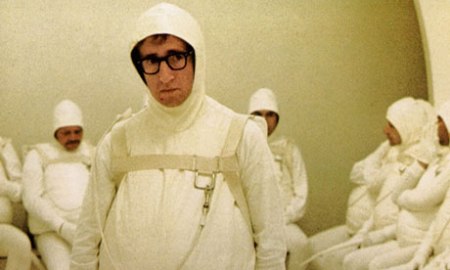
What also happened was subjects tuning in to the consciousness of various organs or tissues of the body. One subject experienced himself as a spermatozoon:

The middle part of my back was generating rhythmical impulses, and I had the feeling of being propelled through space and time toward some unknown goal; I had a very vague awareness of the final destination, but the mission appeared to be one of utmost importance. …
Image

There was a clear awareness of the biochemical processes in the nucleoplasm; in a nebulous atmosphere I could recognize the structure of the chromosomes, individual genes, and molecules of DNA. I could perceive their physiochemical configuration as being simultaneously elements of ancestral memories, primordil phylogenetic forms, nuclear forms of historical events, myths, and archetypal images. … This microworld of the spermatozoid was at the same time influenced and governed by some forces modifying and determining the outcome of the race. They seemed to have the form of karmic, cosmobiological, and astrological force-fields.

Grof ends the report by enumerating other examples of transpersonal LSD experiences. These included encounters with spirit guides and guardians from higher planes of consciousness, also UFO encounters.

ARCHETYPAL EXPERIENCES AND INTUITIVE UNDERSTANDING OF UNIVERSAL SYMBOLS

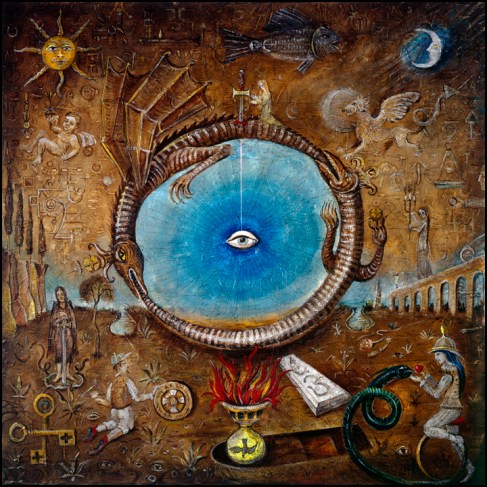
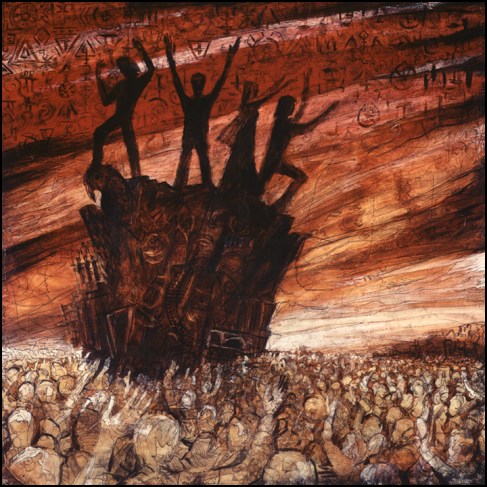
Some subjects, also naïve ones without any educational background, reenacted complex archetypal and mythological sequences and appeared to have encountered various deities from all possible cultures. A lot of the subjects displayed an impressive understanding of universal symbols, as if they had tuned in to the universal matrix of meaning and were just channeling its contents. The most frequent symbols experienced by subjects during the sessions were the cross, the star of David, the swastika, the ankh, the lotus flower, the yin-yang, the lingam, the diamond, the wheel of death and rebirth, the mandala and the ouroboros. Even unsophisticated subjects displayed deep understanding of the meaning of these symbols. What is more:

Subjects who had previously ridiculed astrology and had a condescending attitude toward alchemy discovered deeper meaning in these systems and gained a deep appreciation of their metaphysical relevance.
Image

Image

Images by Vasily Kafanov retrieved from kafanov.com (Illutrations of The Smashing Pumpkins ‘Machina’ album cover)

Source of all quotes:

Stanislav Grof,  Realms of the Human Unconscious: Observations from LSD Research

Related posts:

Cartography of the Deep Human Psyche: 1, 2, 3, 4, 5, 6

Posted in Stanislav Grof | Tagged | 42 Comments

“Dreams” by Wislawa Szymborska

This is a beautiful post on dreams and it also cites one of my favourite Polish poets.

Posted in Uncategorized | 10 Comments

The Woman Who Embodied the Goddess

Image

Aphrodite of Corinth

Beyond light and shade,
Beyond thing and thought,
There is love forever lurking.

B.Z. Goldberg, The Sacred Fire

Among the many totems of the great Babylonian goddess Ishtar was the fish. Her initiates would eat it as part of fertility rites that she presided over. According to a Babylonian story that I repeat here after Liz Greene two fishes found a giant egg in the Euphrates. They moved it to the land, where a dove settled on it. From the egg emerged a great goddess Atargatis, who requested the fish to be placed in the heavens as the sign of Pisces.

Image

Atargatis

In a Greek myth, Aphrodite and her son Eros flee from the monster Typhon disuguised as two fishes.

Image

Eros and Aphrodite

We can see the sign of Pisces as the great fertility goddess paired with her son, who in these ancient cultures was also her lover. In ancient matriarchal cultures, a cyclical union of the goddess and her consort ensured fertility for the land. The most important ritual was the hieros gamos (sacred marriage) between the select priestess of the goddess (chosen to be her embodiment) and the reigning monarch or the high priest. In very ancient cultures the monarch was actually ritually dismembered and sacrificed during those rites. Such a ritual assured fertility for the whole land ad its people. A lot of scholars believe that sacred prostitution was born as the development of that ritual:

In the ancient matriarchies, nature and fertility were the core of existence. … Desire and sexual response experienced as a regenerative power were recognized as a gift or a blessing from the divine.

Nancy Qualls-Corbett, The Sacred Prostitute: The Eternal Aspect of the Feminine

I mentioned fish specifically in connection with the Age of Pisces that we are currently in. Liz Greene writes about the Piscean tendency to disassociate from the world of instinct out of fear of being devoured by the Great Mother. I think that our mainstream culture may be doing precisely that. The revival of the sacred feminine correlates with the crisis within the monotheistic church. Much has been written about the repression of the feminine and the need to reinstate her importance. In the preface to Nancy Qualls-Corbett’s book, Marion Woodman (a Jungian analyst and a key figure in women’s movement) wrote about that deep wound that is so palpable in our culture:

Love had become disassociated from the body in order for human beings to reach a purely spiritual union with god. … No longer seen as the gift of the divine, woman’s sexuality was debased and exploited. The very quality for which woman once had been considered sacred now became the reason for which she was degraded.

In ancient times the goddess was worshiped and venerated. That last word is especially meaningful because its etymology is connected with the Roman goddess Venus, direct descendant of the Greek Aphrodite. One city that revered Aphrodite most was the port of Corinth. In fact, Aphrodite was a counterpart of the Phoenician fertility goddess Astarte, whose cult was adopted by the Greeks. Corinth also adopted the Phoenician rituals of sacred prostitution.

Image

Aphrodite

I am aware of the ongoing fierce debate between scholars whether the so called sacred prostitutes were not used by temple priests to make profits. I also realize that even using the word ‘prostitute’ is risky. Liz Greene suggests using the word harlot instead, which is interesting. I would like to point out, however, that the notion of sex for hire is not inherent in the etymology of the word ‘prostitute’, regardless of our modern connotations. Etymologically, it means something like “exposed to lust, standing erect.” I love Nancy Qualls-Corbett’s book because it focuses on the image and the archetype of the sacred prostitute, on its purest expression and not on its often distorted manifestation. A sacred prostitute was first and foremost the woman who embodied the goddess:

…she is the consecrated priestess in the temple, spiritually receptive to the feminine power flowing through her from the Goddess, and at the same time joyously aware of the beauty and passion in her human body. … She opens the masculine to the potency of penetrating to the divine, and the feminine to the rapture of surrender to it.

As a human race, we share certain images (archetypes) via the collective unconscious. The archetype of the goddess of love is a very vibrant image that can imbue us with lust for life and spiritual renewal. Without her life is empty, barren and meaningless. She gives us the erotic dynamism of the instincts:

In the temple of love the sacred prostitute’s primary offering to the goddess was her welcoming of the stranger… With the stranger she was awakened to her innate feminine nature of giving, reciving and containing love. To him the sacred prostitute offered a rekindling of the divine spark of life … (Nancy Qualls-Corbett)

The union that was achieved with a stranger in a temple was viewed ecstatic and transpersonal. The priestesses did not offer their bodies in exchange for power or favours. A stranger was not someone who was able to satisfy the female ego by giving her security or a sense of identity. She did not possess the stranger nor was she possessed by him. The symbolic meaning of the stranger suggests an aspect of the unconscious that suddenly breaks into consciousness in order to instigate change. As a result of this encounter, both the stranger and the female priestess are transformed. The priestess acts as the Jungian anima, which Erich Neumann described in The Great Mother as “the mover, the instigator of change, whose fascination drives, lures, and encourages the male to all the adventures of the soul and spirit, of action and creation…” She mediates between consciousness and the nonhuman realm of the goddess (the unconscious).

In a highly recommended The Women’s Encyclopedia of Myths and Secrets, Barbara G. Walker devotes six long pages to sacred prostitution and it is a very engrossing read. Here is the very first bunch of quotes that captivated my attention:

As Mother of Harlots, Ishtar was called the great goddess HAR. Her high priestess the Harine was spiritual ruler of “the city of Ishtar.” HAR was a cognate of the Persian houri and the Greek hora…

Image

Shulamite of the Biblical Son of Songs, allegedly a priestess to Ishtar; painting by Gustave Moreau

Houris were dancing “Ladies of the Hour” who kept time in heaven and tended the star-souls.

Egyptian temple-women also were Ladies of the Hour. Each ruled a certain hour of the night, and protected the solar boat of Ra in the underworld during his passage through her hour. The Dance of the Hours began as a pagan ceremony of the Horae (divine “Whores”) who kept the hours of the night by dances as Christian monks later kept the hours of the day by prayers.

Image

Edward John Poynter, Horae Serenae

The priestesses danced around the omphalos (the feminine hub of the universe). They were also known as Charites or Graces, since they expressed a combination of beauty and kindness called charis (Latin caritas), which is related to Hindu karuna meaning mother love, tenderness, comfort, enlightenment and sex. A lot of these women had very high social status and were revered for their learning, wisdom and healing faculties. They were legally and politically equal to men.

For me, the great harlot remains a mystery, a woman behind a veil. She treads the holy ground of life, passion and creation. To misquote the great Greek poetess Sappho, thanks to her we do not let our hearts grow cold, we do not let our wings down.

Posted in Sacred Prostitution | Tagged , , , , , , , , , , , , , , | 23 Comments

The Lady of the Camellias and Her Myth

Image

The Sun is about to enter Libra, the sign of refined elegance ruled by Venus. Two countries associated with Libra in mundane astrology are France (the Sun in Libra) and Japan (the Ascendant in Libra). One expression of the archetype of Libra are courtesans and geishas associated with Libran qualities of beauty, pleasure, grace and erotic love.

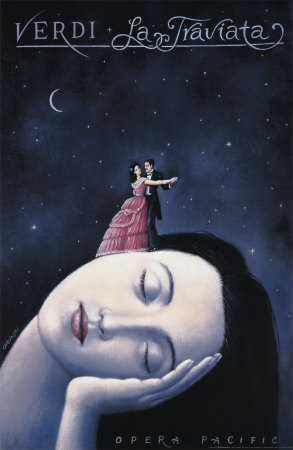
I came across a very interesting article in the last issue of The New York Review of Books dedicated to the most famous French courtesan, Marie Duplessis, otherwise known as The Lady of the Camellias. Dumas wrote a popular novel about her, Verdi composed a famous opera (La Traviata). She captured the imagination of her contemporaries, who mourned her premature death, and the two artists gave her immortality.

In her article “Broken Blossoms,” Anka Muhlstein writes:

In the pecking order of the demimonde of nineteenth-century Paris, the courtesans ranked highest. Merchants of love though they were, they stood apart from the prostitutes who walked the streets… A courtesan never burdened herself with any career other than the one she pursued flat on her back…

From our modern perspective, it is quite easy to share the journalist’s ironic view of the courtesan’s career. I also could not help rolling my eyes when I read about a typical day of Marie Duplessis at the height of her wealth and influence. She would wake up at eleven, drink a cup of hot chocolate and read a little bit. She would spend a few hours deciding what to wear, afterwards she would go shopping or for a carriage ride. She would spend her evenings in the opera, theatre or at parties. Shallow, you may think, but why do these women still hold a fascination in our culture?

The institution of courtesan goes back to ancient Greece. The ancients had temple prostitutes on the one hand, who were vessels of the ecstasy of the goddess. They were free women without any marital bonds, who acted as divine conduits and initiators of men. I am planning a blog post on sacred prostitution some time in the near future, so today I would like to focus solely on the French courtesan. She appears to be more directly related to the ancient Greek institution of the hetaera. The hetaeras were well respected in ancient Greece as educated and refined companions, beautiful and skilled in erotic love. There is a clear connection between the Second Empire France, where courtesans ruled the salons, and ancient Greece with the hetaeras, whose patron goddess was of course Aphrodite. As I see it, neither in Greece nor in France of that time was marriage was a union of love, but it was rather an expression of a stifling patriarchal social order, one chiefly meant to suppress women. The bourgeois wife was expected to be pious, virtuous and respectable. The courtesan was the opposite of all these qualities, and yet she commanded her own brand of respect.

Marie Duplessis (born Alphonsine Rose Plessis) died of tuberculosis at the age of 23. She was mourned by the whole Paris. Her real life story is considerably different from the one portrayed by Dumas or Verdi. She came from a humble background having been born in the French countryside. Her father was brutally abusive to her mother, who fled from him and died shortly after from distress. Marie came to Paris with nothing and managed to find a job in a fashionable boutique. She learnt very fast how to dress fetchingly and surrounded herself with a wide circle of girlfriends. On a night out in a restaurant she managed to seduce its owner, who subsequently bought her an apartment in a good neighbourhood and presented her with a large sum of money. But he was not rich enough for her. She cast her nets wider and soon enough met the rich aristocrat Agenor de Guiche, who taught her how to behave in high society. According to her contemporaries, she oozed exquisite charm, and was described as witty, graceful, tactful, discreet and intelligent.

She was famous for being incredibly expensive. To sustain her lavish lifestyle she had to juggle crowds of male visitors. Her richest lover was a Russian count, Gustav von Stackelberg, aged 80, father of twelve. He set her up in real splendour: a grand apartment with a chambermaid, a cook, a coachman, a valet, and a groom. Her signature was a camellia flower in her black locks – a white one twenty-five days a month and a red one when she was indisposed. Sadly, little is known of her true personality, as she left no letters or memoirs.

In his novel, Dumas portrays her as a heroic woman who sacrificed her love to spare the reputation of her aristocratic lover. She stepped aside to save the young man’s career and reputation. The part of “the hooker with a heart of gold” was coveted by both actresses and operatic divas alike. Greta Garbo is said to have played the role splendidly. Says Anka Muhlstein:

With the stroke of a pen, Dumas rescued the image of the kept woman, turning her into the pitiable victim of bourgeois selfishness. … Alexandre read the novel to a friend. Both men broke down sobbing.

Image

The play based on the novel was also enormously successful:

When Dumas climbed onto the stage to take his bow, the women in the audience showered him with bouquets wet with their tears.

Dumas’ novel may be touching, but it is not a masterpiece. I must admit that I read it in my teenage years and I remember being engrossed in it. However, La Traviata is a feat of genius and it has incredible emotional power. Artists have told the myth of Marie Duplessis, not a true story of her life or personality. Yet there is a profound truth in the myth: deep down we all crave to achieve the union of erotic, pleasurable and esthetic love (symbolized by Libra, ruled by Venus) with the emotional depth, accompanied by true commitment and security. Isn’t this a deep wound of our culture that these two aspects are so often in conflict?

Image

Posted in The Courtesan | Tagged , , , , , , , , , , | 31 Comments

Cartography of the Deep Human Psyche (6)

Having reread the whole chapter dedicated to LSD subjects reliving their own birth, once again, just like after the first reading many years ago, I feel amazed. Our coming into this world is a metaphor of the process of individuation. Consciously we do not remember any of it; the whole archetypal drama took place on the stage of our unconscious. First we float in the waters of the womb, peaceful, undisturbed and passive. We experience unity with our biological mother and a cosmic unity with the Great Mother or the oceanic waters of the collective unconscious. Our consciousness is dissolved, there is no ego. But in order to grow and to achieve consciousness we must leave the warm womb. Contractions bring about fear and anxiety: we feel extremely uncomfortable but we have nowhere to escape. If this experience is prolonged, depression sets in. But then, when all hope seems to have been lost, we notice the exit. The cervix opens and propulsion through the birth canal may begin. This marks the onset of the Basic Perinatal Matrix III, which is experienced as nothing less than a titanic struggle of catastrophic proportions.

Image

Hieronymus Bosch, Detail of Ascent of the Blessed

That painting by Bosch is lovely, but it does not show the painful unbearable tension that characterizes this stage of delivery. The metaphors used by LSD subjects to describe their feelings involved scenes of natural disasters, volcanic eruptions, atomic bombs exploding or massive air raids.

Image

Karl Pavlovich Briullov, The Last Day of Pompeii

While the first perinatal matrix was about a peaceful oceanic ecstasy of the fetus safely floating in the amniotic fluid, the BMP III brings what is called volcanic ecstasy. Despite the enormous destructive energies at play, despite the immense suffering and pain, the subjects reliving this stage of delivery appear to be seized by rapture and immense pleasure.

Pain and intense suffering cannot be distinguished from utmost pleasure, caustic heat from freezing cold, murderous aggression from passionate love, vital anxiety from religious rapture, and the agony of dying from the ecstasy of being born.

Other scenes imagined by subjects reliving this matrix are even more disturbing; they include tortures, murders, executions, ritual sacrifice, suicide, the burning of heretics, the Holocaust, etc. Various cruel dictators and tyrants make their bloody entrance, and, quite disturbingly, the subjects frequently report identifying with them.

LSD subjects tuned into BMP III feel that they can not only understand the motivations of such deviants but that they themselves harbor in their unconscious forces of the same nature and intensity…

Not all subjects relive or imagine such bloody dramas; quite common for BPM III are also wild adventures, hunts, boxing matches, adrenaline sports, hazardous car races, etc. We are definitely far away from the calm waters of BPM I.

Another significant aspect of this matrix is enormous sexual excitement, “burning with sexual ecstasy” that many subjects reported. The characteristic images capturing these experiences include wild orgies, various fertility rites, sensual rhythmic dances, and so on. The atmosphere is that of a carnival full of colours and lasciviousness.

Image

The final stage of the matrix, just before emerging from the birth canal, is characterized by scatology with the subjects reporting coming into contact with various kinds of biological and physiological material, or more symbolically with tons of garbage emitting very unpleasant smells.

One interesting aspect of the third perinatal matrix experience is the encounter with the purifying and cleansing fire. After the subjects have discovered all the dark facets of their own unconscious they literally throw themselves into the fire in order to be cleansed and purified. The Catholic purgatory comes to mind: in the fire the transgressions get burnt away.

Image

Ibrahim Savas Pekdemir, At the Purgatory

Passing through fire marks the beginning of the final Perinatal Matrix IV, which ends with the physical separation from the mother. On a symbolic level BMP IV brings the resolution of the death-rebirth struggle.

Grof’s LSD research shows that minutes before before the child draws the first breath, he or she experiences what may be called ego death. Religious and mythological images seen by subjects in that moment include Aztec sacrificial rituals (some subjects reported feeling their hearts being ripped out of their chests), the dismemberment of the Egyptian god Osiris, and, most frequently, the passion of Christ. Overcoming the agony of birth brings visions of various heroes, such as Hercules, Theseus, Perseus, etc., who have successfully overcome the forces of evil symbolized by the monster.

This is usually illustrated by a rapid sequence of images of events from his (the subject’s) ast as well as from his present life situation. He feels that he is an absolute failure in life from any imaginable point of view; his entire world seems to be collapsing, and he is losing all previously meaningful reference points.

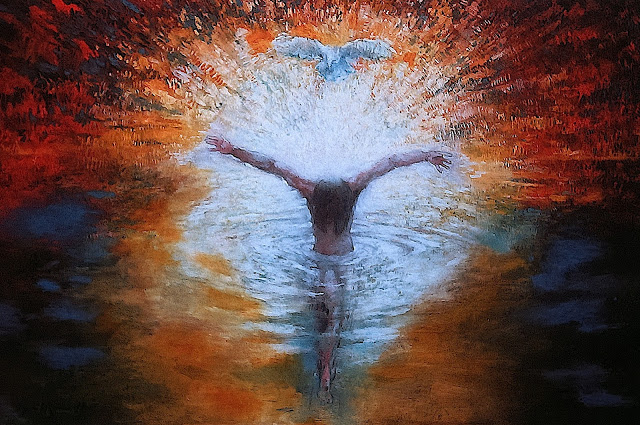
After hitting the cosmic bottom the subject is struck by white blinding light. What follows is the expansion of space and accompanying feelings of redemption, love and forgiveness.

Image

Daniel Bonnell, The Baptism of Christ

In an individual who has completed the death-rebirth sequence and stabilized under the influence of BMP IV, the feeling of joy and relief are accompanied by deep emotional and physical relaxation, serenity, and tranquility. Very characteristic of this stage are non-figurative images of God perceived as pure energy.

There are associations between birth matrices and natural phenomena. BMP II typically involves images of barren landscape, BMP III – the raging forces of nature while BPM IV usually involves post-apocalyptic scenes, visions of landscapes after the storm, calm oceans, fresh buds in the spring and – most frequently – high mountain peaks.

Image

Mount Meru of India

Related posts:

Cartography of the Deep Human Psyche: 1, 2, 3, 4, 5

Posted in Stanislav Grof | Tagged , , , , , , , , , | 28 Comments

Cartography of the Deep Human Psyche (5)

Image

Gustave Dore, Dante at the Gate of Hell

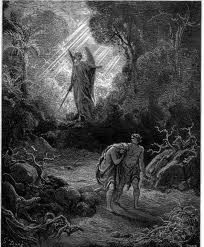
Just as Adam and Eve are cast out from Paradise, so our blissful sojourn in the mother’s womb comes to an end in the first stage of delivery. This moment marks the transition to Basic Perinatal Matrix II. LSD research suggests that contractions always create a situation of threat and emergency for the fetus. The cervix remains closed, the contractions feel like impending doom, which makes the fetus feel trapped with no way out. Grof calls this experience “hell” and “no exit;” it is typically accompanied by an unbearable misery and suffering, deep pessimism, hopelessness, and a negative bias in perceiving reality. All subjects of the research invariably shared these feelings. The first noble truth of Buddhism asserts the existence of suffering, and it seems it stamps its imprint on human existence very early, even before the first breath is drawn.

Image

Gustave Dore, Adam and Eve Driven out of Eden

Those who relive this matrix during an LSD session typically report feelings of empathy and identification with the victimized, downtrodden, and oppressed.

A subject can experience himself as thousands of soldiers who have died on the battlefields of the whole world from the beginning of time, as the tortured victims of the Spanish Inquisition, as prisoners of concentration camps, as patients dying of terminal diseases, as aging individuals who are decrepit and senile, as mothers and children dying during delivery, or as inmates maltreated in chronic wards of insane asylums.

Grof makes a claim that for a person carrying deeply embedded memories of BPM II life seems to be absurd and bereft of meaning. After reading Grof I tried to get some information from my mother about the circumstances of my delivery. Apparently, the BMP II was a long process in my case, which translated into Grof’s psychology might mean I spent a long time experiencing the non-exit situation, feeling trapped with no way out. That made me wonder because I believe I do have an awareness of my inner darkness, although I have never been depressed. When I was a student I went through a prolonged existentialist phase and one of the authors I adored was a Romanian pessimist philosopher, Emil Cioran, author of some books with telling titles, such as On the Heights of Despair or The Trouble with Being Born. Here are a few random quotes from his works, so that you can feel the flavour:

I don’t understand why we must do things in this world, why we must have friends and aspirations, hopes and dreams. Wouldn’t it be better to retreat to a faraway corner of the world, where all its noise and complications would be heard no more? Then we could renounce culture and ambitions; we would lose everything and gain nothing; for what is there to be gained from this world?

Shame on the man who goes to his grave escorted by the miserable hopes that have kept him alive.

We are so lonely in life that we must ask ourselves if the loneliness of dying is not a symbol of our human existence.

I cannot contribute anything to this world because I only have one method: agony.

I can still recommend him although he does talk about suicide much too often, so I would advise caution. Even now I love to return to his books occasionally. I usually do not share a lot of personal details on this blog but I have noticed a certain preference on my part for darker authors. My cherished writers are actually, besides Cioran, Kafka and Dostoevsky. Ever since their prose stung me, which happened very early, I haven’t found any other writers who would affect me more. Also, I used to read enormous amounts of literary texts on concentration camps. And yet I am not depressive by nature: far from it. I just believe strongly that darkness is an inalienable part of the human psyche.

Image

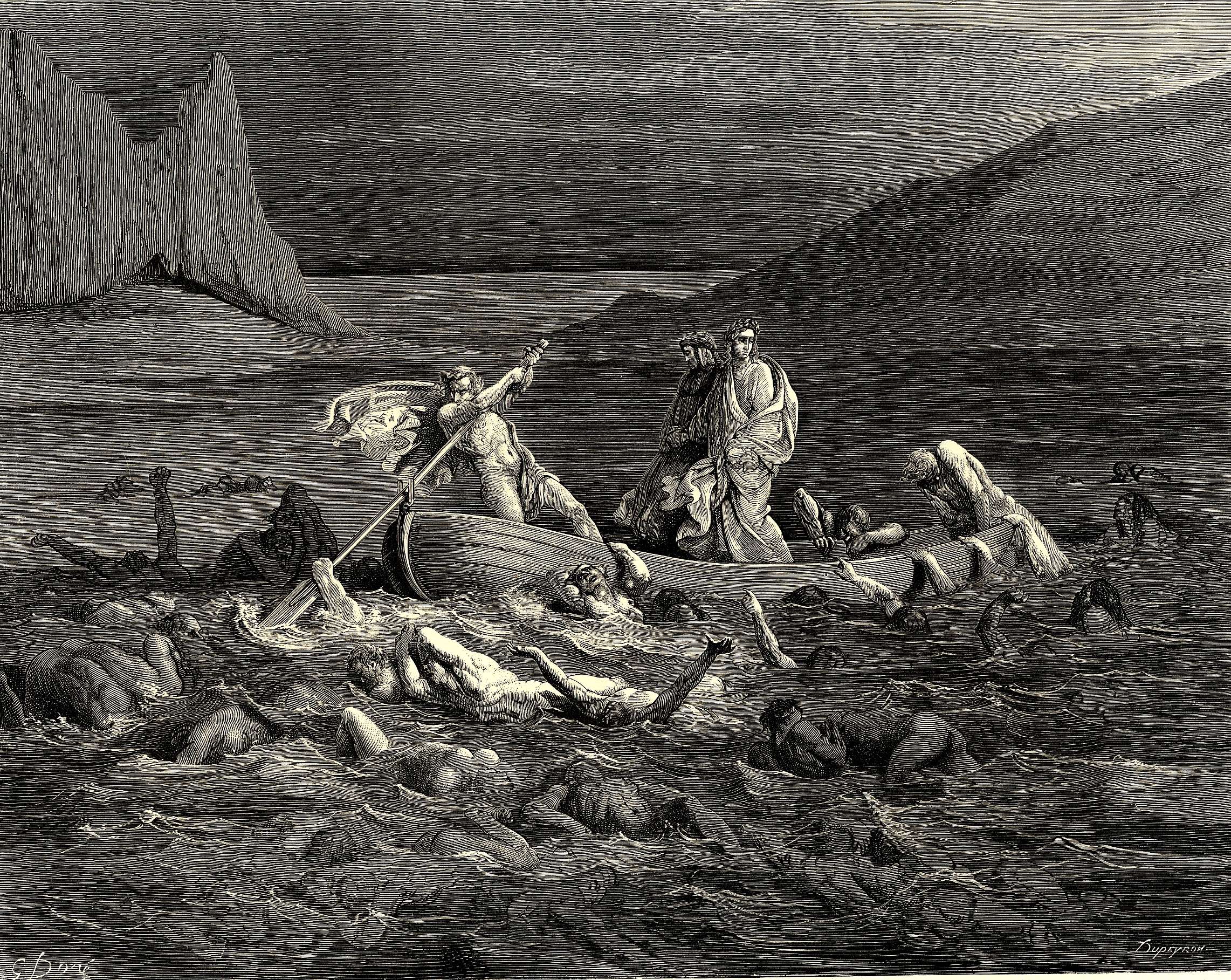
Gustave Dore, The Inferno, Canto 8

What I found really fascinating in the description of BMP II was that death and birth are accompanied by exactly the same feeling in human existence. As Beckett wrote, we give birth astride the grave. The subjects of Grof’s LSD research who were reliving the onset of delivery were actually convinced they were dying. They experienced real agony and terror. We all know that death always precedes rebirth in symbolic thinking. Like in the Tarot, the Death card carries symbolism of rebirth with it.

Image

Death, Mystic Dreamer tarot

The LSD experience of BPM II is accompanied by various symbolic images that the subjects report seeing. These include: hell, Sisyphus’ plight, Ixion fixed to a fiery rolling wheel, Prometheus chained to a rock, screaming Erinyes, the passion of Christ, etc. Ixion especially drew my attention because his myth is extremely interesting to me. He committed a horrible crime (murder of kin) for which he was to be eternally damned. However, Zeus decided to purify him and took him to the Olympus. The ungrateful Ixion planned to seduce Hera, the wife of Zeus. Zeus saw through his plans and fashioned a cloud which Ixion believed to be Hera. Ixion blissfully mated with the cloud, which enraged Zeus, who sentenced him to being chained to a fiery wheel for eternity.

Image

Ixion

The fascinating part is that a race of Centaurs was born from Ixion and the cloud. Ixion epitomizes carnal sins, the hot passion, anger and cruelty, which the gods so love to punish. The Centaurs that descended from Ixion were very violent and malicious. It is worth noting that he wise Centaur Chiron was fathered by the Titan Cronos, not Ixion. To the Greeks, Chiron represented the positive combination of human’s animal and spiritual nature, while the Ixion descended Centaurs stood for violent lust, evil, debauchery, cruelty, thoughtlessness and bestiality.

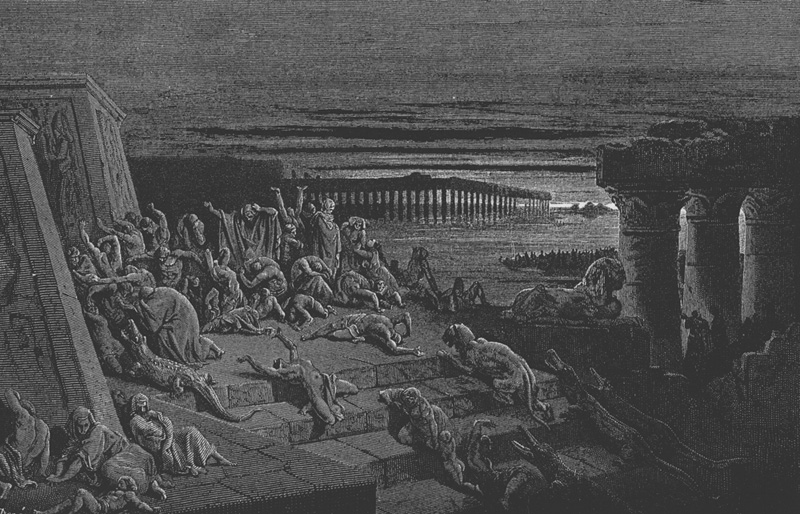
Reading on this perinatal matrix made me ponder a lot on the origins and roots of evil and darkness in the human psyche. I was reminded of a verse from Dante’s Inferno:

I felt for the tormented whirlwinds
Damned for their carnal sins
Committed when they let their passions rule their reason.

Image

Gustave Dore, Exodus 10: The Plague of Darkness

Related posts:

Cartography of the Deep Human Psyche: 1, 2, 3, 4

Posted in Stanislav Grof | Tagged , , , , , , , , , , , , , , | 46 Comments

Cartography of the Deep Human Psyche (4)

Image

Leonardo da Vinci, Studies of Embryos

The first nine months of our life are spent in water, where we are surrounded by darkness. We have no conscious memory of that period. Subconsciously, we crave to relive that time later on in life; we want to reconnect to that primordial feeling of bliss whether in the arms of a loved one or swimming in a crystal clear lake or maybe just contemplating a beautiful landscape.

The fourth chapter of Grof’s report on his LSD research is dedicated to perinatal experiences. According to his findings, it is possible to relive this period of our life. These experiences are situated on the threshold between the personal unconscious and the collective unconscious. They consist in subjects reliving the life in the womb followed by their own biological birth and the accompanying feelings of physical pain, agony, dying and symbolic death/rebirth.

Grof stresses that one LSD session is not enough to reach the perinatal depths. The initial sessions usually consisted in reliving personal traumas but once these were integrated, subjects opened to the deeper layers of their psyche. All the people who reached the perinatal level reported deep and life-changing spiritual realizations. Grof emphasizes that reliving their own birth transformed everybody, even “hard-core materialists, positivistically-oriented scientists, skeptics and cynics, and uncompromising atheists and antireligious crusaders such as the Marxist philosophers.”

Grof classified the fetus experiences during pregnancy and delivery into four perinatal matrices. Here is a brief summary containing some key words characterizing them:

Basic Perinatal Matrix I (BPM I):

realistic recollections of life in a womb, either positive or negative: oceanic ecstasy, cosmic unity, visions of paradise or the experience of attempted abortions, emotional upheavals, unpleasant tastes, feelings of being poisoned; related transpersonal experiences: racial or evolutionary memories, past incarnation experiences;

Basic Perinatal Matrix II (BPM II):

immense suffering, unbearable situation that will never end, images of hell, guilt, inferiority complex, epidemics, diseases, absurdity of life, feelings of oppression, trouble breathing;

Basic Perinatal Matrix III (BPM III):

borderline between pain and pleasure, volcanic ecstasy, vibrant colours, explosions, carnivals, murders, orgies, bloody sacrifice;

Basic Perinatal Matrix IV (BPM IV):

decompression, expansion of space, visions of gigantic halls, rebirth, redemption, sensory enhancement.

I would like to focus today on LSD experiences related to the first Basic Perinatal Matrix, i.e. Primal Union with the Mother.

When talking about good womb experiences during LSD sessions, subjects invariably reported blissful, oceanic state of consciousness. They felt peace, serenity, bliss, melted ecstasy, sacredness, an experience of pure being and timelessness. They described the experience as ineffable and impossible to put into words. In this state they perceived the world as a safe, benevolent place. Evil seemed insignificant. What also happened quite frequently was spontaneous regression into historical times, identification with groups of people, for example American Indians, or identification with species of plants, animals, and, amazingly enough, feeling one with with galaxies, solar systems and stars. Visions of gods and archetypes were quite common:

… I became the entire universe; I was witnessing the spectacle of the macrocosm with countless pulsating and vibrating galaxies and was it at the same time. … For the first time, I was experiencing the universe for what it really is – an unfathomable mystery, a divine play of energy. Everything in this universe appeared to be conscious. … I became fish swimming in crystal-clear waters, butterflies floating in mountain meadows, and seagulls gliding by the ocean.

Image

Some subjects reported reliving events from previous incarnations. I am going to discuss this in more depth in a future post dedicated to transpersonal experiences in LSD sessions. One person reported a startling realization:

During a session in which he alternately experienced episodes of “good” and “bad” womb, he felt that he developed new insights into the understanding of demons from several cultures. … He suddenly saw a striking relationship between the state of mind of the Buddha sitting on the lotus in deep meditation and that of an embryo in a good womb. .. It seemed as if elements of bad karma entered his present life in the form of disturbances of his embryonic existence …

Image

image via http://www.redbubble.com/people/danita22/works/9919784-buddha-ocean-evening

Interestingly, memories of life in the womb opened the gates to memories of other blissful moments of subjects’ lives. They recalled happy love relationships, encounters with beauty, nature or art. It seems that one of our chief motivations as human beings is to experience as adults that feeling of absolute fulfillment and oceanic ecstasy we felt in our mother’s womb.

Support my blog

If you appreciate my writing, consider donating and make my day. Thank you in advance.

$1.00

Related posts:

Cartography of the Deep Human Psyche (1)

Cartography of the Deep Human Psyche (2)

Cartography of the Deep Human Psyche (3)

Posted in Stanislav Grof | Tagged , , , , , , , | 30 Comments

Alchemical Psychology, Part VIII – Caelum

ptero9's avatarTheoria

It has been a wonderful adventure re-reading and sharing here James Hillman’s wonderful book Alchemical Psychology. Every time I read Hillman I am inspired to keep digging the well that continues to give me sustenance, joy and the feeling that life does make sense. The writing of this series is my attempt to pay tribute to Hillman by presenting a smattering of his writing to you, along with a few of my own thoughts. Hillman has had a profound and lasting influence on my life and my intent here is to be true enough to the gift he has given me – keeping alive his spirit by passing along a bit of his writing to you. Links to parts One through Seven of this series of posts can be found on the Index page of the blog.

Hillman begins the last chapter of Alchemical Psychology by referring to Jung’s final work, Mysterium…

View original post 1,593 more words

Posted in Uncategorized | Leave a comment