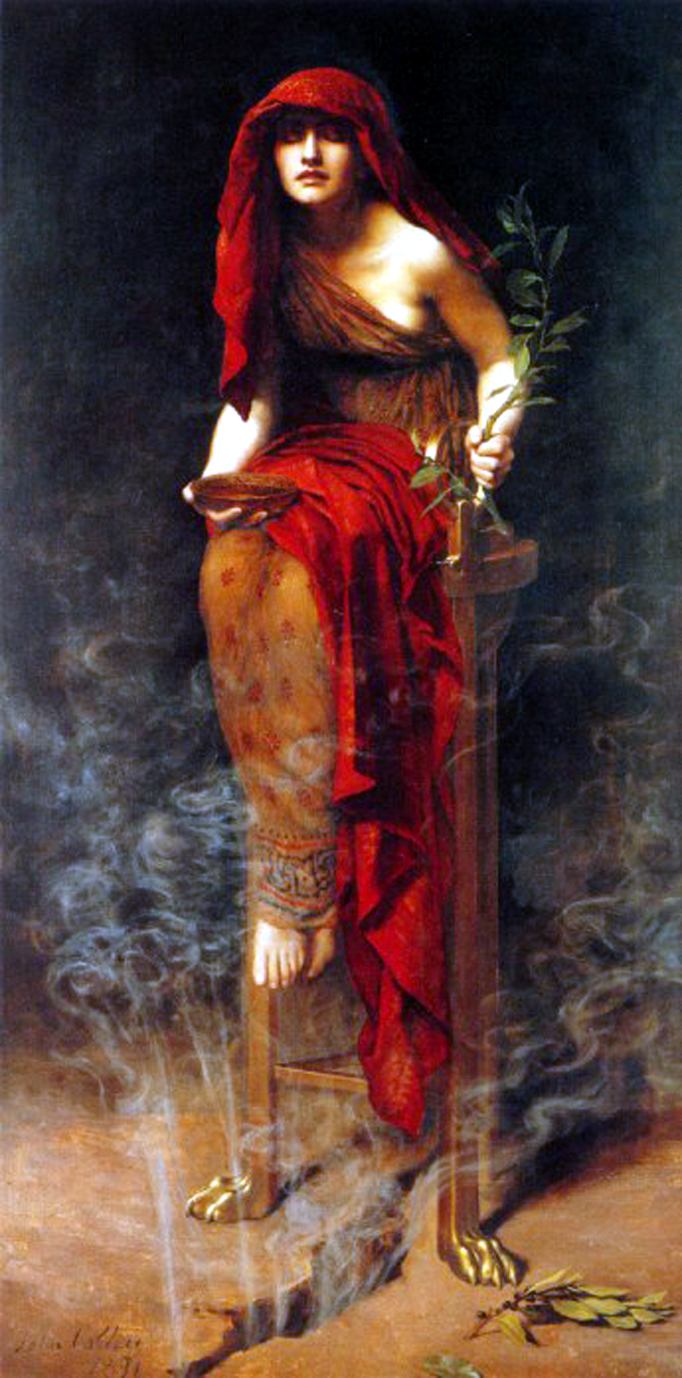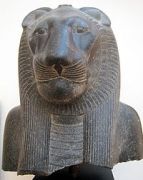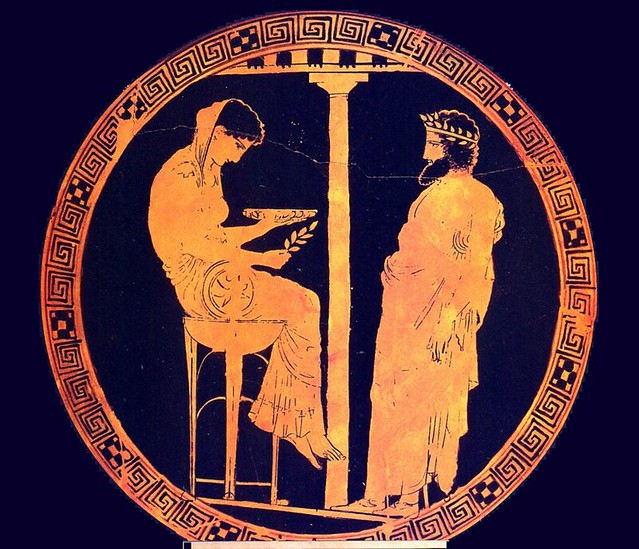
The Fascinating, Flickering Tongue of the Pythia

Posted in The Pythia | Leave a comment

The Modern Need of Oracles

Image

Neo: But if you already know, how can I make a choice?
The Oracle: Because you didn’t come here to make the choice, you’ve already made it. You’re here to try to understand *why* you made it. I thought you’d have figured that out by now.

I had an interesting conversation with Kelsey Lynore of http://thetarotnook.com/ about the human need of oracles, which dates back to the dawn of civilization. The fruit of our conversing is my article on the Pythia and the Oracle of Delphi, which I presented to Kelsey to feature on her blog:

http://thetarotnook.com/2013/09/06/the-fascinating-flickering-tongue-of-the-pythia/

With her insightful tarot readings, Kelsey is the modern embodiment of the Pythia to me. She has twice given me readings and each time I was amazed how different the whole procedure was from a typical, cliché encounter with a fortune teller. She is nothing like a fortune teller, but rather the High Priestess, eloquent in the metaphorical language of symbols and incredibly intuitive: an ultra-modern woman coming from a long lineage of ancient wise sorceresses.

Posted in Uncategorized | Tagged , , , , , , , | 21 Comments

Images of the Zodiac: Contemplating Virgo

Image

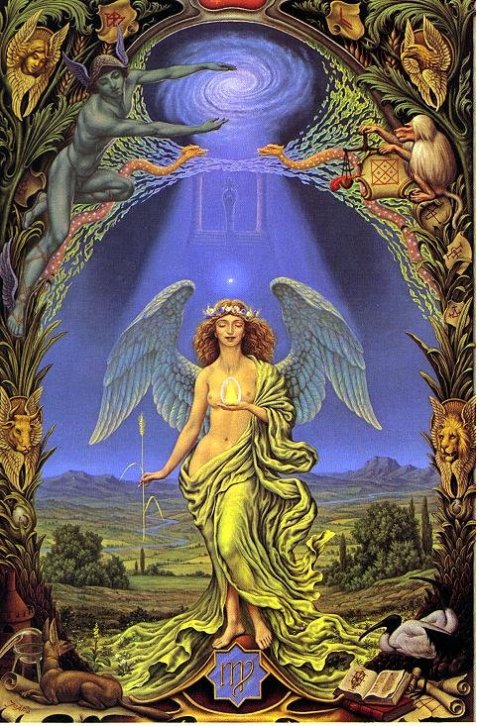
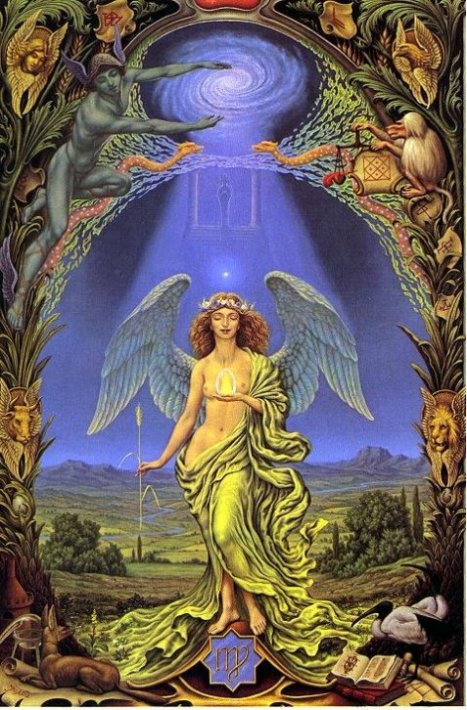
Johfra Bosschart, Virgo

I adore this image. It reminds me of a precious and delicate porcelain figurine that you hold delicately between your fingers, marveling at its fragile beauty. I like to spend a longer time looking at the Zodiac image before I start writing about it. I try to think of a literary work, preferably a poem, that I would associate with the image. For some reason Virgo directed my thoughts towards a Polish poet and a Nobel laureate, Czeslaw Milosz and his Song on Porcelain. In this beautiful poem, he voices his regret about beautiful porcelain being smashed by soldiers’ boots. Here is the first stanza:

Rose-colored cup and saucer,

Flowery demitasses:

They lie beside the river

Where an armored column passes.

Winds from across the meadow

Sprinkle the banks with down;

A torn apple tree’s shadow

Falls on the muddy path;

The ground everywhere is strewn

With bits of brittle froth –

Of all things broken and lost

The porcelain troubles me most.

To me this poem is a song of innocence and experience, and these two themes are very important for Virgo – the Virgin. The poem evokes the second world war. When I was a schoolgirl I Poland, September marked the anniversary of Hitler’s invasion on Poland (followed by Stalin’s some two weeks later). This happened when the Sun was in Virgo: our collective innocence was shattered and we paid dearly for the experience we gained.

In my last post of the series dedicated to Leo I pondered on the symbol of the Sphinx: half-lion, half-maiden. I have recently looked at Dane Rudhyar’s writings to see what he had to say about the sign Virgo. He also thinks that the Sphinx is a very important symbol to understand if we want to fathom the meaning of Virgo. He writes:

In Leo the creative thinker is born. With Virgo this new birth becomes substantiated. The fiery activity of the creative personality, dramatizing itself and releasing its energies from within outward, reaches a circumference and the cold winds of space. … the personalized emotional power of the human ego … transforms itself into the potentiality and expectancy of the virgin Woman, waiting for fecundity – within the sanctuary of the Pyramid. … The Virgin is alone – and expectant. She expects the performance of a Mystery which will destroy both her aloneness and her virginity.

The Sphinx is the symbolical expression of the crisis which must come at a certain stage of evolution if the creative, self-projecting, dramatic aloneness of the human ego (Leo) is to become the expectant, potentially fruitful aloneness of the human Soul (Virgo).

This fragment touches upon the many mysteries surrounding the sign Virgo and underlies a lot of the ostensive paradoxes of that sign. It alludes to ancient mysteries and female priestesses (often also sacred prostitutes as was the case in the cult of goddesses such as Atargatis and the Ephesian Artemis) who took part in them. Liz Greene quotes extensively from an essay by John Layard on the virgin archetype. I hope to read the original source one day but at this point I am quoting from it after Liz Greene:

… though we now think of the word ‘virgin’ as being synonymous with ‘chaste’, this was not the case either with the Greek word parthenos or with the Hebrew almah of which ‘virgin’ is the most usual biblical translation. For the Greek word was used of an unmarried girl whether she was chaste or not, and was in fact also applied to unmarried mothers. The Hebrew word means likewise ‘unmarried’ without reference to premarital chastity. … Thus in this sense the word ‘virgin’ does not mean chastity but the reverse, the pregnancy of nature, free and uncontrolled, corresponding on the human plane to unmarried love…”

A mind untrained to think symbolically takes everything literally. It is sad that for most of us in modern times virginity is limited to biology. This was not the case in ancient times.

Who is the female figure in the image? She is the Greek Astraea (or Dike), she is the Syrian Atargatis, and she is the Egyptian Isis. Let us look at them in turn. Dike represents the principle of justice and natural law. She used to live on the earth but got severely disappointed with human depravity and flew up to heaven to her father Zeus, becoming the constellation of Virgo. Like Demeter, Dike was usually depicted carrying a sheaf of barley. Liz Greene, herself a Virgo, writes the following about her:

She seems to be an image of the intrinsic orderliness of nature, and her disgust at humanity is a mythic image of the traditional Virgoan disgust at disorder, chaos and wastage of time and substance.

Atargatis is a fascinating goddess, one of my favourites that I feel a strong urge to learn more about. Atargatis’ epithets included ‘pure,’ ‘virgin’ and ‘Mother of the Gods.’ She was the great mother and a goddess of fertility, often portrayed as a mermaid with fish as her sacred emblems. Her cult had orgiastic elements. In the Latin novel The Golden Ass by Apuleius, the chief protagonist called Lucius is transformed into a donkey. The donkey’s evolution involves living out his brutish lustful nature. At one point Lucius as a donkey joins the orgiastic cult of Atargatis. This experience taught him something very crucial for the sign Virgo: the sacredness of the ritual and the sanctity of the body as the vessel of the divine. In the end, it is the goddess Isis who transforms him back into the human form. Ancient Egyptians associated Isis with the sign Virgo and portrayed her with huge, sheltering wings. She helped her consort Osiris to civilize Egypt by teaching women to grind corn, to spin and to weave. After the dark god Seth murdered Osiris and cut his body into 14 pieces (note that I am shortening the myth significantly here), she lovingly collected all the pieces save one – his penis, which had been swallowed by a fish.  In the end in a sacred sex ritual she brought him back to life with her magic and they conceived a son – Horus. After this act of sacred sex Osiris became the King of the Underworld. In the Egyptian Book of the Dead the sign of Virgo is represented as the gateway to the kingdom of Osiris.

The word I associate with the Virgin archetype is integrity, being one-in-herself, intact, and adept at preserving boundaries. Her eyes are closed in the painting because she follows her own commands and bows only to the dictates of her own nature. She gives of herself guided by her own inner principles. Two quotes by Liz Greene capture this idea beautifully:

The issue of bestowing one’s gifts or one’s bounty as one wishes, according to inner laws, rather than satisfying expectations to gain rewards, seems fundamental to the mythic figure of the Virgin.

Virgos of both sexes are often caught in the dilemma of having to choose between the safe, well-paid and ultimately barren path of external compliance and the fertile but often lonely path of inner loyalty.

The traditional ruler of Virgo is Mercury (I will return to this) but her esoteric ruler is the Moon. The archetype of the Great Mother (“the universal primordial substance from which the material cosmos is condensed,” as Johfra puts it) is essentially Virgoan. Mother and matter share the same etymological root: the sign Virgo is an expression of matter divided into tiny atoms. The four Evangelists included in the four corners of the image allude to the four elements (the tetramorph, Greek tetra: four, morph: shape): the angel in the top left-hand corner is Matthew (the air element, presented in human form because his gospel stresses the humanity of Christ), the eagle is John (the water element as the eagle is a higher expression of Scorpio and symbolic of Logos – the word of God), the lion is Mark (fire; in his gospel the royal dignity of Christ is in the foreground), and the ox is Luke (earth; this gospel speaks of Christ’s sacrifice). The four of them are an expression of Christ consciousness.

Erich Neumann explored the Virgin archetype in astonishing detail in his wonderful book The Great Mother:

The childbearing virgin, the Great Mother as a unity of mother and virgin, appears in a very early period as the virgin with the ear of grain, the heavenly gold of the stars, which corresponds to the earthly gold of the wheat. This golden ear is a symbol of the luminous son who on the lower plane is borne as grain in the earth and in the crib, and on the higher plane appears in the heavens as the immortal luminous son of night. Thus the virgin with the spica, the ear of grain, and the torch-bearer, Phosphora, are identical to the virgin with the child.

In the painting she holds an ancient fertility symbol – the egg – which contains a flame. As the Sun is the child of the Night, so Virgin Mary gave birth to Christ or Isis to Horus. Liz Greene emphasizes also that the sign Virgo is about mothering in the deeper sense as “the nurturing of potentials and the bringing to birth of the inner pattern in outer life.” The fire she holds is feminine fire – fire of the earth, the libido that flames up in the act of sacred sex. The white wings not only stand for chastity but also for the upward movement starting on the earth, in the mundane, amidst nature, and rising towards the upper spiritual realms.

The traditional ruler of Virgo is Mercury presented on the left as Hermes and on the right as the Egyptian Thoth (the baboon). Rudhyar asserts that Virgo stands for “mental fecundity” and “critical faculty.” In search of meaning, Virgo questions, criticizes and passes value judgements, “breaking everything down as finely as possible” (Johfra). With a graceful gesture, Hermes is trying to encompass the universe with the mind. Thoth performs quality control of the souls of the dead, placing their hearts on one scale and the feather of Maat (measure, truth, balance, morality, justice) on the other. Maat was the Egyptian goddess who set the order of the universe out of chaos.

In conclusion, let me look at the remaining elements depicted in this image. There is the ibis in the lower right-hand corner, a bird sacred to Thoth, the Egyptian god of wisdom. It is guarding the scrolls of wisdom (we can see the Kabbalistic Tree of Life on the cover). A stride of the ibis was used as a measure in building temples. The jackal, an animal seen at burial grounds, alludes to an important function of Hermes – that of psychopompos, i.e. the conductor of souls through the underworld, the only god that was allowed to enter Hades. The mysterious figure on the steps emerging from the luminous mist is Osiris. He is awaiting the souls at the gate to the kingdom of the dead. But in alchemical terms, Osiris is also awaiting the initiates who took part in secret mysteries and who through them acquired universal consciousness and eternal life.

Support my blog

If you appreciate my writing, consider donating and make my day. Thank you in advance.

$1.00

Sources:

Johfra Bosschart, Astrology

Juan Eduardo Cirlot, The Dictionary of Symbols

Liz Greene, The Astrology of Fate

Erich Neumann, The Great Mother

Dane Rudhyar, The Zodiac as The Universal Matrix

Related posts:

Images of the Zodiac: Contemplating Aries

Images of the Zodiac: Contemplating Taurus

Images of the Zodiac: Contemplating Gemini

Images of the Zodiac: Contemplating Cancer

Images of the Zodiac: Contemplating Leo

Images of the Zodiac: Contemplating Libra

Images of the Zodiac: Contemplating Scorpio

Images of the Zodiac: Contemplating Sagittarius

Images of the Zodiac: Contemplating Capricorn

Images of the Zodiac: Contemplating Aquarius

Images of the Zodiac: Contemplating Pisces

Posted in Johfra Bosschart | Tagged , , , , , , , , , , , , , , , , , , , , , , , | 46 Comments

Cartography of the Deep Human Psyche (3)

Perhaps it’s true that things can change in a day. That a few dozen hours can affect the outcome of whole lifetimes. And that when they do, those few dozen hours, like the salvaged remains of a burned house—the charred clock, the singed photograph, the scorched furniture—must be resurrected from the ruins and examined. Preserved. Accounted for. Little events, ordinary things, smashed and reconstituted. Imbued with new meaning. Suddenly they become the bleached bones of a story.

Arundhati Roy, The God of Small Things

The one who does not remember history is bound to live through it again.

George Santayana

The initial mutual fascination between Jung and Freud and their subsequent acrimonious break-up is well-documented. I see their approaches as complementary rather than mutually exclusive. While Freud dealt with the individual unconscious, Jung went a step further and proposed the existence of the collective, transpersonal unconscious, a repository of archetypes, myths and universal patterns. Jung never denied the existence of the individual unconscious or the importance of human sexuality. He acknowledged that without healing individual traumas the soul cannot make a step further towards the realm of the transpersonal.

The first threshold crossed by subjects taking part in an LSD procedure is a confrontation with their personal unconscious in the form of significant memories and traumas, emotional issues, unresolved conflicts and repressed material from their lives. The following words of Grof would probably act like balm on Freud’s soul:

… the observations from LSD psychotherapy could be considered to be laboratory proof of the basic Freudian premises. The psychosexual dynamics and the fundamental conflicts of the human psyche as described by Freud are manifested with unusual clarity and vividness even in sessions of naïve subjects, who have never been analyzed…

It is important to point out that Grof’s research was carried out in the communist Czechoslovakia, where Freudian psychoanalysis was banned from mainstream culture. Therefore the subjects cannot have internalized Freud’s theories before the sessions. Another significant psychoanalytic finding of Grof’s is something he called Systems of Condensed Experience (COEX Systems). To me they show how our memories are constituted and maybe how memory itself works.

COEX systems are individual memories from different periods of life that form clusters around a common theme. The deepest layers of such memories are core events that often took place in very early childhood. Similar experiences in later periods build layer upon layer on the original (core) event/memory. A typical COEX constellation may contain experiences of emotional deprivation or rejection that repeat throughout the individual’s life. There is a powerful emotional charge attached to such strings of memories, an activation of one memory seems to trigger a chain reaction and the activation of the whole COEX. A personality can contain an indeterminate number of such systems, which may condense either pleasant or unpleasant emotional experiences. Here is an example of a core experience:
… Richard suddenly regressed deeply into infancy and experienced himself as a one-year old baby swaddled in a blanket and lying on the grass by a field, while adults were harvesting grain. He saw a cow approaching him, graze in the immediate proximity of his head, and then lick his face several times with her huge, rough tongue. During the reliving of this episode, the head of the cow seemed gigantic and almost filled the session room. Richard found himself gazing helplessly into the monstrous salivating mouth of the cow and felt her saliva flowing all over his face. After having relived the happy ending of this situation … Richard felt enormous relief and a surge of vitality and activity. …

Image

Marc Chagall, I and the Village

The basic COEX theme of this experience was being helpless and at a mercy of a destructive external force. Prior to his LSD sessions Richard had suffered from severe depression, anxiety and various psychosomatic symptoms. He had been unable to form a long-lasting relationship. After reliving the COEX experiences in an LSD session, his symptoms disappeared and he appeared to be healed.

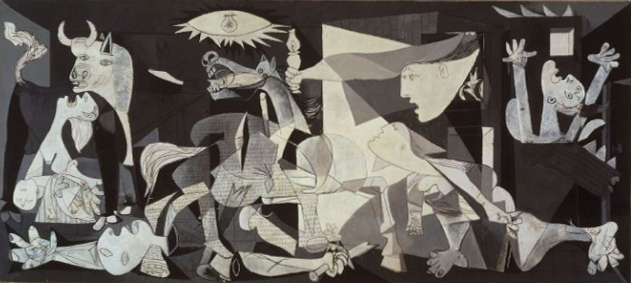
The onset of COEX activation during an LSD session is heralded by a vision that subjects compare to a flood or a whirlpool. They get surrounded by a motley of seemingly random “amorphous mixture fragments of human or animal bodies, portions of a landscape, pieces of furniture” that in fact are sensory fragments of the COEX experience. While reading this I immediately thought of Pablo Picasso’s Guernica, which shows the trauma of war and civilians suffering as a result of an air attack. In a great BBC series called Power of Art, which I cannot recommend enough, Simon Schama says this about Guernica:

Instead of a laboured literal commentary on German warplanes, Basque civilians and incendiary bombs, Picasso connects with our worst nightmares. He’s saying here’s where the world’s horror comes from; the dark pit of our psyche.

Image

Like Proust’s madeleine, a seemingly trivial object can transport s back into the heart of a memory. Another indication of an emerging COEX is an incessant repetition of the same words and sentences. I could not help but thinking how dismembered our memories are, how fragmented. Re-membering and reliving seem to be reintroducing wholeness back. All the lost memory fragments have to be mined and excavated and thanks to such archeology of memories our souls can find peace again

I was fascinated to read the accounts of early childhood memories full of astonishing details and accompanied by detailed realistic representations of the setting and the events that occurred. What that shows is that in the deep recesses of our memory everything is stored and our conscious lives, our actions and reactions, are rounded, shaped and guided by a multitude of unconscious memories. The researchers were also astonished by these findings and therefore they tried to verify the authenticity of the relived memories, which is described here:

Dana … relived in one of her LSD sessions a traumatic episode from infancy that she tentatively located at the end of her first year of life. She described in great detail the interior of the room where this event happened to the point of being able to draw the elaborate pattern of embroidery on the bedspread and tablecloth. Dana’s mother was independently asked to give her description of the room in question. When confronted with the material from the patient, she was absolutely astonished by the accuracy of the account concerning the traumatic event as well as its physical setting.

But what does reliving a traumatic event under LSD really mean? It means assuming the roles of all participants in the COEX event. For example, if a subject was a victim of an assault he or she must relive both the role of the victim and that of the aggressor. For a disturbing moment a victim has to identify with an aggressor. Only by experiencing the event from all the possible perspectives can our soul make peace with it.

Image

Related posts:

Cartography of the Deep Human Psyche (1)

Cartography of the Deep Human Psyche (2)

Posted in Stanislav Grof | Tagged , , , , , , , | 50 Comments

Cartography of the Deep Human Psyche (2)

Concerning matter we have been all wrong. What we have called matter is energy, whose vibration has been so lowered as to be perceptible to the senses. There is no matter.

Albert Einstein

Image

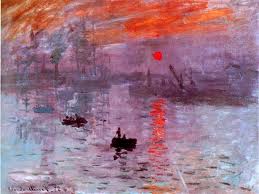
This iconic painting by Monet shows very accurately how I perceive the “physical reality.” Putting aside the fact that I am shortsighted, this blurry vision can be better explained by referring to Jung’s psychological types. I am introverted and intuitive, which in Jung’s typology means that my vision is directed inwards, towards the world of the archetypes, while the outside world of “hard matter” is often mysterious, hazy and hard to navigate.

Without getting on the high horse (OK, maybe a little bit), I felt avenged when I encountered the ideas of quantum physics and of the mystics of various epochs. What they all seem to claim is that hard reality is not the actual reality. The universe is vibration, and the constantly changing energy fractals weave our space together. We are surrounded by a timeless world of waves – solidity is an illusion. We may speak of the sound and the dance of the universe. External forms, seemingly solid, are in a state of constant flux, they are transient, shifting, transforming, moving about. The god Shiva is a cosmic dancer, the lord of the dance who orders the universe with his graceful movement. He dances out the creation of the world. With his drum he beats the rhythm of creation.

Image

Shiva Nataraja, The Lord of the Dance

In my last post (https://symbolreader.net/2013/08/23/cartography-of-the-deep-human-psyche-1/) I introduced the subject and addressed the ethical concerns of LSD research. Today I am focusing on the shortest chapter of Grof’s report, where he describes the initial stages of the LSD procedure. The author himself dismisses this part as not so important and rather superficial, which is quite surprising to me because I found it extremely significant.

In short, the first thing that often happens after taking LSD is the experience of the animation of the visual field.

Occasionally, the colourful and dynamic mosaic of the entoptic field can be perceived as indistinct and fleeting images of fantastic and exotic scenery, such as visions of mysterious jungles, luscious bamboo thickets, tropical islands, Siberian taigas, or undersea kelp forests and coral reefs. (Grof, Realsm of the Human Unconscious)

Image

Image

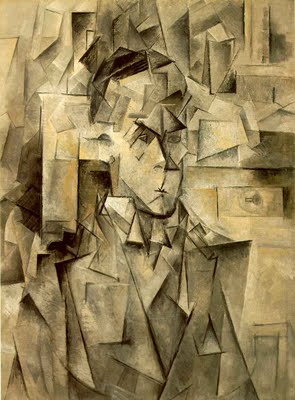
Subjects frequently reported seeing abstract geometric designs such as mosaics or arabesques that were accompanied by dynamic colour transformations with the colours described as bright, penetrating and explosive. Very characteristic was “ornamentalization and geometrization of human faces, animals and objects.” Objects ceased being solid but they fluctuated, transformed and vibrated. These were real “orgies of visions,” as Grof puts it.

Image

Alhambra, via http://www.nationalgeographic.pl

Image

Pablo Picasso, Portrait of Wilhelm Uhde

Image

Louis Wain, Progression

Another common experience was hypersensitivity to subliminal sounds accompanied by synesthesia (hearing colours, for example). A lot of subjects claimed to have been able to really hear music for the first time in their lives.

What I gather from all this is that LSD gave the participants an inner eye vision, enabling them to see the true nature of reality; as if the veil had dropped and the universe was revealed to them as a pulsating, vibrating, throbbing field of energy that is all there is. When Shiva grows tired of dancing, he lapses into inactivity and the universe falls into chaos. What follows is destruction, followed by creation, followed by destruction in an endless cycle. The initial stages of the LSD experience seem to show the collapse of the illusory solid structures that our minds erect; it takes us back to the initial stage of creation where the building blocks of reality are floating in the primordial ocean. Change and transformation become possible when rigidity is overcome and fluid consciousness is acquired.

Sources:

Stanislaw Grof, Realms of the Human Unconscious: Observations from LSD Research

Rachel Storm, The Encyclopedia of Eastern Mythology

Posted in Stanislav Grof | Tagged , , , , , , , , , , | 44 Comments

Cartography of the Deep Human Psyche (1)

Image

Gustave Doré, Paradise

In a famous remark that all professors of philosophy love to quote, A. N. Whitehead said that the development of Western philosophy is just a series of footnotes to Plato. I think understand what Whitehead was really trying to say. What he meant was that Plato was the queen bee of his field. Allow me to explain. In the course of history a few great minds are born, whose thinking is universal and all-encompassing. Their gift is a total and comprehensive vision, a breathtaking bird’s eye view over the whole universe of his or her field. The queen bee metaphor comes from Norman Davies, a great British historian, author of a total history of Europe (Europe: A History), who likened himself to the queen bee. The queen bee is the great simplificator, who brings order to the labours of the hive. Narrow specialization is a curse of our times. If the industrious worker bees completely took over, there would be no honey. It is the great visionaries, the ‘simplificators,’ the queen bees who can fertilize their fields for years to come.

Image

Albrecht Dürer, Venus and Cupid as the Honey Thief

Carl Gustav Jung was the queen bee of depth psychology. In an ironic quip he joked he was happy to be Jung and not a Jungian. Thousands of Jungians are still busy expanding on his work. My personal allegiance is always with Jung simply because he captures my imagination and can open my eyes with a single sentence. But there is another psychologist, who has been instrumental for me in my journey towards understanding the depths of the human psyche. It is Stanislav Grof. I have decided to start a series of posts dedicated to his findings.

He became famous for conducting research with the use of LSD, which he administered to his subjects. This was before the substance was delegalized. Now he achieves the same results, i.e. accessing the deep realms of the psyche, by means of holotropic breathwork. It is a wonderful coincidence that just as I was planning to write this, I saw a new post in one of my favourite blogs. A fellow blogger from Ecuador relates in detail his experience with taking LSD (http://thefaustorocksyeah.wordpress.com/2013/08/22/listen-to-the-colour-of-your-dreams-mi-experiencia-con-lsd/). On a personal note, I think I will never try LSD myself, there is something in my psyche that has always kept me off any kind of intoxicating substances. Alcohol, even in very small amounts, blurs my consciousness almost instantaneously. Having said that, I read Fausto’s post with vicarious fascination. During the great mysteries of Eleusis, associated with the goddess Demeter and her daughter Persephone, the participants probably took powerful psychoactive potion to achieve altered states of consciousness. Here are four passages from Fausto’s post (my translation):

It was the night of full moon and he was visible in all her glory; I had never seen her so bright, at times she seemed to have been shining like the sun.

I listened to colours.

What surprised me most was to see kaleidoscopic manifestations of Vishnu, Indra, Buddha and various medieval and Victorian motifs on the room’s ceiling, all truly amazing.

I also had a revelation of the origin of the universe and the origin of the idea of ​​God.

He also saw two stars on the ceiling that he identified as planets and called them “Sirius/Orion/Osiris one and two” without having any idea what that actually meant. But when he went out and looked at the real sky, those same stars were there and in the same position. I relate to this experience having had a few dreams myself, which I knew were revealing something deep to me but when I had them I had no idea what it was.

But returning to Grof, I am planning to reread his first book called Realms of the Human Unconscious: Observations from LSD Research because it is the foundation of all his theories and practice. In it he focuses on a description of the various experiences manifested in the sessions. He argues that there is “a surprisingly consistent metaphysical system” that emerged from his extensive research. LSD was accidentally discovered by a Swiss chemist Albert Hofmann, who later called it “my problem child.”

I must admit I am still on the fence when it comes to LSD. I was absolutely fascinated by Grof’s findings and I hope to do them justice in my subsequent posts, but there is a gnawing doubt in me and an accompanying thought that the same insights and revelations can be achieved without the aid of chemical substances. As Hofmann himself wrote:

By … a perception deepened by meditation, we can develop a new awareness of reality. This awareness could become the bedrock of a spirituality that is not based on the dogmas of a given religion, but on insights into a higher and deeper meaning. I am referring to the ability to recognize, to read, and to understand the firsthand revelations.

Image

Hieronymus Bosch, Antonius Altar triptych 

Posted in Stanislav Grof | Tagged , , , , , , , | 62 Comments

The Nourishing Power of Words

O mouth which inspires and respires the existence of all beings in the flux and reflux of thy eternal Word, which is the divine ocean of movement and of truth.

Eliphas Levi, The Conjuration of the Four Elements

If there is one thing that we humans share it is a craving for nourishment, both of the body and of the soul. During the upcoming Full Moon we may all be collectively nourished as the dwarf planet Ceres will be in conjunction with the Sun tomorrow and opposing the Moon. The Greek goddess Demeter, about whom you can read more here, to me represents first and foremost sustenance and nourishment by the Mother Goddess.

Image

I could think of a number of things that nourish me but for some reason I have been thinking a lot recently about my need and thirst for books and words. Reading is what sustains me, what nourishes my soul and what keeps me alive and alert. In various esoteric doctrines a book is a symbol of the whole immense universe. Rosicrucianism spoke of Liber Mundi – the Book of the World. The Kabbalah speaks of the transcendent letters or words that created the manifest reality. “In the beginning was the Word”, a well-known quote from the New Testament says. Eliphas Lèvi, a French occult author with a wondrous gift of words, whose writings greatly inspired The Hermetic Order of the Golden Dawn,  thus emphasized the power of Word in his book The Key of Mysteries: “Light is the instrument of the Word, it is the white writing of God upon the great book of night.”

The nourishing power of words is directly touched upon in the Old Testament in The Book of Ezekiel, where we read: “”Son of man, eat this scroll I am giving you and fill your stomach with it.” So I ate it, and it tasted as sweet as honey in my mouth.”” (Ezekiel 2:9-3:3.) Probably this is how the expression to “devour books” was born. Kafka, whose books I devour with delight, often spoke in his Diaries of his greed for books: “It is as though this greed came from my stomach, as though it were a perverse appetite.” The love of books has a carnal quality – I do not doubt that.

The book is obviously something beyond its paper, glue, cardboard and ink, but nevertheless there is something holy in the act of holding a book. I am not sure I could ever experience the same thing holding my e-book reader, although the emotions stirred by its words may be the same. Perhaps in the future paper books will be rare treasures made according to the high art of hand paper making that is still alive in Tibet and Nepal for example. Only a selected number of books, only those containing words of light, truth and beauty, will be worthy of the sacrificed life of a tree.

Image

An amazing library in the Abbey of St. Gallen, Switzerland

Posted in Ceres | Tagged , , , , , , , , | 42 Comments

The Tempestuous Loveliness of Terror: A Few Thoughts on Medusa

Image

I borrowed the florid title of this post from the Romantic poet Shelley, who wrote a poem on Leonardo da Vinci’s Medusa painting. In one of my previous posts (https://symbolreader.net/2013/08/11/light-and-matter-the-perseid-meteor-shower/) I talked about the mythical story of Perseus and I feel compelled today to add a little more on this hero’s journey with a sole focus on the monster that he slew by cutting her head off. There is a modern mystery school for women (http://www.sevensistersmysteryschool.com/home/), which organize rituals consisting in re-membering and restoring Medusa’s head. The ritual is described here for those interested. Its purpose is to undo all the wrongdoings that the sacred feminine suffered at the hands of the patriarchal establishment.

The history of Medusa starts with a beautiful princess with long auburn hair that she would comb and brush for hours every day. Medea had no shortage of suitors, one of whom was Poseidon. He arranged a tryst with her in Athena’s temple, which insulted the virgin goddess, whoe transformed Medusa’s hair into a nest of coiling, tangled snakes.

A modern interpretation of the myth may go like this: the Medusa prior to her transformation symbolized the sensual femininity, beauty, attractiveness and the openness to a relationship with a man. The monstrous Medusa, who turned anyone who looked at her into stone (symbolic of the rigidity of death), is another face of the Dark Goddess – the devouring, flesh-eating mother associated with the last, dark phase of the moon. Athena is the embodied intellect, the woman’s mind, and as a virgin goddess she also stands for independence and self-reliance, being able to stand without a man at her side, being whole unto herself. Medusa is Athena’s dark instinctual sister. This relationship was strengthened when Athena put the image of the monstrous feminine on her shield and used it in battle to scare off her enemies.

Image

In her book “Mysteries of the Dark Moon,” Demetra George, who reintroduced the divine feminine back into astrology, reflects on the meaning of Medusa. She writes:

Medusa and Athena are aspects of the same goddess who emerged from Lake Tritonis in Libya.  They are both associated with female wisdom, which is depicted in the serpent symbolism that surrounds them – Medusa with her serpent locks and Athena with her serpent-fringed aegis.  Medusa, as wise crone, holds the secrets of sex, divination, magic, death and renewal.  Athena, the eternal maiden, is linked with the new moon and presides over the female qualities of courage, strength and valor.

As Athena was absorbed into the classical Greek pantheon, she was the only one of the old goddesses who was elevated and respected, and she became part of the new ruling trinity along with Zeus and Apollo.  She had to pay a steep price for her supremacy in the new order.  First she was forced to deny her femininity and to sacrifice her sexuality, becoming a perpetually chaste virgin.  She was cut off from her cyclical nature, which included renewal through sexual rites.  She then promised to become champion of the patriarchy by using her warrior potency to denounce, slaughter, and conquer her matriarchal ancestors from Africa.

It is fascinating indeed, how Medusa is beheaded and how Athena is born out of Zeus’s head. Historically, the myth of Medusa slaying seems to be telling the story of replacing a matriarchal order and religion with the patriarchal one. The victors chose to portray the losers as evil demons.

The patriarchy, in their fear of the wise woman, of death, and of the magical sexual power of the menstruating feminine, demonized Medusa (as they did the other dark goddesses) into a monstrous figure of the devouring, castrating mother.

Slaying a monster is part of almost every archetypal hero’s journey. The symbolism of this is twofold. First, the hero must separate from his mother, who represents the regressive pull-back toward the safety of her womb. But once his separation is complete he must “reestablish a loving relationship to his inner dark feminine, “ says Demetra George.

It is quite striking that both Medusa and Andromeda (Perseus’s future wife) have names based on the same root, notices Richard P. Martins in his book Myths of the Ancient Greeks. The prefix “med-“ means “to devise” or “to use powerful means” and also to consider, reflect, advise, judge, estimate. We see this prefix in the word ‘meditate’ (meditation as the tool to sharpen and focus the mind) and also ‘medicine,’ which indicates that the doctor needs to shrewdly ‘measure, limit and consider’ in order to find the appropriate cure. Medusa’s blood had healing and restoring properties.

                Athena later gave two phials of Medusa’s blood to Asklepius, the God of Healing.  It was said that blood from her right vein could cure and restore life, and that the blood from her left vein could slay and kill instantly.  Others say that Athena and Asklepius divided the blood between them; he used it to save lives, but she to destroy and instigate wars.

Pegasus, the patron of poets, was son of Medea and Poseidon, born after Medea’s death. It is fitting then to conclude by invoking literature again. A serendipitous thing happened yesterday. Someone handed me a book of short stories, which I opened at a random page only to find a brilliant short story by A.S. Byatt called “Medusa’s Ankles.” I cannot even begin to tell you how much I loved that story. It is so beautiful and so forgiving of human frailty. The female protagonist is a middle-aged woman whose beauty is fading and who regularly visits a hair salon, where her hair is done by the owner himself. He understands her hair, accepting her for what she is:

He soothed her middle-aged hair into a cunningly blown and natural windswept sweep, with escaping strands and tendrils, softening brow and chin.

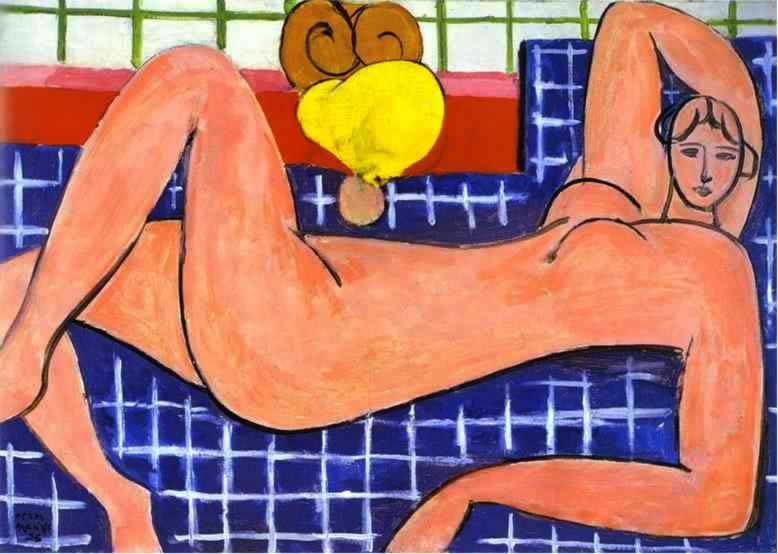
The salon is done in rosy hues with the pink colour scheme. On display is a painting by Matisse called Pink Nude, which the woman finds very beautiful and soothing.

Image

But one day the décor gets changed:

The Rosy Nude was taken down. In her place were photographs of girls with grey faces, coal-black eyes and spiky lashes, under bonfires of incandescent puce hair which matched their lips, rounded to suck, at microphones perhaps, or other things.

On that day the woman’s hair is done by a female assistant, who does terrible job of it. The description of female rage that comes afterwards is uncanny, both extremely funny and poignant.

She could only see dimly, for the red flood was like a curtain at the back of her eyes, but she knew what she saw. The Japanese say demons of another world approach us through mirrors as fish rise through water, and, bubble-eyed and trailing fins, a fat demon swam towards her, turret-crowned, snake-crowned, her mother fresh from the dryer in all her embarrassing irreality.

What follows is mayhem: Susannah smashes the whole hair salon to pieces.

She whirled a container of hairpins about her head and scattered it like a nailbomb. She tore dryers from their sockets and sprayed the puce punk with sweet-smelling foam.

But it is the ending of the story that melted my heart. The owner reassures her and tells her that such a fit could happen to anybody. He says insurance will take care of everything and he pours her a cup of coffee. Now that is emotional security that every woman dreams of. Before Perseus could rescue Andromeda, his bride-to-be, from another sea monster, he placed the precious Medusa head on seaweed at the water’s edge. Only later did he discover that the seaweed had turned to beautiful coral.

Posted in Medusa | Tagged , , , , , , , , , | 40 Comments

Reflections on Water

Image

image credit

I am always delighted when scientists speak like poets without losing the science. I have come across an excellent article delineating the latest research on water, which reads like an excerpt from a sacred knowledge book. It is a deep well of information.

http://www.wakingtimes.com/2013/08/13/the-miracle-of-water-the-yin-the-yang/

I was reminded of a great poem by Goethe called Song of the Spirits over the Waters:

The soul of man,
It is like water:
It comes from heaven,
It mounts to heaven,
And earthward again
Descends
Eternally changing.

If the pure jet
Streams from the high
Vertical rockface,
A powdering spray,
A wave of cloud
Splashes the smooth rock
And gathered lightly
Like a veil it rolls
Murmuring onward
To depths yonder.

If cliffs loom up
To stem its fall,
It foams petulant
Step by step
To the abyss.

Along a level bed
Through the glen it slips,
In the lake unruffled
All the clustering stars
Turn their gaze.

Wind woos
The wave like a lover,
Wind churns from the ground up
Foaming billows.

Soul of man,
How like the water you are!
Fate of man,
How like the wind.

Translated by Christopher Middleton

Posted in Poetry, Water | Tagged , , , , , , | 39 Comments

Light and Matter: the Perseid Meteor Shower

I am going to watch the Perseid meteor shower tonight. They are very fast moving meteors and they radiate from the constellation Perseus, and Perseus happens to be one of my beloved Greek heroes.

The birth of Perseus appears to have a lot to do with the miraculous meteor shower. I always find it fascinating when myth and the actual physical phenomena align like this. Perseus was mothered by Danae, a daughter of King Akrisios who ruled over the city of Argos. He had no son and wanted one badly, so he sought the oracle’s advice. The priestess at Delphi said to him that he would have a grandson, who would kill him. To prevent that Akrisios decided to lock his daughter in an underground chamber constructed of bronze. There was a small opening in the ceiling through which one night a golden rain, a shower of shimmering gold descended right onto Danae. It was Zeus (Roman Jupiter) who made Danae pregnant that night. A more magical conception is hardly imaginable.

Image

Léon-François Comerre, Danae

Why was the chamber made of bronze? There are never accidental images in myths, all have significance. Bronze is an alloy of tin and copper. In alchemy, tin was related to the planet Jupiter while copper to the planet Venus. Bronze is the favoured metal of bell makers. The sound of the bell is a symbol of creative power. The bell is a sacred object suspended between heaven and earth, and its role is to deliver the message from above to below. The clapper inside the bell is its ‘tongue’ – used to communicate the message of heaven to the earth. In Tibetan Buddhism the sound of the bell is supposed to drive away evil spirits while the sound of the bell is the voice of Buddha teaching dharma.

Image

The mythical story of Perseus makes a very interesting reading. His most famous feat was cutting off the monster Medusa’s head. He was assisted by Hermes in his quest. He led him to the three old crones called the Graiai, who had only one eye among them and only one tooth. He stole their eye and tooth and did not give it back until they revealed where Medusa (the serpent-haired Gorgon) was hiding. Other attributes of Perseus that he acquired with the help of Hermes were the winged sandals, an invisibility cap, a adamantine sickle, and a sack for holding bulky objects. He was not able to kill Medusa directly. Anyone who looked at the monster immediately turned to stone, so Perseus had to devise a way to kill her without looking at her and he managed it with the help of Athena, who presented him with a polished shield of bronze (!), which reflected the image of Medusa and was safe to look at.

In a brilliant essay called Lightness an Italian writer Italo Calvino attempts to retell the myth of Perseus in a new, fresh way. He writes:

To cut off Medusa’s head without being turned to stone, Perseus supports himself on the very lightest of things, the winds and the clouds, and fixes his gaze upon what can be revealed only by indirect vision, an image caught in a mirror. I am immediately tempted to see this myth as an allegory on the poet’s relationship to the world, a lesson in the method to follow when writing. But I know that any interpretation impoverishes the myth and suffocates it. With myths, one should not be in a hurry. It is better to let them settle into the memory, to stop and dwell on every detail, to reflect on them without losing touch with their language of images. The lesson we can learn from a myth lies in the literal narrative, not in what we add to it from the outside.

Image

Caput Algol; a fixed star in the constellation Perseus at 26 degrees Taurus

The relationship between Perseus and the Gorgon is a complex one and does not end with the beheading of the monster. Medusa’s blood gives birth to a winged horse, Pegasus—the heaviness of stone is transformed into its opposite. With one blow of his hoof on Mount Helicon, Pegasus makes a spring gush forth, where the Muses drink.

Pegasus, a winged horse, the patron of poetry was born out of Medusa’s blood. Art cannot be just light and airy – it is deeply rooted in the sensual world of matter and the body. Liz Greene calls the winged horse the bridge between opposites:  “an earthy creature which has the power to ascend into the spiritual realm.” Also, who fights demons if not poets?

Image

Peter Paul Rubens, Perseus and Andromeda (detail Pegasus) (source: http://www.mythindex.com/greek-mythology/P/Pegasus.html)

The whole mythological story of Perseus seems to weave together the alchemical marriage of the active and the passive principles: the feminine and the masculine, light and darkness, life and death, gentleness and violence, spirit and matter, fatedness and overcoming it with creating one’s destiny. I might retell the story of his love for Andromeda another time and how he fulfilled the Delphi prophesy and killed his grandfather. His life was full of passion with many dramatic twists and turns. His fate seems to have comprised two Zodiac signs: Gemini (his brilliant mind and airy lightness symbolized by the winged sandals, his cunningness) and Scorpio (heavy and dark themes, death, suffering and cruelty, slaying monsters), which happen to be opposites of respectively Sagittarius and Taurus. The sign Sagittarius is ruled by Jupiter, Taurus by Venus, which brings us back to Perseus’ parents. In an ingenious way the story of Perseus weaves together these four Zodiac signs. Even the four attributes that I mentioned above appear to be linked to these four signs: the winged sandals to Gemini, the adamantine sickle to Sagittarius (the Buddhist diamond mind that slices through illusion), the invisibility clock with Scorpio and the sack for bulky objects with Taurus. This is at least my interpretation and I would be interested to hear from others if it makes sense at all.

I will be thinking of Perseus while looking at the Perseids tonight. Since ancient times shooting stars have been considered as gifts from the gods. They were symbolic of light and illumination coming from above. It is wondrous how they look like balls of light but are in fact stones. Light in the matter.

Image

Source for the mythological content:

Richard P. Martin, Myths of the Ancient Greeks (I happen to love that book – the myths are told in a captivating manner, lots of dialogue and dynamic descriptions, they are accurate but there is no boring, scholarly baggage. I thoroughly recommend it.)

Posted in The Perseids | Tagged , , , , , , , , , , , , , , , , , , | 72 Comments