Symbolism of the Forest

In the middle of our walk of life, I found myself within a forest dark, for the straightforward pathway had been lost.

Dante, The Divine Comedy

Image

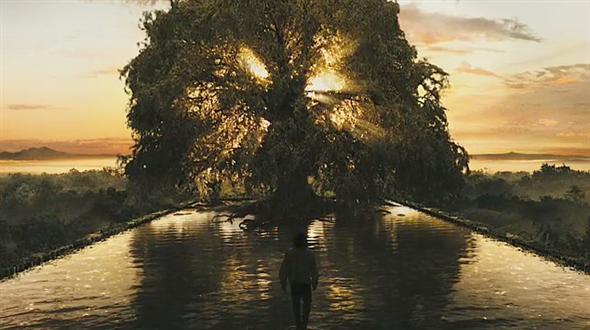
Foggy Forest on Emei Shan, via http://tryse.net/blog/2009/08/

It seemed to him that he had stepped through a high window that looked on a vanished world. A light was upon it for which his language had no name. All that he saw was shapely, but the shapes seemed at once clear cut, as if they had been first conceived and drawn at the uncovering of his eyes, and ancient as if they had endured for ever. He saw no colour but those he knew, gold and white and blue and green, but they were fresh and poignant, as if he had at that moment first perceived them and made for them names new and wonderful. In winter here no heart could mourn for summer or for spring. No blemish or sickness or deformity could be seen in anything that grew upon the earth. On the land of Lórien, there was no stain.

Tolkien, The Fellowship of the Ring

Image

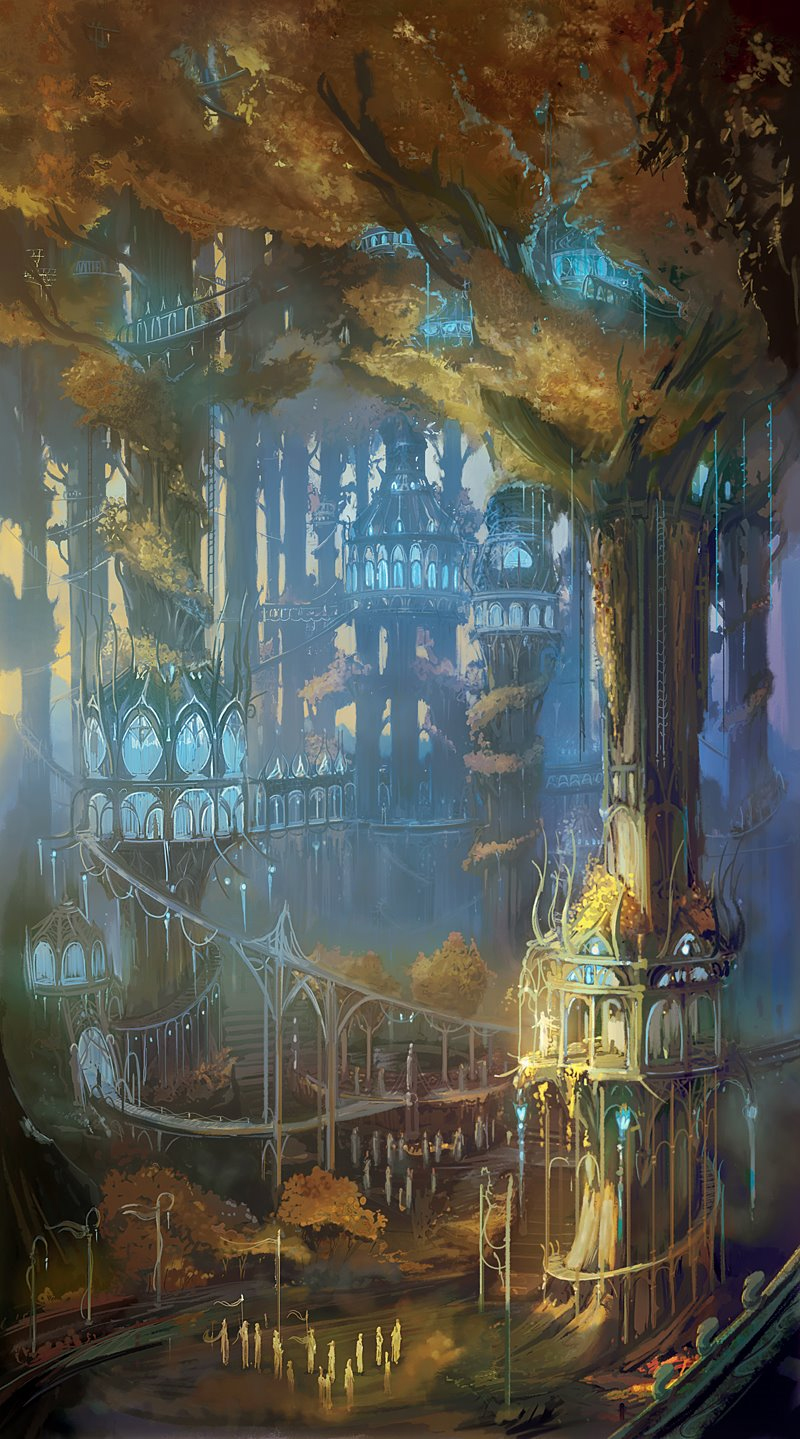
Lothlórien, via  here

The forest is one of these great symbols which have been ever-present in myth, legend, literature, film and others, if not all, creative endeavours of mankind. I have long been enchanted by the following poem by Baudeleaire called Correspondences, mainly because of the way it is both deeply spiritual and sensual (note the wonderful use of synesthesia) and how it touches upon the mystery of forest symbolism without defiling its depth and mysteriousness. Correspondences is a term put forward by Swedenborg to denote the affinity between Above and Below, a hidden network of secret relationships, the belief in which is at the heart of symbolist thought. According to Swedenborg,  correspondences exist between Spiritual and Natural Plane of the Mind, between God and the world he created, between body and spirit, and between action and intention. The poem shows wonderfully what the forest may correspond with in the spiritual realm of symbols.

Nature is a temple in which living pillars
Sometimes give voice to confused words;
Man passes there through forests of symbols
Which look at him with understanding eyes.

Like prolonged echoes mingling in the distance
In a deep and tenebrous unity,
Vast as the dark of night and as the light of day,
Perfumes, sounds, and colors correspond.

There are perfumes as cool as the flesh of children,
Sweet as oboes, green as meadows
— And others are corrupt, and rich, triumphant,

With power to expand into infinity,
Like amber and incense, musk, benzoin,
That sing the ecstasy of the soul and senses.

(translated from the French by William Aggeler)

When I was a little girl we played a game of imagination which started with a challenge: Imagine you are in a forest. Describe it in as much detail as you can. I would always imagine a really deep, dark and dense forest, perhaps even foggy, with very low visibility but with breathtaking and intoxicating aromas, full of crooked mossy branches and with the sounds of hooting owls and screeching bats. I remember playing that game with our secondary school teacher during a school trip. Her imaginary forest was sunny, lush, green, with tall trees and short manicured grass, full of colourful mushrooms and berries. After I offered my description she looked at me suspiciously, perhaps not certain whether the monsters hiding in my subconscious would not haunt her at night. I think she might have thought I was disturbed. However, when I learned more about symbols later on in life, I felt a little vindicated. In his Dictionary of Symbols Cirlot writes thus about the forest:

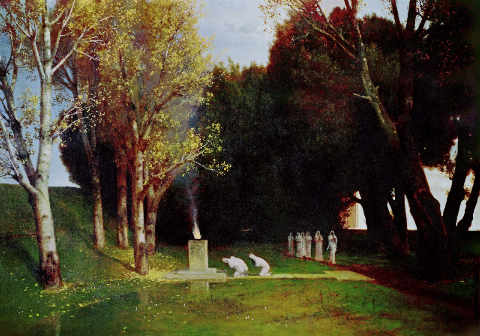
The forest is the place where vegetable life thrives and luxuriates, free from any control or cultivation. And since its foliage obscures the light of the sun, it is therefore regarded as opposed to the sun’s power and as a symbol of the earth. In Druid mythology, the forest was given to the sun in marriage. Since the female principle is identified with the unconscious in Man, it follows that the forest is also a symbol of the unconscious. It is for this reason that Jung maintains that the sylvan terrors that figure so prominently in children’s tales symbolize the perilous aspects of the unconscious, that is, its tendency to devour or obscure the reason. Zimmer stresses that, in contrast with the city, the house and cultivated land, which are all safe areas, the forest harbours all kinds of dangers and demons, enemies and diseases. This is why forests were among the first places in nature to be dedicated to the cult of the gods, and why propitiatory offerings were suspended from trees (the tree being, in this case, the equivalent of a sacrificial stake).

Image

 Arnold Böcklin, The Sacred Grove

I think Cirlot succeeds in capturing the gist of forest symbolism but I would dare to expand a little on his definition by looking at the forest imagery in Tolkien’s Lord of the Rings (the book).  In the first part, the heroic quest begins in the Old Forest, which borders the Shire symbolizing the threshold on the verge of the unknown.  Marching through it, the hobbits go deeper and deeper and always keep turning left, which symbolically implies introversion and probing the unconscious. The trees are perilous, alive and can be malicious. At one point Merry and Pippin get trapped in the trunk of Old Man Willow, who had cast a spell on them making them sleepy. In this part of the hero’s journey the forest symbolizes the threatening aspect of the personal unconscious, its deathly pull towards inertia stemming from the lack of consciousness and self-knowledge.

The next stop in the journey, which is the beautiful forest of Lothlórien, where Lady Galadriel resides with the Elves, symbolizes the enchanting, magic and creative powers of the collective unconscious. This is a sacred grove not touched by Sauron’s evil powers. The word Lórien meant literally Land of Gold and Dream. It is a place where the heroes can find a respite in their quest, get in touch with their own inner beauty and divinity and fill their hearts with hope, meaning and vision of the future, tapping into  the prophetic powers of Lady Galadriel.

Lastly, the heroes find themselves in the Fangorn Forest, where the Ents (tree-like creatures, shepherds of the trees) dwell. The Hobbits have gone full circle now in their journey of self-discovery and are able to ensure the assistance of the Ents.  In other words, they are now able to form a meaningful connection with their own unconscious Self and find help and inspiration there. In the ultimate Gaia’s revenge against her oppressors, who have been chopping down the forest, the Ents invade the evil Saruman’s domain and destroy it. The Fangorn Forest symbolizes simultaneously the destructive forces of the collective unconscious but also its Saviour aspect. The Hobbits have now learned that “where danger is, grows the saving power also”, as the German poet Holderlin put it.An act of destruction can lead to magnificent creation, which once again shows that the power of archetypes activates light and dark forces at the same time.

Support my blog

If you appreciate my writing, consider donating and make my day. Thank you in advance.

$1.00

Posted in The Forest | Tagged , , , , , , , , , , , , , | 37 Comments

The Symbolic World – Llewellyn Vaughan-Lee

A short talk by a Sufi mystic about a symbolic world which mediates between our ordinary consciousness and the world of the soul.

Posted in Uncategorized | Tagged , , , , , , , | 5 Comments

A Few Words on the (Western) Soul

Image

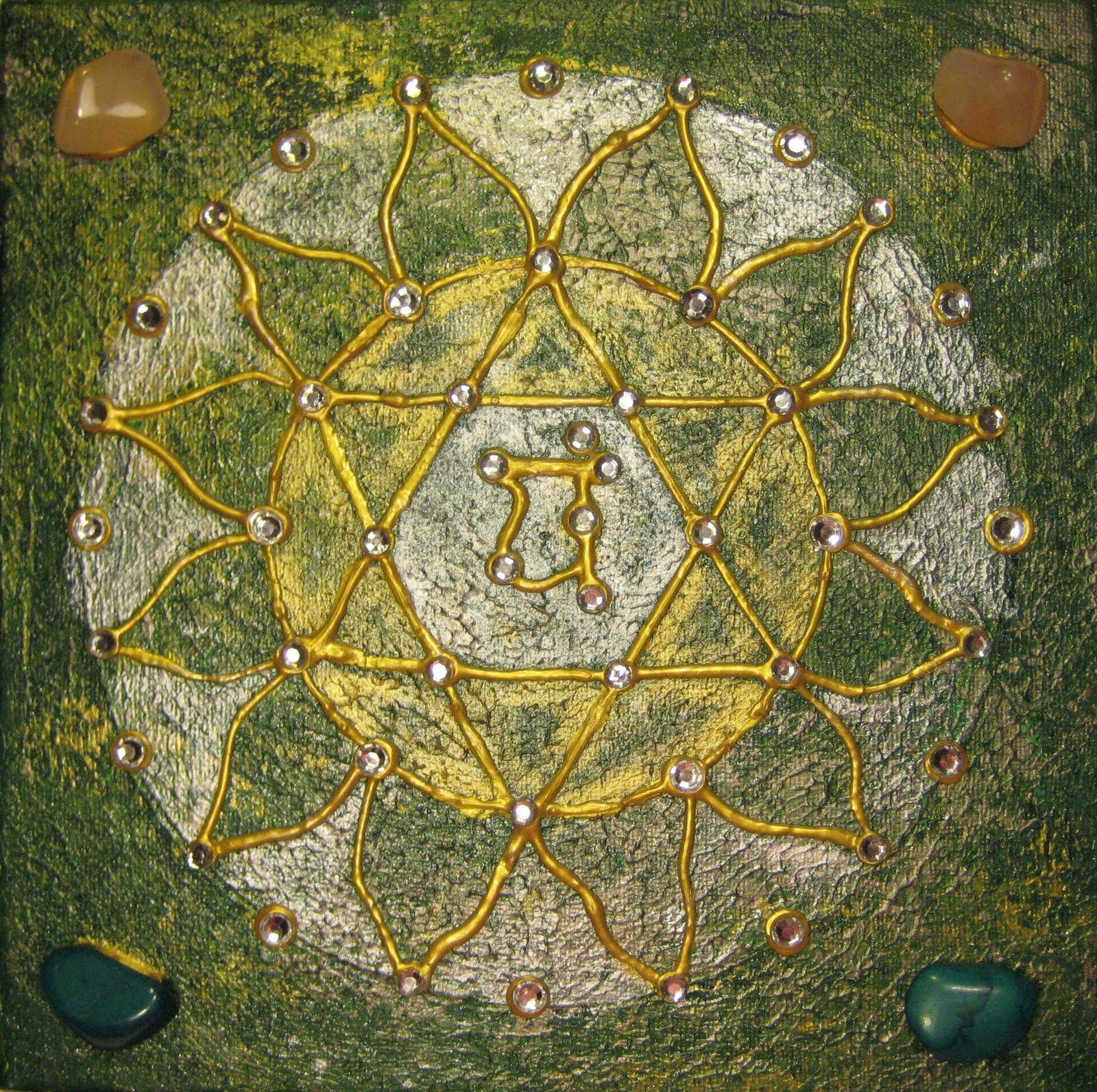
The Heart Chakra (via here)

I have always believed, and actually started my blog with that idea, that the anatomy of the human soul is the same regardless of any superficial cultural differences. There is a general lament for the West having lost the Soul. While I agree that the official public sphere is quite rigid and uninspiring, I think Westerners have been more creative than ever in all spheres of life. Wonderful novels, poetry, paintings and ideas are pouring out, making it virtually impossible to keep up with all that is going on in the realm of creativity. This fervent ferment in the Western soul is just impossible to ignore. Just take a look at the busy blogosphere for example. A spiritual revolution is happening at the grass roots. May the roots blossom into towering trees.

A Few Words on the Soul

By Wislawa Szymborska (Polish poet, recipient of the Nobel Prize in Literature)

Translated from the Polish by Stanislaw Baranczak and Clare Cavanagh

We have a soul at times.
No one’s got it non-stop,
for keeps.

Day after day,
year after year
may pass without it.

Sometimes
it will settle for a while
only in childhood’s fears and raptures.
Sometimes only in astonishment
that we are old.

It rarely lends a hand
in uphill tasks,
like moving furniture,
or lifting luggage,
or going miles in shoes that pinch.

It usually steps out
whenever meat needs chopping
or forms have to be filled.

For every thousand conversations
it participates in one,
if even that,
since it prefers silence.

Just when our body goes from ache to pain,
it slips off-duty.

It’s picky:
it doesn’t like seeing us in crowds,
our hustling for a dubious advantage
and creaky machinations make it sick.

Joy and sorrow
aren’t two different feelings for it.
It attends us
only when the two are joined.

We can count on it
when we’re sure of nothing
and curious about everything.

Among the material objects
it favors clocks with pendulums
and mirrors, which keep on working
even when no one is looking.

It won’t say where it comes from
or when it’s taking off again,
though it’s clearly expecting such questions.

We need it
but apparently
it needs us
for some reason too.

amerigo-vespucci

This photo shows the Moon Compass, a bracelet made of gold, silver and bronze by Alessandro Dari, a master jeweller from Florence. I was lucky to visit his studio last summer. The artist’s inscription says that this compass will always indicate the right way to follow, since you will never know where you are going if you don’t know who you are. Sounds like a beautiful definition of the Soul.

Posted in Uncategorized | Tagged , , , , , , , , , , , , | 19 Comments

Why Think of Something Rather than Nothing

Image

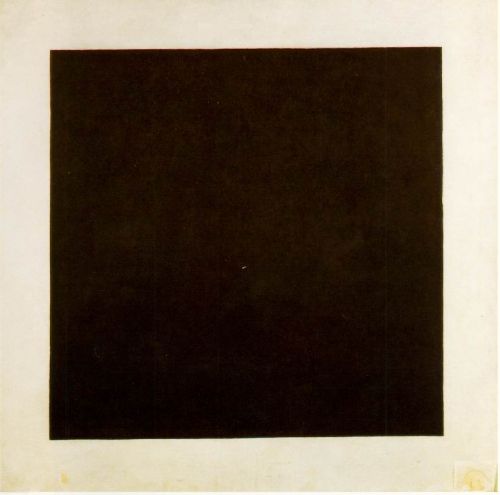
Malevitch, Black Square

I have an American Indian friend who is a Pueblo chieftain. Once when we were talking confidentially about the white man, he said to me: “We don’t understand the whites. They are always wanting something, always restless, always looking for something. What is it? We don’t know. We can’t understand them. They have such sharp noses, such thin, cruel lips, such lines in their faces. We think they are all crazy.

Carl Jung, The Spiritual Problem of Modern Man

Starting on a very light note today, I am reminded of a brilliant scene on Seinfeld, in which Elaine and her boyfriend Paddy are on a long-haul flight. Theirs is a love-hate relationship, which consists in breaking up and getting back together cyclically. She considers herself an intellectual whereas he is a simple-minded car mechanic/football fan. While on the plane she takes out a fairly thick looking book and starts reading whereas he just keeps staring at the seat in front of him.  She cannot comprehend how a person can spend the entire duration of a journey just staring into nothingness, so she loses it, starts yelling and breaks up with him, yet again. But perhaps Paddy is the ultimate Zen master we should all look up to. Must we keep the mind busy at all times? I always try to achieve my moments of stillness but I find that task impossible when I am at home or up and about in the city. Quietness and peace come naturally when I am in a large forest that stretches near where I live, though. Surrounded by its beauty, I can let my earthly Taurus Moon commune with nature and shut down the ever busy planets in Gemini that keep bombarding and straining my nervous system on a daily basis.

It is fitting that I should have started by mentioning the most famous TV show about nothing because nothing is my subject, or rather I want to write about nothing. Being Polish, I am partial to Slavic humour. One of my favourite writers is Czech, Michal Ajvaz. He is able to dress deep philosophical issues into attractive and humorous costumes without sacrificing their depth. In his short story entitled Nothing he wonders how opinionated everyone is nowadays. What comes is my attempt at a translation from Polish:

I am amazed how people always carry their opinions around like suitcases. It is enough to ask them about something and they will open one of the suitcases and empty its contents. This has always been incomprehensible to me. I do not have any opinions myself but I do not own up to that. In social circumstances, I used to pretend to have the whole inventory of opinions, ready to be used like instant tea bags. But in fact, my opinions were dummies, they were often incoherent, fragile and ugly. The others would show off their shiny, shapely, polished and hygienic opinions. As our conversation progressed the room got cluttered with all kinds of opinions. We could not see each other any more. I was really ashamed.

In a joking manner, he captured my exact sentiment. I break out in cold sweat when asked about my opinion on something. At the etymological root of the word opinion there is the word choice (think of the word option which is related). We must choose to form an opinion. But what if you see the two sides simultaneously and why should you devalue their wholeness and co-existence? This is one problem I have with decisive opinions, and the other one is that they prevent the mind from being fresh and open to new possibilities and wonder.  Opinions often prevent life from flowing naturally. I would always choose ideas over opinions. Ideas can plant the seeds of change, opinions are usually stumbling blocks.

One thinker that has changed (been changing?) the landscape of my mind is Krishnamurti. I always keep the following words of his in my heart, as a pointer to what I would like to achieve one day:

Truth can come to you only when your mind and heart are simple, clear, and there is love in your heart; not if your heart is filled with the things of the mind. When there is love in your heart, you do not talk about organizing for brotherhood; you do not talk about belief, you do not talk about division or the powers that create division, you need not seek reconciliation. Then you are a simple human being without a label, without a country. This means that you must strip yourself of all those things and allow truth to come into being; and it can only come when the mind is empty, when the mind ceases to create. Then it will come without your invitation. Then it will come as swiftly as the wind and unbeknown. It comes obscurely, not when you are watching, wanting. It is there as sudden as sunlight, as pure as the night; but to receive it, the heart must be full and the mind empty.

I do not think that Krishnamurti rejects thinking here and puts all value on feeling. I believe what he means is this: be still, be open, do not be rigid in your opinions, do not identify with your views, your background, your ethnicity. I spent enough time at universities and various intellectual circles to be able to see clearly how futile and sterile all the excessively intellectual pursuits can be. Thoughts create more thoughts without touching you emotionally. Academic psychology left the human heart outside in the cold and shut the doors firmly. All I know is that this is no longer my world. I choose nothingness, which according to Cirlot’s Dictionary of Symbols is “reality without objects and without forms yet nurturing the seeds of all things.”

Image

Krishnamurti

Posted in Uncategorized | Tagged , , , , , , , , , , , , , | 16 Comments

The Eternal Charm of the Feminine

Spirituality and sexuality are not your qualities, not things which ye possess and contain. But they possess and contain you; for they are powerful … manifestations of the gods, and are, therefore, things which reach beyond you, existing in themselves. No man hath a spirituality unto himself, or a sexuality unto himself. But he standeth under the law of spirituality and of sexuality.

C.G. Jung, The Seven Sermons to the Dead

Gustave Moreau’s art strikes a deep chord with me. He captures my imagination like no other painter. It was the anniversary of his birth last Sunday so I decided to share a few reflections on his art. His beloved subject were beautiful and alluring women, the ones immortalized in myth and the Bible. In his paintings they are always larger than life, terrifying and awe-inspiring, tempting, mysterious, at the same time powerful and ethereal. The mystery of the eternal feminine must have haunted him all his life. He lived with his mother until her death while his girlfriend, whom he never married, lived nearby in a flat that he was paying for. It is not my intention to interpret his birth chart here but even a quick glance at it reveals quite a lot. No less than six planets in Aries, including the Sun, the Moon (in close conjunction with Pluto) and Venus, which is squared by the rebellious Uranus. It must have been hard being him, torn between the desire for absolute freedom and all the deepest yearnings, passions and anxieties, maybe even fear of the dark feminine, which I read into his Moon in conjunction with Pluto. Carl Jung, who also had his Moon close to Pluto, wrote about his mother:

From the door to my mother’s room came a frightening influence.  At night Mother was strange and mysterious.  One night I saw coming from her door a faintly luminous indefinite figure whose head detached itself from the neck and floated along in front of it, in the air like a little moon.

C.G. Jung, Memories, Dreams, Relections, p. 18 (all the subsequent quotes come from the Vintage Books Edition, New York, 1965)

There is terror and mystery in these words. It also occurred to me that perhaps keeping his lover at a safe distance made it possible for Moreau to keep a divine spark in their relationship; that perhaps in this way he never ceased to see a goddess in her and was able to translate that feeling into his art. She could forever stay his anima and continue to be his divine inspiration, which was in danger of disappearing had they ever married and lived together. Here are a few Jung’s quotes on the anima, who I think is the ultimate theme of Moreau’s paintings:

…this inner feminine figure plays a typical, or archetypal, role in the unconscious of a man…  (p. 186)

At first it was the negative aspect of the anima that most impressed me. I felt a little awed by her. (p. 186)

… the insinuations of the anima, the mouthpiece of the unconscious, can utterly destroy a man. (p. 187)

But the anima has a positive aspect as well. It is she who communicates the images of the unconscious to the conscious mind… For decades I always turned to the anima when I felt that my emotional behavior was disturbed, and that something had been constellated in the unconscious. I would then ask the anima: “Now what are you up to? What do you see? …” After some resistance she regularly produced an image. As soon as the image was there, the unrest or the sense of oppression vanished. The whole energy of these emotions was transformed into interest in and curiosity about the image. (p. 187)

The anima of a man has a strongly historical character. As a personification of the unconscious she goes back into prehistory, and embodies the contents of the past. She provides the individual with those elements that he ought to know about his prehistory. … In comparison to her I have always felt myself to be a barbarian who really has no history – like a creature just sprung out of nothingness, with neither a past nor a future. (p. 286)

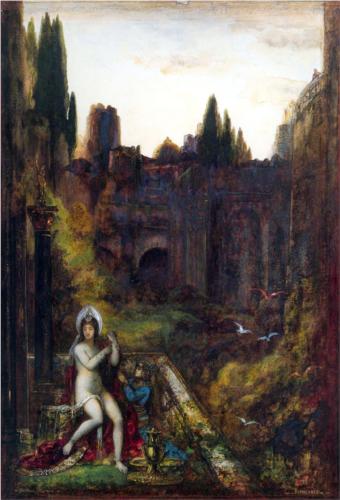
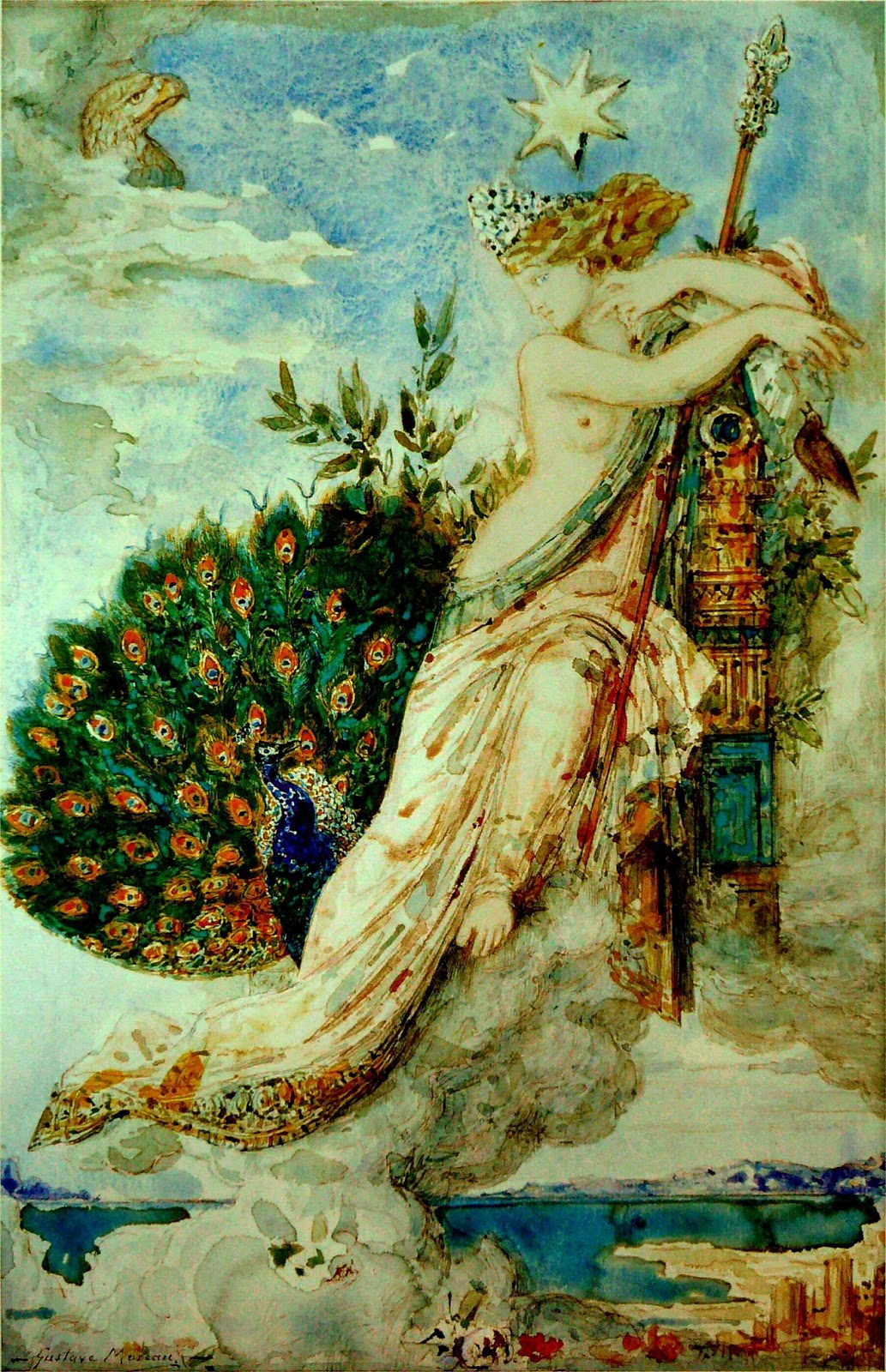
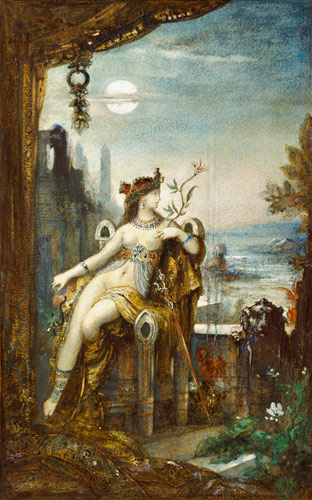
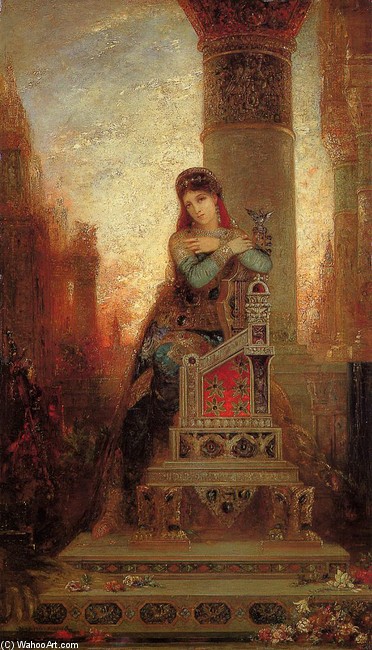
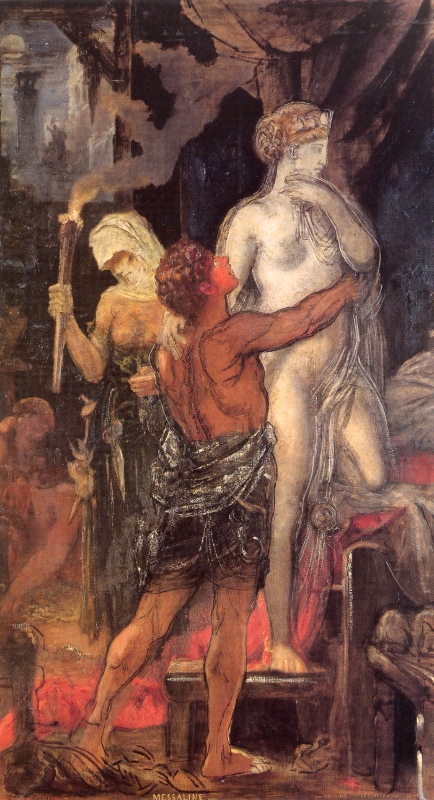
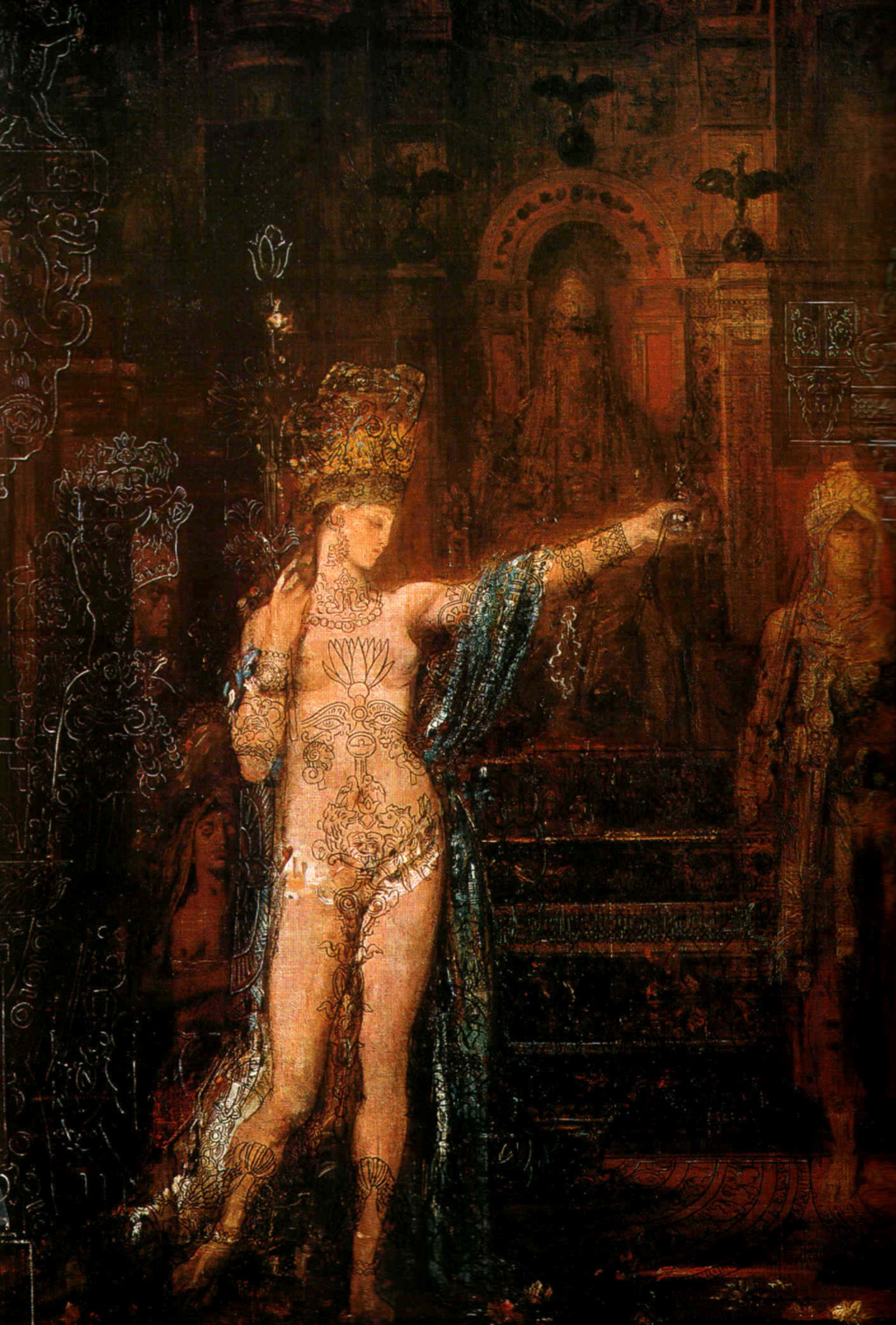
The negative anima bewitches, seduces, is mischievous, causes delusions and makes the man neglect reality. The positive anima is the man’s guide through the unconscious; he is his Ariadna leading him out of the dark. I think Moreau captured both the negative and the positive aspect of the anima archetype. Below is a gallery of some of his images of the feminine. In Bathsheba, who became King David’s wife after he seduced her and had her then husband killed, the most extraordinary thing is the sheer size of the female figure. He covets her and feels literally small and insignificant in her presence. She looks innocent and corrupt at the same time, carrying an enormous archetypal force, since archetypes are always composed of the dark and the light side. Embracing an archetype means accepting both its creative and destructive force. Moreau was supposed to have said that he did not believe what he could touch or see, but only in what he did not see and in what he could feel. This credo gave his art the strength of the inner vision. His paintings look like dream images and have a strong otherworldly aura.

Image

Bathsheba

Image

Helen on the walls of Troy

Image

Juno

Image

Cleopatra

Image

Desdemona

Image

Messalina

Image

Salome

Image

The Sirens

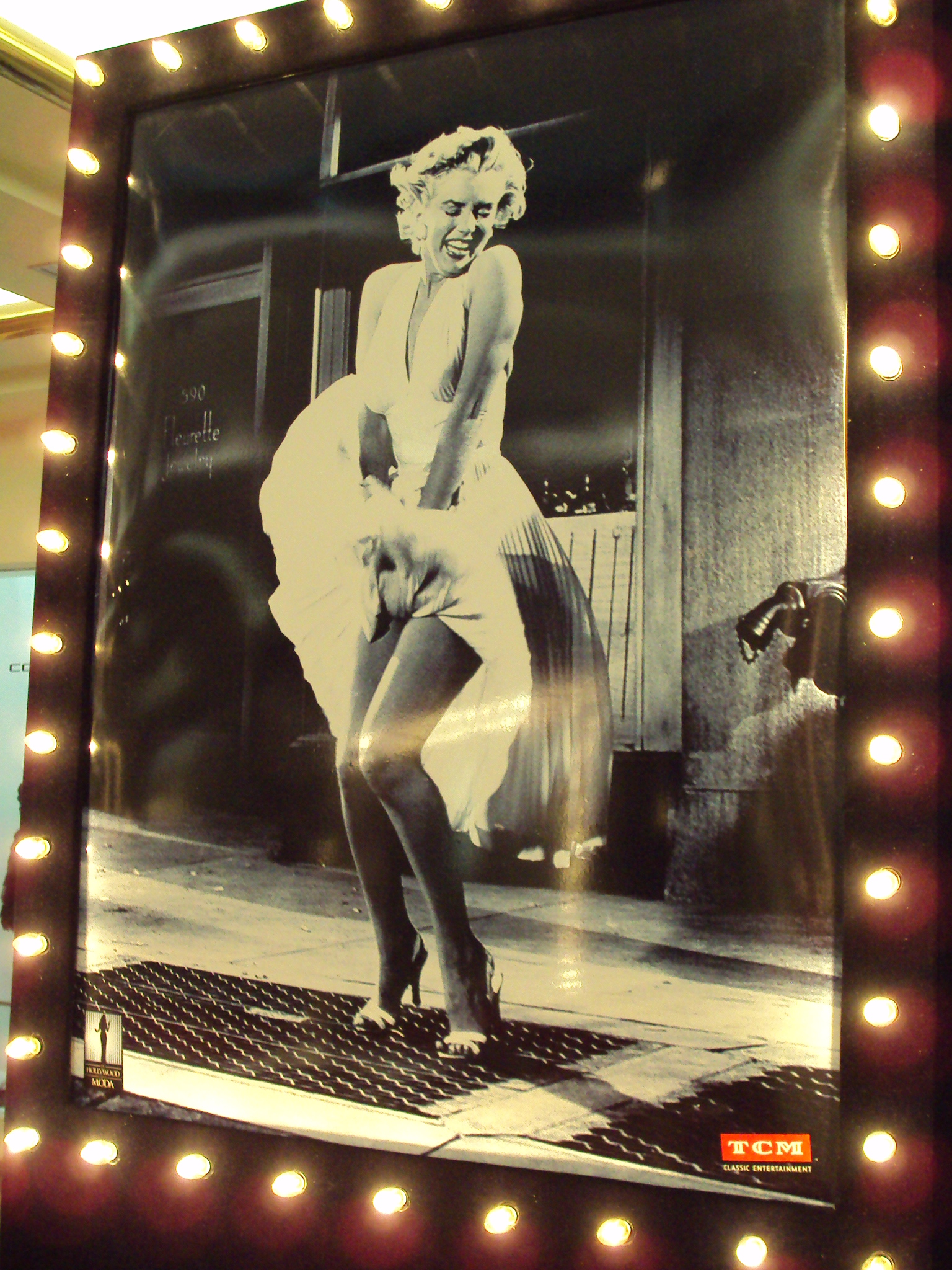
We continue to be mesmerized by the power of the anima archetype when we worship female actresses, the goddesses of the cinema. Marilyn Monroe personified the anima for countless men and in the end she was consumed by that archetype, while her personality dissolved and disappeared. She became a mere collective image. This process is beautifully described in Joyce Carol Oates’ masterpiece Blonde, which is a sort of a chronicle of the inner life of Marilyn Monroe. I found the book fascinating and I particularly remember one quote:

A lush-bodied girl in the prime of her physical beauty. In an ivory georgette-crepe sundress with a halter top that gathers her breasts up in soft undulating folds of the fabric. She’s standing with bare legs apart on a New York subway grating. Her blond head is thrown rapturously back as an updraft lifts her full, flaring skirt, exposing white cotton panties. White cotton! The ivory-crepe sundress is floating and filmy as magic. The dress is magic. Without the dress the girl would be female meat, raw and exposed.

Image

This is how a goddess was born and how the real woman died. She might have been saved had she become conscious of the danger of being swept by the collective forces. Personifying the goddess for millions of people came with a price. The essential thing, according to Jung, is to differentiate oneself  from these unconscious contents and bring them into relationship with consciousness. We are not gods or goddesses but gods and goddesses act through us with a considerable amount of autonomy. They are tremendous forces and are not to be toyed with. Simone de Beavoir, the first important feminist, insisted that the notion of the eternal feminine was a myth invented by men to trap women and deny them their individuality. I believe humans will forever continue to be trapped by the seductive charms of the anima and the more we do to make this archetype conscious, the more it will enrich our lives with meaning, beauty and mystery.


Posted in Uncategorized | Tagged , , , , , , , , , , , , , , , | 26 Comments

The Source of Unity and Harmony

Beautiful-Clouds-1920x1080-Wallpapers

To the magus, there exists no accidental happening…everything is established solidly by that law which the wise man discerns in happenings that appear accidental to the profane. The curve observed in the flight of birds, the barking of a dog, the shape of a cloud, are occult manifestations of that omnipotent coordinator, the source of unity and harmony.
Kurt Seligmann, Magic, Supernaturalism, and Religion

(Image via here)

Posted in Uncategorized | Tagged , , , , , , , , , | 4 Comments

Crumbling Ruins and Underwater Palaces

My imagination has always been stirred by crumbling ruins and underwater palaces. Their symbolism is directly connected with the astrological Neptune, a planet which governs dissolution by water, getting lost in imagination, fantasy and reverie and being enchanted by inner visions. It evokes the transience of all things material and a general feeling of world-weariness. The twelfth house of the Zodiac, which is ruled by Neptune, is a primordial ocean, the birthplace of the archetypes of the collective unconscious. Out of its primordial waters all form is manifested, as it precedes Aries, the first sign of the Zodiac, which brings manifestation on the physical plane. Without this non-material and unseen realm of images nothing could ever be born.

Neptune is often called a planet of illusions because if it features prominently in a natal chart, a person may be prone to excessive fantasizing and escapism. On the other hand, I would bet that all the self-realized mystics must have had a prominent Neptune in their charts. While individuation requires finding ourselves in the world of form and hard matter and creating order in our personal universe, Neptune shuns artificial order and dissolves all forms. From a mystical point of view, it is the physical world of our everyday lives which is an illusion (maya), while the real world is hidden and can only be reached through the dissolution of the ego.

There is a richly symbolic story written by one of my favourite writers, Jorge Luis Borges called The Circular Ruins. It shows the paradox of reality and illusion. A wizard leaves the world and retreats to the circular ruins, a magical place that possesses strong mystical powers, where the god of Fire resides. His purpose is to create a human being from his own dreams. He dreams longer and longer every day and yet all his creative attempts are fruitless. But then one day he dreams of a human heart, and after that he is able to create a human, piece by piece. He prays to Fire god to give life to his creation. The god agrees but on one important condition: nobody will know the boy is not a real human, the wizard’s secret cannot be revealed to anybody. Thus the magician has achieved his ambition but soon his victory and piece became blurred with boredom. In the end, the ruins of the sanctuary of the god of Fire are destroyed by fire and the wizard sees that his death is coming. Here is how the story ends:

He walked toward the sheets of flame. They did not bite his flesh, they caressed him and flooded him without heat or combustion. With relief, with humiliation, with terror, he understood that he also was an illusion, that someone else was dreaming him.

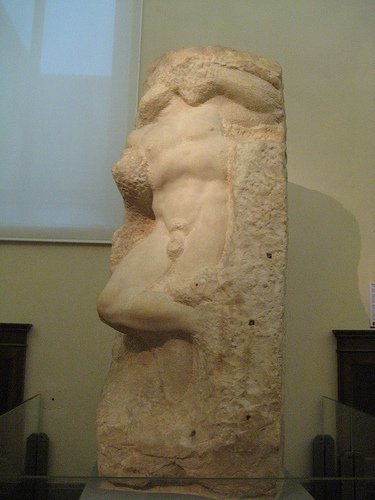
I have always felt more at home in the Neptunian realm of dreams than in the physical reality. The words “My Kingdom is not of this world” have always resonated very true for me. How strange that I should feel more inspired and energized looking at the Venus of Milo with her missing arms than at any other sculpture, however perfect or colourful it would be. Similarly, the works of the impressionists in which everything vibrates and in which the form is not settled yet, as it was at the moment of creation, are very vibrant and alive to me. I guess I am enchanted by this moment of emerging form that can be so beautifully observed in Michaelangelo’s sculptures. Conversely, I am enchanted by the crumbling form on the verge of returning to the primordial Neptunian waters. Ruins as well as all forms of ancient and dilapidated building have always held a special fascination for me.

Image

Michaelangelo’s unfinished (?) sculpture

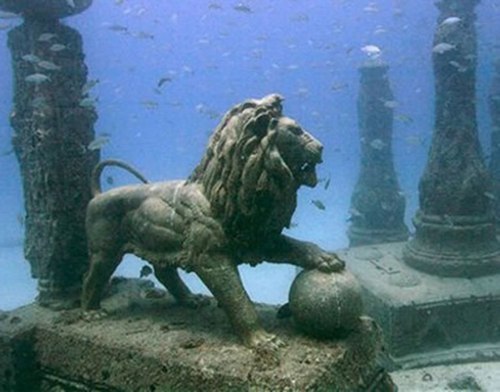
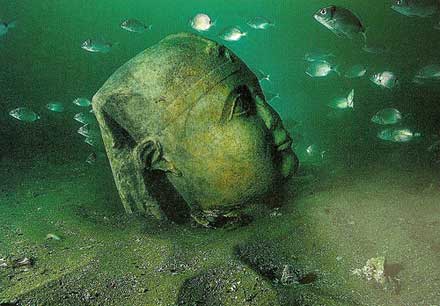
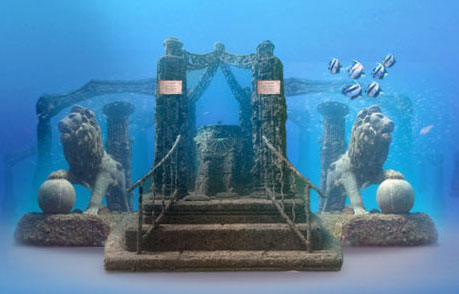
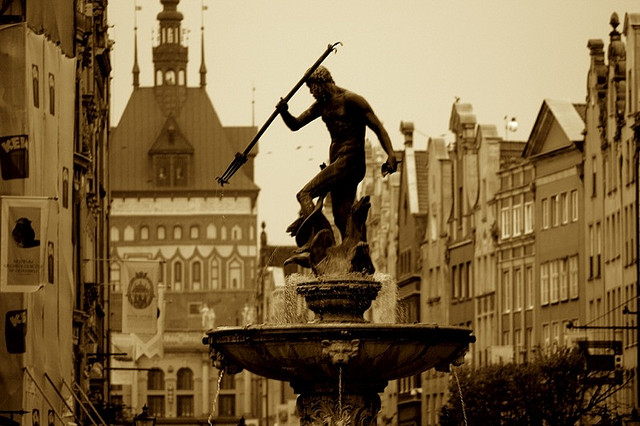
I have recently read about two underwater ruins which quite captured my imagination. The first is the underwater palace of Cleopatra in Egypt. It was swept to the bottom of the ocean as a result of an earthquake. The beauty of it is breathtaking. The other one is the Neptune Memorial Reef, an underwater mausoleum in Florida. I was particularly impressed by the archetypal aptness of the name choice for this underwater cemetery. I used to live at the Polish seaside in the city of Danzig, five minutes away from a beautiful statue of Neptune. At that time I could pay daily homage to the god of the matrix from which all things arise. I often miss seeing him.

Image

Cleopatra’s underwater palace

Image

Cleopatra’s underwater palace

Image

Neptune memorial

Image

Neptune Statue in Gdansk (Danzig)

Posted in Neptune | Tagged , , , , , , , , , | 44 Comments

Hear Your Inner Voice

Image

Image of the Self from Carl Jung’s Man & His Symbols

I am in a mood for a self-indulgent post. I just wanted to share my joy of inspiration. Someone was inspired by me today to create a haiku (http://martsart.wordpress.com/2013/04/01/water/) and this really made me happy.

I looked into the Online Etymology Dictionary:

inspiration (n.)

c.1300, “immediate influence of God or a god,” especially that under which the holy books were written, from Old French inspiracion “inhaling, breathing in; inspiration,” from Late Latin inspirationem (nominative inspiratio), noun of action from past participle stem of Latin inspirare “inspire, inflame, blow into,” from in- “in” (see in- (2)) + spirare “to breathe” (see spirit). Literal sense “act of inhaling” attested in English from 1560s. Meaning “one who inspires others” is attested by 1867.

Ever since I started this blog, I have been feeling more and more inspired. This can be explained astrologically: the transiting Jupiter is approaching my Sun among other things. When I moved to Zurich, the Swiss city of bankers, two years ago, I hit a very dry spell inspiration-wise. I was almost completely stuck in and devoured by the material plane. It was as if the spirit had left me. There is a movie for children called the Golden Compass, in which the characters have their own dæmons, which basically are their souls in the form of animals. Dæmons and their humans are not of the same gender, which to me is a neat allusion to Carl Jung’s theory of anima and animus – the male and female soul respectively. Anima and animus literally animate our inner spirit by sending us on a spiritual quest and guiding us through the world of the unconscious forms. In the film Golden Compass the separation from one’s dæmon caused severe pain and trauma. The evil Magisterium constructed a special guillotine which separates people from their dæmon. A person whose dæmon has been separated loses creativity, intelligence, will and any traces of a divine spark, thus becoming empty and lifeless, in short: uninspired. It is a very Gnostic concept: robbing humans of the Divine Spark and separating them from the Divine Light. This is how I felt for quite a while but I am pleased to say that not any more. My Socratean dæmon has come back to me after years of exile.

Image

Who or what is that Socratean dæmon? We hear it via the inner voice. The dæmon is a powerful archetypal call of something larger than us. Jung wrote that it had an autonomous force and was able to make demands on a person ‘possessed’ by it. It is supposed to be a powerful creative process that individuals get caught up in and which is beyond their conscious control. As a natural force it cannot be stopped by ego consciousness. The main role of the dæmon is to make the individual whole again by forcing him or her to integrate the split fragments of the psyche and to find connection with a larger, divine Self archetype. The dæmon releases all the buried unconscious energy and that’s why it should be handled with caution because of its destructive force.

I am grateful to experience this feeling of renovation of spirit.

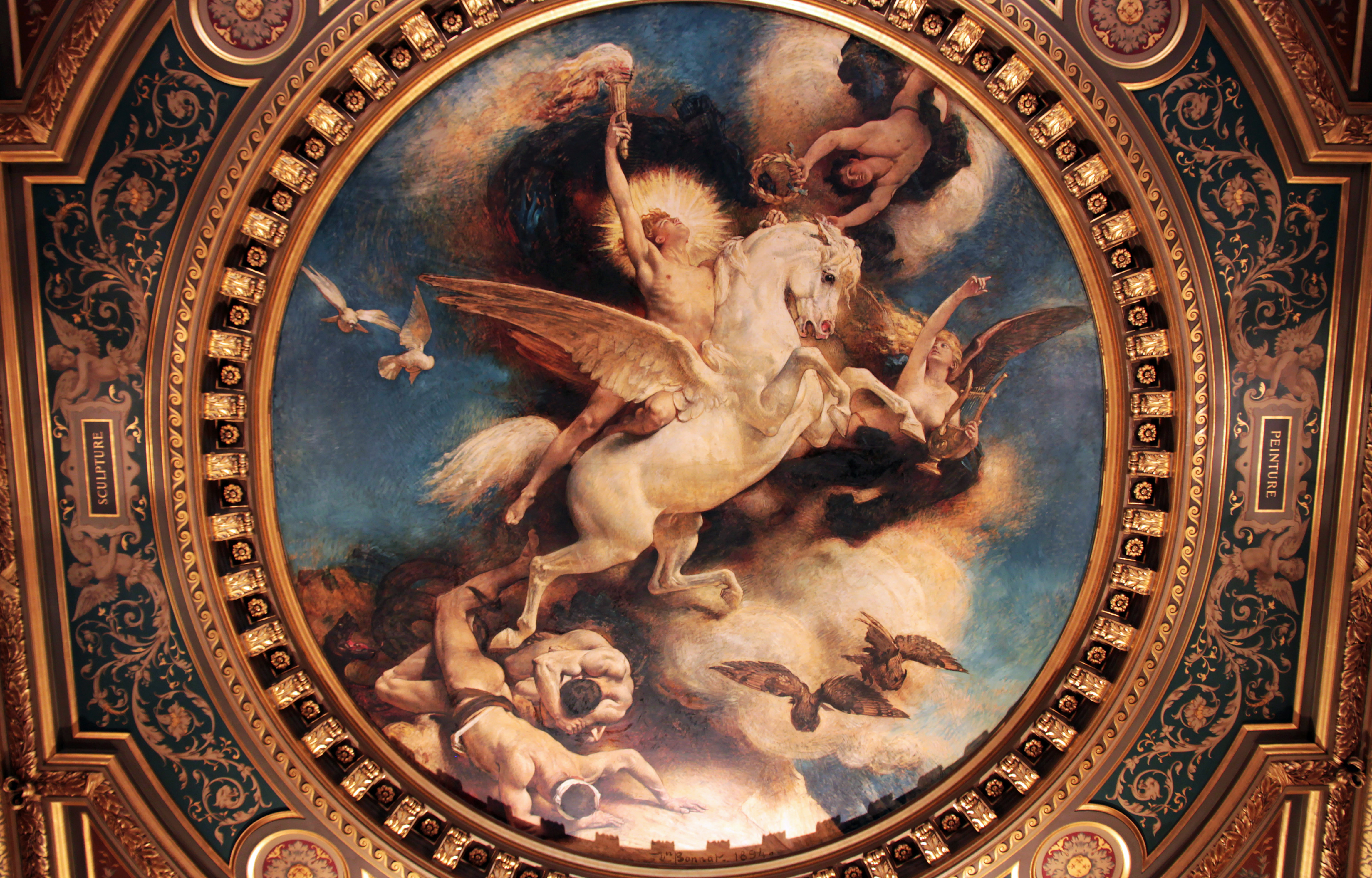
Triomphe_de_lart_leon_bonnat_hotel_de_ville_paris
“Le Triomphe de l’Art”, 1894, by Léon Bonnat

Posted in Uncategorized | Tagged , , , , , , , , , , , , , , , | 13 Comments

Thinking of Ishtar

Ishtar-Gate-picture

the magnificent Ishtar gate

Image

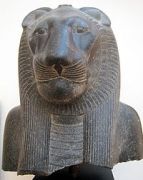
Ishtar gate lion

A shop assistant in my local grocery store wished me “Schöne Ostertage” (happy Easter days) but what I heard was the name of the goddess Astarte, which is a counterpart of the Babylonian goddess Ishtar. I found myself thinking of her today. Some scholars speculate her name is at the root of our Easter, but as far as I know this has not been proven beyond doubt.

I found two fascinating links today that I want to share.

The true origin of Easter

Ishtar myth

A link to a great post by a fellow blogger that I stumbled upon just today.

Posted in Uncategorized | Tagged , , , , , , | 8 Comments

Musings on the Symbol of the Cross

Image

Salvador Dali, Christ of Saint John of the Cross

The symbol of the cross has held a fascination with me for a very long time now. I don’t wear a lot of jewellery but the Celtic cross is something I wear very often. Both the Ankh (juxtaposing the eternal circle with the four arms symbolizing the material plane; an Egyptian symbol of life and fertility) and the Celtic cross hold an evocative power for me.

Image

Image

image via http://www.trekearth.com/gallery/Europe/Ireland/South/Kerry/Muckross/photo1258736.htm

I remember seeing Salvador Dali’s painting Christ of Saint John of the Cross for the first time during an Arts lesson at school. It had a tremendous effect on me, which only now I can rationalize. All its elements: the dark sky, a body of water and a fisherman’s boat emanate with a primal archetypal force. It is a crucifixion but it is not an image of physical suffering, at least not with the usual gory display. Apparently, the vision of the painting came to Dali in a dream, in which he was admonished not to present Christ with the crown of thorn or blood. The lighting used in the painting is extraordinary and so is perspective. We view the painting from above, so to speak, which to me emphasizes its eternal quality and shows the significance of Christ’s passion for the whole humanity. Nevertheless, the sea below is not shown from a bird’s eye view, which makes this painting quite unique and surreal, creating a mixed perspective and a feeling of vertigo which I get looking at it. To me the essence of this image is the following: the earthly perspective is juxtaposed with the heavenly one. The transcendent is overlooking the mundane. The mystical dimension pointing towards the earth cannot be ignored; it has urgency about it and affects the viewer on a physiological level, making his or her head spin. The cross in this painting is the axis mundi, the world axis connecting Heaven and Earth. Dali himself wrote:

In the first place, in 1950, I had a ‘cosmic dream’ in which I saw this image in colour and which in my dream represented the ‘nucleus of the atom.’ This nucleus later took on a metaphysical sense; I considered it ‘the very unity of the universe,’ the Christ!

I love reading about the history of the cross symbol throughout the ages. Long before Christianity the symbol of tau (the letter T) was allegedly drawn on foreheads of mystery initiates. The Pagan roots of Christianity are compelling to anybody who just takes a cursory glance at world mythologies. Death and suffering of a god was not invented by Christianity. Tammuz, Orpheus, Osiris, Mithra and other ancient deities also died and some were even resurrected.

What is the synthesis of the meaning of the cross? The Ankh symbol shows how the divine principle (symbolized by the circle) descends to the material plane via the vertical line of the cross. The vertical line is an active principle descending on the passive horizontal plane. The vertical line of the cross symbolizes what is active and positive, the horizontal what is passive and negative. The cross is a very dramatic juxtaposition of opposites, complete opposite to the symbol of uroboros (the divine serpent eating its tail), which shows the dynamic interplay of opposites, the chaos preceding the order of creation. The cross is a symbol of the human drama connected with being incarnated into hard matter, where the opposites create conflict, tension, pain and suffering. It is a symbol of human existence on the material plane here and now.

Image

image via http://crossandcosmos.blogspot.ch/

Posted in The Cross | Tagged , , , , , , , , , , , , , | 14 Comments