
"The deepest core of life is poetry and symbol." - Dane Rudhyar
Like Symbol Reader on Facebook
-
-
Recent Posts
Categories
Archives
Meta





Tag Archives: symbolism
Reading The Red Book (19)
I. “… opening The Red Book seems to be opening the mouth of the dead.” James Hillman in James Hillman and Sonu Shamdasani, “Lament of the Dead: Psychology After Jung’s Red Book” II. “We need the coldness of death to … Continue reading
Symbolism of the Door
“Lock up your libraries if you like; but there is no gate, no lock, no bolt that you can set upon the freedom of my mind.” V. Woolf, A Room of One’s Own My favourite master of symbolism, J.E. Cirlot … Continue reading
Posted in The Door, Uncategorized
Tagged ancient Egypt, archetypes, Bachelard, door, doors, doorway, false door, Poetics of Space, religion, safety, security, shelter, symbolism, symbols, the new, threshold, torii
7 Comments
Reading The Red Book (18)
“The stars whisper your deepest mysteries to you, and the soft valleys of the earth rescue you in a motherly womb.” C. G. Jung, Liber Novus We have reached chapter V of Liber Secundus, which is the second part of … Continue reading
Posted in The Red Book by C.G. Jung, Uncategorized
Tagged alchemy, ancient Egypt, anima mundi, archetypes, C.G. Jung, Christianity, darkness, depth psychology, Egyptian mythology, Helios, khepri, Liber Novus, light, paganism, Philosophical Tree, scarab, shadow, sun, symbolism, symbols, The Red Book, tree, world soul
5 Comments
The Danaids, the Lernaean Hydra and Heracles
According to the Greek myth, the Danaids, fifty daughters of Danaus, were forced to marry fifty sons of Aegyptus, a ruler of Egypt. Forty-nine of them killed their husbands on the wedding night. The forty-nine heads of the men were … Continue reading
Posted in The Danaids and Hydra, Uncategorized
Tagged archetype, archetypes, arrow, Bachofen, Chiron, Danaides, Danaids, Greek mythology, Hercules, Hydra, Lernean Hydra, magic, matriarchy, patriarchy, priestess, Robert Graves, symbolism, symbols, twelve labours, wounded healer
6 Comments
Ancient Roots of the Symbol
The book Birth of the Symbol: Ancient Readers at the Limits of Their Texts by Peter T. Struck, published in 2004 by Princeton University Press, traces the ancient origins of the concept of a symbol. The author has this to … Continue reading
Posted in The Symbol, Uncategorized
Tagged Ancient Greece, archetypes, C.G. Jung, Chaldean Oracles, Divine, enigma, gods, Iamblichus, interpretation, meaning, Nous, Peter Struck, Plato, Porphyry, Proclus, Pythagoras, sunthemata, symbol, symbolism, symbolon, synchronicity, theurgy
2 Comments
Hermes in the Forest of Symbols
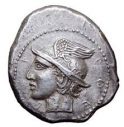
I. “…Hermesian reading is an open, in-depth reading, one that lays bare the metalanguages for us, that is to say, the structures of signs and correspondences that only symbolism and myth make it possible to conserve and transmit. To read, … Continue reading
Posted in Hermes, Uncategorized
Tagged Adocentyn, alchemy, archetypes, Argus, Botticelli, C.G. Jung, caduceus, Carl Jung, Corpus Hermeticum, crossroads, dead, esotericism, Faivre, God, Greek myth, Greek mythology, guide, herma, hermaion, Hermes, Hermes Trismegistus, Hermetica, hermeticism, Hermopolis, magic, Marcilio Ficino, Mercury, messenger, myth, mythology, peacock, Picatrix, Primavera, psychopompos, Soul, symbolism, symbols, Thoth, Zeus
6 Comments
The Underworld in Finnish and Greek Myth
I have been reading The Underland: A Deep Time Journey by Robert MacFarlane, which is a dazzling exploration of the author’s daring travels into the bowels of the earth. He devotes space to mining, caving, cave painting, Parisian catacombs, glaciers … Continue reading
Posted in "The Underland" by Robert MacFarlane, Uncategorized
Tagged "The Dead", Acheron, Ancient Greece, archetypes, Cocytus, descent, five rivers of Hell, Greek myth, Greek mythology, Hades, Kalevala, katabasis, Lethe, myth, mythology, Phlegethon, Robert MacFarlane, Styx, symbolism, symbols, The Underland, the underworld, Tuonela
8 Comments
Reading The Red Book (16)
“In Paris, on a day that stayed morning until dusk, in a Paris like – in a Paris which – (save me, sacred folly of description!) in a garden by a stone cathedral (not built, no, rather played upon a … Continue reading
Posted in The Red Book by C.G. Jung, Uncategorized
Tagged archetypes, becoming, being, C.G. Jung, Carl Jung, Dionysos, fate, individuation, instinct, Liber Novus, symbolism, symbols, The Red Book, tramp, zoe
3 Comments
Reading The Red Book (15)
“Your Hell is made up of all the things that you always ejected from your sanctuary with a curse and a kick of the foot.” Carl Jung, “The Red Book” The second chapter of Liber Secundus is entitled “The Castle … Continue reading
Posted in The Red Book by C.G. Jung, Uncategorized
Tagged analytical psychology, anima, anima mundi, animus, archetypes, C.G. Jung, depth psychology, feminine, gender, Liber Novus, masculine, psyche, Soul, symbolism, symbols, The Red Book
4 Comments
Reading The Red Book (14)
Jung’s Liber Novus, better known as The Red Book, is divided into Liber Primus and Liber Secundus. The former was created on parchment and resembles a medieval illuminated manuscript. The reason why Jung decided to switch to paper in Liber … Continue reading
Posted in The Red Book by C.G. Jung, Uncategorized
Tagged alchemy, analytical psychology, archetypes, C.G. Jung, depth psychology, devil, eye, individuation, instincts, joy, Liber Novus, Mars, red, rubedo, self-knowledge, symbolism, symbols, The Red Book, The Red One
7 Comments
 symbolreader