Vesta: Devoted Guardian of the Sacred Flame

Georges de la Tour, "Mary Magdalene with a Night Light"

Georges de la Tour, “Mary Magdalene with a Night Light”

I.“The chaos of the ancients; the Zoroastrian sacred fire, …; the Hermes-fire; …the lightning of Cybele; the burning torch of Apollo; the flame on the altar of Pan; the inextinguishable fire in the temple on the Acropolis, and in that of Vesta; the fire-flame of Pluto’s helm; the brilliant sparks on the hats of the Dioscuri, on the Gorgon head, the helm of Pallas, and the staff of Mercury; … the pentecostal fire-tongues; the burning bush of Moses; the pillar of fire of the Exodus, and the “burning lamp” of Abram; the eternal fire of the “bottomless pit”; the Delphic oracular vapors; the Sidereal light of the Rosicrucians; the AKASA of the Hindu adepts; the Astral light of Eliphas Levi; the nerve-aura and the fluid of the magnetists; … are but various names for many different manifestations, or effects of the same mysterious, all-pervading cause — the Greek Archeus, or [[Archaios]].“

Madame Blavatsky, “Isis Unveiled“

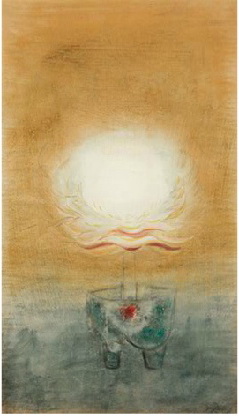
Morris Graves, “Chalice”

Morris Graves, “Chalice”

II.That which always was

and is, and will be everlasting fire,

the same for all, the cosmos,
made neither by god nor man,
replenishes in measure
as it burns away.“

Heraclitus, translated by Brooks Haxton

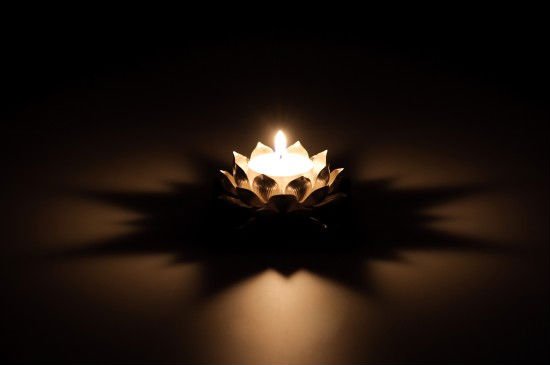
Morris Graves, "Lotus"

Morris Graves, “Lotus”

Morris Graves, “Lotus“

III. A Philosophical Hymn to Hestia

“I sing of Hestia,
the most ancient of Goddesses,
the Fire in the Middle,
the Centre of the Cosmos,
the Centre of the Sphere,
the Prime Composite,
the All, the Source, the Good,
she who maintains order,
she who is the Essence of All Things,
The Goddess of Being,
She Who Abides,
she who alone stays at home in the dwellings of the immortals,
tending the central fire in the heaven of Olympus,
the intellect of the Earth,
the Source and Cause of All Being,
she who presides over the universe with a guardian power,
the fountain of Virtue,
she who fixes the firm seat of the Earth,
who stabilizes the poles,
a ruling power among the supercelestial Gods,
imparting permanence to All,
illuminating all things with stable and inflexible power,
she who contains an inflexible and undefiled permanency in herself,
she who is conjoined to the first causes,
she who is responsible for everything stable and immutable,
she who imparts order to the cosmos,
she who fixes the circulations of the heavenly spheres,
bringing an unshaken permanency to the centre of the Cosmos,
she who is the summit of all beings,
the monad of the whole,
she who imparts from herself to the Gods
an uninclining permanency,
a seat in themselves,
an indissoluble essence,
she who abides in herself,
possessing an undefiled purity,
the Essence of All,
the Cause of Impulsion,
she who subsists in the self,
she who embodies all gravitational forces,
the Ether in the Heart,
the Flame of Life,
She Who Creates, Preserves, and Regenerates the Universe,
she who is honored both first and last in all things,
All hail Hestia, the most ancient of Goddesses!”

Written by the author of this blog: https://paganreveries.wordpress.com/2012/05/19/hestia-the-queen-of-fire-part-three/

Among Greek Gods and Goddesses, Hestia (the Roman Vesta) was worshiped as first born and last born. She was the first daughter of Cronus (Saturn) and Rhea, the first to be swallowed by her father, and the last to be brought back to life. Hence, she can be viewed as both the primal and the final archetypal principle, much like the fire she was the guardian of. She never married, preserving forever her mystic purity; she never took part in any ceaseless conflicts of other gods and goddesses, as if she had deliberately removed herself from the vicissitudes of the temporal world to stand as a guardian to eternity. The temples of other deities were usually quadrangular, but Hestia’s was circular and covered with a dome, the circle being the symbol of unity and eternity that she stood for. In his Greek Myths, Robert Graves acknowledged her primordial quality when he wrote that the very first image of the Great Goddess was in fact non-representational but just “a heap of glowing charcoal, kept alive by a covering of white ash, … (which) formed the natural centre of family or clan gatherings.”

Reconstruction drawing of the temple of Vesta in the Roman Forum

Reconstruction drawing of the temple of Vesta in the Roman Forum

The Greeks believed that the centre of their world lay in Delphi, where the Oracle was located. This was the navel of the world, where Hestia was worshiped along with Apollo and Poseidon. Her sacred fire was viewed as the burning hearth in the centre of the ancient Cosmos. Both in Greek and Roman homes and temples the sacred fire was tended religiously. According to Plutarch:

“And in case by any accident it should happen that this fire became extinct, … then, afterwards, in kindling this fire again, it was esteemed an impiety to light it from common sparks or flame, or from anything but the pure and unpolluted rays of the sun, which they usually effect by concave mirrors…”

via http://www.hellenicgods.org/hestia

Flavia Publicia, statue to Vestal priestess

Flavia Publicia, statue to Vestal priestess

In this way, Hestia connects the fire of the centre of our solar system with the fire burning in the centre of the Earth. Dionysus of Halicarnassus wrote this of the Roman goddess Vesta:

“And they regard the fire as consecrated to Vesta because that goddess, being the earth and occupying the central place in the universe, kindles the celestial fires from herself.”

Via https://archive.org/stream/romanantiquities01dionuoft/romanantiquities01dionuoft_djvu.txt

Also Porphyry saw Hestia as a goddess of the earth, but he distinguished her from Rhea and Demeter in this way:

“The ruling principle of the power of earth is called Hestia, of whom a statue representing her as a virgin is usually set up on the hearth; but inasmuch as the power is productive, they symbolize her by the form of a woman with prominent breasts. The name Rhea they gave to the power of rocky and mountainous land, and Demeter to that of level and productive land. Demeter in other respects is the same as Rhea, but differs in the fact that she gives birth to Kore by Zeus, that is, she produces the shoot from the seeds of plants. And on this account her statue is crowned with ears of corn, and poppies are set round her as a symbol of productiveness.”

Porphyry,“On Images“ via http://classics.mit.edu/Porphyry/images.html

Hestia seems to symbolize the creative, enlivening spark in all nature, the undistinguishable spark of creativity in the very center of our soul, while Rhea and Demeter are connected with the manifest productivity of nature. Hestia presides over all ceremonies aiming at purification, centering on our soul with full devotion, reigniting the divine spark of creativity, preserving and creating the warmth of our personal sacred space, be it home, homeland, or the inner sanctuary of our soul. She calls us to center on our inner spark of divinity – the harmonious and unchanging part of our individual unique being. Tending to that fire brings us warmth, light, harmony and illumination.

Like every archetype, also this one has its darker aspect. It is connected with the ancient Rome and Vestal virgins, who may have enjoyed an elevated social status in comparison to average women, but who were cruelly punished for breaking the vows of chastity and also for letting the sacred fire be extinguished. The punishment consisted in the perpetrator being whipped and subsequently buried alive after a public ceremony (an echo of Vesta being the earth goddess). This is what may happen when archetypes are interpreted literally and not in symbolic terms. The virgin as an archetype is understood as a woman who is self-contained and one-in-herself, not chaste in sexual terms; the fire actually burning in the temple was just an external, profane representation of the archetypal sacred fire which can never be extinguished because it is tended by none other than Vesta, the guardian of the innermost things, as Cicero referred to her.

John Weguelin, "The Obsequies of an Egyptian Cat"

John Weguelin, “The Obsequies of an Egyptian Cat”

Posted in Hestia, Vesta | Tagged , , , , , , , , , , , , , , , | 39 Comments

Jung on Alchemy (3): Meditation and Imagination

Brigit Marlin, "Meditation on Emptiness"

Brigid Marlin, “Meditation on Emptiness”

Alchemy speaks a secret language, which, provided there is a basic soul readiness, can be learnt through a slow and arduous process, yet abounding in moments of rapture and revelation. Its method of explanation was best summarized by a Latin phrase obscurum per obscurium, ignotium per ignotius (the obscure by the more obscure, the unknown by the more unknown):

“The real mystery does not behave mysteriously or secretively;… it adumbrates itself by a variety of images which all indicate its true nature. I am not speaking of a secret personally guarded by someone, with a content known to its possessor, but of a mystery, a matter or circumstance which is ‘secret,’ i.e. known only through vague hints but essentially unknown. The real nature of matter was unknown to the alchemist: he knew it only in hints. In seeking to explore it he projected the unconscious into the darkness of matter in order to illuminate it.” (par. 345)

In the modern art of text interpretation called hermeneutics, in the foreground is the relationship between the reader and the text. My relationship with Jung’s alchemical writings is a devoted one; the vagueness, secretiveness and all the contradictions just fan my flames. If we agree that alchemy works with the soul, whose limits, as Heraclitus taught, one cannot find, so deep is its logos; then we will see that the multi-faceted and paradoxical nature of alchemical contents is warranted. Psyche is timeless, unchanging throughout the ages; this makes it possible to merge our modern horizon with that of the alchemists of the old times, provided we are attuned to our inner depths in the same way as they were.

According to Jung, two components were indispensable in order to embark on alchemical work: meditatio and imaginatio. They are defined in Ruland’s Lexicon Alchemiae as follows:

MEDITATIO — The name of an Internal Talk of one person with another who is invisible, as in the invocation of the Deity, or communion with one’s self, or with one’s good angel.

IMAGINATIO — is the Star in Man, the Celestial or Supercelestial Body.

Via http://www.rexresearch.com/rulandus/rulxm.htm

It seems that there was a hermeneutic process operating in alchemy, which was based on “an inner dialogue and hence a living relationship to the answering voice of the other in ourselves, i.e., of the unconscious” (par. 390). As the Emerald Tablet stated, “And all things proceed from the One through the meditation of the One,” which demands from us to attune ourselves to our inner psychic reality in order to bring what is hidden into light. The life-bringing exchange between the spotlight of consciousness and the vast fertile darkness of the unconscious is “a creative dialogue, by means of which things pass from an unconscious potential state to a manifest one.” (par. 390).

Brigid Marlin, "Mandala East to West"

Brigid Marlin, “Mandala East to West”

Imagination was what fired up those great alchemical works with their phantasmagorical images. Those “fantasy-pictures,” said Jung, are not mere immaterial phantoms but they are subtle symbolic bodies. For Jung, imagination was “a concentrated extract of the life forces, both physical and psychic” (par. 394). The soul is the bridge that spans the material and the spiritual realm, constantly engaging in creative imagination in order to actualize the archetypal forms into manifestation:

“The place or the medium of realization is neither mind nor matter, but that intermediate realm of subtle reality which can be adequately only expressed by the symbol. The symbol is neither abstract nor concrete, neither rational nor irrational, neither real or unreal. It is always both.” (par. 400)

Imagination is the inner star guiding us along the process of our soul making. The process of imagining and birthing new forms takes place in an egg-shaped vessel, which the alchemists imagined as well sealed, “completely round, in imitation of the spherical cosmos, so that the influence of the stars may contribute to the success of the operation.” (par. 338). This soul vessel held all secrets of creation.

Brigid Marlin, "Wolves in St Marks"

Brigid Marlin, “Wolves in St Marks”

Support my blog

If you appreciate my writing, consider donating and make my day. Thank you in advance.

$1.00
Source of quotes:

C.G Jung, Psychology and Alchemy

Related posts:

Jung on Alchemy (1): The Moist and Earthly Foundation

Jung on Alchemy (2): The Mandala

Jung on Alchemy (4): Prima Materia – The One, Who Art All

Jung on Alchemy (5): Hermes, the Arcane Interpreter of All

Jung on Alchemy (6): Sol and Sulphur – the Fiery Ferment of the Soul’s Hidden Depth

Posted in Alchemy | Tagged , , , , , , , , , , , , | 28 Comments

Two Different Kinds of Soul

I. “The dual fate of Heracles after death, dwelling simultaneously on high with the gods and below in Hades, reflects the Greek notion that we have two different kinds of soul. Thymos is warm, emotional and red-blooded; while psyche is colder, deeper and more impersonal. From thymos’ point of view, the Otherworld is the cold, grey, unsubstantial Hades full of `pottering shades, querulous beside the salt-pits/And mawkish in their wits’. From psyche’s perspective, it is our robust, red-blooded world which is unreal, while Hades who was called Plouton (Pluto), the Rich One, holds all the treasures of the imagination. The shades are not dim ghosts to psyche, but mythic images that erupt out of the Underworld like the laughing Sidhe, their silver eyes flashing. We can begin to understand what Heraclitus meant when he remarked that `Dionysus and Hades are one.’ The god of creative life has a secret affinity with death.

Thymos has been assimilated into the robust ego-consciousness of Western man who believes in no reality other than his own. From the deeper psychic viewpoint, however, ego-consciousness is – as the Neoplatonists noticed – a kind of unconsciousness. We are unaware of reality, claim the Romantics, except in moments of imaginative vision. The Otherworld lies all about us, an earthly paradise – if we would but cleanse `the doors of perception’, as Blake put it, and see the world as it really is, ‘infinite’.”‘

Patrick Harpur, “The Pilosophers’ Secret Fire: A History of the Imagination”

II.”The word ‘thūmos,’ which I translate here as ‘heart,’ expresses in Homeric diction the human capacity to feel and to think, taken together. … Thūmos is the vital force.

Psūkhe – ‘life, life’s breath, spirit, soul, mind,’ … In Homeric Greek this word refers to the essence of life when one is alive and to the disembodied conveyor of identity when one is dead.”

Gregory Nagy, “The Ancient Greek Hero in 24 Hours”

Archaeological Museum of Chalkis: Votive relief of Dionysus and Pluto with adorant.

Archaeological Museum of Chalkis: Votive relief of Dionysus and Pluto with adorant.

Posted in Psyche | Tagged , , , , , , , , , , , , , , , | 13 Comments

The Flames of Passion in Bellini’s “Norma”

While learning Latin in high school, we were supposed to memorize parts of Julius Ceasar’s Commentaries on the Gallic War. The first sentence has been forever etched in my memory: “Gallia est omnis divisa in partes tres, quarum unam incolunt Belgae, aliam Aquitani, tertiam qui ipsorum lingua Celtae, nostra Galli appellantur” (“All Gaul is divided into three parts, one of which the Belgae inhabit, the Aquitani another, those who in their own language are called Celts, in ours Gauls, the third.”). Gaul of the 1st century AD is a setting for Norma, a celebrated opera by Vinzenzo Bellini. The most famous Norma of all times was undoubtedly Maria Callas, perfect for the role of a priestess with her natal Sun in Sagittarius in conjunction with Vesta.  It is worth pointing out that the very name Norma was invented by Felice Romani, the author of the libretto. Probably it derives from the Latin for “rule, standard.” It seems that the heroine was indeed both a giver of laws and a victim of them.

Maria Callas as Norma

Maria Callas as Norma

The libretto, entirely fictitious, tells the story of a Druid High Priestess and leader of her people at the time when Gaul (a region of Western Europe which was inhabited by Celtic tribes; today covering France, Belgium, most of Switzerland, among others) was occupied by the Romans. Scene 1 of the opera takes place in the grove of the Druids. Oroveso, Norma’s father and the Chief Druid priest, tells the gathered Celts to pray for victory against Roman invaders. The sacred ceremony is being secretly observed by two Romans: Pollione and Flavio. What we learn later is that Norma who is secretly in love with Pollione, has broken her priestess’s vows for him and has borne him two sons, whom she raises by herself in a secluded house. Pollione appears to have abandoned her, which causes her a lot of anguish; she desperately tries to conceal her suffering from her people. Pollione confides in Flavio that he no longer loves Norma because he had fallen for a younger priestess – Adalgisa.

Dressing a priestess or bride,found in the palaestra of the Forum Baths at Herculaneum

Dressing a priestess or bride,found in the palaestra of the Forum Baths at Herculaneum

The Druids expect Norma to break peace with the Romans. In response, Norma prays to the Chaste Goddess (Casta Diva is the Italian title of this celebrated aria) for peace telling the Druids that time is not ripe for war. It seems that by praying to the goddess for peace Norma is also pleading in her own cause: she is in great distress fearing that Pollione does not love her. The English translation of Casta Diva goes:

 “Virtuous Goddess, covering with silver
these sacred ancient plants,
turn towards us your fair face
cloudless and unveiled
Temper, oh Goddess,
you temper the ardent hearts
furthermore temper the audacious zeal,
spread on earth the same peace
that make you make reign in heaven.”

Taken from http://lyricstranslate.com/en/casta-diva-virtuous-goddess.html#ixzz3UT9hOF7Z

Here the aria is sung by Maria Callas:

Later that night Pollione prevails upon the hesitant Adalgisa to elope to Rome with him the next day. The young woman decides to confide in her High Priestess, who is also her closest friend. She visits Norma in her house. Her confession is met with forgiveness and understanding. Norma, reminded of her own deep love for Pollione, promises to free Adalgisa from her vows so that she can be happy with her lover. In her case, the damage is already done, her sacred vows broken. On that, Pollione suddenly appears, to which Adalgisa confesses that this is her lover. In an extremely emotionally charged scene, the raging Norma attacks him, so does Adalgisa, while Pollione curses the day he met Norma and beseeches Adalgisa to accompany her. She firmly says no, remaining loyal to Norma.

Polish opera poster designer by Wieslaw Walkuski

Polish opera poster designed by Wieslaw Walkuski

The second act starts very dramatically. Norma is watching her sons asleep with a knife in her hand. She cannot bring herself to murder them. In anguish, she calls for Adalgisa and pleads her to marry Pollione and take Norma’s sons away from Gaul to spare them from the punishment of the Druids. Adalgisa is aghast and professes her eternal friendship to Norma, renouncing Pollione. She even vows to persuade Pollione to take Norma back. Pollione is not persuaded, to which Norma summons the Druids to war against the Romans, who in the meantime are plotting to abduct Adalgisa. However, the plot is thwarted and Pollione is captured by the Druids in the temple. They demand he be sacrificed by Norma, but she cannot bring herself to stab him, telling the crows she will question him instead.  After the questioning she orders a pyre to be built in order to sacrifice a priestess who has broken her chastity vows. Everyone thinks she means Adalgisa but Norma means herself. She is the one who has broken the holy vows and the pyre has been built for her. She begs her father to spare her sons. Pollione is deeply touched by her nobility and declares he still loves her. They both step into the flames to die.

The role of Norma is said to be one of the most difficult in the entire history of the opera. Maria Callas was admired for her emotionally stirring and passionate rendering of the heroine’s anguish. Uncontrollable passions, raw emotions, seem to be the subject matter of the opera. The friendship between the two priestesses, both united in their acute sense of an injustice committed, is extremely touching. The prayer to the Chaste Goddess is like a distant hope for redemption from anger, selfishness and war that will bring nothing but destruction. However, it seems that before that kind of tranquility can ever be attained, the flames of passion need to engulf us, consume us, just as they did with Norma and Pollione. No norms can stop that from happening.

Posted in Norma | Tagged , , , , , , , , , , , , , , , , | 17 Comments

“There is a girl inside” by Lucille Clifton

There is a girl inside.
She is randy as a wolf.
She will not walk away and leave these bones
to an old woman.

She is a green tree in a forest of kindling.
She is a green girl in a used poet.

She has waited patient as a nun
for the second coming,
when she can break through gray hairs
into blossom

and her lovers will harvest
honey and thyme
and the woods will be wild
with the damn wonder of it.

Emily Balivet, "Awakening Pagan Spring Goddess"

Emily Balivet, “Awakening Pagan Spring Goddess”

Posted in Poetry | Tagged , , , , , | 18 Comments

The Birch and Biopoesis

After his wife’s death, a broken man lives in an isolated forest with his little daughter:

 “Nothing had been able to call him out of the fog that had enveloped him ever since his wife’s death; he saw everything through a veil, which greatly impeded his vision, but nothing worse.”

Having lost touch with the living tissue of life, he neglects his daughter, passing all his days wrapped in his mourning shroud. Quite unexpectedly, his lively younger brother comes to stay bringing high spirits, love of music and jarring blue socks. As it turns out, the brother is dying of consumption and has come to spend his last days in the idyllic setting of the birch grove with his older brother and his niece. In an extraordinary movie by Andrzej Wajda entitled The Birch Grove, based on a short story by Jaroslaw Iwaszkiewicz, the symbolism of the birch tree is rendered in an outstanding way. Death, life and rebirth are the main themes of the movie; paradoxically, the brother closest to death is the hungriest for life, grabbing at it with all his might. The older brother, rigid and shrunk with mourning, throughout the movie undergoes a resurrection silently witnessed by the delicate yet resilient birch trees – “the snow-clad pillars, brittle, as if made of sugar or snow.” Towards the end of the story, the older brother experiences a mystical moment of connection with all life, while contemplating the birch grove. He sees the white tree trunks as pearls set in the dark velvet of the night. The white smooth entangled trunks remind him of feminine arms pointing upwards as if in a prayer of ecstasy. The humid and dense air circulating between the trees, transforms the grove into some sort of a sensual temple.

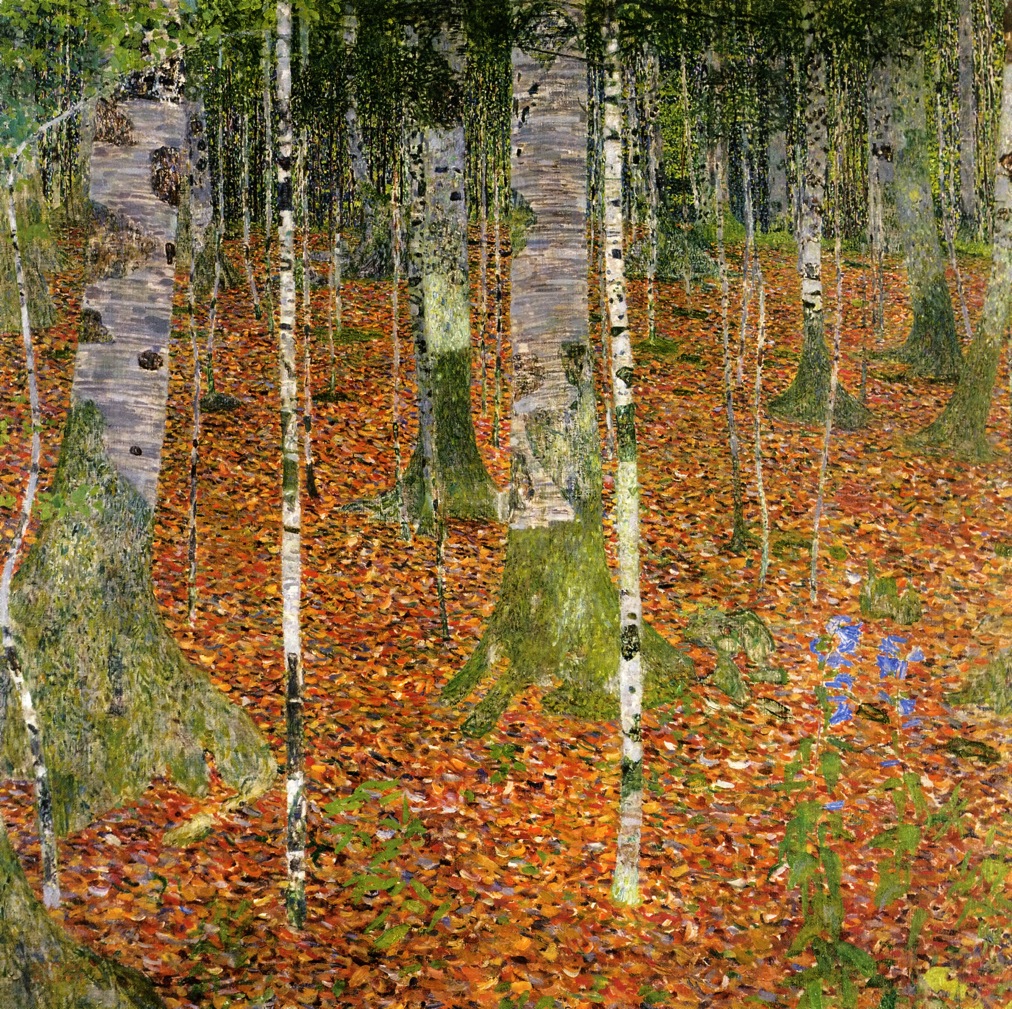
Gustav Klimt, "Farmhouse with Birch Trees"

Gustav Klimt, “Farmhouse with Birch Trees”

Birch trees are my beloved ones. So many times they have made me stop and just marvel at their beauty. The birch tree is the first one to wake up in the spring. It is also associated with the first month of the Celtic calendar. The birch belongs to the so-called pioneering species, i.e “hardy species which are the first to colonize previously disrupted or damaged ecosystems” (Wikipedia). Birches spring up rapidly after a forest fire or another disturbance. Sharlyn Hidalgo, the author of The Healing Power of Trees: Spiritual Journeys through the Celtic Tree Calendar, connects the resilient birch tree with beginnings, endings, shedding, purification, renewal, overcoming difficulties and resolution of conflict, as her branches are pliant and subtle. The snake and the phoenix are totem animals associated with the birch tree.

In the runic alphabet, Berkano, meaning “birch goddess”, is a rune associated with femininity. In The Book of Rune Secrets by Tyriel we read:

“Berkano is the rune of life’s emergence from the fundamental cosmic law. In natural science, abiogenesis or biopoesis is the study of how biological life arises from inorganic matter.… The Berkano rune then, points to this biopoesis wherever it occurs in the universe, and its particular qualities of reproduction, regeneration and adaptation to the rhythms of varied environments. An example of one such event, to which the rune refers, is life’s spring-time renewal from the cold of winter.”

Berkano

Berkano

This rune’s symbolism points to life force itself, because life can “care about itself and provide sanctuary for itself.” The fruition of this rune is achieved through silence, stillness and love. This can be a rune of deep secrets, which are justified, because the new life gestating in the womb requires our protection.

Posted in The Birch Tree | Tagged , , , , , , , , , | 16 Comments

Nemesis: the Restorer of Cosmic Order

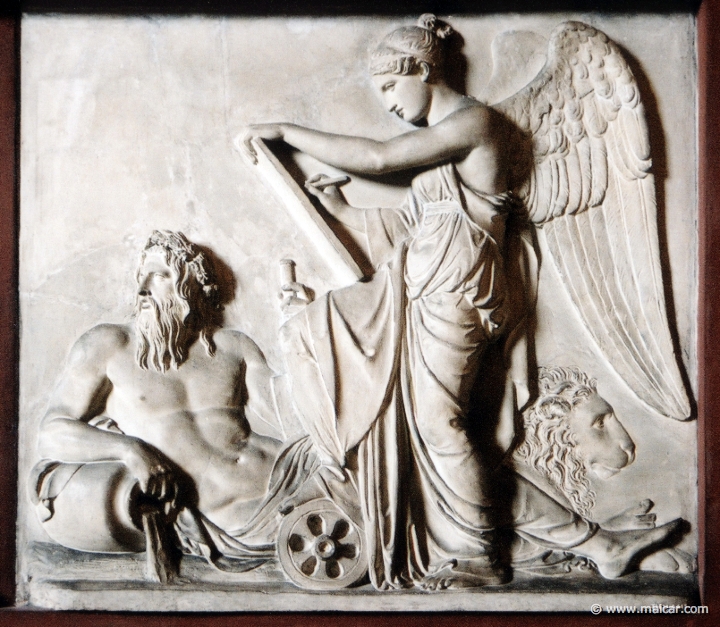
Bertel Thorvaldsen, “Nemesis”

Bertel Thorvaldsen, “Nemesis”

 I. ”Nemesis, winged tilter of scales and lives,

Justice-spawned Goddess with steel-blue eyes!
Thou bridlest vain men who roil in vain
Against Thy harsh adamantine rein.
Great hater of hubris and megalomania,
Obliterator of black resentment,
By Thy trackless, churning, wracking wheel
Man’s glinting fortunes turn on earth.
Thou comest in oblivion’s cloak to bend
The grandeur-deluded rebel neck,
With forearm measuring out lifetimes
With brow frowning into the heart of man
And the yoke raised sovereign in Thy hand.
Hail in the highest, O justice-queen

Nemesis, winged tilter of scales and lives,
Immortal Judge! I sing Thy song,
Almighty Triumph on proud-spread wings,
Lieutenant of fairness, Requiter of wrongs.
Despise the lordly with all Thine art
And lay them low in the Nether-dark.”

“Hymn to Nemesis” by Mesomedes of Crete, translated by A.Z. Foreman (via http://poemsintranslation.blogspot.ch/2011/05/mesomedes-hymn-to-nemesis-from-greek.html)

II.“Thee, Nemesis I call, almighty queen, by whom the deeds of mortal life are seen:Eternal, much rever’d, of boundless sight, alone rejoicing in the just and right:Changing the counsels of the human breast for ever various, rolling without rest.

To every mortal is thy influence known, and men beneath thy righteous bondage groan;
For ev’ry thought within the mind conceal’d is to thy fight perspicuously reveal’d.
The soul unwilling reason to obey by lawless passion rul’d, thy eyes survey.
All to see, hear, and rule, O pow’r divine whose nature Equity contains, is thine.
Come, blessed, holy Goddess, hear my pray’r, and make thy mystic’s life, thy constant care:
Give aid benignant in the needful hour, and strength abundant to the reas’ning pow’r;
And far avert the dire, unfriendly race of counsels impious, arrogant, and base.”

An Orphic hymn to Nemesis

III. http://hellopoetry.com/poem/69342/nemesis/

The very name Nemesis (Greek for “to give what is due”) arrests attention and commands respect. It connotes vengeance but originally Nemesis, also known as Adrasteia – the Inescapable One, was just “an abstract force of justice rather than that of retaliation,” as Demetra George puts it in Mysteries of the Dark Moon. At first, no value was attached to the fortune distributed by Nemesis: it was described as neither good nor bad, but just in due proportion according to what was deserved. With time, Nemesis came to be associated with the sense of resentment at an injustice done and a call for rightful vengeance.

The beauty of Nemesis, like of no other goddess, was compared to that of Aphrodite herself. She rode a chariot drawn by griffins, and had a wheel, a measuring rod, scales, a bridle, a scourge and a sword for her attributes. Her crown was adorned with stag horns; there was an apple bough in her hand. The wheel of life turned by griffins seems like her most striking attribute aligning her with the eastern concept of karma. Part eagle, part lion, the griffin “like certain kinds of dragon, is always to be found as the guardian of the roads to salvation, standing beside the Tree of Life or some such symbol. From the psychological point of view it symbolizes the relationship between psychic energy and cosmic force,” says Cirlot in his Dictionary of Symbols. Personally, I have always thought of royal griffins as symbols of concentrated benevolent consciousness and spiritual protection. The eagle being the king of birds and the lion the king of animals bestow on the noble griffin the gift of double royalty.

Griffin with the wheel of Nemesis

The apple is obviously associated with Venus:

 “For if an apple is halved cross-wise each half shows a five-pointed star in the centre, emblem of immortality, which represents the Goddess in her five stations from birth to death and back to birth again. It also represents the planet of Venus—Venus to whom the apple was sacred—adored as Hesper the evening star on one half of the apple, and as Lucifer Son of the Morning on the other.”

Robert Graves, The White Goddess

Winged and adorned in white, Nemesis acted swiftly when an injustice was committed. As Demetra George writes:

“She was held in awe and fear as a mysterious power who shaped the behavior of individuals in their time of prosperity, punishing crime and evil deeds, taking luck away from the unworthy, tracking every wrong to its doer, and keeping society in equipoise. Nemesis also personified the resentment aroused in people when others who committed crimes were not punished, or toward those who had inordinate or undeserved good fortune.”

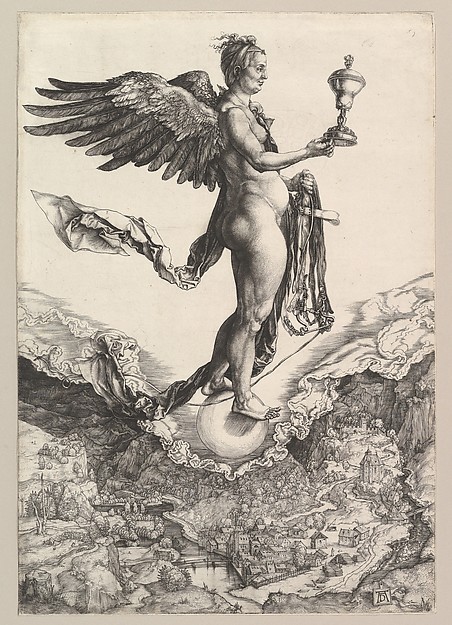
Albrecht Dürer,

Albrecht Dürer, “Nemesis”

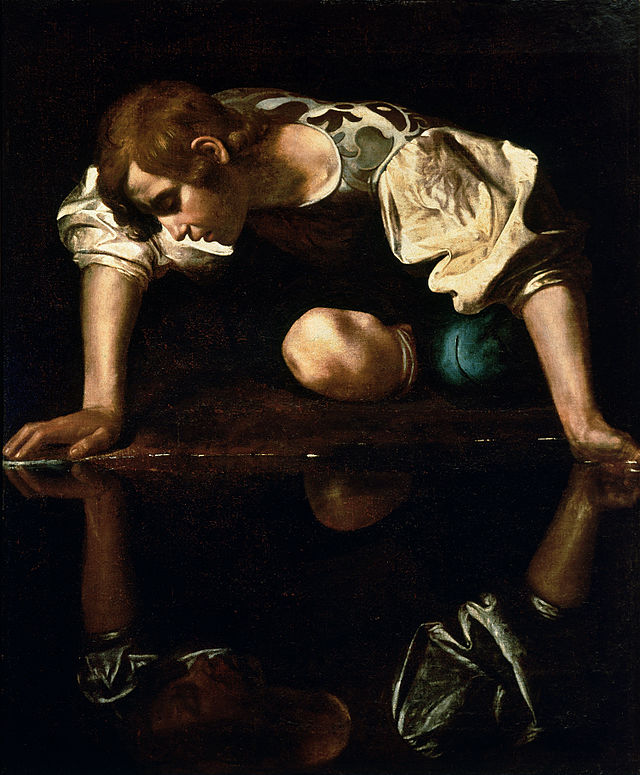
She was especially adamant to punish the sin of hubris, which in modern understanding means excessive pride and self-confidence but for ancient Greeks meant insolence before the gods as well as all kinds of actions that shamed or humiliated the victim. In today’s terms we would speak of physical assault, rape, harassment, battery, but that was all collected under the umbrella term hubris for ancient Greeks. In the well-known myth of Echo and Narcissus, Nemesis punished Narcissus for the sin of excessive self-involvement. Shamelessness accompanied by arrogance, a sense of entitlement and exploitation of others, are listed among the traits of the narcissistic personality disorder. Nemesis strikes these with a single move of her sword.

Caravaggio, “Narcissus”

However, the scales held by Nemesis denote that not only can humans be excessively arrogant but they can also be excessively humble. Hubris has its shadow – a feeling of inadequacy and inferiority, the shadow of excessive humility is the deeply-seated illusion of grandeur. In an excellent book The Complex: Path of Transformation from Archetype to Ego, a Jungian analyst Erel Shalit, relates Nemesis to both the inferiority and the superiority complex:

 “We find an image of the core of the inferiority complex in Nemesis, goddess of measurement and retribution for good fortune, who reminds the ego of its minuteness and its boundaries. The person who suffers from an inferiority complex … feels defeated before setting out. In fact, the inferiority complex may withhold from the ego even the necessary minimum of adequate (primary) narcissistic energy, thus preventing the person from even departing on his or her journey.”

This goddess does not approve of wishy-washiness and hesitation. Her element is decisive action in the light of conscious discrimination.
In a lost epic entitled Cypria we find a fascinating myth with Nemesis as one of its chief protagonists, which shows her special significance in the Greek pantheon. In The Marriage of Cadmus and Harmony, Roberto Calasso devotes a lot of place to pondering this myth. The forever amorous Zeus seemed to have been at one time obsessed with Nemesis, going to great lengths to get her:

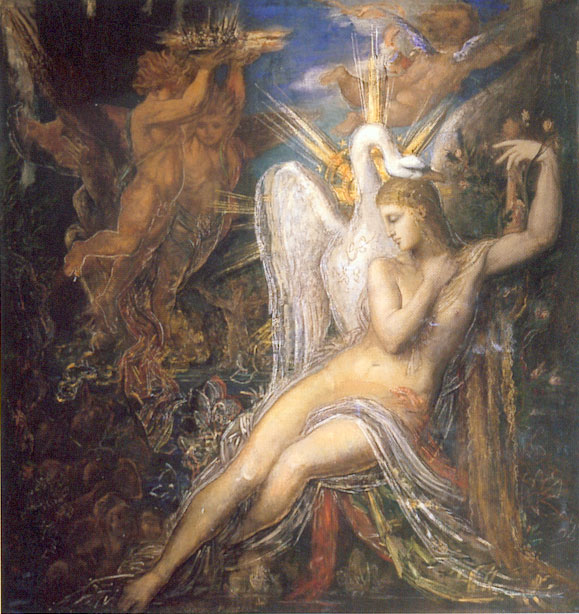
“Something tremendous must have been at stake in that erotic conquest. Never, for a woman, had Zeus traveled so far, crossing country after country, sea after sea, ‘beneath the earth, beneath the black, unfished waters,’ and on and on to ‘the ends of the earth, to the watery snake, Oceanus.’ Stubborn and desperate, Nemesis transformed herself into all kinds of animals, while Zeus never let up following her. And when all the feather flapping was finally done, when atlas and zoology were exhausted, what was left? A wild goose and a swan. The swan settled on the goose and forced her to yield. Zeus ‘passionately united himself with her, out of powerful necessity.’ … Nemesis was still sleeping when the swan raped her. Then from Nemesis’ womb a white egg appeared. Hermes took it, carried it to Sparta, and placed it in Leda’s womb. When the big egg hatched, from inside the shell emerged a tiny, perfect female figure: Helen.

Gustave Moreau, “Leda”

But what was the relationship between mother and daughter? We know a great deal about Helen, whereas only a few details have come down to us about the divine figure of Nemesis, and even these are often enigmatic. This goddess of the offense that boomerangs back on its perpetrator must have been very beautiful if people could mistake her for Aphrodite. Herself the great enemy of hubris, she gave birth to a daughter whose very body was an offense and in doing so provoked the most magnificent unfolding of hubris in all of Greek history: the Trojan War.”

Bertel Thorvaldsen, “Nemesis recites the deeds of men to Jupiter”

Called Queen of Motives and Arbitress of all Things, Nemesis’ cult originated in Smyrna, where she was worshiped as two identical goddesses both called Nemesis. Duplication seems to be a curious leitmotif in her myth: Narcissus looking at his reflection, Helen having two mothers and being born together with her twin brothers – Castor and Pollux and Clytemnestra, a twin sister. Castor was mortal, Pollux was an immortal son of Zeus. Nemesis embodies the duality of human versus natural/celestial law of the gods; she serves as a soul guide to the right action in the light of good conscience and good judgment. For me, she personifies faith in the balance of the universe. I take comfort in this archetype believing that inherent to our universe is a natural, archetypal defense against evil and injustice. I think this short poem by D.H. Lawrence captures the essence of Nemesis’ justice:

 “The profoundest of all sensualities
is the sense of truth
and the next deepest sensual experience
is the sense of justice.”

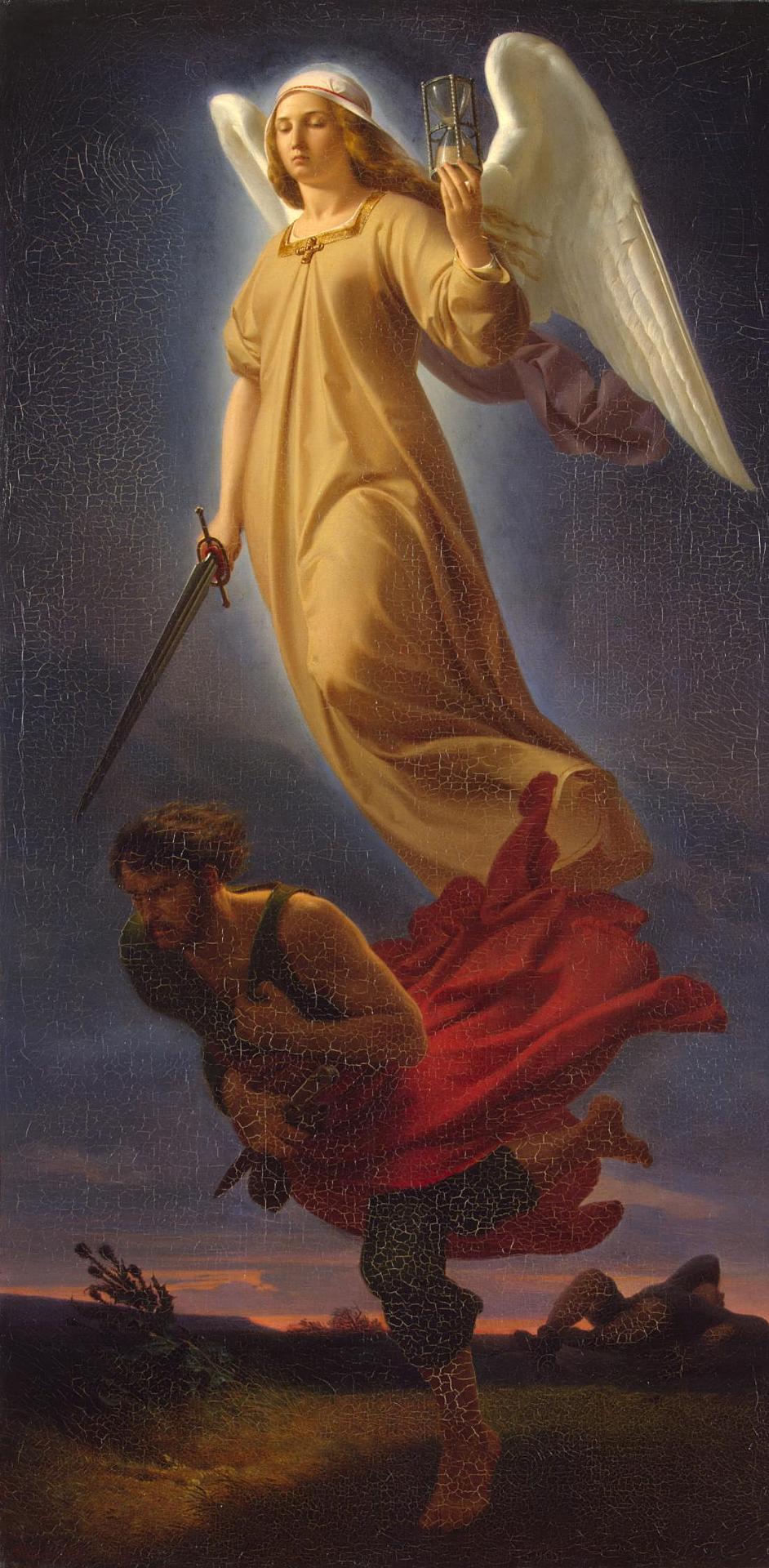
Alfred Rethel, “Nemesis.” “He painted Nemesis pursuing a murderer across a flat stretch of landscape. A slaughtered body lies on the ground, while in front is the assassin speeding away into the darkness, and above an angel of vengeance. The picture, so the story goes, was won in a lottery at Frankfurt by a personage of high rank, who had been guilty of an undiscovered crime, and the contemplation of his prize drove him mad.” (from Wikipedia)

Posted in Nemesis | Tagged , , , , , , , , , , , , , , , | 32 Comments

Jung on Alchemy (2): The Mandala

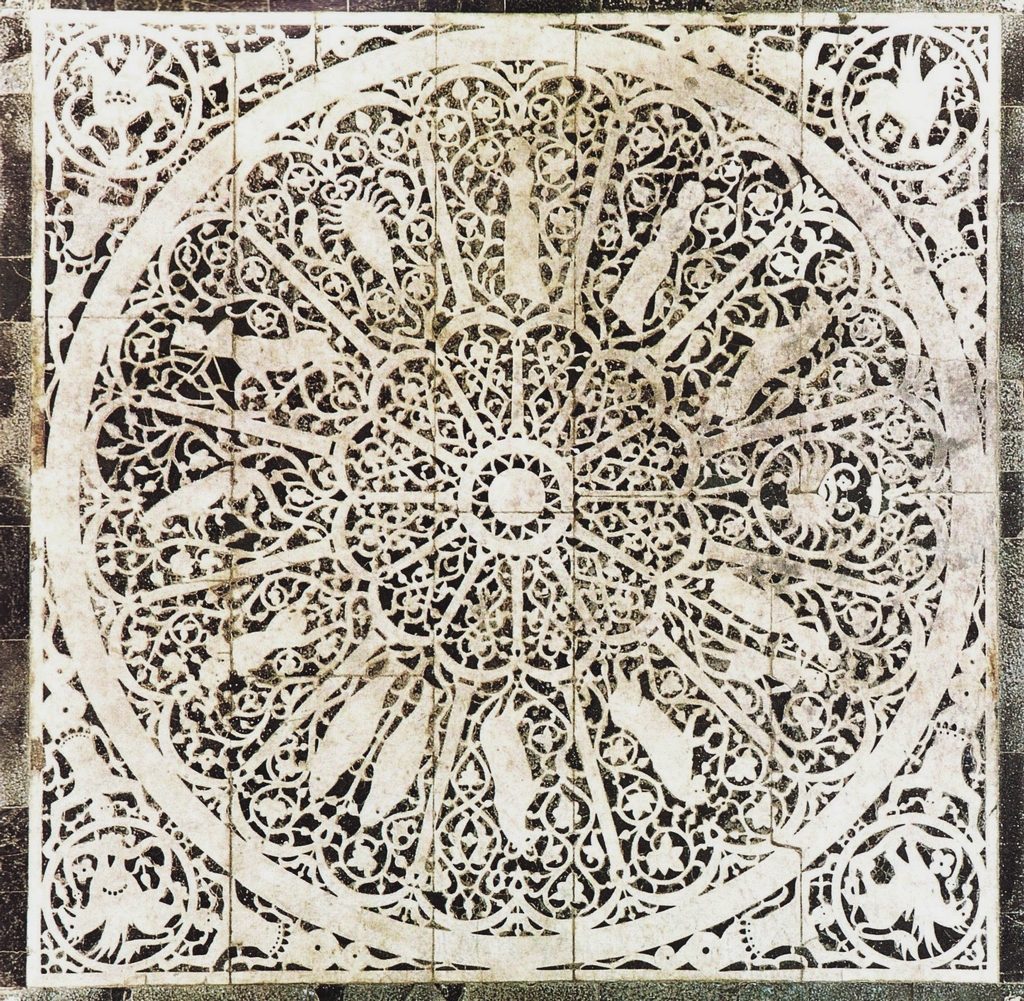
The Zodiac, San Miniato al Monte, Florence

The Zodiac, San Miniato al Monte, Florence

“People will do anything, no matter how absurd, to avoid facing their own souls. They will practice Indian yoga and all its exercises, observe a strict regimen or diet, learn theosophy by heart, or mechanically repeat mystic texts from the literature of the whole world – all because they cannot get on with themselves and have not the slightest faith that anything useful could ever come out of their souls. … It is rewarding to watch patiently the silent happenings in the soul, and the most and the best happens when it is not regulated from outside and from above. I readily admit that I have such a great respect for what happens in the human soul that I would be afraid of disturbing and distorting the silent operation of nature by clumsy interference.”

Carl Gustav Jung, “Psychology and Alchemy,” par. 126

On the psychological level, all alchemical operations served to obliterate the separation between the conscious and the unconscious mind, which the alchemists saw as the real source of life:

 “In my experience the conscious mind can claim only a relatively central position and must accept the fact that the unconscious psyche transcends and as it were surrounds it on all sides.” (par. 175)

The “dark depths of the unconscious” are limitless and unfathomable. They are undefinable and must be approached with humility. Any claims of knowledge about what is hidden out there should be inspected with caution because we may always be wrong. We are caught in the maya web of our illusions, and yet so many of us sense that there is something “out there,” a mystical centre from which the visible universe emanated:

 “We can hardly escape the feeling that the unconscious process moves spiral-wise round a centre, gradually getting closer, while the characteristics of the centre grow more and more distinct. Or perhaps we could put it the other way round and say that the centre – itself virtually unknowable – acts like a magnet on the disparate materials and processes of the unconscious and gradually captures them as in a crystal lattice. For this reason the centre is often pictured as a spider in its web.” (par. 325)

The mandala, similarly to the stupa, the vessel and the egg, are all symbols that deeply resonate with the meaning of this all-encompassing sacred psychoid (i.e. both mental and physical) entity that Jung called the Self.

The centre of the mandala has been likened to the calyx of the sacred Indian lotus – the Padma, and has a feminine significance. If the lotus seed gets split in the middle, a miraculous discovery can be made: it turns out that the seed contains the leaves and the branches of the whole plant in miniature form. The One Seed holds all the possible forms within itself. Jung also compares it to the vas bene clausum (well-sealed vessel), and the uterus where the child is gestated. Nothing can escape the circumference of a sacred mandala nor can anything undesirable enter the walls of the sacred enclosure of the well-sealed vessel. From its primordial womblike Unity, the Centre, as the cosmic energy source, radiated things into existence.

Jung muses further: “Among the various characteristics of the centre the one that struck me from the beginning was the phenomenon of the quaternity.” (par. 327) All manifest reality that emanated from the centre is governed by the number four symbolizing the stable organization, the principle of wholeness, the triumph of order and structure over chaos.

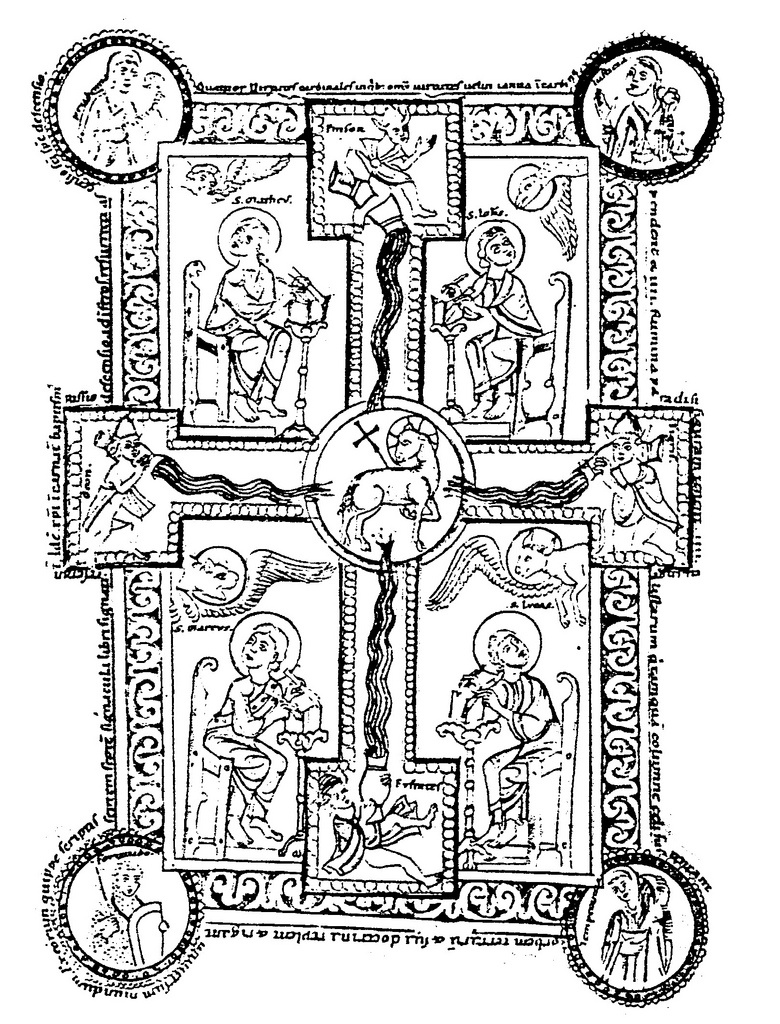
Image from a twelfth century breviary in the monastery of Zwiefalten, Germany.

Image from a twelfth century breviary in the monastery of Zwiefalten, Germany.

In her book Japanese Mandalas: Representations of Sacred Geography, Elizabeth ten Grotenhuis, gives an excellent analysis of the significance of the mandala in the Esoteric Buddhist tradition in Japan. In particular, she talks about the Mandala of the Two Worlds, which has two component parts: the Diamond Way mandala and the Womb World mandala:

“Broadly speaking, the Diamond Way Mandala represents reality in the Buddha realm, the world of the unconditioned, the real, the universal, and the absolute. The Womb World mandala represents reality as it is revealed in the world of the conditioned, the individual, the particular, and the relative. Each mandala is fully meaningful, however, only when paired with the other.” (p. 37) (bolding mine)

The Womb World mandala

The Womb World mandala

The universal gives meaning to the particular as much as the particular gives back to the universal, and thus the circle closes. In the centre of the Womb World mandala seats an open eight-petaled lotus, eight being the number connected with the cyclical and temporal nature of manifested form. The process of individuation can be likened to a spiral journey round a mystical centre which is never quite reached but always sensed and seen with the eyes of the soul. While moving around the centre a sacred precinct is marked off; at the same time high concentration and fixation are achieved. Such a ritual focused action creates a sense of inner unity:

“The squaring of the circle breaks down the original chaotic unity into the four elements and then combines them again in a higher unity. Unity is represented by a circle and the four elements by a square. The production of one from four is the result of a process of distillation and sublimation which takes the so-called ‘circular’ form … so that the ‘soul’ or ‘spirit’ shall be extracted in its purest state. This product is generally called the ‘quintessence…’” (par 165)

This quintessence is the jewel birthed by the lotus.

All quotes, unless otherwise stated, come from Jung’s Psychology and Alchemy.

Support my blog

If you appreciate my writing, consider donating and make my day. Thank you in advance.

$1.00

Related posts:

Jung on Alchemy (1): The Moist and Earthly Foundation

Jung on Alchemy (3): Meditation and Imagination

Jung on Alchemy (4): Prima Materia – The One, Who Art All

Jung on Alchemy (5): Hermes, the Arcane Interpreter of All

Jung on Alchemy (6): Sol and Sulphur – the Fiery Ferment of the Soul’s Hidden Depth

Posted in Alchemy, The Mandala | Tagged , , , , , , , , , , , , , , , , , , , , | 31 Comments

The Light that Shines in Darkness

The New Age movement has given women more significance and more power of expression than art, science or politics of the last century. It is said to have been originated by Madame Blavatsky, who was a co-founder of the Theosophical Society. The chief idea behind the new age spirituality, as unveiled and put forward by Blavatsky, was a belief in panhuman fraternity without distinction of religion, color, caste or race. At the source of all cultures lies a primordial, unified tradition, which is obfuscated by sectarian conflicts and cultural differences. As divinity was believed to rest within every man’s and woman’s psyche, the theosophical emphasis lay on the individual religious experience rather than an adoption of outside, objective cultural forms of cult. As Gary Lachman wrote in a section dedicated to Blavatsky in his A Dark Muse: A History of the Occult:

“At the centre of the mass of doctrines about reincarnation, past lives, astral planes, higher consciousness and spiritual evolution was the formidable, electric and roguish figure of Madame Blavatsky. It is true that the world was waiting for something like theosophy to arrive. Bereft of God through the rise of science, and flooded with a triumphant materialist doctrine, thousands of individuals who sought spiritual guidance found themselves adrift in an indifferent universe. With its broad message of universal brotherhood, spiritual truth and cosmic mysteries, theosophy appealed to both the devout ascetic and the late-Romantic.”

I have not read The Secret Doctrine in its entirety, though I have approached the task and read longer passages, which I found very worthwhile. As the moon is dark right now, I was drawn to a particularly illuminating quote about light and darkness:

 “Darkness is Father-Mother: light their son, says an old Eastern proverb. Light is inconceivable except as coming from some source which is the cause of it; and as, in the instance of primordial light, that source is unknown, though as strongly demanded by reason and logic, therefore it is called ‘Darkness’ by us, from an intellectual point of view. As to borrowed or secondary light, whatever its source, it can be but of a temporary mayavic character. Darkness, then, is the eternal matrix in which the sources of light appear and disappear. Nothing is added to darkness to make of it light, or to light to make it darkness, on this our plane. They are interchangeable, and scientifically light is but a mode of darkness and vice versa. Yet both are phenomena of the same noumenon — which is absolute darkness to the scientific mind, and but a gray twilight to the perception of the average mystic, though to that of the spiritual eye of the Initiate it is absolute light. How far we discern the light that shines in darkness depends upon our powers of vision. What is light to us is darkness to certain insects, and the eye of the clairvoyant sees illumination where the normal eye perceives only blackness. When the whole universe was plunged in sleep — had returned to its one primordial element — there was neither centre of luminosity, nor eye to perceive light, and darkness necessarily filled the boundless all.”

What is dark to the scientific mind, is gray twilight to the average mystic but absolute light to the Initiate. The clarity of inner vision is unrelated to the presence or absence of what we profanely understand as light. In the following beautiful poem, the divine is seen and experienced most clearly by direct participation in different geographical zones: the I of the poem, in a sequence of incarnations, was a Celtic ornament, an oar from Ithaca, a bump of clay in a Navajo rug in Native America, a stone in Tibet, and a tongue of bark in the dark heart of Africa. When he just was his vision was clearer and more immediate than the one possessed by his present self – the anthropologist – equipped with all the contemporary trappings of scientific measurement and observation.

“Lives” [for Seamus Heaney], by Derek Mahon 

First time out
I was a torc of gold
And wept tears of the sun.

That was fun
But they buried me
In the earth two thousand years

Till a labourer
Turned me up with a pick
In eighteen fifty-four

And sold me
For tea and sugar
In Newmarket-on-Fergus.

Once I was an oar
But stuck in the shore
To mark the place of a grave

When the lost ship
Sailed away. I thought
Of Ithaca, but soon decayed.

The time that I liked
Best was when
I was a bump of clay

In a Navaho rug,
Put there to mitigate
The too god-like

Perfection of that
Merely human artifact.
I served my maker well

He lived long
To be struck down in
Tucson by an electric shock

The night the lights
Went out in Europe
Never to shine again.

So many lives,
So many things to remember!
I was a stone in Tibet,

A tongue of bark
At the heart of Africa
Growing darker and darker …

It all seems
A little unreal now,
Now that I am

An anthropologist
With my own
Credit card, dictaphone,

Army-surplus boots
And a whole boatload
Of photographic equipment.

I know too much
To be anything any more;
And if in the distant

Future someone
Thinks he has once been me
As I am today,

Let him revise
His insolent ontology
Or teach himself to pray.

by Alex Grey

by Alex Grey

Posted in Madame Blavatsky | Tagged , , , , , , , , , , , , , , , | 26 Comments

The Bull of Heaven II

I am always happy to discover an astrological blog focusing so heavily on myth and archetype. This is an excellent read.

P. James Clark's avatarThe Classical Astrologer

10869529_10205433475507018_1210822786407283407_o

I make no pretense of being an expert in Egyptology, but there are some fundamental elements of that culture which allow us to see Taurus in a different way, in part by the relationship of the Bull of Heaven to Osiris

The region of the heavens occupied by the constellation Taurus is home to several powerful fixed stars from Algol (above left) the Pleiades, the Hyades and Aldebaran, the red eye of the bull – Watcher of the East and one of the Royal Stars of Persia. Babylonian astrologers would also be very interested in the stars associated with the horns – unsurprisingly they tend to be of the nature of Mars.  However, as an entity we can see the essential nature of Taurus is Lunar and Venusian.

The cultural interpretation of a constellation surely says something about the culture itself. The ravaging bull in eternal conflict with Orion the Hunter…

View original post 895 more words

Posted in Uncategorized | 1 Comment