The Beneficent Maleficent

I see the movie Maleficent as an apotheosis of the rising feminine power. I only had the chance to see it yesterday and thought the movie was magnificent. I loved it how Maleficent’s character echoed so many powerful and wrathful mythological goddesses: Lilith, Eris, Hekate, Sekhmet, Kali, Artemis, the Black Madonna, and many others. In The Great Mother, Erich Neumann spoke of Artemis as the goddess of the Outside: of the world that lies outside the mainstream culture and consciousness. In the movie, the world of fairies that Maleficent rules and protects is juxtaposed with the patriarchal kingdom of King Stefan. She is a winged goddess, as many mythological goddesses were (Lilith, Isis and Ishtar all had wings), which suggests, according to Neumann, her capacity for transforming and sublimating the dark root of her powers into “the highest forms of psychic reality.” Her connection to life’s mysterious processes lets her raise that energy from lower to higher chakras but not for a moment does she lose contact with the earth and her own nature. In contrast, the three “good” fairies that are supposed to take care of Princess Aurora in order to protect her from Maleficent’s curse are incapable of protecting her because by professing to be just “good” they have cut off their own shadows, which results in their losing touch with reality and getting disconnected from the dark power of primal instincts. That the good fairies are sadly deluded and have no gravitas at all is one of the most magnificent twists of the tale making it hard to believe it is a Disney movie.

The symbolism of some scenes in the movie was beautifully executed. What stuck in my mind, among many other great scenes, was a mud throwing game. The wet earth is a potent symbol for getting reconnected with our basic humanity, our fertile core emotions, the wet and fertile earth-womb:

“… the early Semitic worshippers of the Great Mother, Aryans were “men of clay” -the meaning of their name-because their bodies came forth from Modir. This meant the root of both “mud” and “mother”; she was the same primal creatress whom the Russians called Moist Mother Earth.”

Barbara G. Walker, “Women’s Encyclopedia of Myths and Secrets”

I also loved all the moments when Maleficent made the characters levitate and hover over the earth, completely in her power, as if hypnotized. Such is the power of gods and goddesses: we are ruled by these archetypes, guided and pushed by them to do that which is necessary and that which is unavoidable. Maleficent means “the one that does evil,” which echoes Mephistopheles, a demon from Goethe’s Faust, who said famously: “I am part of that power which eternally wills evil and eternally works good.The most powerful scene for me was when Maleficent said three powerful words to Stefan right before his demise: “It is over.” That sounded like yet another potent magic spell: patriarchy is over, the feminine will no longer be subjugated. She got her wings back.

Maleficents-Wings

Posted in The Dark Goddess | Tagged , , , , , , , , , , , , , , | 30 Comments

The Secrets of the Odyssey (10): Return to Ithaca through the Cave of the Nymphs

venus_morning star

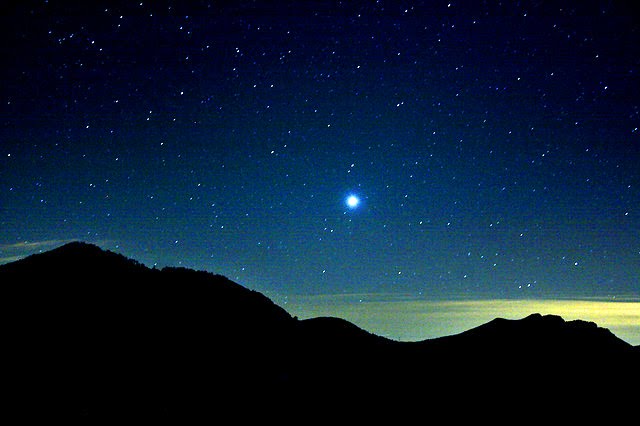
Venus the Morning Star (Venus Phosphorus – Light-Bringer)

“When on the East the sheer bright star arose

that tells of coming Dawn, the ship made landfall

and came up islandward in the dim of night.

Phorkys, the old sea baron, has a cove

here in the realm of Ithaka; two points

of high rock, breaking sharply, hunch around it,

making a haven from the plunging surf

that gales at sea roll shoreward. Deep inside,

at mooring range, good ships can ride unmoored.

There, on the inmost shore, an olive tree

throws wide its boughs over the bay; nearby

a cave of dusky light is hidden

for those immortal girls, the Naiadês.

Within are winebowls hollowed in the rock

and amphorai; bees bring their honey here;

and there are looms of stone, great looms, whereon

the weaving nymphs make tissues, richly dyed

as the deep sea is; and clear springs in the cavern

f low forever. Of two entrances,

one on the north allows descent of mortals,

but beings out of light alone, the undying,

can pass by the south slit; no men come there.”

Homer, The Odyssey, Book XIII, transl. Robert Fitzgerald

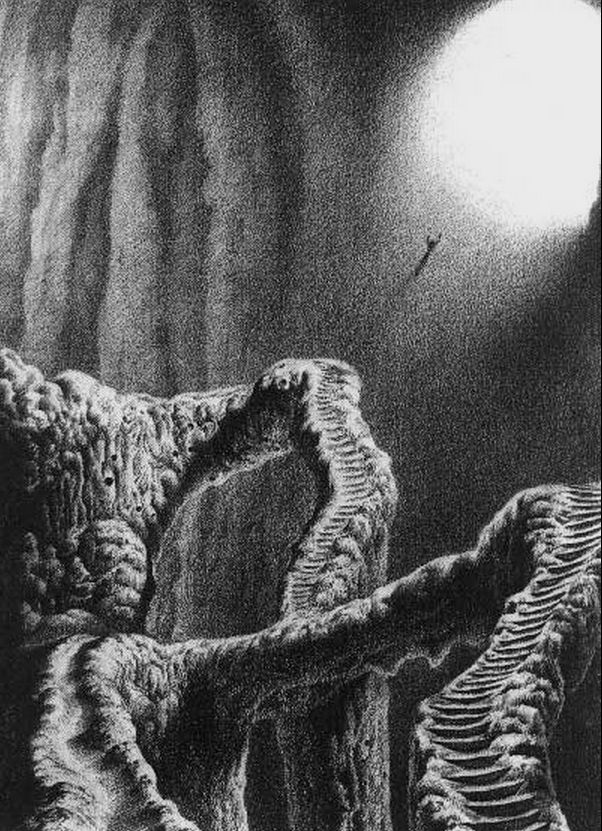
While Odysseus is sleeping serenely, the Phaecian ship lands on the shore of Ithaca and leaves the hero there. After long trials and tribulations “the seer or shaman returns home from his vision quest,” as scholar Gregory Nagy put it. Venus, the Morning Star, shines to herald his low-profile return when the Moon is dark and midwinter cold chilling to the bone. In symbolic terms, the hero’s journey resembles that of the Sun, which in the northern hemisphere is reborn at winter solstice. In his book The Ancient Greek Hero in 24 Hours, Nagy devotes a lot of space to analyzing the Greek word “nostos,” whose meaning comprises “return, homecoming; song about homecoming; return to light and life, immortalization after death.” He dwells on the mystical meaning of homecoming understood as returning to consciousness: emerging to light after being enveloped by darkness. Closely related to “nostos” is “noos,” the word which means “mind, thinking, perception, intuition, consciousness”:

“Both words, noos and nostos, are derived from an Indo-European root nes-, the basic meaning of which can be interpreted as ‘return to light and life’; when we survey the traditions of Indo-European languages – … we see that this root nes- occurs in myths having to do with the rising of the sun at dawn or with the rising of the morning star.”
johfrabirthdream

Johfra Bosschart, “Birth Dream”

According to Nagy, The Odyssey is a story of a soul’s journey and its return to light and life from darkness and death. On coming to Ithaca, the hero needs to gain his status back and retrieve his old identity as king. During the twenty years of his homeward journey his social standing has been reduced to nothing: you may recall how already in the cave of Polyphemus Odysseus had called himself a Nobody. His identity at the beginning of the Odyssey could be summarized as “a hero from Troy,” but that identity was relinquished in the cave of the Cyclops. By relinquishing the power of his ego, Odysseus had gained a new kind of power bestowed on him by his divine mentor – the goddess Athena, who reveals herself to him after he lands on Ithaca and acknowledges that she and Odysseus are equals now:

“Two of a kind, we are,

contrivers, both. Of all men now alive

you are the best in plots and story telling.”

Athena dispelled the mist she had covered sleeping Odysseus with and revealed the beautiful island of Ithaca to him. They proceed to hide the treasure he had brought from Phaecia in the Cave of the Nymphs and work out the strategy of gaining back the kingdom by vanquishing the suitors. To that end, Athena disguises Odysseus as a beggar:

“Speaking no more, she touched him with her wand,

Shriveled the clear skin of his arms and legs,

made all his hair fall out, cast over him

the wrinkled hide of an old man, and bleared

both his eyes, that were so bright. Then she

clapped an old tunic, a foul cloak, upon him,

tattered, filthy, stained by greasy smoke,

and over that a mangy big buck skin.”

Before Odysseus proceeds to execute the master plan he spends a considerable amount of time in a cave with the goddess. Previously, as you may recall, he had spent a lot of time in a cave with the goddess Calypso. It seems that the symbolism of caves as places of initiation is crucial for the hero’s journey in the Homeric epic. The significance of the Cave of Nymphs is revealed brilliantly by the Neoplatonic philosopher Porphyry in his essay “On the Cave of the Nymphs.” The cave for Porphyry is a symbol of the world and mundane powers, especially the invisible, occult powers:

“a cave is a symbol of the sensible world because caverns are dark, stony, and humid; … the world is a thing of this kind, through the matter of which it consists, and through its repercussive and flowing nature.”

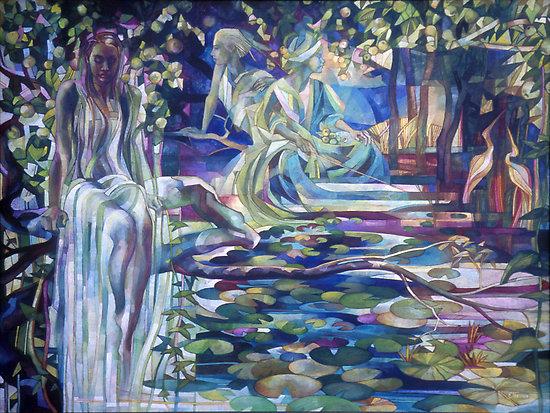
The Cave of the Naiades (water Nymphs) is a place where souls descend into generation: “souls descending into generation fly to moisture.” As Heraclitus wrote, “moisture appears delightful and not deadly to souls; but the lapse into generation is delightful to them.” All souls, therefore, “are profoundly steeped in moisture ” as “the spirit becomes moist and more aqueous through the desire of generation.” In the Cave, Naiades are busy weaving, which for Porphyry means that they are clothing the souls in corporeal energies:
trevisannanaides

Elisabetta Trevisan, “Naiades”, via http://www.redbubble.com/people/betta?ref=breadcrumb

“For the formation of the flesh is on and about the bones, which in the bodies of animals resemble stones. Hence these instruments of weaving consist of stone, and not of any other matter. But the purple webs will evidently be the flesh which is woven from the blood. For purple woolen garments are tinged from blood and wool is dyed from animal juice. The generation of flesh, also, is through and from blood. Add, too, that the body is a garment with which the soul is invested…”

Another potent symbol in the Cave of the Nymphs are the amphorae filled with honeycombs. Honey is a substance which is both cathartic and preservative, its sweetness is “indicative of the pleasure which draws souls downward to generation. “ Barbara G. Walker saw honey as a symbol of the feminine potency of nature, the life-giving feminine fluid that in some ancient rituals was combined with menstrual blood to obtain the elixir of life.

The two entrances to the cave are also deeply significant. According to Porphyry, the northern entrance to the cave is the tropic of Cancer, the southern one – the tropic of Capricorn. Roger Sworder asserts that with such symbolism ”this Ithacan cave is symbolically transformed into the whole earth. In the Odyssey, as Sworder elaborates “the southward path leads to mortal death, the northward path to immortality.” Cancer, a water sign, is associated with descending into generation while the sign of Capricorn – the goat ascending rocky mountains – is the gateway to the heavens. Thus, Odysseus’ and Athena’s passage through the southern entrance of the cave brings his second birth and spiritual rebirth.
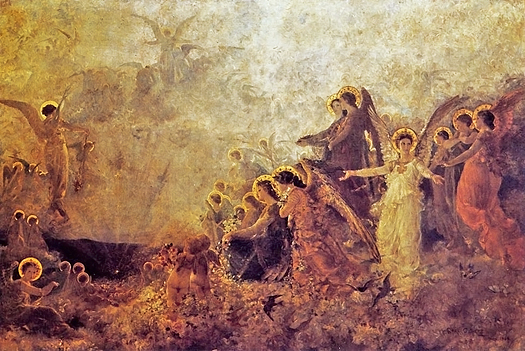
Carl_Gutherz_Light_of_the_Incarnation_525

Carl Gutherz, “Light of the Incarnation”

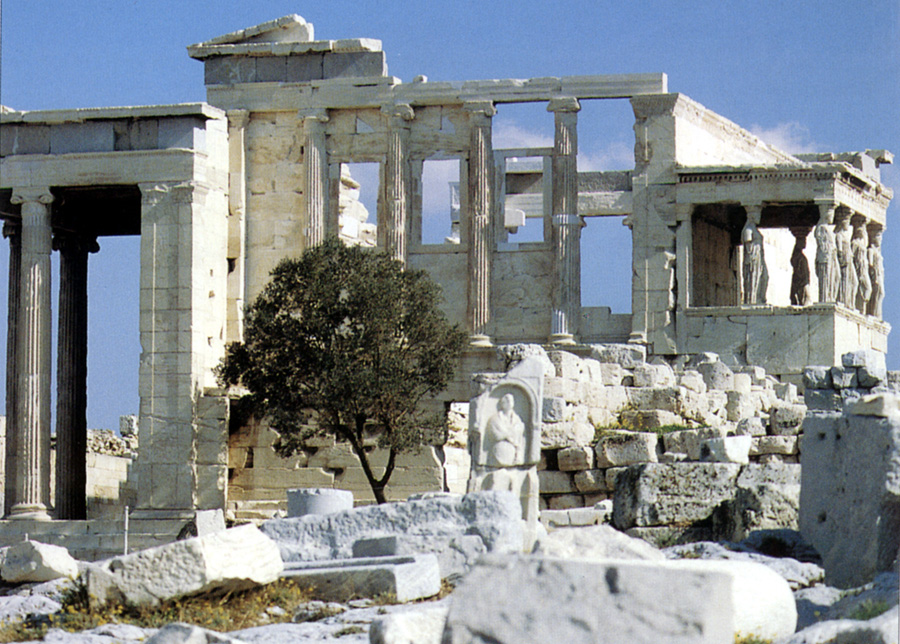
The final symbol analyzed by Porphyry is the olive tree placed next to the Cave of Nymphs. The cave, like the heart, is a symbol of a deeply hidden spiritual centre and the point of communication between higher and lower realms, as Rene Guenon points out. The olive tree, whose oil was used to feed lamps, was sacred to Athena and symbolized the light of divine wisdom. According to some traditions, as cited by Rene Guenon, the Tree of Life in Eden was an olive tree. For Porphyry, it was the plant of wisdom sacred to the goddess who was born from the head of Zeus, which for him suggests that “the universe is not the effect of a casual event and the work of irrational fortune, but that it is the offspring of an intellectual nature and divine wisdom.” Olive is an ever-flourishing tree associated with boundless fertility: in the summer its leaves turn upwards, in the winter they are bent downwards.
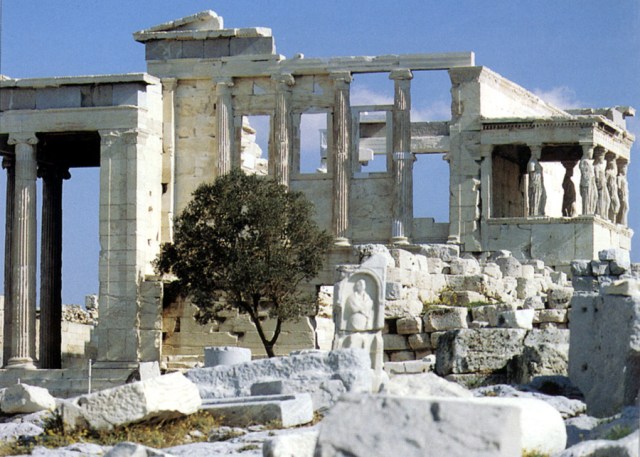
erechtheumolive

An olive tree outside the Erechtheion – an ancient Greek temple dedicated to Athena and Poseidon

I must admit the verses describing the Cave of the Nymphs are my favourite in the whole Odyssey. I see this passage as the Epiphany of the deepest mysteries of Creation. One cannot imagine a more auspicious or miraculous homecoming than the one lyrically depicted by Homer.

Support my blog

If you appreciate my writing, consider donating and make my day. Thank you in advance.

$1.00

Sources:

Rene Guenon, Fundamental Symbols, The Universal Language of Sacred Science

Gregory Nagy, Ancient Greek Hero in 24 Hours

Porphyry, “On the Cave of the Nymphs” http://www.tertullian.org/fathers/porphyry_cave_of_nymphs_02_translation.htm

Roger Sworder, Science and Religion in Archaic Greece

Barbara G. Walker, The Women’s Encyclopedia of Myths and Secrets
Related posts:

The Secrets of the Odyssey (1)

The Secrets of the Odyssey (2): Elements of Time (the Muse and the Moon)

The Secrets of the Odyssey (3): Calypso and Phaecians

The Secrets of the Odyssey (4): A Tribute to Penelope

The Secrets of the Odyssey (5): Lotus-Eaters, Auriga and Polyphemus

The Secrets of the Odyssey (6): the God of Winds

The Secrets of the Odyssey (7): Circe and the Underworld

The Secrets of the Odyssey (8): the Sirens, Scylla & Charybdis, and Thrinacia

The Secrets of the Odyssey (9): Leucothea in the Sea of Space and Time

The Secrets of the Odyssey (11): Death of Odysseus, Master of Land Ways and Sea Ways

Posted in The Odyssey | Tagged , , , , , , , , , , , , , , , , , , , , , , , | 11 Comments

Cultivating the Dark Core of Passion

“Your reason and your passion are the rudder and the sails of your seafaring soul. If either your sails or your rudder be broken, you can but toss and drift, or else be held at a standstill in mid-seas.
For reason, ruling alone, is a force confining; and passion, unattended, is a flame that burns to its own destruction.
Therefore let your soul exalt your reason to the height of passion, that it may sing;
And let it direct your passion with reason, that your passion may live through its own daily resurrection, and like the phoenix rise above its own ashes.”

Kahlil Gibran

I attended a Japanese tea ceremony recently and thought about passion and method while watching and participating in this beautiful ritual. I had not been aware of the numerous micro-rules regarding gestures, bowing and distance that have to be observed during the proceedings. Such a passionate perfection and a refined beauty are achieved through hard work and disciplined observance of rules. It makes a lot of sense to me that the words ‘passion’ and ‘patience’ have the same root and are both related to the word ‘suffering.’ I thought about this while trying to stay for ninety minutes in the same position, which is called Seiza in Japanese and which involves kneeling with legs folded underneath the thighs. Some people may think this is a mechanical ceremony governed by soulless rules but I sensed a deep passion and a predilection for extremity that I have always associated with the Japanese spirit. I feel there is a lesson to be learnt here about the need of a purposeful cultivation of our passions in a manner similar to a dancer who will repeat a single movement tirelessly or a composer who will revise tirelessly individual notes of his work. Discipline, control and rules are inextricable from real passion; there is something passionate and frightening in every work of perfection. For me, reading Dostoevsky or Kafka is a powerful encounter with passion every time but it is worth remembering that both writers spent hours revising their manuscripts, never satisfied with the end result. Their souls may have been in frenzy but their work was full of cold discipline and relentless dedication. The painful extremes of passion are different from the mere madness of an obsession:

“What makes a person refuse passion – or be incapable of pursuing a passion which has already been born, thus transforming it into a mere obsession – is his or her refusal of totality.  Within the lover’s totality – as within any – there is the unknown: the unknown which is also conjured up by death, chaos, extremity.  Those who are conditioned to treat the unknown as something exterior to themselves against which they must continually take measures and be on guard, may refuse passion.  This is not a question of fearing the unknown.  Everyone fears it.  It is a question of where the unknown is located.  Our culture encourages us to locate it outside ourselves.  Always.  Even disease is thought of as coming from outside.  To locate the unknown as being out there is incompatible with passion.”

John Berger, “The Sense of Sight”

Method and discipline are not enemies of passion but rather its true measure.

tea-ceremony

Posted in Psyche | Tagged , , , , , , , , , , , | 31 Comments

A Few Thoughts on Power

Image

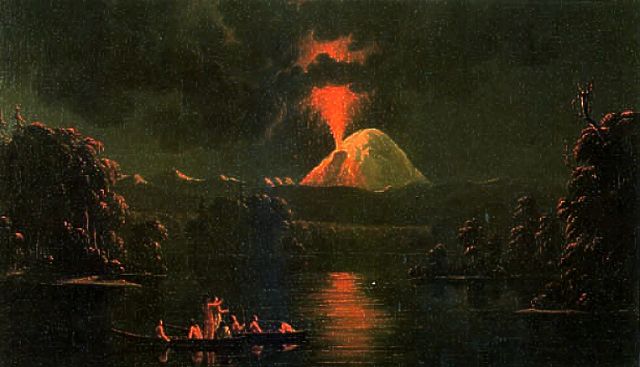
Paul Kane, “Mount St Helens Erupting at Night”

“Business has defeated everything in its path. Its last enemies are the oldest: it is still defied by the ancient Gods of blood revenge, territorial tribalism and the strangely recurrent death struggles between genders, as well as by the untamed divinities of nature – the oceans, the deserts, the magma at the earth’s core and the powers of storm and rain. They alone remain to affront and disrupt the power of business.”

James Hillman, “Kinds of Power”

Before I started reading James Hillman’s Kinds of Power I tried to ponder and intuit what power means for me. For me the most tremendous kind of power is the kind that is born in the darkest core of nature, the pulsating hidden geyser of power we all carry within, whether we are high profile politicians, businesspeople or celebrities or the powerless have-nots, victims of abuse, the discriminated ones. Empowerment is a key issue in our times: victims of glaring imbalances are realizing that power can never be really taken from anyone because it belongs to everyone and no human can claim to be its distributor. The roots of true power are indestructible and accessible to all.

As a society, we may be conditioned by the historical root of the word power, though, which, as Hillman explains, is poti, i.e. “husband, lord, master,” echoed in the word “despote,” which was used by Greek slaves to address their masters. What we need to learn right now as humans is to exercise our power without dominating anyone, without pathological control and oppression. The need for new kinds of power is emerging right now. In Tao te Ching power is thus described: “All streams flow to the sea because it is lower than they are. Humility gives it its power. If you want to govern the people, you must place yourself below them. If you want to lead the people, you must learn how to follow them.” But this kind of transcendence of the shadows of power can only happen if imbalances, inequalities and injustices in our world are redressed.

Posted in Power | Tagged , , , , , , , , , , | 24 Comments

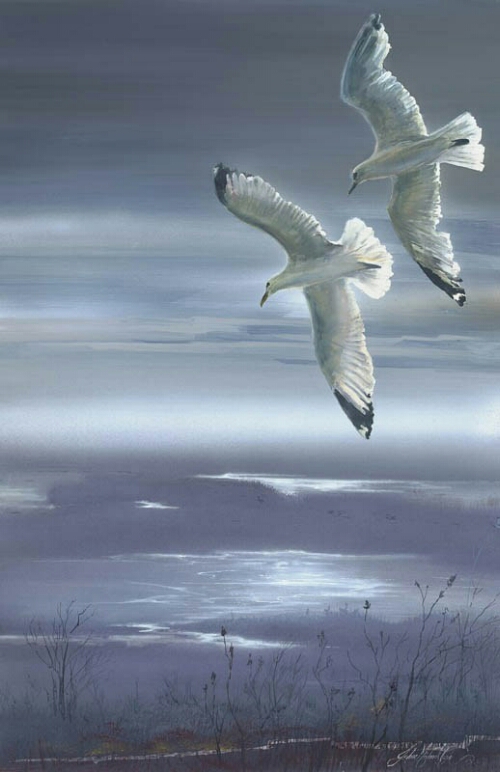
The White Birds

THE WHITE BIRDS by W.B. Yeats

I would that we were, my beloved, white birds on the foam of the sea!
We tire of the flame of the meteor, before it can fade and flee;
And the flame of the blue star of twilight, hung low on the rim of the sky,
Has awakened in our hearts, my beloved, a sadness that may not die.

A weariness comes from those dreamers, dew-dabbled, the lily and rose;
Ah, dream not of them, my beloved, the flame of the meteor that goes,
Or the flame of the blue star that lingers hung low in the fall of the dew:
For I would we were changed to white birds on the wandering foam: I and you!

I am haunted by numberless islands, and many a Danaan shore,
Where Time would surely forget us, and Sorrow come near us no more;
Soon far from the rose and the lily, and fret of the flames would we be,
Were we only white birds, my beloved, buoyed out on the foam of the sea!

image

Image from this blog: http://storydoors.com/2013/02/25/464/

Posted in Poetry | 18 Comments

The Secrets of the Odyssey (9): Leucothea in the Sea of Space and Time

The climax of the Odyssey is the hero’s arrival in Ithaca but a harbinger of that pivotal moment is his sojourn on the island of Scheria (Phaecia), which I have written about here. William Blake also connected these two events, i.e. arrival in Scheria and subsequent arrival in Ithaca, into a unified vision. In his painting “The Sea of Space and Time” the left side is occupied by Odysseus and goddess Leukothea, the right side presents the magical Cave of Nymphs found on Ithaca. Having rejected Calypso’s gift of immortality, Odysseus chose life in the body – incarnation. This is the theme of Blake’s painting.

Image

Here is how Homer describes Odysseus’ encounter with the White Goddess Leukothea (transl. Fitzgerald):

 “Across the foaming water, to and fro,

the boat careered like a ball of tumbleweed

blown on the autumn plains, but intact still.

So the winds drove this wreck over the deep,

East Wind and North Wind, then South Wind and West,

coursing each in turn to the brutal harry.

But Inosaw him—Ino, Kadmos’ daughter,

slim-legged, lovely, once an earthling girl,

now in the seas a nereid, Leukothea.

Touched by Odysseus’ painful buffeting

she broke the surface, like a diving bird,

to rest upon the tossing raft and say:

“O forlorn man, I wonder

why the Earthshaker, Lord Poseidon, holds

this fearful grudge—father of all your woes.

He will not drown you, though, despite his rage.

You seem clear-headed still; do what I tell you.

Shed that cloak, let the gale take your craft,

and swim for it—swim hard to get ashore

upon Skhería, yonder,

where it is fated that you find a shelter.

Here: make my veil your sash; it is not mortal;

you cannot, now, be drowned or suffer harm.

Only, the instant you lay hold of earth,

discard it, cast it far, far out from shore

in the winedark sea again, and turn away.”

Swollen from head to foot he was, and seawater

gushed from his mouth and nostrils. There he lay,

scarce drawing breath, unstirring, deathly spent.

In time, as air came back into his lungs

and warmth around his heart, he loosed the veil,

letting it drift away on the estuary

downstream to where a white wave took it under

and Ino’s hands received it. Then the man

crawled to the river bank among the reeds

where, face down, he could kiss the soil of earth,

in his exhaustion murmuring to himself:

“What more can this hulk suffer? What comes now?

In vigil through the night here by the river

how can I not succumb, being weak and sick,

to the night’s damp and hoarfrost of the morning?

The air comes cold from rivers before dawn.

But if I climb the slope and fall asleep

in the dark forest’s undergrowth—supposing

cold and fatigue will go, and sweet sleep come—

I fear I make the wild beasts easy prey.”

But this seemed best to him, as he thought it over.

He made his way to a grove above the water

on open ground, and crept under twin bushes

grown from the same spot—olive and wild olive—

a thicket proof against the stinging wind

or Sun’s blaze, fine soever the needling sunlight;

nor could a downpour wet it through, so dense

those plants were interwoven. Here Odysseus

tunnelled, and raked together with his hands

a wide bed—for a fall of leaves was there,

enough to save two men or maybe three

on a winter night, a night of bitter cold.

Odysseus’ heart laughed when he saw his leaf-bed

and down he lay, heaping more leaves above him.

A man in a distant field, no hearthfires near,

will hide a fresh brand in his bed of embers

to keep a spark alive for the next day;

so in the leaves Odysseus hid himself,

while over him Athena showered sleep

that his distress should end, and soon, soon.

In quiet sleep she sealed his cherished eyes.”

Like Odysseus, Leucothea used to be mortal. She was Semele’s sister, who helped her nurse young Dionysos. That enraged Hera, who made Leucothea jump into the sea in an act of insanity. Gods took pity on her and turned her into a sea goddess worshiped for her oracular gift of dream interpretation (she had a dream sanctuary dedicated to her in Laconia). In an interesting parallel, she was the one who discarded the veil of mortality while Odysseus consciously accepted it.

Image

Hans Meyer, “Leukothea Appears to Odysseus”

Wikipedia traces the origin of the word “veil,” which further links it to the sea goddess:

“Veil” came from Latin vēlum, which also means “sail”. There are two theories about the origin of the word vēlum:-

  • Via the “covering” meaning, from (Indo-European root) *wel– = “to cover, to enclose”.

  • Via the “sail” meaning, from Indo-European *weghslom, from root *wegh- = “way” or “carry in a vehicle”, because it makes the ship move.

Both in Christian and Pagan traditions veils were used to protect the holiest of mysteries against profane eyes. The goddess offering her veil to Odysseus means that he as the only mortal is allowed to peek behind the veil of great mystery into the sea of space and time. I see how the white foam adorning sea waves, so precious and delicate, could have invoked the veiled goddess for the ancients, while their ships gliding across the waves’ white foam were carried to safety by the benevolent white goddess. The dark bed of leaves he rests upon is like the arms of the earth goddess embracing her son in her bosom, like a veil covering his radiance from curious eyes.

Related posts:

The Secrets of the Odyssey (1)

The Secrets of the Odyssey (2): Elements of Time (the Muse and the Moon)

The Secrets of the Odyssey (3): Calypso and Phaecians

The Secrets of the Odyssey (4): A Tribute to Penelope

The Secrets of the Odyssey (5): Lotus-Eaters, Auriga and Polyphemus

The Secrets of the Odyssey (6): the God of Winds

The Secrets of the Odyssey (7): Circe and the Underworld

The Secrets of the Odyssey (8): the Sirens, Scylla & Charybdis, and Thrinacia

https://symbolreader.wordpress.com/2014/07/14/the-secrets-of-the-odyssey-10-return-to-ithaca-through-the-cave-of-the-nymphs/?preview=true

The Secrets of the Odyssey (11): Death of Odysseus, Master of Land Ways and Sea Ways
Posted in The Odyssey | Tagged , , , , , , , , , , , , , , , | 9 Comments

Ancient Wind Chant

I find the poetry in this blog enchanting.

Bonnie Marshall's avatarProem...

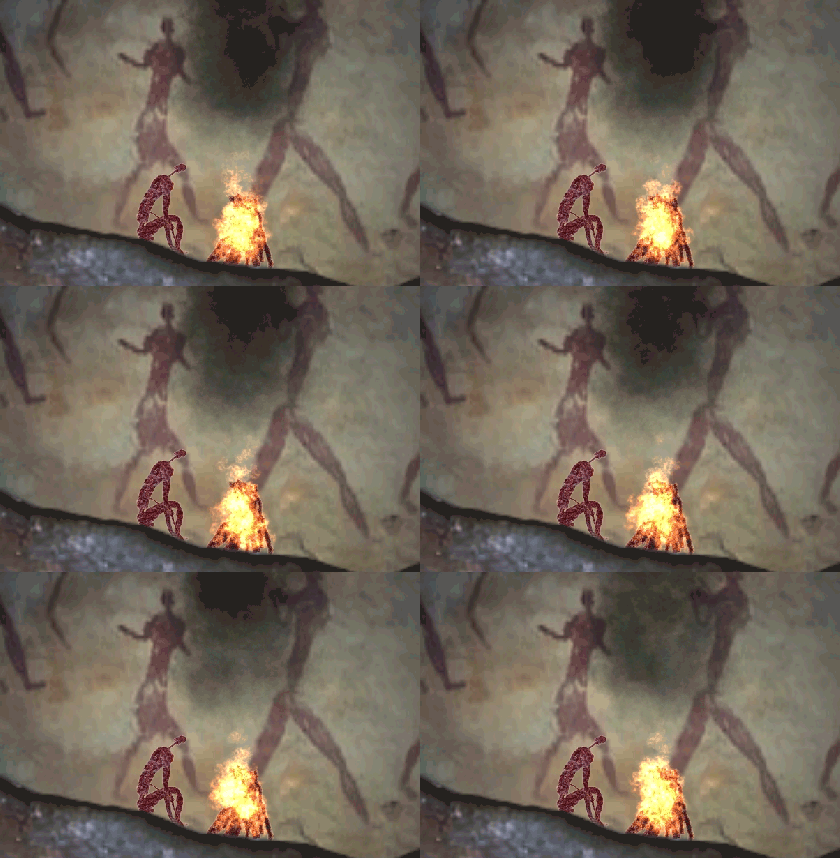
fire rock

Old Hopi lies prostrate upon a deep-red sandstone mesa,
while under him the ground remembers noontime heat.
His rib cage barely liftswith narrow breaths of chanting.
His voice is hushed and reedy.
Ki-tana-po, ki-tana-po, ki-tana-po.*

As his words become more halting, raven caws.
He and raven are old friends.
He kneels, and with trembling fingers
sifts two-million-year old sand into a gentle breeze.
Ai-na, ki-na-weh, ki-na-weh

He feels sensations of his body are not balanced.
Vistas of escarpment, of river and of mesa
swirl slightly in his sight.
In his shaman’s pouch is honeycomb
wrapped in a beaded bag.
He lifts it toward the sky as if in offering.
Chi-li-li-cha, chi-li-li-cha.

Honey is precious in the homeland of the Hopi.
Its dense fragrance hints of amaranth and clover.
Its syrup glows deep gold in bright sunlight.
Blessed, healing sweetness.
Don-ka-va-ki, mas-i-ki-va-ki.

There is presence in the wind now.
It has…

View original post 79 more words

Posted in Uncategorized | 4 Comments

The Erotic Watery Dreamland of Henri Rousseau

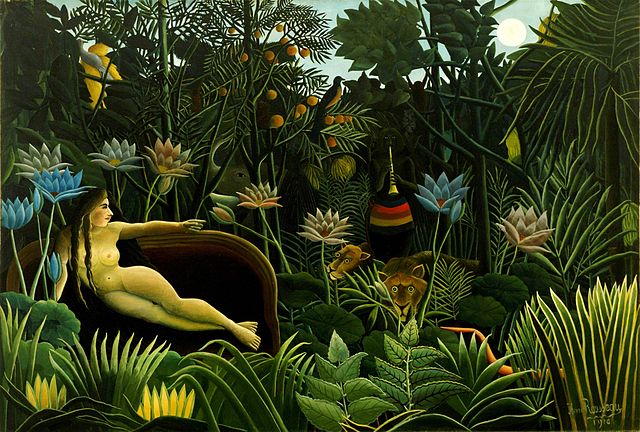
Image

“In 1910, the year of his death, Rousseau gave the world his last dream, his extraordinary painting Le Rȇve. In a moonlit jungle clearing, a naked woman lies on a brown velvet-covered couch. In attendance are she-lions, birds of paradise, an elephant, a worm-pink serpent and a dark-skinned snake charmer. Surrounding the odalisque’s sofa are the leaves and lilac-mauve blooms of Nelumbo nucifera (lotus flower). Although Rousseau’s ‘Dream’ is impossible to divine, it might be seen as the final and most florid flowering of the fantasy of nymph plus Nymphaea (or Nelumbo), the erotic watery dreamland that Mallarmé and Manet first pictured decades before. “

Mark Griffiths, “The Lotus Quest: In Search of the Sacred Flower”

I love everything about this painting but especially the domestic comfort of the velvet sofa submersed in the ocean of vegetation and the woman and the snake moving in sync with the same lethargic, watery, slippery, sinuous movements. According to the website www.henrirousseau.net, the woman portrayed in the painting is Jadwiga, Rousseau’s Polish mistress from his youth. Wikipedia quotes a poem that the artist wrote to accompany the painting:

“Jadwiga in a beautiful dream
Having fallen gently to sleep
Heard the sounds of a reed instrument
Played by a well-intentioned [snake] charmer.
As the moon reflected
On the rivers [or flowers], the verdant trees,
The wild snakes lend an ear
To the joyous tunes of the instrument.”

Posted in Painting | Tagged , , , , , , , , , | 24 Comments

The World Is Like a Divine Language

Image

René Guénon

“1. … symbolism seems to us to be quite specially adapted to the needs of human nature, which is not exclusively intellectual but which needs a sensory basis from which to rise to higher levels.

2. Fundamentally, every expression, every formulation, whatever it may be, is a symbol of the thought which it expresses outwardly. In this sense, language itself is nothing other than symbolism. There can be no opposition, therefore, between the use of words and the use of figurative symbols; rather, these two modes of expression should be complementary one to another (moreover, they may in fact be combined, for primitive writing is ideographic and sometimes, as in China, it has always retained this characteristic). Generally speaking, the form of language is analytical and ‘discursive’ , as is human reason of which it is the true and fitting instrument and the flow of which it reproduces as exactly as possible. On the contrary, symbolism in the strict sense is essentially synthetic and thereby as it were intuitive…

3. …if one is not content merely to note a difference and if one wishes to speak of superiority, this superiority, whatever some may claim, will lie with synthetic symbolism which opens the way to truly unlimited conceptual possibilities. Language, on the contrary, fraught as it is with more definite and less supple meanings, always sets more or less narrow limits for the understanding.

4. … the highest truths, which would not be communicable or transmissible by any other means, can be communicated up to a certain point when they are, so to speak, incorporated in symbols which will hide them for many, no doubt, but which will manifest them in all their splendour to the eyes of those who can see.

5. … once it be accepted that symbolism has its basis in the very nature of beings and things, that it is in perfect conformity with the laws of this nature, and if it be borne in mind that natural laws are basically only an expression and as it were an exteriorisation of the divine Will-does this not authorize us to affirm that symbolism is of ‘non-human’ origin, as the Hindus say; or in other words, that its principle goes further back and higher than humanity?

6. … the world is like a divine language for those who know how to understand it.

7. … if the world is the result of the Divine Word offered at the beginning of time, then nature in its entirety can be taken as a symbol of supernatural reality.”

René Guénon, “Fundamental Symbols, The Universal Language of Sacred Science”; 4§ Word and Symbol

Image

Monju Bosatsu with Eight Sacred Sanskrit Syllables

Description from www.metmuseum.org:

“Monju (Sanskrit: Manjushri), the Bodhisattva of Wisdom, is seated on a lion against an ovoid nimbus edged with flames. He wears a crown decorated with eight miniature Buddhas and holds a sword and a long stemmed lotus flower supporting a vajra—a pronged implement with origins in Indian weaponry. In other manifestations of the bodhisattva, Monju’s lotus typically supports a Buddhist scripture, but here the vajra is an emblem of wisdom. Monju is surrounded by eight Sanskrit seed syllables, or sacred utterances symbolizing the eight guardian youths from a mantra invoking him…”


Posted in Language | Tagged , , , , , | 11 Comments

Symbolism of the Dove

Image

A. Andrew Gonzalez, “Unio Mystica”

1. “In the myths of Babylonia and Judaism, a dive circles the subsiding waters of the primal flood and returns with the olive branch, sign of renewal after inundation.”

“The Book of Symbols”

2.“Be ye therefore wise as serpents, and harmless as doves.”

Matthew 10:16

The symbolism of the dove goes back a long way and over many geographical locations. In ancient Greece, it was sacred to the goddess Aphrodite, who the Romans called Venus Columba (Venus-the-Dove). In India it was perceived as a symbol of desire and the equivalent of the yoni. As Barbara G. Walker puts it, “Joined to her consort the phallic serpent, the Dove-goddess stood for sexual union and Life.” Interestingly, the Semitic word for ‘dove’ – ione, is related not only to ‘yoni’ but also to the Roman name of the goddess Hera – Juno. “Juno” also meant a woman genius, so the Dove/Holy Spirit is in its essence an expression of the higher mind of the deity, i.e. Sophia –an emanation of divine wisdom. In Gnosticism, Sophia was a feminine figure, identified with the soul. In Christianity, the dove is the emblem of the Holy Spirit, which impregnates the Virgin Mary. Great mother goddesses such as Ishtar, Atargatis or Aphrodite were perceived as doves in their dual nature of being earthy and celestial at the same time.

Image

Queen Semiramis, legendary founder of Babylon – her name meant “Dove” in the Syrian tongue

Further, the dove is a longstanding symbol of the soul. In ancient Rome, Aphrodite’s catacombs were called “columbaria” (dovecotes), which, according to Barbara G. Walker, gave rise to the belief that the soul returns to the Goddess after death as a dove.

Image

William-Adolphe Bouguereau, “Venus with Doves”

As an interesting parallel, during canonization ceremonies in the Catholic Church white doves are released as symbols of the souls of saints.

Image

In Christian iconography, the dove is sometimes shown with seven rays emanating from her, which further connects her to the Goddess, specifically to the Pleiades, the Seven Sisters, whose name in Greek meant “a flock of doves.”

Image

Pleiades as doves, image via http://corinazone.deviantart.com/art/Pleiades-The-doves-66096424

Ted Andrews identifies the dove with “feminine energies of peace, maternity and prophecy.” Cassandra Eason wrote that “the cooing of sacred doves in the oracular groves dedicated to the Ancient Greek Sky god Zeus at Dodona was used for prophecy by the priestesses.” This ancient shrine was second only to Delphi in its oracular significance and it was dedicated to a Mother Goddess. The prophetesses residing there were called “peleiades” (doves). According to a legend retold by Herodotus, the oracle was established by former foreign female slaves at a place where a black dove settled on an oak tree:

“I expect that these women were called ‘doves’ by the people of Dodona because they spoke a strange language, and the people thought it like the cries of birds; then the woman spoke what they could understand, and that is why they say that the dove uttered human speech; as long as she spoke in a foreign tongue, they thought her voice was like the voice of a bird. For how could a dove utter the speech of men? The tale that the dove was black signifies that the woman was Egyptian.” (quote after Wikipedia)

Image

John William Waterhouse, “Consulting the Oracle”

Image

The cooing of the white dove is one of the most beautiful sounds one can hear. Ted Andrews says the song of the dove (especially the mourning dove) is “the rain song,” which “invokes new waters of life.” It is the most distinct and audible at liminal temporal spaces, i.e. the dawn and the dusk. At these times the veil between matter and spirit is the thinnest, the past opens the gate to the future and the Holy Spirit descends.  Ted Andrew adds:

 “The song of this totem tells you to mourn what has passed, but awaken to the promise of the future. It is a bird of prophecy and can help you to see what you can give birth to in your life.”

The dove is an emblem of good tidings and of peace. It is monogamous by nature and “has been associated with the mystic, erotic attraction and devotion that bring things into fertile union,” says the entry Dove in The Book of Symbols. The dove is a soulful image that “transcends the violence of our polarities,” adds the same book.

Image

Support my blog

If you appreciate my writing, consider donating and make my day. Thank you in advance.

$1.00

Sources:

Ted Andrews, Animal Speak

Cassandra Eason, Fabulous Creatures, Mythical Monsters and Animal Power Symbols

Barbara G. Walker, Women’s Encyclopedia of Myths and Secrets

The Book of Symbols: Reflections on Archetypal Images, ARAS, ed. Ami Ronnberg

Posted in The Dove | Tagged , , , , , , , , , , , , , , , , , , , , , , | 30 Comments